


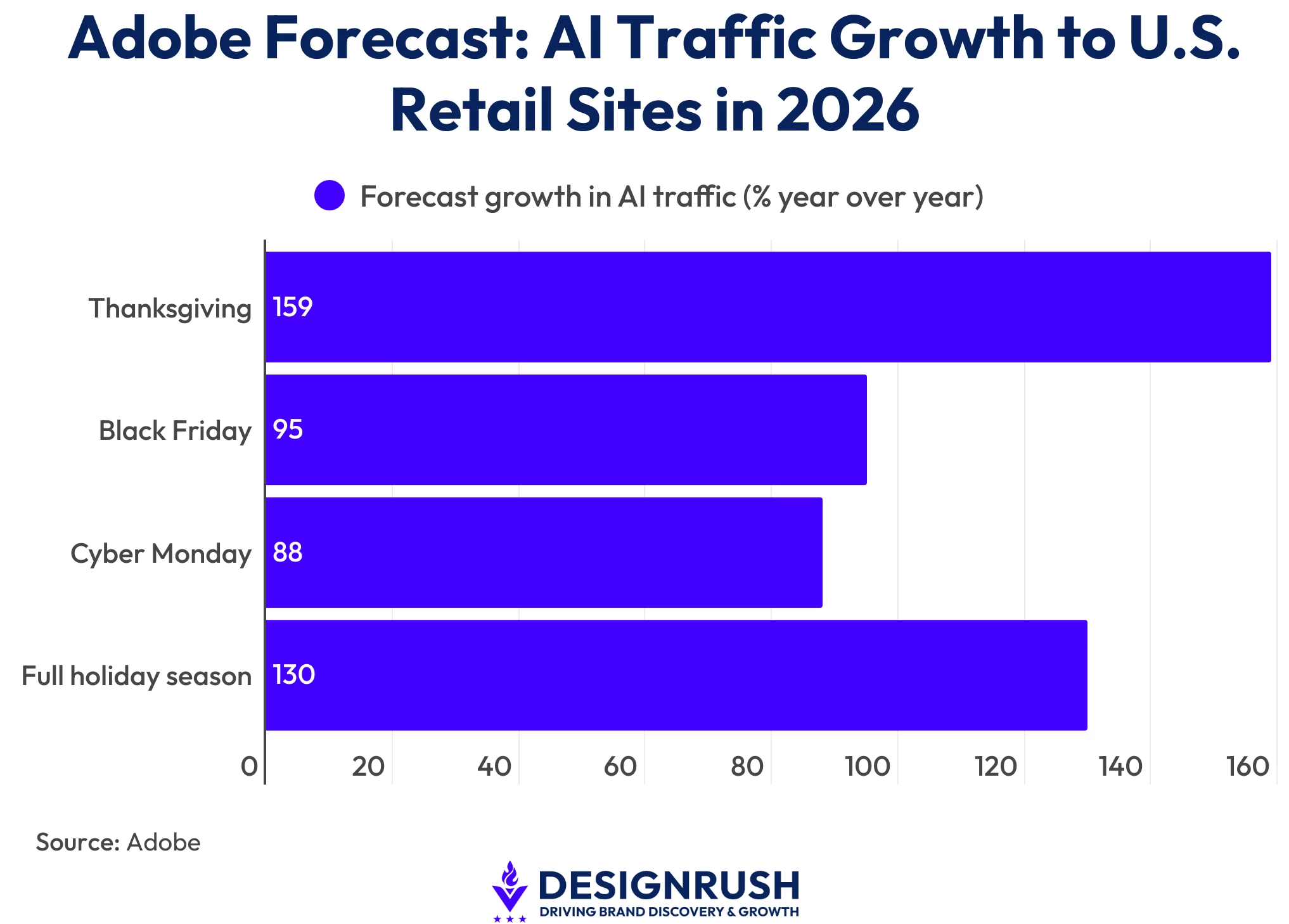
Adobe expects AI traffic to U.S. retail sites to rise 130% this holiday season.
Meanwhile, Salesforce predicts that 20% of holiday eCommerce traffic will originate from AI chat agents.
Prada has already built the discovery side of this, with a ChatGPT pilot that lets shoppers browse its collections and find stores.
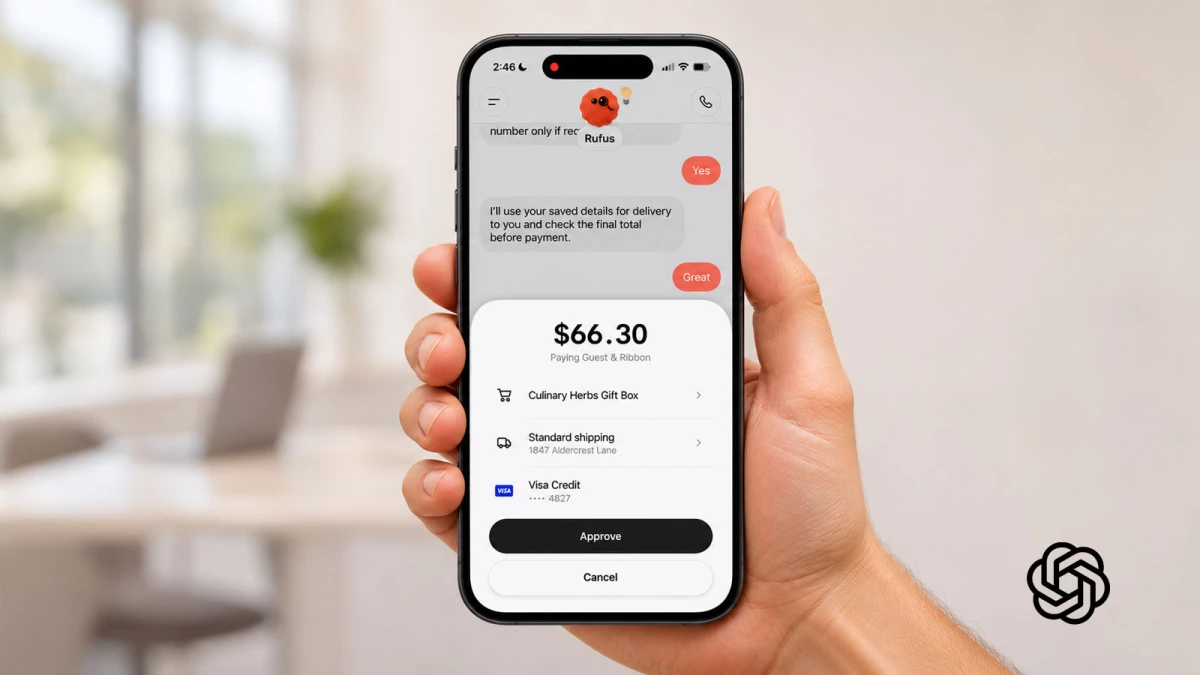
OpenAI covered the payment side on Nov. 13 with ChatGPT Wallet, which lets a Pro subscriber's AI agent pay on a merchant's own checkout page.
Cyber Week opened on Thanksgiving, Nov. 26, and runs five days through Cyber Monday, Nov. 30.
Adobe expects these five days to bring in $47.5 billion in U.S. online sales.
Agencies can use this window to see where agent shoppers stall in their clients' stores.
Below, we break down what the forecasts show, along with steps that agencies can take through Cyber Monday.
Cyber Week Forecasts Point to AI Agent Traffic
Adobe's September forecast puts U.S. online holiday sales at $275.1 billion for November and December, up 6.7% year over year.
The company also counts AI traffic as shoppers clicking a link from an AI tool to a retail site.
Adobe's January report on the 2025 season called its base of AI shoppers modest, so this year's 130% growth starts from a small number.
Salesforce says its 20% forecast mixes shoppers' own agents with competitor scrapers and autonomous backend agents.
It also expects one in three eCommerce sites to have their own shopper agent live by Cyber Week.
Its Nov. 19 forecast expects AI and agents to influence $75.8 billion in global online sales during the week.
The CRM platform measures this week from Nov. 24 to 30, two days longer than Adobe's U.S. count.
Remember that scrapers add visits without new orders, so agencies should judge a client's agent traffic by the actual orders it produces.
ChatGPT Wallet Leaves Checkout With the Merchant
OpenAI launched ChatGPT Wallet on Nov. 13 for a limited number of U.S. Pro subscribers who are 18 or older.
Subscribers can add an eligible Visa, Mastercard, or American Express card once before asking their agent, which OpenAI calls a dot, to complete a purchase.
The merchant receives a token generated by the payment network, with every transaction requiring a biometric approval.
A Salesforce survey published on Nov. 12 found that almost 20% of shoppers now start with AI, with most still unready to let an agent click Buy Now.
Now your dot can securely complete purchases on your behalf—with your approval. With ChatGPT Wallet, agents pay without access to your actual card details. Every purchase requires a security check. ChatGPT Wallet is rolling out starting today to dots, for Pro subscribers in the US. https://t.co/OnAl3SKQ3n
— ChatGPT (@ChatGPT) November 13, 2026
With the agent paying on the merchant's existing checkout page, the order, the pricing, and the customer stay with the merchant.
OpenAI handed checkout back to merchants in March, saying that Instant Checkout "did not offer the level of flexibility" it wanted.
A client's in-house team or agency still handles returns and service on every Wallet order, so agent shoppers meet the brand after checkout.
Prada Builds the Discovery Side in ChatGPT
Prada launched the pilot in the U.S., U.K., and Italy in late October, with Accenture Song developing the plugin alongside the fashion house.
Accenture invested in DaVinci Commerce, the agentic commerce platform that supported the project, in March.
DaVinci sells a product called Agentic BrandStore, which builds branded conversational shopping experiences inside large language models.
Prada Group Digital Director Laura Campanella described the pilot as a way of "exploring a new territory for customer engagement."
Salesforce's holiday predictions found that 41% of shoppers say that a brand-owned AI assistant makes them "much more confident" in a purchase.
Prada's plugin pulls from its own content, so the brand decides what ChatGPT tells shoppers about its products and stores.
Brands hiring an agency for an AI storefront can ask which platforms it already backs, as this can speed up a pilot and narrow down later vendor choices.
Walmart Sets Limits and Amazon Blocks Muse
CEO John Furner announced Walmart's Agent Gateway in October, with profiles that let shoppers cap agent spending, require approval, and cut access.
Amazon, on the other hand, blocked Meta's Muse agent from shopping on its site on Sept. 20, roughly two weeks after Muse launched.
It claims that Meta gave no notice that Muse would visit the store, adding that the agent appeared to retain customer credentials.
But according to Meta, Muse has no visibility into passwords or payment methods.
Shopify announced a partnership with Muse a day later, opening agentic checkout through Shop Pay across its stores.
Muse can now shop at Walmart through the gateway, which went live on Nov. 23.
Each retailer now decides which AI agents can shop in its store, so agencies can help clients write down which agents they'll allow, block, or limit.
3 Agent Checks Before Cyber Monday's $15.1B Rush
Adobe expects Cyber Monday to be the season's biggest online day, with U.S. shoppers spending about $15.1 billion.
Agencies still have time before then to run these quick checks on their client's store, each one aimed at a spot where an AI agent order can fail.
Audit Product Feeds Every Morning
Each product feed needs one owner who matches its prices and stock status against the client's live product pages.
An agent that reads a stale feed can show shoppers a price or delivery date that has already changed on the live page.
Test an Agent Purchase Before the Peak
Agencies can place a trial order through an agent on each client's site, then have the security team review any bot or fraud rule that blocks it.
Salesforce's November survey found that 22% of personal agent users have already had an agent blocked from completing a purchase.
Tag Agent Orders in Analytics
Teams can give sessions that start in ChatGPT and other AI agents their own source tag in each client's analytics.
A tagged report after Cyber Week shows which products agents picked, so clients know which listings to keep accurate first.
Our Take: Can Brands Control Agent Shopping?
OpenAI has limited Wallet to U.S. Pro subscribers with eligible cards, which keeps its share of Cyber Week orders small.
Brands can control agent shopping, and most of that control, in our view, lies in the product feed and checkout that a client owns.
Salesforce's November survey found that most shoppers drop an AI assistant after two or three mistakes, so brands get few tries at agent checkout.
Agencies that log this week's failed agent orders can walk into next year's holiday budget talks with real numbers of their own.
With OpenAI calling agentic commerce early, a wider Wallet rollout would raise the number of agent orders a store has to handle.
Our coverage of McKinsey's report on agent-ready eCommerce stores looks at how teams can prepare for AI shopping agents.
Brands getting ready for agent shoppers need agencies that can tune product data and checkout flows for AI-led buying.
Explore these top eCommerce marketing agencies in our directory.