
Agentic AI and eCommerce Success: Key Findings
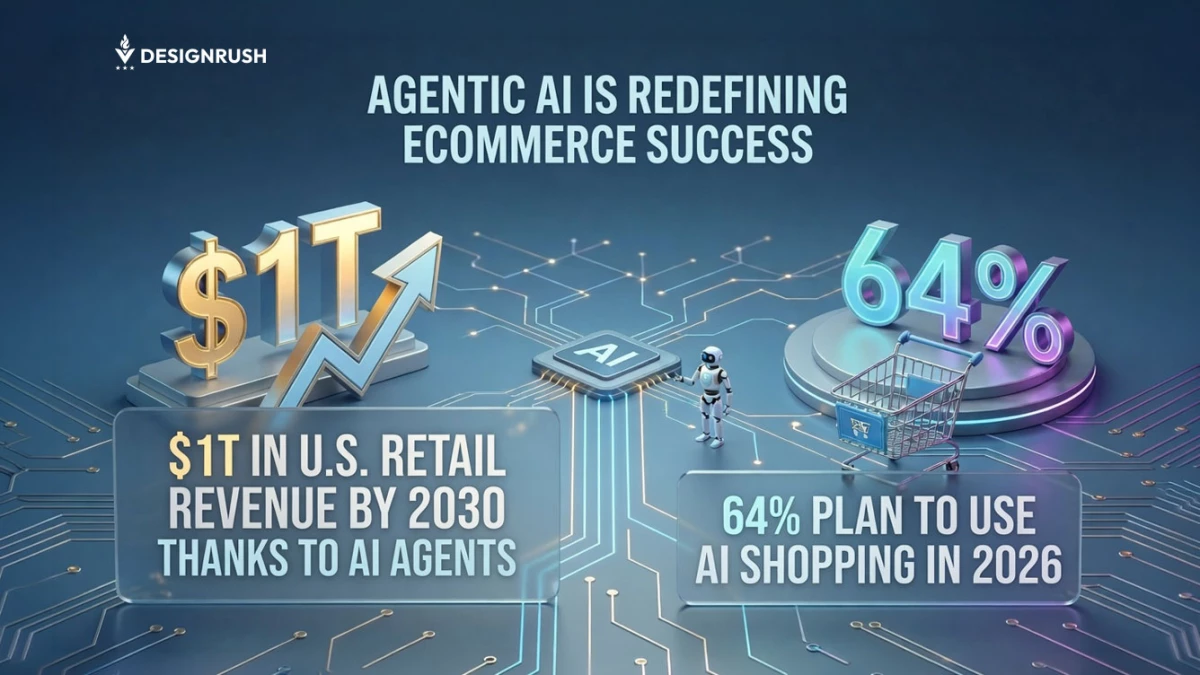
- AI agents could generate up to $1 trillion in U.S. retail revenue by 2030, signaling a shift from assistance to autonomous eCommerce execution.
- Real-time inventory accuracy and API-first architecture determine agent success, since outdated data and brittle integrations lead to failed purchases and overselling.
- Instinctools emphasizes system readiness over tool adoption, helping retailers expose structured data and convert business logic into machine-readable rules.
Back when eCommerce brands first started using AI, it mostly meant adding chatbots for customer support or recommendation engines.
AI has taken a big leap since then.
Today, eCommerce AI has evolved into agents that autonomously search, compare, and even buy products for online shoppers.
For the most part, it's no overstatement to say that AI has changed the way we think about customer experience and the buying journey when building eCommerce websites.
Shopping is getting a new user.
— *instinctools (@instinctools_EE) February 23, 2026
Not a person. An #AI agent.
In our latest article, we break down what agentic commerce actually is and what it changes for ecommerce teams when agents can discover → compare → decide → transact on a shopper’s behalf > https://t.co/tL80jNSwef…
And experts from McKinsey agree, as a new report projects that AI-powered shopping agents could generate up to $1 trillion in U.S. retail revenue by 2030.
But in our experience, eCommerce brands looking to ride that wave in revenue should think beyond adopting more AI tools.
Instead, we at Instinctools recommend that they focus more on how their systems expose data, process transactions, and integrate with external AI-driven interfaces.
What Makes an AI Agent Different
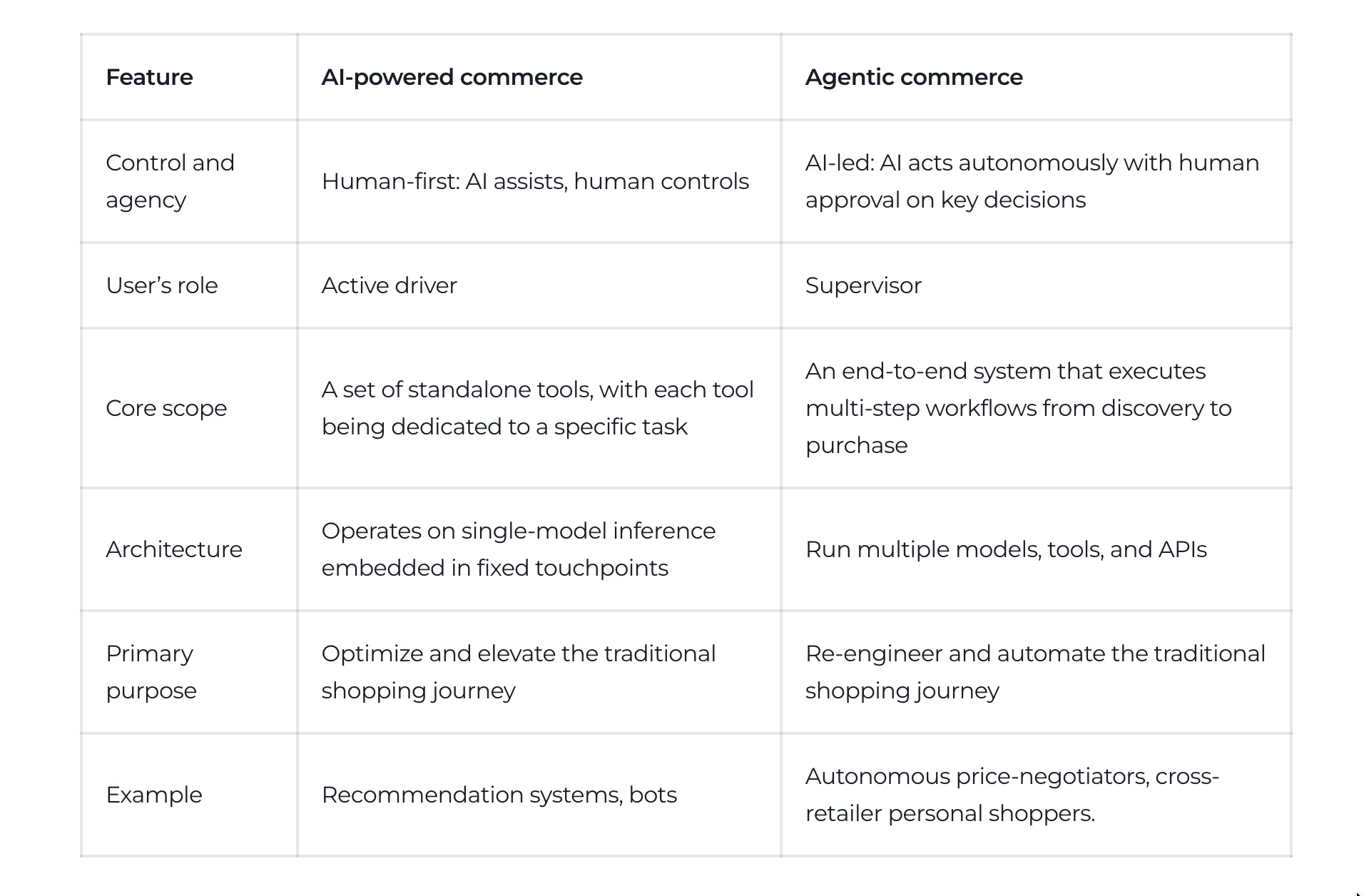
Traditional AI in eCommerce was primarily used as a predictive support layer that guided product discovery, comparison, or checkout.
But it neither took control of transactions nor acted on behalf of the customer.
Agentic AI, on the other hand, operates at the very heart of the buying journey.
Rather than wait for step-by-step instructions, these agents are capable of coordinating actions across multiple systems.
For example, a chatbot might be able to answer a shopper's question about a product, but a commerce AI agent can automatically scan multiple online stores, compare options, and complete a purchase with human approval.
That's because AI agents are able to directly interact with external systems like payment gateways and cart management APIs like Shopify, creating smooth and coordinated cross-platform workflows.
This requires a fundamentally different architecture, setting a stage for real engineering challenges in building agentic commerce systems.
Engineering Challenges Related to Agentic Commerce
AI agents in eCommerce require a more complex approach in their implementation.
Their ability to operate autonomously and coordinate workflows across multiple platforms introduces a range of engineering challenges across system architecture, data integrity, transaction reliability, and performance:
System integration
To ensure AI agents are able to interact with retailers, payment gateways and fulfillment providers seamlessly, teams should take an API-first approach right from the start.
This is why headless commerce, which decouples the front end from the back end, has become so popular as of late.
Thanks to how headless commerce is set up, AI agents are able to interface directly with inventory, pricing, and order management systems without having to rely on UI-driven workflows.
But what about teams that are already using several external agents?
Teams can ensure compatibility with these agents by standardizing communication protocols and authentication mechanisms.
Doing so helps prevent errors when using multiple agents simultaneously.
Inventory data synchronization
Agentic systems depend on fresh and accurate inventory information to function effectively since any delays or discrepancies can lead to issues like failed purchases or overselling.
Fortunately, preventing these issues is as simple as implementing the right inventory management software, integrated POS systems, and automated stock update services in place.
On top of this, teams should check that structured and machine-readable product data, such as SKUs and shipping options, are consistent throughout all their systems.
Inconsistent and poorly structured product data can prevent agentic AI from quickly comparing products, following business rules, and making purchasing decisions.
Performance under high load
When scanning multiple stores, checking stock, and executing simultaneous actions on the eCommerce website, agentic systems may generate higher, but inaccurate, traffic numbers.
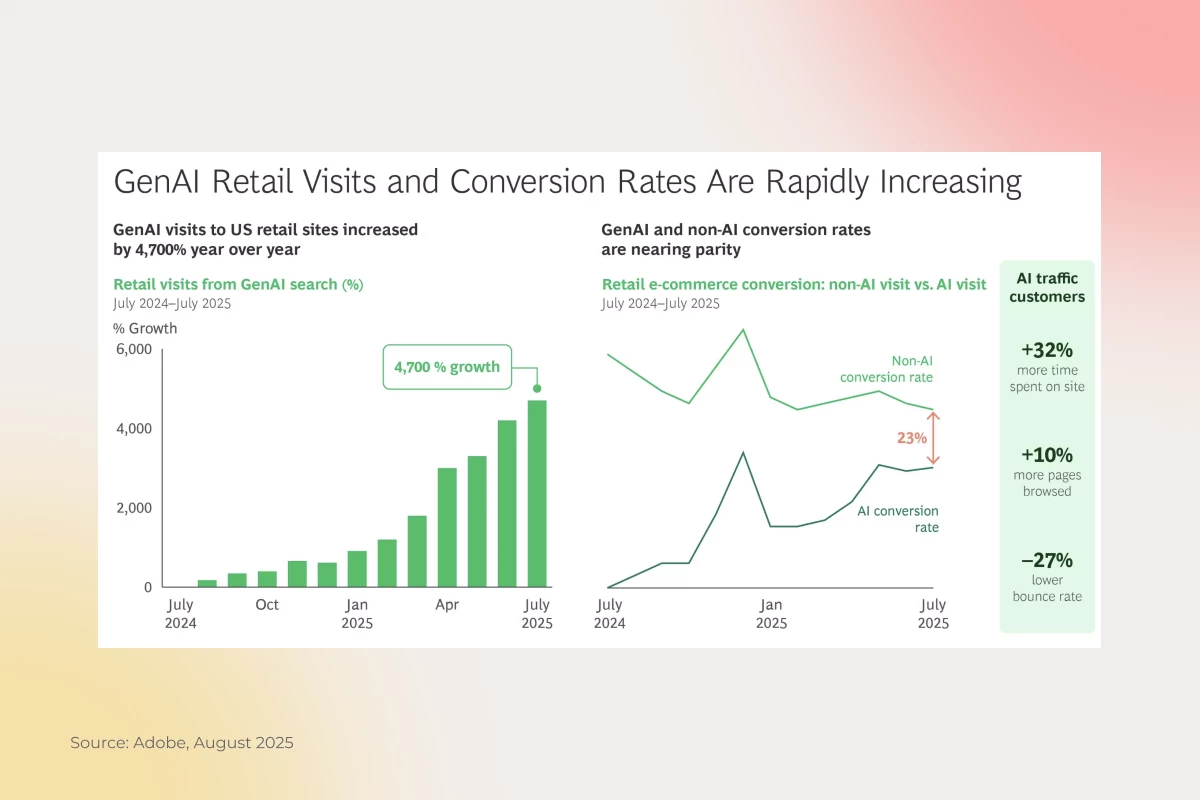
When this happens, retailers lose direct traffic visibility and the ability to explore customer behavior.
If real-time monitoring and analysis of this traffic isn't done, it can easily lead to slowdowns, site errors, or even lost sales when agent activity spikes.
To address this, companies should take advantage of data analytics and visualization solutions that can automatically track traffic patterns and alert support teams.
This helps maintain smooth operations even during peak periods.
High-impact Use Cases for eCommerce AI Agents
When retail and eCommerce businesses consider adopting agentic AI solutions, it’s important to match potential use cases with the company’s technological readiness.
To be specific, we believe there are four key areas where agentic AI works wonders:
1. Customer engagement and product discovery
In product discovery, AI agents can deliver the fastest ROI by leveraging existing intent, context, and conversion signals.
The more accessible, machine-readable catalogs with detailed and structured product data an eCommerce site has, the more chances the AI agent will perform the following actions and achieve its goal:
- Curate product selections based on customer intent.
- Compare offerings across multiple criteria and shortlist the best options.
- Communicate preferences to the brand’s systems or other agents for refinement.
- Adjust recommendations based on subtle or indirect customer signals.
2. Clienteling and loyalty
AI agents integrated in retail business sites can act as concierge agents – a next-generation personal assistant, enabling hyper-personalized experiences for the users, which can:
- Remember customers’ favorite brands, sizes, and past purchases across browser sessions and channels.
- Provide timely reminders for life events, anniversaries, or seasonal needs.
- Find and suggest personalized “just-for-you” deals.
- Negotiate trade-offs on price, style, availability, or timing with the customer’s agent.
This allows retailers to embed their existing clienteling strategies directly into the agent’s reasoning layer, or the decision-making logic that determines how the agent interprets customer data, applies brand rules, and takes actions.
3. Payments and fraud detection
eCommerce agents can strengthen backend commerce operations, particularly in fraud prevention and transaction security.
As agent-driven transactions increase, so does the need for systems that can distinguish between legitimate autonomous activity and malicious behavior.
For example, agents can:
- Authenticate and approve payments on the user’s behalf within predefined spending limits.
- Enable Know Your Agent verification to confirm the acting agent is properly authorized and compliant with the retailer’s security and access policies.
- Detect and block suspicious activity in real time by analyzing transaction patterns across devices, geolocations, purchase history, and behavioral signals.
- Automate reconciliation and settlement processes, reducing manual workload while improving financial accuracy and operational efficiency.
As agent autonomy grows, retailers will also need payment infrastructures that are capable of supporting agent-aware authentication, secure delegation of authority, and trust layers designed specifically for machine-to-machine transactions.
4. Core commerce systems
Embedding agents into foundational commerce systems, including product catalogues, inventory management, and order processing, can help businesses automate critical workflows.
Once integrated into core commerce software, agents can:
- Validate and complete orders based on inventory availability and predefined business logic.
- Coordinate across internal systems and logistics partners to select the fastest or most cost-efficient shipping option.
- Monitor stock levels and trigger reallocation of inventory between warehouses to prevent overstocking or stockouts.
- Ensure that orders, returns, and transactions comply with internal policies, tax requirements, and shipping regulations.
In most cases, retailers don’t need to fully rebuild their commerce stack to add agentic autonomy.
However, success depends on making sure the company is foundationally ready to integrate AI.
This is often determined by whether or not a company has accessible APIs, structured and reliable data, and clearly defined business rules that agents can interpret and execute.
Without these elements, automation remains limited and fragmented.
How to Prepare for Agentic AI in eCommerce
For most existing eCommerce business models, agentic AI may leverage a structural shift.
To move from experimentation to real deployment, eCommerce teams need to focus on a small number of foundational capabilities”.
Build the right foundations
Agents cannot function effectively if product data is fragmented, APIs are inconsistent, or business logic exists only in people’s heads.
Regardless of their starting point, most retailers will need to realign their tech capabilities and decisions.
- Ensure product data is structured, standardized, and readable by both humans and machines.
- Expose core services such as inventory, pricing, promotions, checkout, and order management through consistent, well-documented APIs.
- Convert informal operational knowledge into clearly defined, machine-readable business rules.
- Align architecture with the intended level of autonomy (for example, headless or composable commerce setups where flexibility is required).
Without these elements in place, agents remain limited to surface-level interactions instead of true execution.
Enable cross-system and cross-agent collaboration
AI agents in commerce do not operate in isolation as they need to constantly communicate with internal and external systems.
To make this possible, businesses need open, secure APIs. Without them, agents are forced to interact through manual interfaces, which severely limits automation and scalability.
- Identify high-impact, transaction-critical services such as inventory, pricing, and order processing.
- Choose integration protocols that match their ecosystem needs.
- Implement strong authentication, authorization, and audit mechanisms for all agent interactions.
Establish trust, guardrails, and compliance
Granting AI the authority to execute transactions requires a corresponding evolution in governance.
Agentic systems need a robust trust framework that protects customers, the business, and partners.
- Verify agent identity using a process similar to human KYC.
- Embed human-in-the-loop controls for high-risk or high-value decisions.
- Encrypt sensitive data end-to-end and limit unnecessary data exposure.
- Ensure compliance with global standards, including GDPR and ISO certifications.
- Clearly define accountability at every stage of an autonomous transaction.
Retailers that treat agentic AI as an operational capability and not just a feature will be better positioned to deploy it confidently and scale it responsibly.
Build an agent-ready commerce
Overall, the ever-growing use cases for agentic AI in eCommerce is sure to redefine how online stores are built and operated.
However, it can only accomplish these transformative changes if it's implemented the right way.
And given how competitive eCommerce is projected to be until the end of the decade, the decisive advantage isn't in how many AI agents a company has deployed.
It's in how they've been integrated so seamlessly that efficiency becomes invisible for both your team and your customers.