
Our analysts track the weekly developments in AI and how it reaches users. Brands building AI products can partner with vetted AI companies to bring their ideas to life.
Three decisions this week drew the actual battle lines of agentic commerce.
- Amazon blocked Meta's Muse shopping agent from its site, then accused Perplexity of misleading a federal court about how its Comet browser works.
- Shopify announced a partnership with Muse a day later, opening agentic checkout through Shop Pay across its stores.
- Cloudflare introduced a setting that lets sites block AI training without losing search visibility, a problem mixed-use crawlers had made unsolvable.
Each move answers the same question in a different way.
Our Take: Who Gets to Decide What a Customer Buys?
An AI agent now handles product discovery one step before the customer sees a storefront.
We think that the agent decides more than either Amazon or Shopify will say out loud.
Amazon sells advertising against the search results that an AI agent skips on its way to a product page.
Shopify gave up the storefront visit and kept the catalog, the payment rail, and the order.
Both companies are protecting whichever part of the transaction an agent still needs.
Merchants who treat feed data and crawler permissions as marketing work will get surfaced.
And the rest will find out what an agent picked for them after the sale closes.
Amazon Locks Out Meta's Muse
Meta launched Muse on September 8. The personal AI agent can browse, shop, and complete purchases on someone's behalf.
GeekWire first reported it was blocked from Amazon.com 12 days later, citing violations of its Conditions of Use.
Trending: Amazon blocks Meta’s Muse AI assistant in new standoff over agentic shopping https://t.co/2bPvMpDZIv
— GeekWire (@geekwire) September 21, 2026
Muse joins shopping agents from Google and OpenAI, both of which were blocked by Amazon over the past year.
The pattern traces to a lawsuit filed against Perplexity in November 2025.
The Ninth Circuit vacated Amazon's March injunction on August 4, holding that the user is the one accessing Amazon's servers when an agent shops.
Amazon filed a 41-page amended complaint the next day, September 21.
It accuses Perplexity of telling the Ninth Circuit that none of its computers touch Amazon directly.
Amazon says its engineers logged that traffic daily from March 18 to at least May 11.
It also says that Muse can reach a customer's account pages and order history without identifying itself.
And this allegation means that data could be exposed to an undisclosed third party.
Amazon compared Muse to any other middleman that needs permission before selling on someone else's behalf.
"Third-party agentic applications like Muse are subject to the same obligations, and we have asked Meta to remove Amazon from the user experience," a company spokesperson told Bloomberg.
But Meta says that Muse has no visibility into passwords or payment methods, which sit in secure storage that the agent can use without reading.
The standoff sits awkwardly next to an existing partnership.
Amazon products have been purchasable inside Facebook and Instagram since 2023.
Meta signed a multibillion-dollar deal in April to run agentic AI workloads on Amazon's Graviton chips.
Shopify Says Yes to Meta's AI Agent
Shopify opened its stores to Muse a day later.
"Agentic commerce really excites us. The agents don't have the same challenges as humans," Shopify VP of Product Rohit Mishra told American Banker.Muse can search Shopify's catalog and check out through Shop Pay.
Merchants need no setup, and the integration covers stores in every country where Muse operates.
Neither company disclosed a timeline for when every Muse user gets it.
Nat Friedman, head of product at Meta Superintelligence Labs, said that Muse was built from scratch but is "heavily inspired" by OpenClaw.
The open-source personal agent went viral in China and elsewhere earlier this year.
Its creator, Austrian developer Peter Steinberger, joined OpenAI in February.
Friedman credited him in a post on X, calling his harness "pioneering from the jump."
So Meta's product chief credits a rival lab's employee by name while Muse declines to identify itself to the sites it visits.
Google Gears Up AI Shopping for the Holidays
Google rolled out a batch of agentic-commerce updates ahead of the holidays.
AI performance insights in Merchant Center are now generally available in Australia, Canada, India, New Zealand, and the U.S.
A Business Agent beta inside YouTube ads lets U.S. viewers ask product questions without leaving the video.
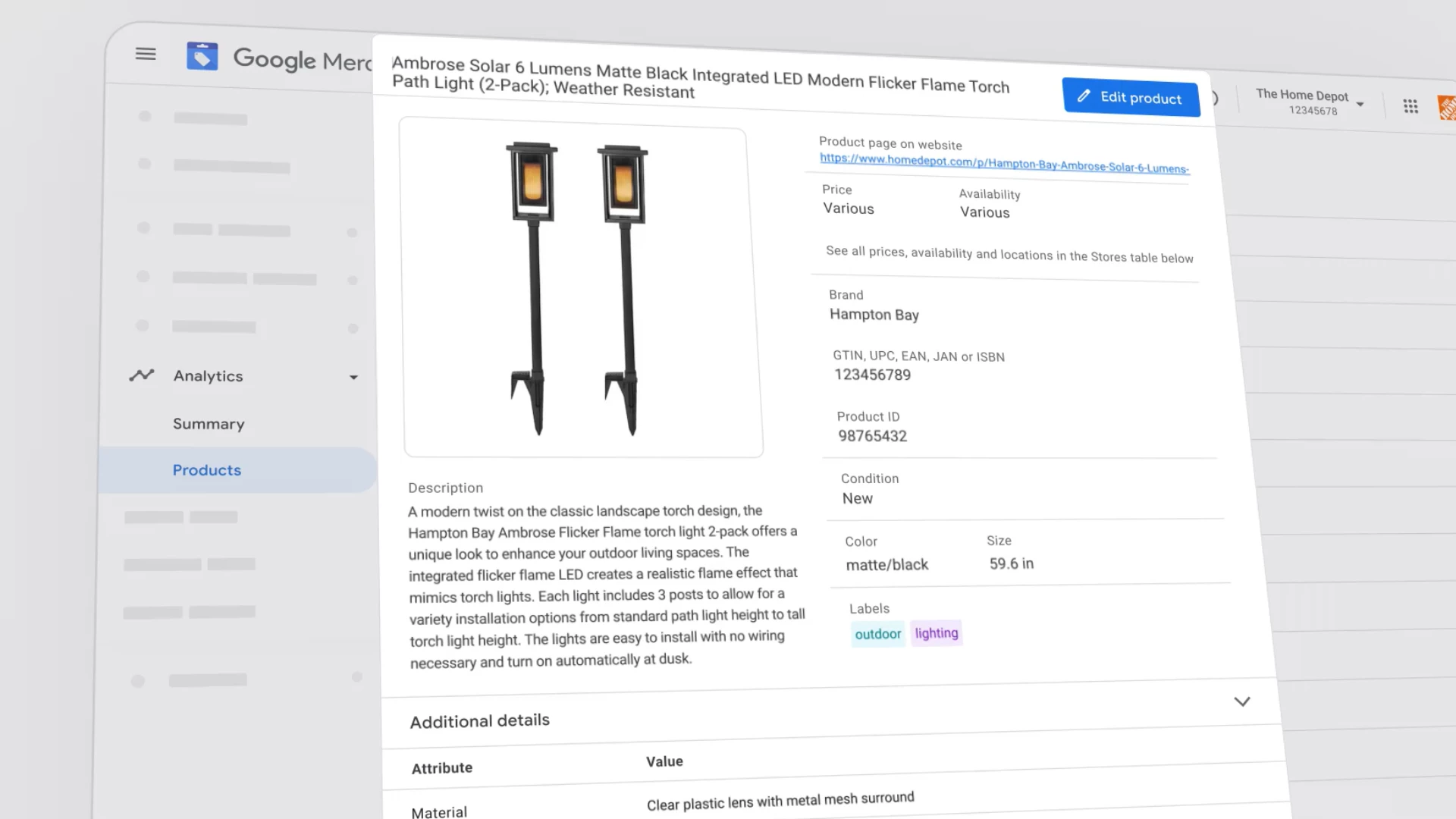
Google also expanded the Universal Commerce Protocol hub in Merchant Center with cart transfer and checkout flow testing.
The rollout starts in the U.S., with Australia and Canada following in early 2027.
The feed data backs up the case.
Google said conversational attributes submitted by Lululemon appeared in relevant AI Mode recommendations 50% of the time in testing.
Merchants that adopt its feed best practices see an average 5% lift in conversions the following month.
Feed quality now decides whether an AI shopping agent surfaces a product at all.
Product data has become a distribution channel, which puts it in the same budget conversation as paid search and content marketing.
Cloudflare Separates Search From AI Training
Cloudflare introduced a Disallow AI Training setting on September 15, solving a problem site owners have had for years.
Mixed-use crawlers like Googlebot handle search indexing and AI training through the same bot, so blocking one meant losing the other.
Cloudflare puts these at 36.6% of verified crawler traffic on its network.
A site can now block Googlebot, Bingbot, or Applebot from AI training while keeping them fully active for search.
Apple, Google, and Microsoft either honor the setting or have given Cloudflare a timeline for doing so.
Training-only crawlers from Amazon, Anthropic, Meta, and OpenAI carry no search function, so the setting already blocks them.
Domains onboarded after September 15 default to blocking training and agents on ad pages, with search untouched. Sites without ads allow everything.
Agencies managing client sites no longer have to weigh training against rankings, which used to leave most sites open by default.
Three Checks for Anyone Selling Through an AI Agent
The rules for AI shopping agents are still being written, but merchants don't get to wait for them to settle.
Here are three things to check before you let an AI agent sell on your behalf.
- Audit which agents can transact on your behalf. Amazon sellers should track the Muse dispute, while Shopify merchants can review Agentic Storefronts in admin and opt out per channel.
- Write product data so an agent can read it. Start with conversational attributes, then check structured data and stock accuracy.
- Set crawler permissions on every domain you run. Sites launched after September 15 inherit Cloudflare's defaults, while older domains need Disallow AI Training switched on manually.
A merchant who runs these three checks decides which AI agents sell on its site.
The alternative is finding out after an agent already did.
Catch up on Delaware's new AI privacy threshold, Salesforce's Agentforce lineup, and the Google-Microsoft AI Max split in last week's AI roundup.
If an AI agent can shop at one store and gets blocked at another, whose storefront is it actually visiting?
These leading AI companies help brands decide whether to open their storefronts to shopping agents.