
AI Agents in Enterprise Software: Key Findings
- AI is moving from assistance to execution, with systems now completing multi-step tasks instead of just responding to prompts.
- Enterprise software is being rebuilt for AI agents, as companies shift toward modular systems that allow agents to operate and scale effectively.
- Organizations must redesign systems around AI, by building secure, observable, and data-ready environments that support autonomous agents.
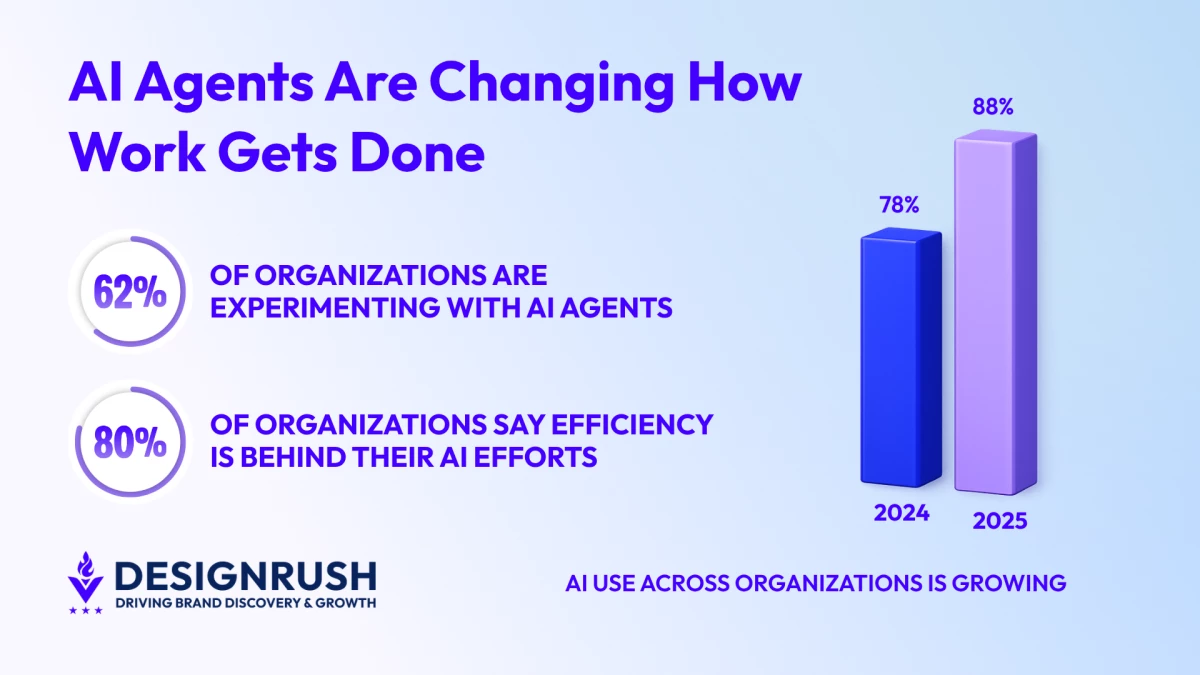
AI is now part of how most organizations operate, with 88% using it in at least one part of the business, up from 78% in 2024, according to McKinsey & Company’s State of AI in 2025 report.
That momentum is getting harder to ignore as Microsoft pushes Copilot from just being a helpful assistant into one that can do the work. This move brings Anthropic’s models into its Copilot ecosystem through Copilot Cowork, expanding what these systems are expected to handle.
Instead of stopping at prompts and responses, the focus is moving toward multi-step tasks like creating applications, organizing data, and managing workflows.
Malay Parekh is the CEO of Unico Connect, an AI-native software development company that designs and builds intelligent digital products for enterprises worldwide. He sees AI moving past support roles and into execution.
“Microsoft working with multiple models, including Anthropic alongside OpenAI, is a practical move. Different tasks call for different strengths, and relying on a single model doesn’t hold up across the range of work enterprises expect AI to handle,” he says.
That didn’t happen overnight. For the past few years, enterprise AI mostly played an assisting role. It could respond, suggest, and generate, but it still relied on people to follow through.
Now, that boundary is starting to move, with systems taking on more of the process themselves.
Microsoft’s video below explains how Copilot Cowork allows users to delegate meaningful work and stay in the loop as that work progresses:
Editor's Note: This is a sponsored article created in partnership with Unico Connect.
AI Agents Are Reshaping Enterprise Software
As that happens, the definition of the end user starts to change as well. It’s no longer only a person moving through an interface. In many cases, it’s an AI system operating inside it.
This forces a rethink in how products are built, with the focus moving away from adding features and toward making systems easier for agents to work with. In other words, structure is starting to matter more than surface functionality.
This is where traditional systems begin to show their limits. Tightly connected applications tend to slow things down. They’re harder for AI agents to move through and even harder to automate without breaking something.
“More flexible systems, built in smaller parts, give agents room to operate and complete tasks across workflows,” Parekh says.
At the same time, the division of work is becoming more defined. Agents take on repetitive, pattern-based tasks, while people focus on decisions that require judgment, context, and creativity. This is less about replacement and more about shifting where effort is spent.
IBM delves into the five types of AI agents, their functions, and their real-world applications:
Infrastructure Gaps for AI Agents
Once agents start operating more independently, the pressure moves deeper into the stack.
Identity is one of the first areas where this shows up. As Parekh explains, AI agents can’t keep operating as extensions of human users.
“They need their own identities, with permissions tied to specific tasks. Without that separation, access becomes difficult to control and even harder to track,” he says.
From there, visibility becomes just as important.
When agents are handling multi-step processes, companies need to see what’s happening at each stage. What actions were taken, in what order, and based on what inputs?
Without this information, figuring out what went wrong becomes guesswork.
That’s why many teams are focusing more than ever on fixing data issues, including fragmented systems with inconsistent formats.
Agents only work with what they can reach and when that data is messy, the results tend to reflect that.
Companies that invest in cleaning this up tend to get far better outcomes.
TFiR dives into why data is one of the biggest infrastructure challenges for enterprise AI:
AI Adoption Trends in Enterprises
That momentum is already visible in how companies are putting AI to work.
According to the same McKinsey report, what’s changing now is intent alongside adoption.
80% of organizations say efficiency is a core goal behind their AI efforts, while 64% say it’s already helping them innovate, not just refine what’s already in place.
There are early signs of where this is heading as well. 62% of organizations are already experimenting with AI agents, moving beyond tools that assist into systems that can take on parts of the workflow themselves.
Inside organizations, that’s starting to show up in how work gets structured. AI isn’t just supporting tasks anymore. It’s becoming part of how those tasks move forward.
AI Governance Risks in Enterprises
That gap becomes more visible when AI agents begin to act on their own.
If an agent sends a message, approves a request, or updates a record, responsibility isn’t always obvious.
Unico Connect says that many organizations still don’t have clear AI governance frameworks that define what agents can do independently and where human approval is still required.
“Without those boundaries, the risks extend beyond technical issues. They start to affect compliance, security, and day-to-day operations,” Parekh says.
Some teams are beginning to respond by setting clearer limits on agent autonomy and logging every action with full context. That makes it easier to understand what happened and why. Even so, this level of oversight isn’t yet common.
IBM reveals why this level of autonomy brings with it all kinds of governance and security challenges:
What Leaders Can Learn from AI Agents
All of this is starting to reshape how software itself gets created.
Tools like Copilot are no longer just supporting workflows. They’re beginning to influence how those workflows are built in the first place.
When an agent inside a workplace platform can generate an application or set up a process from a simple instruction, the gap between using software and building it starts to narrow.
Parekh sees this playing out in how work is being redistributed. Routine tasks are increasingly handled by agents, while developers focus on systems where architecture, security, and reliability carry more weight.
“What’s changing isn’t just the pace of development. It’s the role that AI now plays in how the work itself gets done,” he says.
Want to learn more about AI software development?
Take a look at our list of the Top AI Development Companies for 2026.