
AI, Vibe Coding and the Developer Shift: Key Findings
- AI is redefining the developer role, as software creation shifts from manual coding to prompt-driven execution.
- AI-generated code is speeding up development but exposing new risks, with security vulnerabilities, debugging demands, and technical debt continuing to rise.
- Strong engineering oversight is becoming a competitive advantage, as companies invest in architecture, governance, and validation to ensure long-term stability.
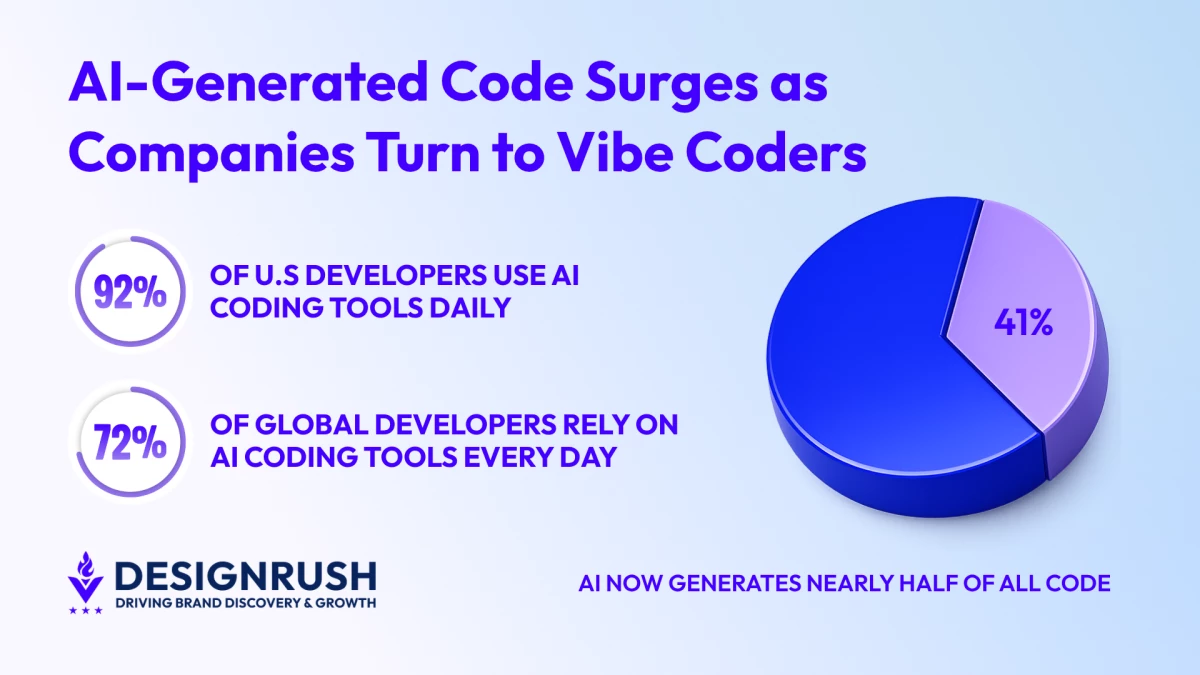
AI now generates 41% of the world’s code, with 256 billion lines of code written using AI tools in 2024 alone, according to Second Talent.
That scale is already reshaping how software gets built and who companies trust to build it. One of the most visible signs is the rise of “vibe coders,” developers who rely on prompts to turn ideas into working products.
For custom website and software development agencies like Quixta, this is starting to change how projects are scoped and delivered, particularly as clients experiment with faster, AI-assisted ways to bring products to life.
Quixta founder and CEO, Anand Ashok, explains that what started as a productivity boost has quickly turned into something more disruptive.
“The advent of AI has given rise to “vibe coders,” a term used to describe developers who delegate most of the implementation to AI through prompts rather than writing code line by line.”
“Startups are already leaning into this approach, treating AI as a core part of their development stack rather than a supporting tool,” he says.
The appeal is obvious, as ideas move faster, prototypes take shape in hours, and the path from concept to product feels shorter than ever.
That momentum, however, is beginning to redefine what it means to be a developer.
Find out more about vibe coding in the video below, where YouTube channel, Lenny’s Podcast, interviews Lazar Jovanovic, a full-time professional vibe coder at Lovable:
Editor's Note: This is a sponsored article created in partnership with Quixta.
AI Coding Tools Are Changing Software Development
The familiar rhythm of writing and reviewing code line by line is starting to fade.
In its place is a more fluid process where developers guide systems, refine outputs, and shape direction rather than build everything manually.
In practice, the role of a developer is shifting from programming to prompting, with natural language now driving much of the execution.
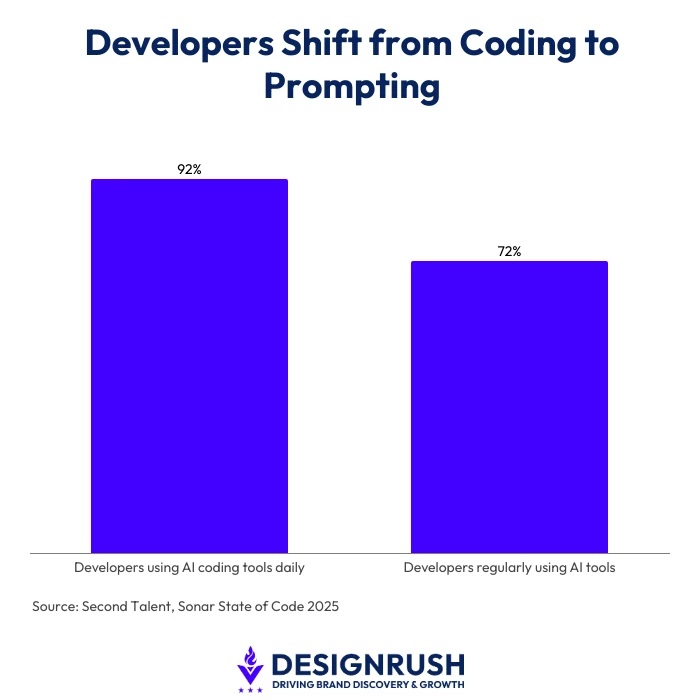
This is reflected in Second Talent’s findings, which show that 92% of U.S developers use AI coding tools daily.
Sonar’s State of Code 2025 survey confirms this, with 72% of developers around the world relying on AI coding tools every day.
“That does not make the role of a traditional developer any easier, and moves the skill higher up the chain,” Ashok says.
“Developers are now expected to break down problems clearly, guide AI with precision, and recognize when something is off before it turns into a larger issue.”
How AI Is Changing Developer Skills
As AI takes on more of the execution, the skills that matter are changing just as quickly.
Developers are spending less time writing code and more time evaluating it.
System design, security awareness, and the ability to manage complexity are becoming essential. Prompting is part of the role now, but so is knowing when not to trust the output.
The labor market is already reflecting this change.
Stack Overflow’s findings show that employment among younger developers has dropped by nearly 20% since its peak.
Meanwhile, the demand for experienced engineers with architectural and governance expertise has risen by around 9%.
“This isn’t making the job easier,” Ashok says. “It’s raising the bar on what developers are expected to handle.”
Modern Software Engineering’s video below outlines the skills that developers need to survive the advent of vibe coding and the resultant changes in the industry:
Why Engineering Teams Still Matter in AI Development
Even as companies move faster, experts at Quixta are quick to remind clients that experienced engineering teams remain central to building software that lasts.
AI can produce functional outputs quickly, but it does not always account for how those pieces interact over time. Systems built this way can appear stable early on, then run into issues as they scale.
This is where engineers with experience in custom software development step in, applying structure, validating outputs, and ensuring the system holds together under real-world conditions.
Taskade’s State of Vibe Coding 2026 analysis of AI-generated code uncovered 1.7x more major issues and 2.74 times higher security vulnerability rates compared to human-written code.
And teams are already adjusting.
“Junior engineers are using AI tools to experiment and move quickly, while senior engineers focus on architecture, oversight, and long-term stability,” Ashok says.
“That balance allows teams to keep pace without losing control of the bigger picture.”
The video below shows why vibe coding can be a potential trap for aspiring young developers, and why traditional coding skills still matter:
The Risks of AI-Generated Code
The risks tied to AI-generated code are becoming harder to ignore. Security concerns continue to surface, particularly in early-stage builds where speed often takes priority.
Veracode's 2025 GenAI Code Security Report found vulnerabilities in roughly 45% of AI-generated code, including critical flaws tied to widely recognized security risks.
In fact, one of the most frequent issues was cross-site scripting, with AI tools failing to defend against it in 86% of relevant code samples. It highlights a clear limit in relying too heavily on automated outputs without proper review.
That trade-off is already showing up in day-to-day work. DevOps.com adds that around 67% of developers say they now spend more time debugging AI-generated code, adding friction back into a process designed for speed.
“Technical debt is also building in the background,” Ashok says.
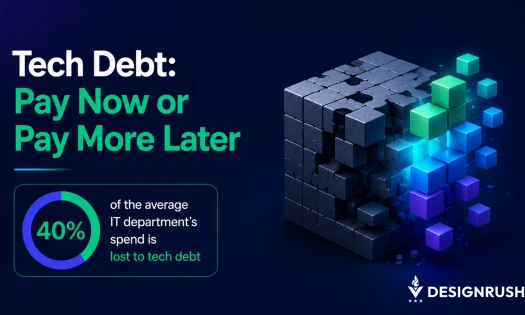
“The quick generation of code is not always designed to last. Duplications and structural gaps may not cause immediate failures, but they tend to surface as products grow, forcing teams to revisit and fix what was rushed early on.”
ByteGrad explains the six security risks associated with vibe coding:
How Leaders Can Balance AI Speed and Code Quality
For companies, the question is no longer whether to use AI in development, but how to use it without compromising long-term stability.
The most effective teams are combining fast generation with careful review.
AI helps accelerate early builds and speeds up iteration, while strong engineering oversight ensures that every component is tested, integrated, and aligned with a broader system.
This is where governance frameworks come into play. Despite the rapid adoption of AI, only 18% of organizations currently have formal policies in place to manage AI-generated code, according to AI Data & Analytics Network.
“This changes the equation for leadership teams,” Ashok says.
“Speed alone is no longer a competitive advantage, with the real differentiator being how well teams can manage, validate, and scale what AI produces.”
Companies that invest in strong architecture and oversight now will be the ones that avoid costly rebuilds later and deliver systems that actually hold up.
Build it properly now, or rebuild it under pressure later.
Want to know more about AI and software development?
Take a look at our list of the Top Software Development Companies of 2026.