
The FIFA World Cup 2026 kicks off on June 11 across 16 host cities in the U.S., Canada, and Mexico, and the advertising wave is already well underway.
According to WARC Media, brands are expected to pour an additional $10.5 billion in global ad spend into Q2 2026 on the back of it.
The first campaigns are in, and the gap between what's working and what's not is already wide enough to draw some conclusions.
Over half of the 20 official sponsors have yet to release anything, including McDonald's and Kia America.
This means that the brands already in the market had a head start in shaping how the tournament feels to audiences.
The campaigns earning the most attention share one thing: a clear answer to what role the brand plays in the fan's experience of the tournament.
The Campaigns Landing Hardest
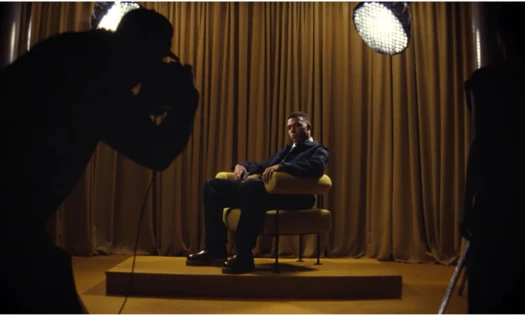
Adidas' "Backyard Legends," created by LOLA USA and directed by Mark Molloy through SMUGGLER, has set the highest bar in the cycle.
The five-minute cinematic film stars Timothée Chalamet as a street football recruiter trying to assemble a team capable of taking down an undefeated neighborhood crew.
The cast also includes Lionel Messi, Bad Bunny, Jude Bellingham, Lamine Yamal, and Trinity Rodman.
AI de-aged versions of David Beckham, Zinedine Zidane, and Alessandro Del Piero round out the lineup.
Unlike most AI use in advertising this year, the de-aging work on the legacy players hasn't angered viewers because it supports the brand story.
So far, Adidas has already sold about $292 million in 2026 World Cup products.
And its CEO Bjørn Gulden has described the U.S. as the brand's biggest long-term opportunity.
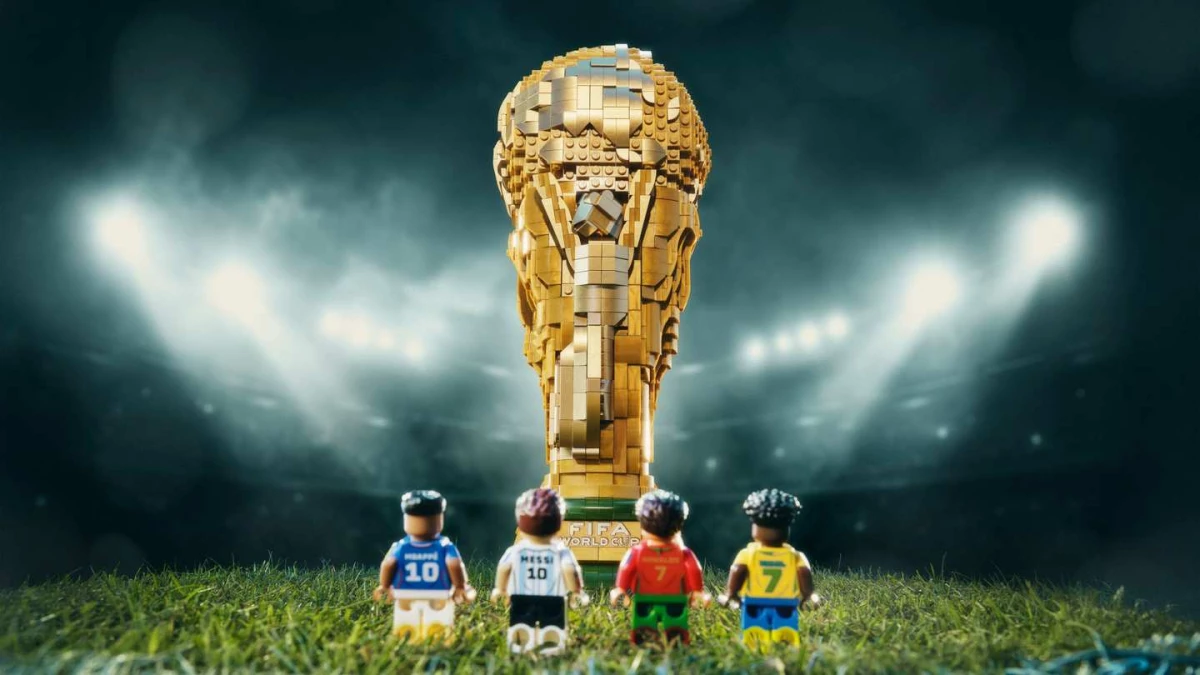
LEGO's "Everyone Wants a Piece," on the other hand, generated 314 million views across the players' Instagram accounts within 24 hours of release.
Fans called the campaign a moment "generations will talk about."
Created by LEGO's in-house team and Wieden+Kennedy Amsterdam, it put Messi, Ronaldo, Mbappé, and Vinícius Jr. around a table, building a version of the FIFA World Cup trophy.
The next generation of players sits alongside two of the sport's biggest names, framing the four as a generational handover.
The spot ends with a child finishing the build, reconnecting the ad to what LEGO's brand actually stands for.
Meanwhile, Lay's is running two simultaneous standout campaigns, both of which cover the full spectrum of who will be watching the World Cup in America.
The brand's "No Lay's, No Game" platform, now in its fourth year and running across 90 markets, is headlined by a film titled "Epic Watch Party."
It features Messi, Beckham, Alexia Putellas, Thierry Henry, and Steve Carell as they surprise shoppers in a supermarket.
The global campaign extends into a WhatsApp channel where all five stars will share live reactions, voice notes, and behind-the-scenes content throughout the tournament.
Next up is "Bandwagon." It addresses U.S. audiences specifically, speaking to those who haven't really watched football (or soccer) before.
The spot stars Will Ferrell driving a yellow-branded Bandwagon across the country with Beckham and Marshawn Lynch.
The whole point is to invite casual fans to skip the gatekeeping and just show up.
According to a study from Full Circle Research, 75% of Americans plan to follow the 2026 tournament, many of whom are not traditional football fans.
Lay's has addressed this tension and built an entire campaign around dissolving it.
Fox Sports' "Miracle," created with Special US, opens in the 97th minute of an imagined World Cup final.
It features Christian Pulisic scoring the tournament-clinching goal for the U.S. on home soil.
DAIVID's World Cup ad study ranked it the top-performing campaign ahead of the tournament, with intense positive emotions recorded in over half of viewers.
Tom Brady, Zlatan Ibrahimović, and Mike Eruzione each bring a different sports audience into the film.
The fictional premise of a U.S. victory gives domestic viewers something to argue about before the first match kicks off.
Finally, no other campaign in the field arrives with 40 years of World Cup presence already banked.
Budweiser's "The Big Drop," developed with Africa Creative, follows oversized Budweiser bottles traveling across landscapes before arriving at stadiums that hosted past tournaments.
Set to "You'll Never Walk Alone," the film sits at the center of the wider "Budstalgia" platform, which marks the brand's 40th year as official FIFA beer sponsor.
A secondary activation at Maracanã Stadium brought the film's visuals into real life, with the launch of three 36-meter bottle-shaped hot air balloons setting a Guinness World Record.
Karine Khamoyan, creative producer at multidisciplinary agency Shakuro, told DesignRush that what this cycle reveals is how seriously the top brands are treating creative coherence:
"When a film's visual language carries through to a physical activation, or a four-year sponsorship opens with a culturally specific hero spot, that's a strategic decision made early in the process.
Locking the creative platform upstream means every execution, regardless of channel or format, is pulling in the same direction and building cumulative weight with the audience."
Fan Access, Culture, and the Long Game
Powerade's "Power Your Fate" is the campaign most likely to pay dividends after this tournament finishes.
Created by WPP Open X and led by AKQA, the hero film stars brand ambassadors Lamine Yamal and Rodrygo Goes.
It visualizes their training through cultural art forms from their home countries, including murals, mosaics, and sculptures drawn from Spanish and Brazilian traditions.
This is also the opening activation of a four-year sponsorship cycle.
It runs through the FIFA Women's World Cup 2027 and the LA 2028 Olympics, giving the creative a longer runway than most World Cup work.
Nike, on the other hand, opened its World Cup campaign differently this year.
It skipped the cinematic hero film that has typically launched its past tournament marketing in favor of a 12-week content rollout.
On May 21, the brand launched the campaign's first phase with 42 autographed Polaroids posted across its social channels.
It features a cast spanning Ronaldo, Erling Haaland, Mbappé, and Ronaldinho alongside Kim Kardashian, Serena Williams, Travis Scott, LISA of BLACKPINK, and Central Cee.
The rollout will unfold through product drops, collaborations, and creator content, keeping Nike visible across different audience communities for the full 39 days.
Where Brands Are Getting It Wrong
The World Cup punishes brands that put themselves at the center of the story. Audiences are tuning in for the fans and the football.
Coca-Cola's "Uncanned Emotions" has drawn the most criticism of any campaign so far, and it's easy to see why.
The ad's visual centerpiece is a series of AI-generated shots of Coca-Cola cans being tapped, opened, thrown, and spilled.
Reactions have been mostly negative, with critics accusing the brand of using production shortcuts and taking the focus away from an otherwise strong concept.
This is the third consecutive year Coca-Cola has drawn backlash, with its holiday campaigns in 2024 and 2025 being widely described as unsettling and "soulless."
Pepsi's "Football Nation," meanwhile, has drawn smaller-scale criticism for its own AI visuals.
This suggests that people's tolerance for generative AI in World Cup advertising is running thin across the category.
The contrast within Coca-Cola's own World Cup output this year is also worth mentioning.
The brand's "Bubbling Up" campaign, the first of three films in its "All the Feels" platform, launched in January and landed far better.
The spot depicts a fan's pre-tournament excitement taking over a crowded elevator, with a preview of a reworked version of Van Halen's "Jump."
Coca-Cola clearly knows how to center the fan, which makes "Uncanned Emotions" the more puzzling creative decision of the two.
The campaigns generating the most attention share a few things that agencies and brands should take into consideration:
- Give fans a role in the story: Lay's, LEGO, and Fox all built their creatives around the fans' experience, and each earned more attention for it.
- Build activations that outlast the broadcast window: Nike's multi-week rollout is built to sustain presence across a 39-day tournament.
- Use AI when it serves the story. Adidas de-aged three legends to complete a nostalgic cast; Coca-Cola used it to fill a production gap and paid for it in backlash.
With over half of official sponsors still to launch, the advertising picture could change considerably over the next few weeks.
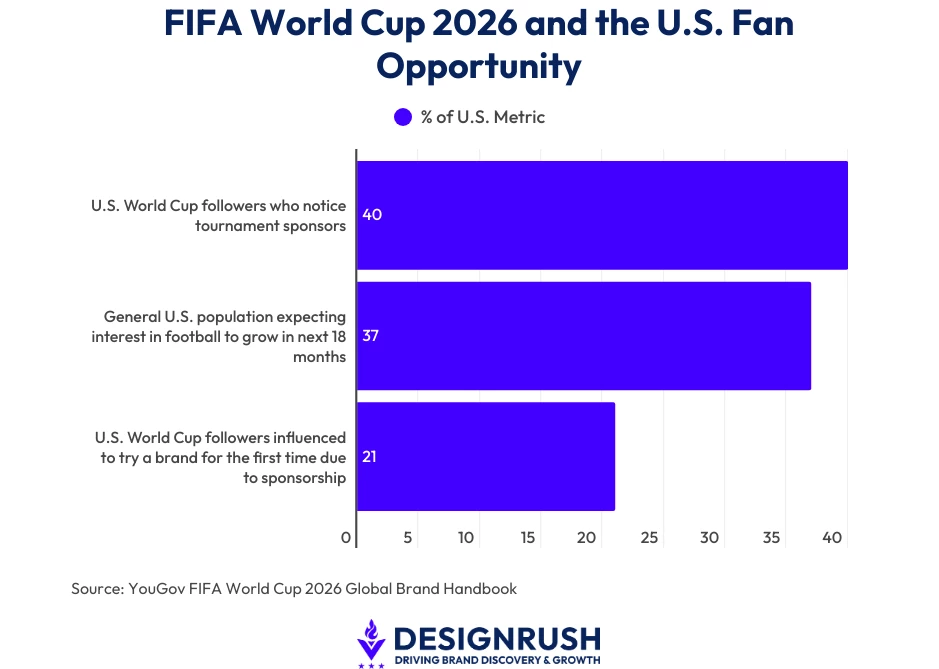
That said, YouGov data finds that 40% of U.S. World Cup followers actively notice tournament sponsors.
Another 21% say sponsorship has influenced them to try a brand for the first time.
This means that the campaigns still to come will have this audience waiting.
Our Take: What Does It Take to Win a World Cup Campaign?
We think the campaigns generating the most attention all started with a specific idea about what this tournament means to the people watching it.
Adidas put the game back in the streets before a stadium was involved.
LEGO ended with a child finishing the build, while Lay's made the watch party the whole point.
Each decision came from understanding the fan first.
Getting fans to care before the tournament starts is the hard part, and the brands that have managed it are already a step ahead.
Brands planning global sports campaigns need creative partners who understand how to connect a brand's role to a fan's experience before the event begins.
Explore the top sports marketing agencies in our directory.