
March 2026 Google Core Update: Key Findings
- Google’s March 2026 core update is causing rankings to fluctuate for up to two weeks, highlighting that early drops are often temporary and teams should monitor performance before making broad changes.
- Pages with clear, in-depth content and strong authority outperform thin or repetitive content, showing that quality and credibility still drive visibility under this update.
- Structured audits of technical health, content alignment, and authority signals are essential, as targeted improvements during the rollout yield better long-term search performance than reactive edits.
Google has started rolling out its March 2026 core update, and U.S. search rankings are expected to bounce around over the next two weeks, according to the company’s Search Status Dashboard.
Some websites will climb, others will fall, and positions will keep changing as the update works through the system.
This matters because it’s the first major core update of the year and applies broad evaluation signals that Google has used for years.
Which means that websites built on shallow tactics or shortcuts are likely to drop.
And pages that deliver clarity, depth, and authoritative information are more likely to hold or improve their visibility.
So for businesses, this creates an immediate need to monitor search performance.
Editor's note: This is a sponsored article created in partnership with HigherVisibility.
Early Drops Reveal Where To Focus
A drop in traffic doesn’t always mean a page is lost. Sometimes it just points to areas that need a closer look, like content or technical issues.
Skipping these early signs can keep rankings lower for longer.
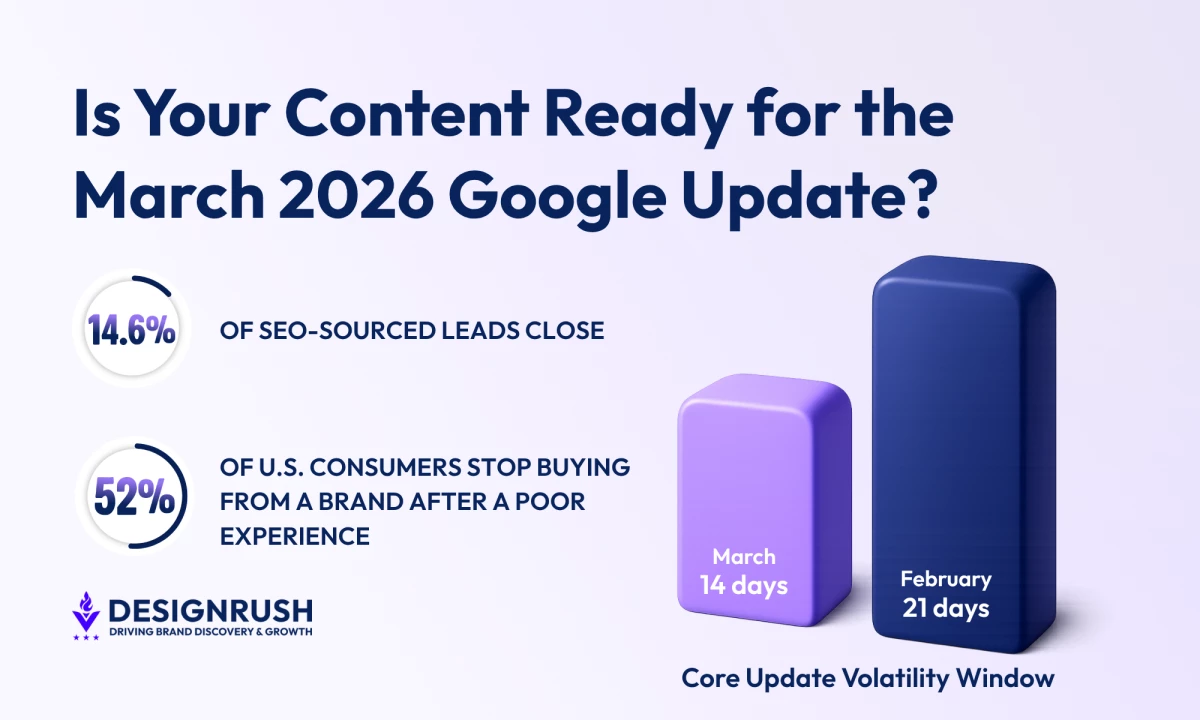
Recent core updates, such as the February 2026 update, took up to three weeks to complete, reinforcing that volatility is expected and that short-term changes aren’t final.
“Each core update introduces a period where rankings move as Google reassesses content at scale,” said Adam Heitzman, Managing Partner at HigherVisibility.
This U.S.-based SEO agency had advised hundreds of companies, from small businesses to Fortune 1000’s, on search performance and algorithm changes.
“That movement is expected. The focus should be on understanding what signals are being reweighted and how existing content aligns with them.”
But mistaking early drops for permanent losses is common.
Teams often respond by rewriting pages, adjusting keywords, or reshuffling internal links. That instinct is understandable, but it rarely helps, because core updates take time to settle and aren’t meant for quick fixes.
Chasing short-term recovery usually misses the mark.
That doesn’t mean doing nothing. It means focusing on the right actions in the right order.
“When traffic drops, teams often make sweeping changes across pages without confirming the cause,” Heitzman said.
“That can create more instability because it adds variables while the update is still rolling out. The better approach is to review performance data, identify affected areas, and make targeted updates once patterns emerge.”
The current rollout window creates a brief period where visibility signals are noisy, and rankings alone aren’t reliable indicators of long-term performance.
Plus, acting on incomplete data adds risk. Changes made during the rollout can worsen problems rather than fix them.
This is where discipline matters. The update sets the stage, and how teams respond determines the outcome.
Content Quality Still Drives Performance
Google’s priorities haven’t changed either. Its ranking systems reward helpful, reliable information, and content built to manipulate rankings doesn’t meet that standard.
In practice, that exposes weaknesses that often go unnoticed until an update lands.
“Core updates tend to highlight content that lacks depth, clarity, or purpose,” Heitzman said.
“Pages built around narrow keyword targets without fully addressing user intent are more likely to lose visibility when quality signals are applied more strictly.”
- For example, thin pages focused on narrow keyword targets struggle under broader evaluation.
- Content that repeats what’s already out there without adding depth or clarity loses ground.
- Pages that answer the wrong question, or answer it poorly, fall behind.
Core updates tend to surface these issues all at once.
That’s why content audits matter more than reactive edits. Focus on whether the content delivers real value rather than minor surface changes.
Check intent first.
Confirm that the page matches what users are actually looking for. Misalignment here is a common reason pages lose visibility during an update.
Misalignment here is one of the most common causes of ranking loss during an update.
Next is depth.
Content that fully covers a topic, with clear structure and useful detail, holds up under scrutiny.
Surface-level coverage does not.
Authority matters too.
Google considers a site’s experience, the expertise behind its content, and how trustworthy it is. That’s why having clear authorship, credible sources, and accurate information helps pages perform better.
And this isn’t new; what changes during a core update is the weight applied to these signals.
“Strong performance comes from content that is structured, complete, and backed by credible signals,” Heitzman said.
“That means clear authorship, accurate sourcing, and coverage that addresses the full topic. During a core update, these factors carry more weight because they help Google determine which pages are reliable enough to rank consistently.”
Conversely, waiting for rankings to stabilize before acting misses the point. The update is already evaluating these factors.
Instead, the focus should be on strengthening them now.
Audit Before Acting
HigherVisibility offers a clear approach for these situations.
Seeing fewer visitors after an update isn’t unusual. Instead, check what’s causing it before making changes.
Not every decline comes from the update itself. Technical errors, crawl problems, and site changes can produce similar results.
Treating all losses as algorithm-driven can mislead teams.
This is where structured audits matter.
According to the agency, a proper audit reviews content quality, technical health, and website performance in one go.
It helps identify whether the issue comes from outside the site, something within, or a mix of both.
Fewer visits can have several causes, including updates or technical problems.
Audits should start with technical fundamentals.
Crawlability, indexability, and site performance set the baseline. If search engines can’t access or interpret pages correctly, quality alone won’t mean a thing.
From there, the focus moves to content.
- Pages should match user intent, provide depth, and be clear.
- Outdated or redundant content should be consolidated or removed.
- High-value pages should be expanded where needed.
Authority signals can’t be ignored either.
How content is judged depends on things like author profiles, citations, and external references. Even strong content can struggle if these signals are weak or inconsistent.
Auditing authority is not a quick task.
Auditing authority takes methodical work and careful observation over time, including reviewing author credibility, citations, and external references, so teams should wait until initial ranking fluctuations settle, typically a week, before making targeted changes.
During the rollout, the focus should be on monitoring performance data and identifying affected pages without making broad edits.
What This Update Means for Brands and Agencies
The March 2026 core update continues a pattern that has been building for years.
Broad updates refine how quality is measured. Shortcuts lose traction. Substance carries weight.
Content strategies need to focus on quality, not just quantity, because publishing more pages won’t automatically improve visibility.
A franchise owner came to us with 60 locations. Only 5 were showing up in local search.
— HigherVisibility (@highervis) July 28, 2025
There’s a way to scale SEO without losing control.
This is it → https://t.co/2vkR8nWB99pic.twitter.com/7JFZJLYBAP
Each page should have a purpose. SEO‑sourced leads close at an average rate of 14.6%, compared with just 1.7% for outbound leads, HubSpot found, proving that pages visible in search convert far better.
And even high-quality content falls short if pages load slowly or fail to display correctly. PwC found that 52% of U.S. consumers stop buying from a brand after a poor experience, showing how site problems directly hit revenue.
The best approach is steady, targeted updates that improve the site over time instead of reacting to every algorithm change.
Core updates show how content and site health are performing and help teams make careful, data-based improvements.
Rankings will keep changing over the next two weeks. Some sites will recover, others will need bigger updates.
Stick to content that serves users, avoid quick fixes, and handle issues with structured audits.
This approach doesn’t guarantee instant recovery, but it aligns with how rankings are evaluated today.
That is the standard that matters.