
Scalable Web Design: Key Findings
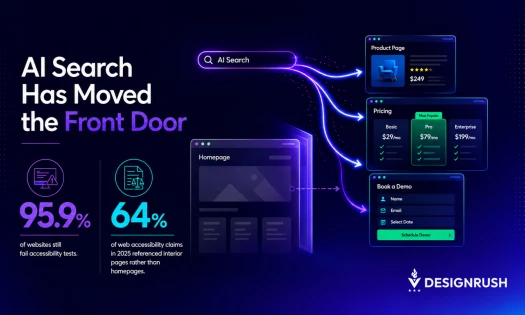
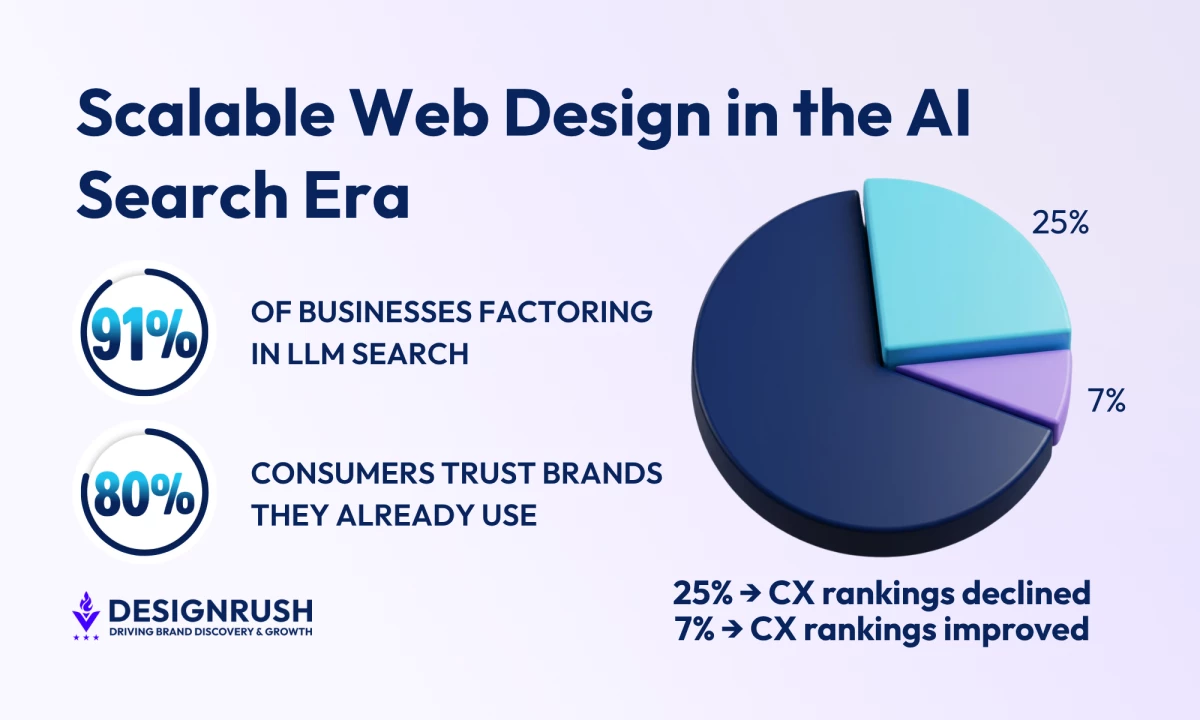
- Adobe found that 91% of organizations factor in the impact of LLM search, highlighting the importance of designing scalable, AI-ready websites
- Websites built mainly for visual presentation struggle because AI search and user expectations reward fast load times, clear navigation, and structured content over style.
- Lounge Lizard’s work with Maggie McFly’s and RubberForm proves that scalable web design directly impacts reservations, sales calls, checkout completion, and user trust.
Adobe and Canva are pushing AI deeper into creative workflows as design moves from manual production to faster, prompt-driven execution.
MarTech reported on April 16 that Adobe’s Firefly AI Assistant is advancing from generation to execution.
At the same time, Canva’s AI 2.0 leans into prompt-based editing across its platform.
That push for speed on the production side has a clear counterpart in how websites need to perform once they go live.
Lounge Lizard, which has been building websites and digital experiences since 1998, has worked through that reality across multiple cycles of web change.
Over time, the focus has remained on websites that load quickly, are easy to use, and can handle more content and user demand without slowing down or breaking.
“AI is making design faster, but speed only gets you so far when the site still helps people get where they need to go,” said Ken Braun, co-founder of Lounge Lizard.
“Brands should treat the website as a working system, with clear structure, reusable components, and a path that makes it easy to act, not just admire the page.”
That thinking becomes more relevant once AI and user expectations start influencing how websites are judged in practice.
Why the Old Web Playbook Is Wearing Out
Adobe’s 2025 research shows that 91% of organizations are already factoring in the impact of LLM search on their visibility.
As such, brands are adjusting content so AI systems can read, surface, and rank it.
These adjustments also change what a website is supposed to do.
Clean structure, predictable navigation, and content that’s easy to parse matter more because discovery isn’t just human-led anymore. Now, it’s also machine-mediated
And machines aren’t impressed by pretty layouts that hide the point.
“AI search rewards structure over styling. If the content can’t be read cleanly by systems and users, it won’t perform,” Braun said.
“The focus should be on building websites with clear hierarchy, reusable components, and navigation that removes guesswork so both people and machines can get to what matters quickly.”
On the user side, the expectations don’t lag behind.
Eighty percent of people trust the brands they already use, according to Edelman’s 2025 Brand Trust report.
But that trust comes with conditions. People want clarity, stability, and something that helps them complete tasks without second-guessing the interface.
If a website feels slow or messy, that trust drops fast because user attention and patience are limited in everyday digital use.
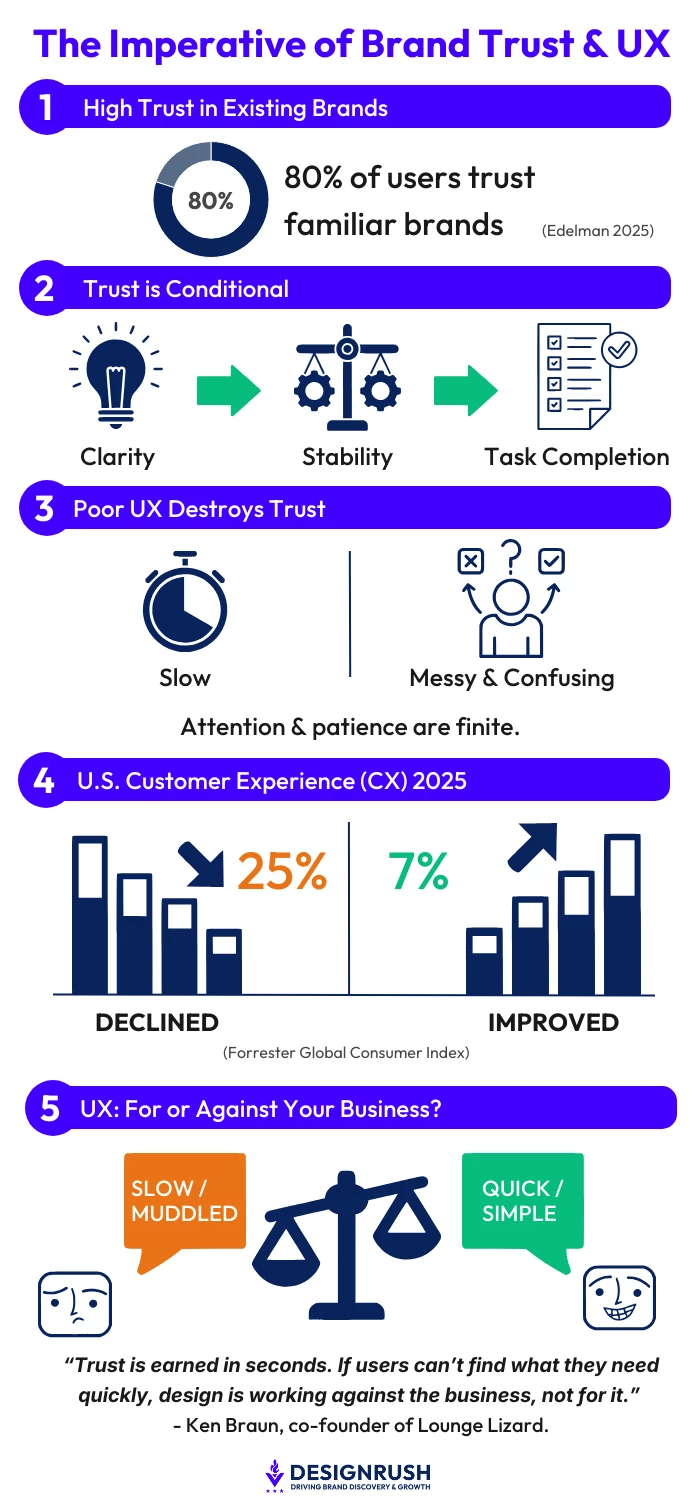
About 25% of brands in the U.S. saw declines in their customer experience rankings while only 7% improved in 2025, according to Forrester’s Global Customer Experience Index.
“Trust is earned in seconds. If users can’t find what they need quickly, design is working against the business, not for it,” Braun added.
What follows is how design decisions hold up under actual use.
For example, craft eatery and bar Maggie McFly’s needed a new website that matched the scale of a growing restaurant group because the existing setup wasn’t built for it.
Navigation felt stretched, key actions were buried, and the experience didn’t reflect how the brand had grown across multiple locations.
Users had to push through unnecessary steps to get to menus, reservations, and takeout ordering.
Lounge Lizard removed the weight for the experience by:
- Rebuilding the website around speed
- Establishing clearer navigation
- Creating a stronger content structure supported by high-impact video
After launch, the site saw higher engagement and an increase in reservations and takeout orders.
The updated system also helped present a more consistent brand experience across locations.
U.S. manufacturer and seller of premium recycled rubber safety and traffic products, RubberForm faced a similar problem before approaching Lounge Lizard
So the agency followed a similar logic, with motion elements, video backgrounds, simplified navigation, stronger calls to action, and a checkout flow built to complete purchases after consultation.
The focus remained on usability, speed, and conversion rather than visual presentation.
And the results were more inbound sales calls generated directly from the website, higher checkout completion rates, and greater user satisfaction and engagement.
What Brands and Agencies Should Take from This
Adobe’s research shows pressure is building on content operations, AI discovery, and performance.
Lounge Lizard’s work proves the importance of modular templates, reusable components, and design systems that let pages scale without losing consistency.
That reflects how most “good-looking” sites behave once traffic, content, and functionality increase.
This comes from a team that has been building digital experiences for nearly three decades and has worked through major changes in web standards, device behavior, and platform requirements.
“Design decisions need to be tied to outcomes like speed, clarity, and conversion. If those aren’t improving, the design is just decoration,” Braun noted.
For brands, the job is to keep the site easy to expand, easy to update, and easy to use without piling on clutter.
The question is simpler for agencies. Does the design improve discovery, lead flow, and conversion, or does it stop at appearance?
Performance comes down to whether a site can stay easy to read, quick to load, and simple to navigate without breaking under added content or traffic.
If it can’t do that, design is only surface-level presentation.