
The $213B Enterprise Software Shift: Key Findings
- Custom software is replacing standardized platforms at scale, as enterprises prioritize systems tailored to their unique operations over one-size-fits-all solutions.
- Cloud and AI are now foundational capabilities, making technical fluency in both critical to future-proofing digital infrastructure.
- Customization alone doesn’t guarantee resilience, as companies risk building bespoke systems that are operationally unique but architecturally fragile without scalable, adaptable foundations.
The most interesting software stories aren’t the ones about shiny new apps; they’re the ones about the systems no one sees, but everyone depends on.
They live in freight terminals routing cargo at 2am, payment engines quietly reconciling millions of transactions, and legacy enterprise systems being asked to modernize without dropping the ball.
Goran Skorput, CTO AI, Big Data, Analytics at Kanda Software, a full-service software development and AI consulting firm, says companies have spent years trying to use cookie-cutter platforms to solve unique problems.
“That model worked...until it didn’t," Skorput says.
“Now, enterprises are building systems that reflect how they actually operate, not how a platform expects them to."
Changing tack to create custom systems is quickly taking hold.
The custom software development market is projected to reach more than $213 billion by 2035, according to Research and Markets.
Enterprises opting to create their own custom solutions are fueling this growth, but so are the people who build them.
Developers fluent in scalable cloud architecture and applied AI are now essential. Together, those capabilities have become the price of entry for meaningful digital transformation.
Editor's Note: This is a sponsored article created in partnership with Kanda Software.
Why Custom Software Is Becoming Core Infrastructure
Bespoke development is having a moment because the alternative is starting to feel like a liability.
Companies are tired of stitching mismatched platforms together, forcing teams to adapt to rigid workflows, and watching innovation stall under the weight of outdated systems.
Across industries, the motivations are strikingly similar:
- Data sits in disconnected silos that refuse to talk
- Legacy systems struggle under global scale
- Customers expect smarter, more intuitive digital experiences
- Manual work is devouring time
Custom software solves these issues not by improving standardization, but by eliminating it where it doesn’t belong.
“Today’s enterprises are investing in systems that behave like infrastructure: scalable, resilient, integrated, and increasingly intelligent,” Skorput says.
A Market Curve With Meaning
Market forecasts can feel abstract until you map them to reality.
“However, this one feels different because it’s tied to a genuine re-platforming of how companies operate,” Skorput says.
The curve is steep because the pain points are real, the budgets are massive, and the skills required to execute are suddenly scarce and incredibly valuable.
Research by GMI Insights highlights key numbers that showcase this market’s rapid growth and evolving priorities:
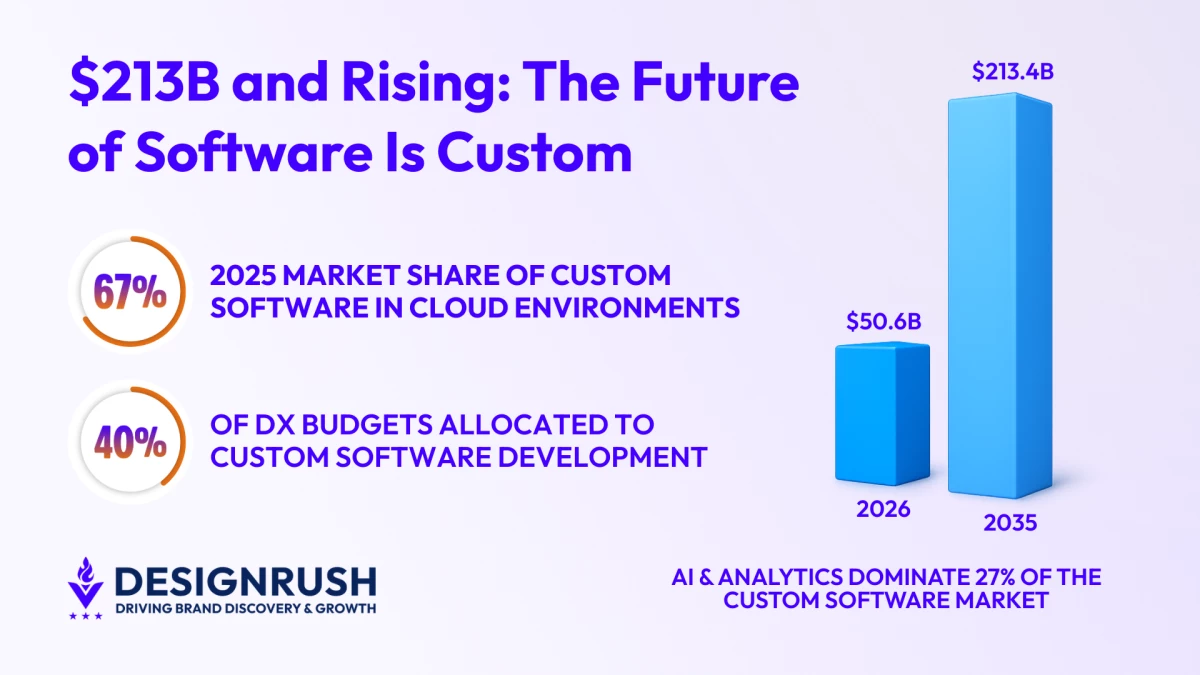
- Projected growth from $50.6 billion in 2026 to $213.4 billion by 2035, showing long-term enterprise reliance on bespoke builds.
- 67% market share of custom software deployed in cloud environments in 2025, proving cloud-native architecture is now the default foundation.
- The projected value of cloud-based custom software within the total market will reach $165.2 billion by 2035, underscoring where spend and expertise are concentrating.
- Global digital transformation spending reached over $2.3 trillion in 2024, reflecting modernization budgets at extraordinary scale, inclusive of software and system modernization.
- Up to 40% of DX budgets are allocated to custom software development, showing bespoke platforms are core infrastructure, not experimental projects.
- Custom software spend tied to intelligent/analytical technologies (including AI and advanced analytics) enjoyed a 27% market share in 2025, showing rapid adoption of intelligence layers.
- AI/analytics within custom software builds are projected to grow at a rate of 21.5% CAGR through 2035, making it the fastest-growing subsegment and a proxy for rising skill demand.
These numbers reveal more than size; they reveal a skills landscape.
“If the cloud is the foundation, then AI is the accelerant. And the organizations that can build with both fluently will dominate a decade defined by bespoke digital infrastructure,” Skorput says.
Everyone else risks building systems that work today, but strain tomorrow.
Cloud & AI: The Twin Capabilities Shaping the Next Decade
Custom software is evolving in two parallel directions.
Cloud computing is enabling systems that deploy globally, scale elastically, and operate without the drag of expensive physical infrastructure. That’s why 67% of the market already lives in the cloud.
Artificial intelligence and analytics are transforming these platforms further, embedding automation, predictive insight, decision engines, and adaptive user experiences directly into core workflows.
In 2025, 27% of custom software spend is already tied to intelligent or analytical feature layers; and it’s growing faster than anything else through 2035.
Put simply:
- Cloud ensures the system can scale
- AI ensures the system can think
- Together, they ensure the system won’t need to be rebuilt every few years
“This combination is no longer a competitive advantage,” Skorput says. “It’s becoming table stakes.”
The Opportunity and the Warning
The upside for companies building bespoke systems today is enormous:
- Automation that compounds efficiency
- Data environments that unify instead of fracture
- Systems that scale without engineering debt spiraling
- Software that reduces burnout instead of accelerating it
But there’s also a cautionary tale playing out in parallel.
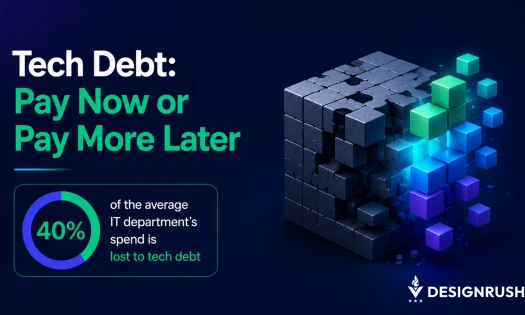
Companies that invest in custom builds without the right architectural fluency risk creating expensive platforms that are operationally bespoke but technically brittle; software that works, but doesn’t adapt, scale, or automate intelligently.
The Future Will Be Custom But Not All Custom Will Be Future-Proof
The custom software market isn’t expanding because businesses suddenly prefer bespoke tools.
It’s expanding because they’ve finally realized something structural: software that runs your business should resemble your business, and not a vendor’s assumptions about it.
But building for tomorrow means more than customization. It means fluency in systems that scale without ceilings and think without constant supervision.
The companies that will win the next decade won’t be the ones that adopt the most software.
They’ll be the ones that invest in software that won’t have to be rebuilt again when the future shifts in ways we can’t yet fully map.
“The real risk isn’t building custom software. It’s assuming custom alone means built to last,” Skorput says.
“That’s why having an experienced development partner matters, with proven architectural discipline, regulatory awareness, and deep domain expertise to ensure what you build can evolve with the business, not limit it.”