
Waymo vs. Tesla Robotaxis: Key Findings
- Waymo now delivers 450,000 weekly paid rides, nearly double its April 2025 volume, signaling growing trust in autonomous service.
- The company is expanding into Miami, Dallas, Houston, San Antonio, and Orlando, and adding freeway service in three cities.
- Tesla’s smaller pilots, with 250,000 autonomous miles in Austin and 1 million in the Bay Area, point to continued testing rather than commercial scale.
Waymo has passed a major milestone, reaching 450,000 paid weekly robotaxi rides and solidifying its lead in autonomous mobility.
Investment firm Tiger Global highlighted the scale in a recent letter to investors, calling Waymo “the clear leader in autonomous driving” and citing 10x safety advantages over human drivers.
The new figure nearly doubles the company’s April 2025 benchmark of 250,000 weekly rides and marks one of the largest verified volumes in the sector.
Its growth continues across Phoenix, San Francisco, Los Angeles, Austin, and Atlanta, with new market launches in Miami, Dallas, Houston, San Antonio, and Orlando.
Waymo is also rolling out freeway operations in three cities, reinforcing that performance and reliability, not brand power, are shaping early consumer trust in robotaxis.
Meanwhile, Tesla’s autonomous efforts remain in supervised-pilot mode, with reported mileage instead of the paid-ride volume needed to signal commercial readiness.
Riders Choose the Brand That Shows Up
Waymo’s network advantage is rooted in consistency.
The company keeps adding dense urban markets while expanding into highway environments that require higher system maturity.
This approach gives riders a dependable routine, which is how lasting brand affinity forms in the mobility industry.
Key strengths of Waymo's strategy include:
- Multi-city availability that encourages recurring use
- Freeway service that broadens trip types and improves travel times
- Stable route performance supported by years of real-world testing
With autonomous mobility still under scrutiny, these qualities shape perceptions of readiness more than any marketing message.
Tesla’s 2025 Troubles
The EV giant's robotaxi rollout this year was hampered by lingering pressure, with vehicle sales having softened in several regions.
Tesla recalled nearly 13,000 U.S. vehicles in October, and regulators continue to examine its self-driving claims.
Shareholder lawsuits and legal challenges have also intensified, creating additional friction.
For riders comparing options, Waymo’s steady expansion stands in clearer contrast to Tesla’s ongoing hurdles.
Waymo has crossed 450,000 weekly paid rides! 🚗
— Jorge (@jorgeedar) December 10, 2025
That’s almost double the milestone it hit in April, when Waymo reported 250,000.
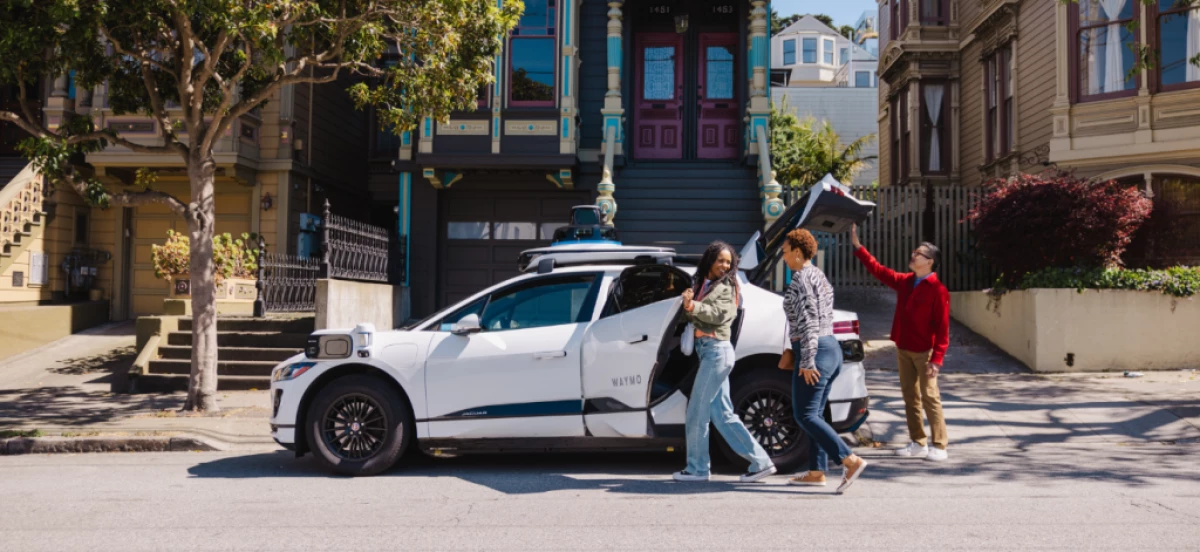
Picture below from Qualtrim. pic.twitter.com/qrfUF1UsHK
Brand executives watching the space can draw several conclusions from the current gap between the two companies:
- Geographic scale accelerates comfort and reduces the novelty barrier for new users.
- Transparent performance indicators build trust more effectively than brand reputation.
- Operational maturity becomes the defining competitive edge, especially across varied environments.
Waymo’s methodical growth shows how consistency compounds over time.
Tesla’s recalls, slower sales, and supervised pilots show how difficult it is to build trust and confidence without operational proof.
Our Take: Is This the First Real Robotaxi Tipping Point?
It definitely feels like one.
Waymo is delivering rides people depend on, while Tesla remains tied to supervised tests and a challenging 2025 news cycle.
Consumers choose what works, and right now, Waymo is the only self-driving service proving reliability at scale.
This is the point where robotaxis begin to feel more like a real transportation option.
Even MINI’s recent Halloween “ghost car” spoof suggests the category is entering mainstream culture.
A strong AI strategy depends on transparency. These top agencies guide teams in building models and systems that show measurable outcomes users can rely on.