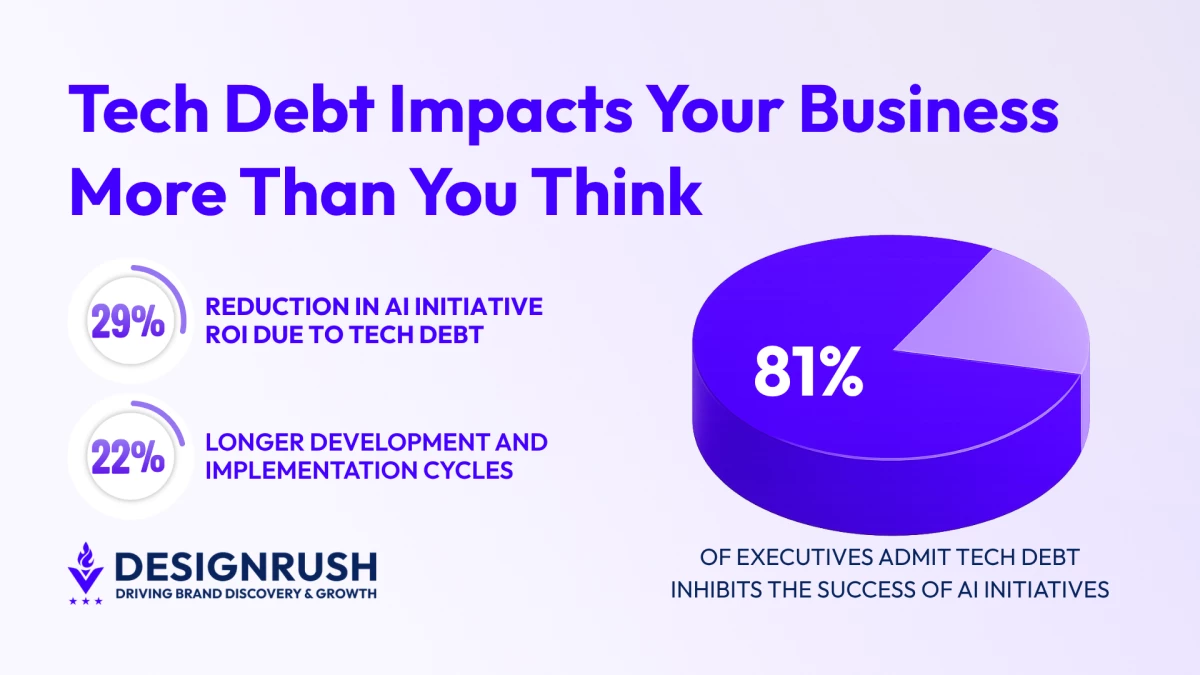

Technical debt can reduce the ROI of AI business cases by 18% to 29%, according to IBM's Tech Debt Reckoning report.
Meanwhile, enterprises that account for the cost of addressing technical debt project 29% higher ROI than those who do not.
The same IBM report found 81% of executives say technical debt is already constraining AI success, and 69% believe it will render some AI initiatives financially untenable.
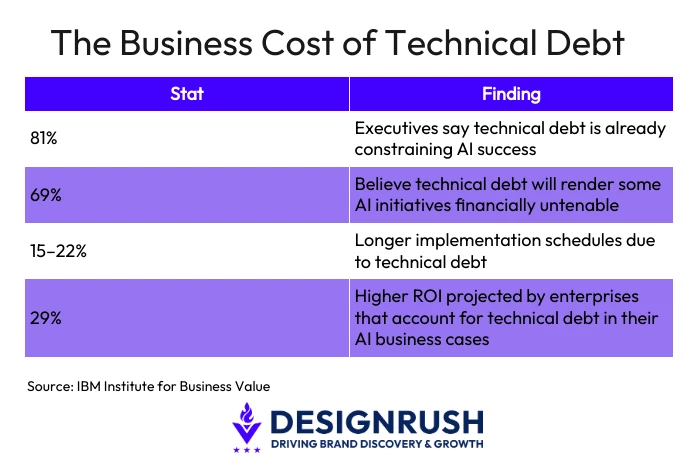

This means a 30-month program becomes a 36-month one.
For a $20 billion enterprise allocating 20% of IT spend to AI, IBM estimates that translates to more than $120 million in hidden implementation costs annually.
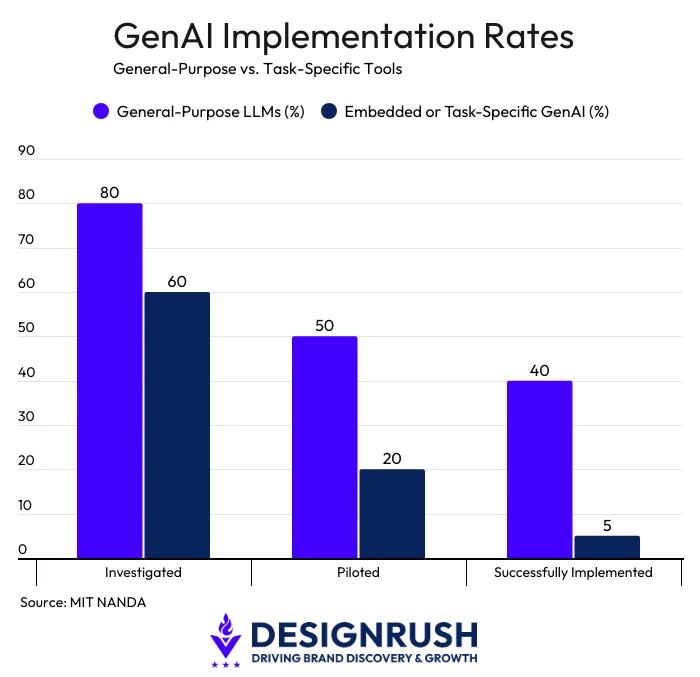
Furthermore, MIT's 2025 State of AI in Business report found 95% of enterprise GenAI pilots fail to delivermeasurable business value, and only 5% of custom enterprise AI tools reach production.
 However, the baseline cost runs deeper than AI programs alone.
Nearly 60% of leaders believe another 21% to 50% of value remains trapped within their current tech, data, and people, per a March 2026 analysis by Deloitte.
This means a typical organization spends just 23% of its tech budget to drive revenue, according to IBM. The rest goes to maintaining and fixing what already exists.
Most Teams Build Debt Into Their MVPs
Technical debt is the accumulated cost of shortcuts taken during development that must eventually be addressed. Most organizations don't recognize it until they're already paying for it.
Unfortunately, this issue arises because teams are getting the Minimum Viable Product (MVP) stage, the earliest and leanest version of a product, wrong.
This is mostly due to the outdated “move fast and break things” mindset that many tech leaders still have.
And while that mindset is great at getting products out before competitors do, that rush driven by wrong priorities applied repeatedly over time allows debt to accumulate faster.
This is the problem that Unico Connect, a digital product development agency that builds and deploys AI systems for enterprise clients, works to reverse before new programs get scoped.
"Speed is the right call at the MVP stage. But most teams never go back to fix what they rushed, and those shortcuts shape the architecture for everything that follows," said Malay Parekh, CEO of Unico Connect.
Tech Debt Follows the Same Pattern Every Time
The root causes of tech debt accumulation in MVPs are varied, but most cases follow a predictable pattern.
Rushed and unverified AI-assisted source codes are tacked on. Edge cases get deferred. QA is skipped for the sake of meeting a deadline.
Although these practices help push AI initiatives out the door, they only make any problem caught later more expensive to fix.
Missing development standards also fragment codebases as teams grow.
When different developers solve the same problem in different ways, every future change requires understanding multiple conflicting approaches first.
And when teams try to go back in to fix any issues, the lack of proper documentation during the development cycle make it nearly impossible to make heads or tails of the code.
Eventually, this leads to patchwork integrations that cause a different part of the product to break.
"The first audit always tells us that speed was the priority, and no one ever went back. By the time we arrive, the debt has become a business constraint," says Parekh.
Fix the Foundation Before AI Exposes It
IBM's research found 80% of executives agree that remediating debt in one initiative improves the ROI of related future initiatives.
But acknowledging tech debt as a problem is only the beginning.
Agents require clean data, structured integrations, and reliable system logic.
That’s why Unico Connect reviews existing architecture before scoping any new AI capability. Current systems define what AI can deliver.
"We look at what exists before we scope what we are building. That is not always what clients expect. But what the current system can support determines what the next one can be," Parekh noted.
 But what should teams address first?
For organizations earlier in this process, the development agency recommends starting with three things before any new AI capability gets scoped.
- Map dependencies before expanding them. Fragmented systems without clear ownership are the primary source of integration failures.
- Treat QA as part of the build. Test coverage built into the development cycle prevents the bug backlog that slows every subsequent sprint.
- Make architecture decisions before writing the first line. Structural decisions made at the MVP stage are the hardest to reverse, and the cheapest to get right.
If this sounds like a lot of work, it is. However, studies have shown that the effort is well worth it.
For example, Deloitte's modeling found that infrastructure modernization alone reduces technical debt by 18% over five years.
Meanwhile, data transformation produces a 52% improvement in latent potential over the same period.
Governance Separates Scalers From Restarters
Every engineering leader knows what technical debt is. The problem is that knowing does not change the sprint deadline.
AI is accelerating that moment. Teams that accumulated debt quietly for years are now deploying agents into fragmented systems.
Agents don't work around inconsistent data models or undocumented integration logic.
They fail, and the failure is operational, immediate, and visible in production rather than buried in a backlog.
Organizations that treat architecture review as a pre-deployment requirement will build on foundations that compound value.
Those that don't will spend the next two years watching pilots succeed, and programs stall while budgets disappear into cleanup work nobody planned for.
Technical debt is not a technology problem. It is a decision made in every sprint where the architecture review loses to the shipping deadline.
The teams paying 2024's shortcuts with 2027's budget already made that decision. The next sprint decides whether they keep doing it.