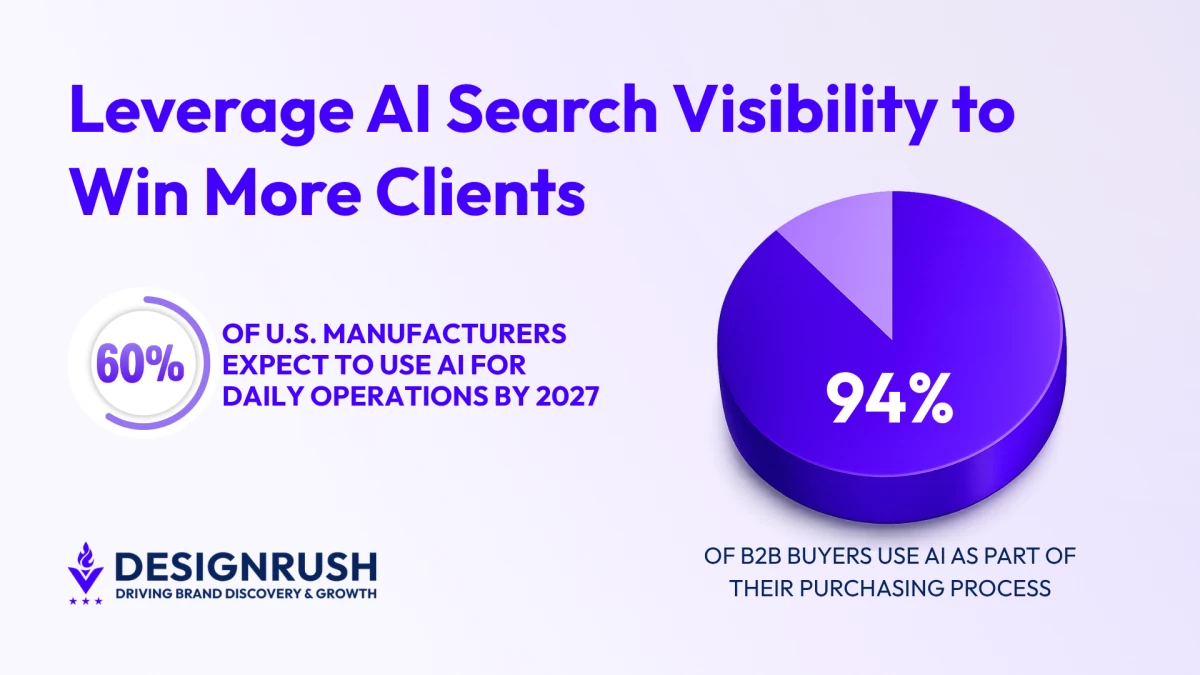

Sixty percent of U.S. manufacturers expect to deploy AI by 2027, according to a Manufacturing Leadership Council survey.
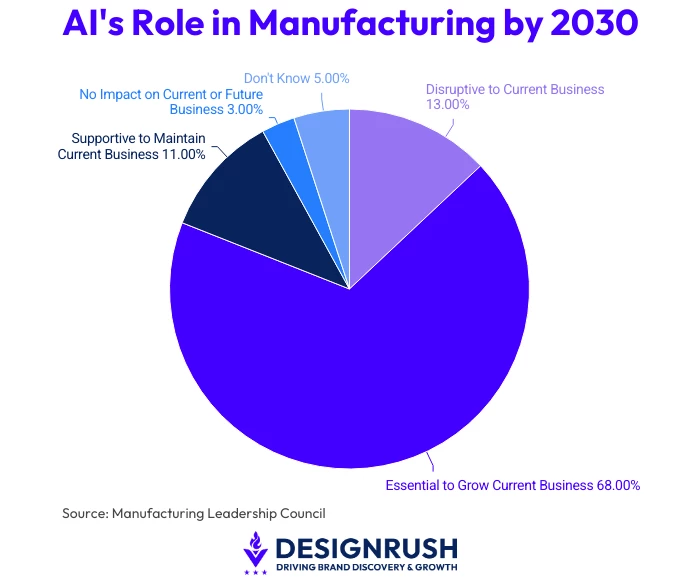
The same survey found that 80% say AI will be essential to growing or maintaining their business by 2030.
 It isn’t surprising to hear that manufacturers are all-in on adding AI to their daily operations.
After all, predictive maintenance, quality assurance, and supply chain optimization are where manufacturing revenue flow.
However, it seems like many manufacturers are overlooking investing in another important aspect, AI search.
This matters since 94% of B2B buyers use AI as part of their purchasing process, more than any other channel, per Forrester.
And manufacturers that don’t appear in those AI search results are removed from consideration before the buying process even begins.
How Industrial Buyers Now Research Suppliers
A procurement manager sourcing an injection molding partner or a fabrication vendor is asking AI platforms to surface options and compare capabilities.
Then, ChatGPT, Google's AI Overviews, Perplexity, and Copilot check credible sources based on those parameters and filter supplier options before a buyer ever visits a website.
As convenient as that is for B2B buyers, it poses a problem for any business that still relies solely on traditional SEO.
In fact, traditional search volume is expected to drop by 25% by 2026 as buyers continue to use AI assistants more often, according to projections by Gartner.
Nathan Wheeler, founder and CEO of weCreate, sees this gap firsthand, working with small and mid-sized manufacturers on digital marketing for manufacturers and lead generation.
"Manufacturers optimizing for Google are fighting the last war. Buyers have already moved the conversation to AI platforms, and most supplier websites were never built to show up there," Wheeler says.
Why Most Manufacturers Are Invisible in AI Search
AI search platforms pull from a different set of signals than traditional Google rankings.
Authority signals, structured data, third-party citations, and machine-readable content determine whether a manufacturer surfaces in an AI-generated answer.
Unfortunately, few industrial websites were built with those signals in mind.
Product pages are thin on technical detail, while service descriptions lack the specificity AI platforms need to match a manufacturer to a buyer's query.
Likewise, many manufacturers haven’t built the kind of off-site authority (e.g. online directories and industry publications) that AI platforms use to establish credibility.
"If an AI platform can’t find the specific questions a buyer is asking on your website or can’t verify your credibility through third-party mentions, your chances of being cited are slim," Wheeler says.
The problem lies in the fact that some manufacturers assume AI search works like Google.
But Google’s search engine rewards websites that optimize for keywords.
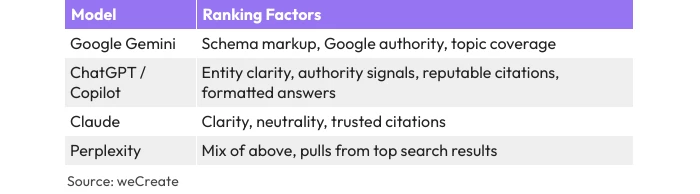
On the other hand, AI platforms reward sources that directly answer a user’s questions.
And according to experts at weCreate, the criteria are different from anything traditional SEO optimized for.
How Manufacturers Can Improve AI Search Visibility
Wheeler outlines four changes manufacturers can make immediately:
- Build content that answers buyer questions directly. Each service page should address materials, tolerances, industries served, certifications, and lead times.
- Expand off-site authority. Prioritize listings in industry directories and trade association databases.
- Build a review profile on third-party platforms. Google Business Profile, industry directories, and review sites all strengthen credibility signals.
- Generate mentions across the web. Reddit threads, niche industry blogs, and trade publications are all sources AI platforms pull from.
weCreate applied this approach for Geometric Design & Technology, a precision quality control company, and achieved amazing results.
Geometric Design & Technology had gone through multiple websites and marketing companies in the last several years, but had barely seen the needle move.
So they built a comprehensive strategy to boost both SEO and AEO. To be more specific, the agency:
- Built out a custom website with adequate service pages and optimized content
- Created a strong backlink profile through related organizations like AVS & RFQUSA
- Supported services with hands-on case studies and other technically detailed content
- Leveraged past work into impactful content that drives traffic and RFQs
Within six months, Geometric Design & Technology saw 152% more clicks and 169% more impressions year over year.
AI Search Visibility Is Still Wide Open for Manufacturers
Manufacturing is one of the last B2B verticals to compete seriously for AI search citations.
A manufacturer that builds technical depth and off-site authority now is entering a race with few competitors, in a category where buyers are actively looking, and suppliers are largely absent.
The same dynamic played out in traditional SEO a decade ago as the manufacturers that built content authority early captured rankings that took competitors years to challenge.
Among the B2B marketing trends reshaping industrial buying, AI search is running the same pattern, compressed into a much shorter window.
A manufacturer cited consistently across directories, trade publications, and industry forums today is building a signal profile that a late mover cannot replicate overnight.
That could determine whether a procurement manager's AI platform returns your name or your competitor's.
And as AI search continues to grow, that extra layer of visibility could be the difference between record sales and a stagnant business.