
YouTube is putting AI disclosures front and center as pressure grows for clearer labeling across online video.
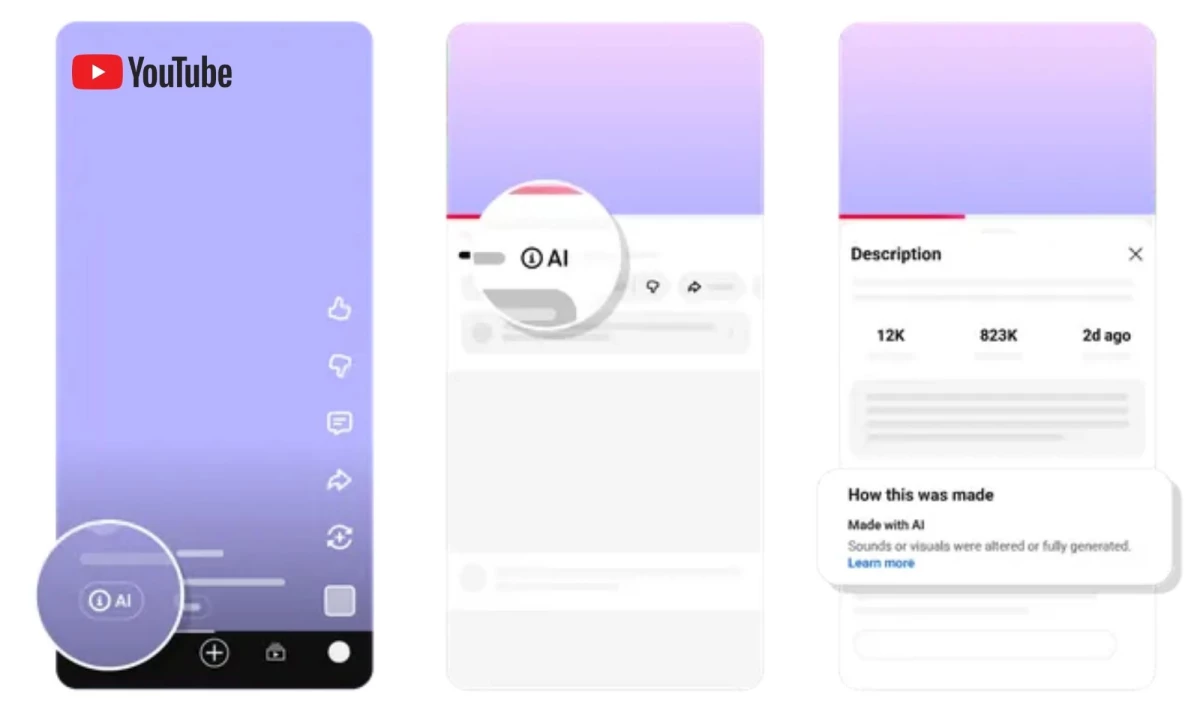
Creators now see simplified AI labels displayed directly below long-form videos and as overlays on Shorts.
Starting in May 2026, YouTube's internal systems scan uploads for "significant photorealistic AI use."
And when creators skip disclosure, YouTube applies the label automatically.
"We've heard consistently from our community that they value transparency when it comes to generative AI content," the YouTube team said in a company blog.
Creators can appeal incorrect classifications through YouTube Studio.
Labels on videos made with YouTube's own AI tools, or those containing C2PA metadata identifying AI content, can't be removed.
Rene Ritchie, YouTube's head of editorial and creator liaison, said the goal is "context at a glance."
"The AI labels alone do not affect how our videos are recommended or whether they can earn money," Ritchie added.
"This is purely about giving viewers the right information at the right time."
The update responds to growing concerns about synthetic media, misinformation, and creator accountability as AI video tools grow more advanced and accessible.
Clearer AI Labels Put Viewer Trust First
YouTube's update prioritizes visibility and creator accountability as AI-generated content grows harder to distinguish from real footage.
Labels that once sat buried under expanded descriptions now appear directly below video players for long-form uploads and overlaid on Shorts.
Comment
by u/Plastic_Ninja_9014 from discussion
in technology
Content considered unrealistic, lightly altered, or animated still carries disclosures inside expanded descriptions.
Automatic detection adds another layer of enforcement.
Videos created with Veo or Dream Screen automatically retain permanent AI labels.
The update also expands YouTube's likeness-detection program.
Any adult 18 and over can now request the removal of unauthorized AI-generated depictions of themselves.
The protection was previously limited to public figures and large creators.
YouTube's approach reflects how tech companies are moving toward embedded disclosure systems as AI content enters mainstream publishing.
And the stakes are real.
According to Animoto's 2026 State of Video Report, 83% of viewers already suspect when a video is AI-generated, and 36% say it lowers their perception of the brand.
Proactive disclosure gives creators a head start on this trust gap.
Labeling AI content before YouTube does it for you tells audiences you have nothing to hide.
AI Transparency Pressure Rises
Platforms face growing pressure to identify synthetic media before audiences mistake it for authentic footage.
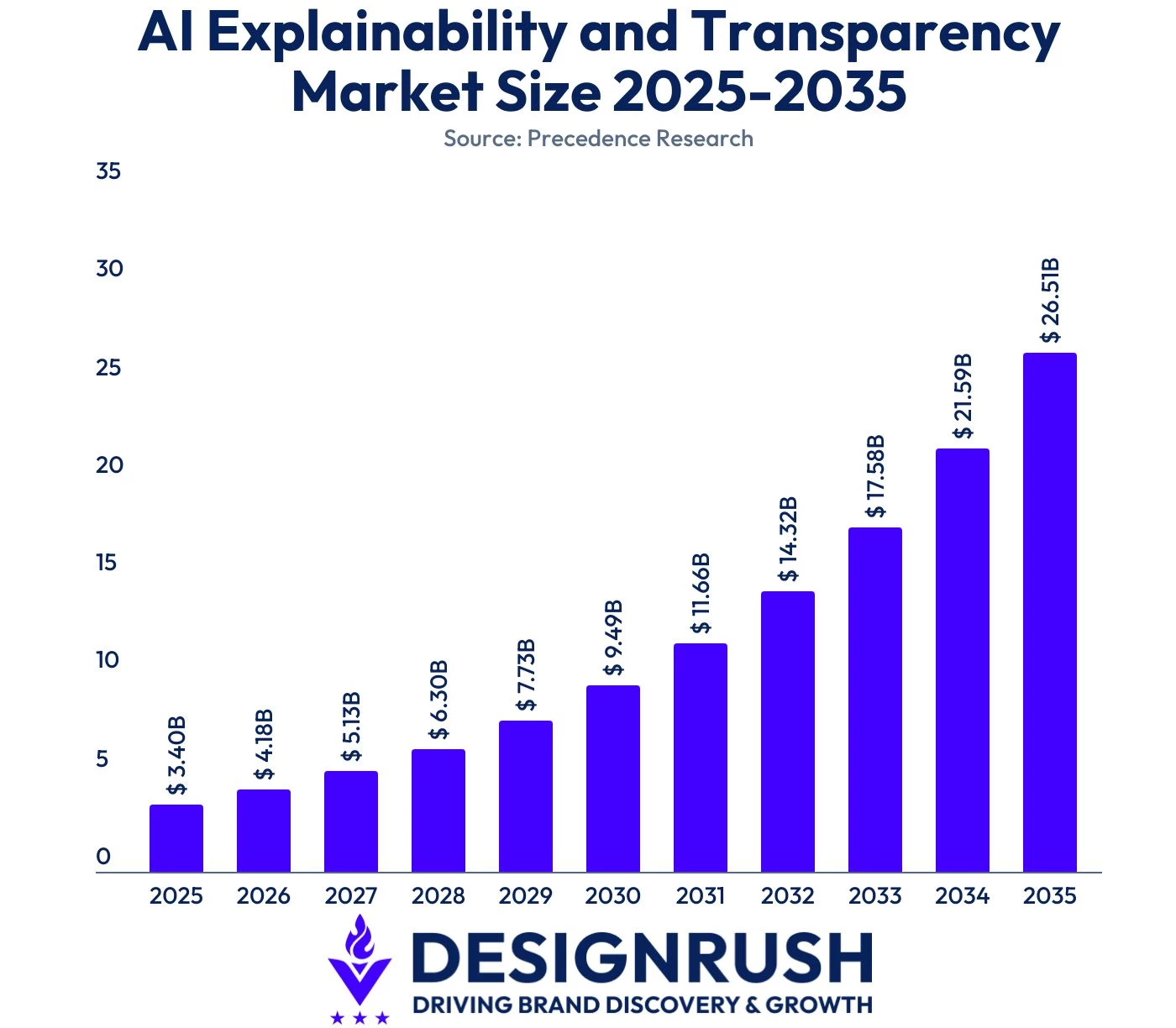
According to Precedence Research, the global AI explainability and transparency market size was $3.4 billion in 2025.
The market is projected to reach about $26.5 billion by 2035, driven by regulatory pressure for ethical AI and demand for accountable, bias-free systems.
Marketers and brands using AI-generated content in video campaigns should note what this update means in practice:
- AI disclosure rules are harder to avoid. Establish internal labeling standards now to reduce compliance friction and protect advertiser relationships.
- Label placement affects trust. Document AI-assisted workflows so your team can respond quickly if content gets flagged or mislabeled.
- Automated enforcement is the new standard. Pair self-reporting with detection awareness to stay consistent as AI volume grows.
Brands that build disclosure into their production workflows from the start earn a structural trust advantage.
Our Take: Will AI Labels Become an Industry Standard?
Yes, and we think the more interesting question is how fast.
Voluntary disclosure was always going to fail since creators have little incentive to flag content that might make audiences trust them less.
YouTube just acknowledged that with the new automatic detection feature.
The deepfake protection expansion is the more underreported part of this update.
Combined with voice cloning detection coming later in 2026, YouTube is building infrastructure to verify who was depicted by AI without consent.
The real short-term risk is false positives. VFX-heavy and stylized videos will get flagged.
The appeal process puts the burden on creators to prove a negative, which is an awkward outcome for a platform that depends on them.
Brands working with AI-generated content may need support from top social media agencies to manage disclosure standards, creator partnerships, and platform compliance.