
Tesla vs. Chinese EV Brands: Key Findings
- A shift in identity: Tesla is leaning on a robotaxi vision to redefine itself as a tech-forward mobility platform, not just a car company.
- China’s EV surge is forcing a pivot: BYD, NIO, and other Chinese rivals are pushing Tesla to differentiate through autonomous tech, not just output.
- Robotaxi rollout is narrative control: Tesla’s Bay Area and Austin launches are as much about symbolism and narrative as it is about scale.
- Rapid expansion comes with risk: New markets raise visibility and expectations, but if product performance lags behind the promise, the brand story risks falling out of sync.
Quick listen: Tesla’s robotaxi rollout is a brand pivot under pressure. Here’s what CMOs should take from it in under 3 minutes.
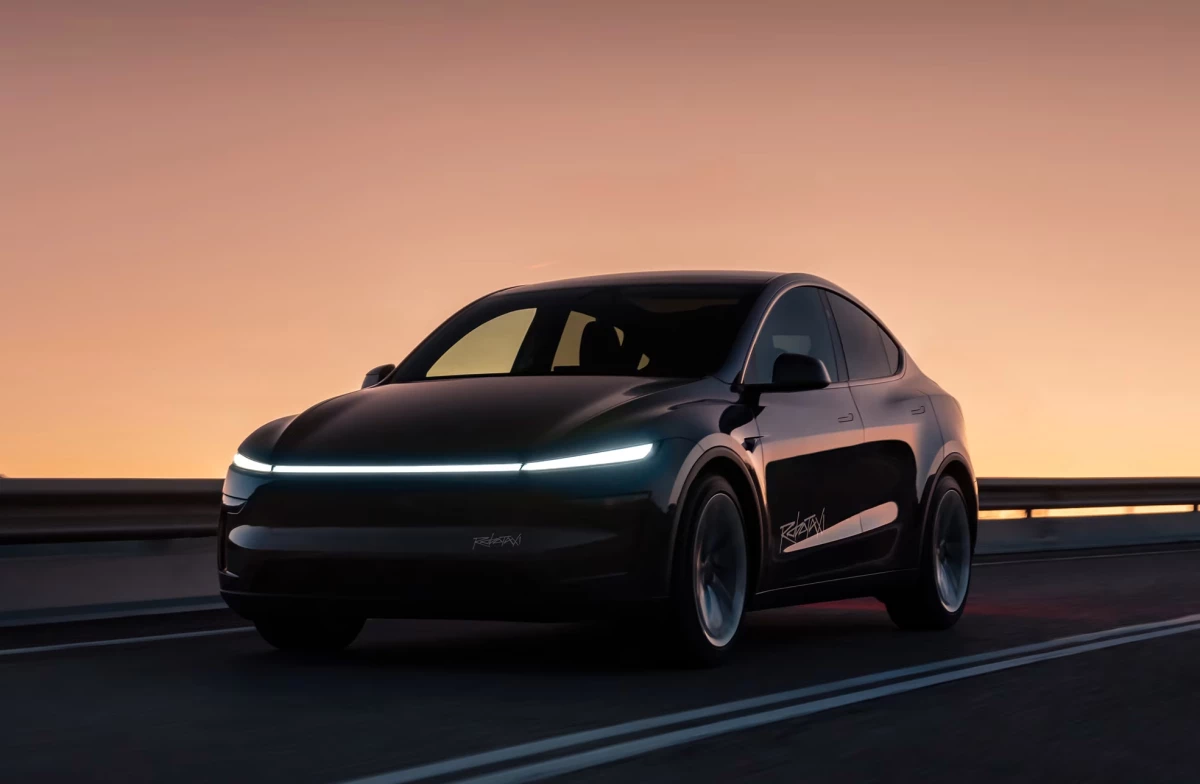
Tesla is going all-in on autonomy. Again.
The company has officially launched its supervised ride-hailing service in the San Francisco Bay Area on Thursday.
Although Elon Musk and Tesla AI confirmed the rollout, neither referred to the service as a robotaxi.
The company is yet to apply for the permits required to test and deploy fully driverless taxis in California, a spokesperson for the state's DMV told Business Insider last week.
Tesla does hold a transportation charter permit from the California Public Utilities Commission.
This allows the EV giant to transport members of the public in a "non-AV" vehicle with a safety driver.
You can now ride-hail a Tesla in the SF Bay Area, in addition to Austin https://t.co/53dG2dDhdW
— Elon Musk (@elonmusk) July 31, 2025
Last month, Musk quietly launched Tesla’s first Robotaxi service in Austin.
It was a limited pilot with about 10 vehicles carrying paying riders and no one in the driver’s seat.
Musk hailed it (pun intended) as the “culmination of a decade of hard work," emphasizing that Tesla’s AI hardware and software were built in-house.
This move continues the brand’s push to position itself as less of a car company and more of a mobility tech platform.
But the timing speaks volumes. It came on the heels of intense pressure.
In Q2 2025, Tesla reported a 12% drop in total revenue and a 16% decline in automotive sales year over year, underscoring the strain on its core business.
Tesla had also been slashing prices and losing ground in China, as Reuters reported.
The brand needed a new frame.
Musk had to reassert his brand's relevance, particularly as Chinese EV giants like BYD and NIO rapidly close the innovation gap.
Elon Musk driving in Tesla Robotaxi. pic.twitter.com/f0pgk9jXbs
— TESLA CARS ONLY.⚡ (@teslacarsonly) June 22, 2025
In fact, Chinese competition was a key factor behind Tesla scrapping plans for a $25,000 "Model 2" in 2024.
Musk has since staked his company's future on self-driving robotaxis, a vision that now makes up the bulk of its ~$1 trillion stock value.
Tesla wants to be more than a car company. We all know this is nothing new.
But the launch's timing feels more like a strategy under pressure and a defensive move.
I think that when a company leans hard into a new narrative right after a rough quarter, it doesn’t radiate confidence.
It looks like a brand trying to seize the storyline before someone else does.
China Is No Longer Playing Catch-Up
In 2024, BYD sold nearly 4.3 million vehicles, which is more than double Tesla’s volume, marking a 29% increase from the previous year.
This earned the Chinese EV giant $107 billion in revenue, surpassing Tesla's $97.7 billion.
BYD has since expanded to Europe, Southeast Asia, and Latin America.
Its lower-cost self-driving models are redefining what an EV can be for mass-market buyers.
No driver. No hesitation.
— BYD (@BYDCompany) July 17, 2025
At 74.5 mph, YANGWANG U9 soared 6 meters—on its own.
This isn’t science fiction. It’s the future, in motion. pic.twitter.com/QYS2wllPm4
NIO is targeting the premium market with battery-swap stations and exclusive customer lounges.
Its subscription-based loyalty program encourages long-term brand engagement.
NIO delivered 72,056 vehicles in Q2 2025, up 25.6% YoY, and recently reached its 800,000 vehicle delivery milestone.
Its battery‑swap network also handled more than 73 million swaps to date, with over 3,390 stations operating in China.
This delivery growth and infrastructure scale suggest the brand’s high‑touch loyalty model is actually fueling customer stickiness and word‑of‑mouth advocacy.
NIO Reaches 800,000 Vehicle Production Milestone
— NIO (@NIOGlobal) July 24, 2025
On July 24, 2025, NIO’s 800,000th mass-produced vehicle rolled off the line at NIO Factory One in Hefei. This milestone reflects the remarkable progress of China’s automotive industry in technology and innovation, and underscores… pic.twitter.com/rJsgmy8e4M
Meanwhile, Tesla remains the dominant EV brand in the U.S. and holds its own in Europe, but it’s clearly watching its flank.
The company’s talk of a cheaper “Model 2” and its new gigafactory in Mexico are signs that it knows what’s coming next.
I’ve been watching Tesla reposition itself to more effectively address the many challenges it's been facing.
And I think the Robotaxi rollout is a brand tactic that says: "We’re not just building cars. We’re building the autonomous infrastructure everyone else will use."
It’s a way of elevating the brand from product maker to platform owner, quietly showing how it's above the competition.
Robotaxis as a Brand Device
Tesla’s Robotaxi pilot in Austin got plenty of press, even without a campaign.
Musk boasts he expects millions of fully autonomous cars by 2026, even setting a jokey flat fare of $4.20 and handpicking social-media influencers as the first riders.
And its fast California rollout is a testament to the company's commitment to this goal.
My first Tesla Robotaxi ride in the Bay Area, CA! 🔥 https://t.co/arZykKfNbZ
— Teslaconomics (@Teslaconomics) July 31, 2025
But early test drives haven’t been flawless.
The Robotaxis in Austin made several driving errors during public trials, including lane confusion and misjudged turns.
It remains to be seen whether the Bay Area will experience the same problems.
By contrast, Google's Waymo, which began self-driving car tests in 2010, already runs a fully driverless taxi service in multiple cities (including Austin).
Self-driving taxi company Waymo is now doing over 700,000 rides per month in California, up from fewer than 100,000 a year ago. The robotaxi future isn’t coming. It’s here. pic.twitter.com/BHVgkfkG2T
— Peter Mallouk (@PeterMallouk) July 16, 2025
To its credit, Tesla has about 4 million cars on the road equipped with self-driving hardware and an unmatched ability to push over-the-air updates.
But its Full Self-Driving (FSD) system is still a beta product, and the path to unsupervised autonomy and regulatory approval remains long and uncertain.
As someone who’s covered brand strategy in tech and mobility, I’ve seen this before: launch a limited pilot, invite influencers, drive the story.
It’s smart marketing, but it’s not proof of scale.
The problem is, when ambition outpaces execution for too long, credibility becomes the cost.
Self-Driving Sounds Great, But What Does It Actually Do?
Musk’s futuristic promises and near-immediate expansion might excite investors and fans, but regular customers are asking practical questions:
- What does this Robotaxi push do for me?
- When will my Tesla truly drive itself safely?
- Will FSD become cheaper or more available because of this strategy?
So far, the answers remain vague. Even the value proposition is getting blurrier.
In China, BYD includes its FSD-like “God’s Eye” system as a standard feature on a $30,000 car.
Adding Tesla’s FSD, on the other hand, pushes a Model 3 above $40,000.
Musk claims these efforts (from opening up code to staging robotaxi trials) will also accelerate AI learning and innovation.
This may be true, but if it doesn’t yield tangible improvements for drivers soon, the narrative will ring hollow.
By @JamesEagle17 “The unthinkable
— China4Tech🌏 (@China4Tech) July 30, 2025
has happened .…. BYD has overtaken
and raced ahead of Tesla” | BYD from
China surpassed Tesla on four areas:
$ Sales volumes, market confidence,
stock performance, global expansion.#China#BYD#Tesla#stockmarketspic.twitter.com/cGV5R6BupM
Tesla risks touting a vision its products can’t yet fully deliver, and competitors will be quick to highlight that gap.
Its advantage has always been clarity. It made fast, desirable EVs and built the best charging network.
Now Tesla is trying to do everything: EVs, energy storage, robotaxis, AI chips, and even humanoid robots.
Without a clear through-line, even great ideas start to feel scattered.
And in a market as competitive as electric mobility, unclear branding is a weakness.
What Brand Leaders Should Watch For
Tesla’s pivot isn’t just about autonomy; it’s about control.
The company wants to own the next category before it’s defined, just as it once did with premium EVs.
For CMOs, it’s a reminder that brand perception is often set before the product even ships.
Here’s what to take away:
- Platform branding requires platform delivery. If you frame yourself as infrastructure, you need ecosystem wins that customers can actually experience.
- Bold tech promises work best when value flows both ways. Developers, drivers, and regulators must feel the benefit, not just hear the story.
- Brand pivots succeed when grounded in product truth. Tesla’s biggest risk isn’t the competition; it’s disconnect.
BREAKING: Tesla is looking for vehicle operators in these cities which looks to be where they want to launch Robotaxi pic.twitter.com/FxN9y8nldJ
— Tesla Owners Silicon Valley (@teslaownersSV) July 31, 2025
I think Tesla’s Robotaxi strategy is a deliberate move to reposition the brand at a moment of real competitive pressure.
As Chinese EV makers gain ground, the Musk-owned brand is trying to assert its leadership by owning the conversation around autonomy.
But to truly lead, it needs more than ambition.
It needs consistency, trust, and progress that people can actually see and experience.
If it can deliver these, Tesla has a real chance to set the terms of the race and not just run in it.
When the market moves fast, perception sets the pace. These teams help you define your brand before the category defines you: