
MINI's Halloween Stunt: Key Findings
- The brand dresses up as a “ghost” Waymo for Halloween, using playful provocation to argue that the real fun starts when drivers take the wheel.
- A social-first rollout in SF, LA, and Atlanta puts the stunt where robotaxis are visible, turning city streets into the stage and conversation into earned media.
- Autonomy keeps rising as MINI refreshes its lineup, showing how the brand’s focus on human joy helps it stay distinctive as driverless tech grows into a $68 billion market.
MINI USA is using Halloween to make a point.
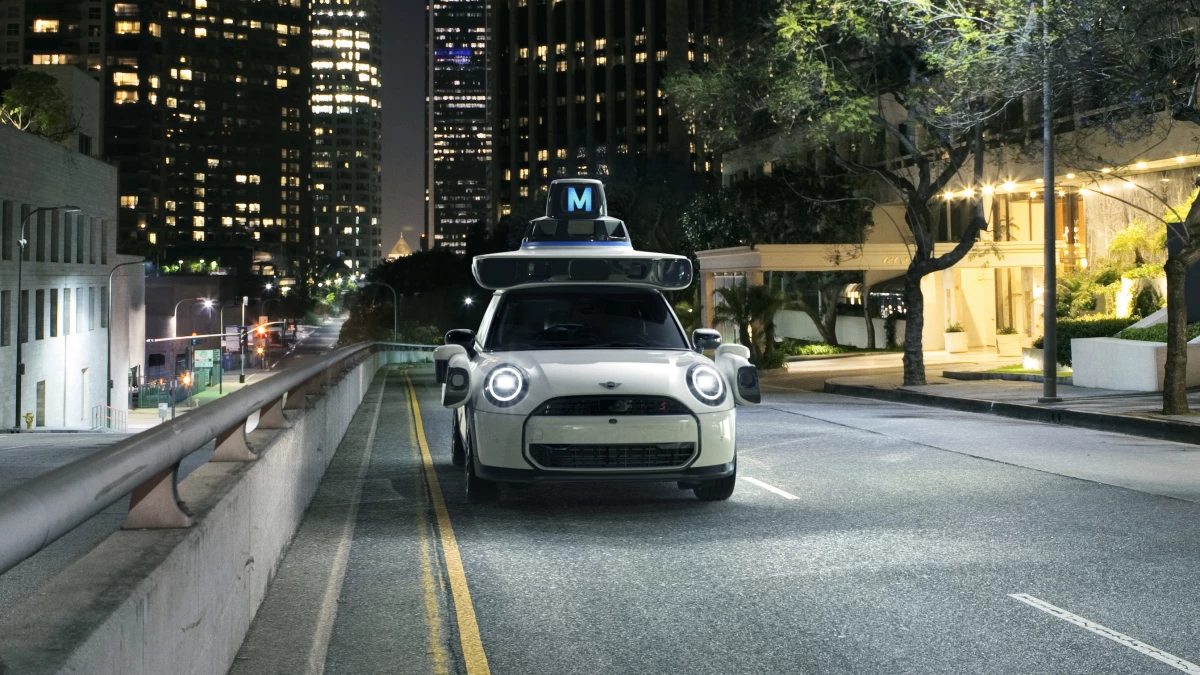
The BMW-owned brand’s “Elloween” stunt, created by full-service ad agency Goodby Silverstein & Partners, teases a MINI dressed as a Waymo look-alike.
The copy calls out the obvious tension in car culture right now, with Waymo scaling fast in rolling out its robotaxi service.
AI automation is everywhere, but the brand insists the best part of a MINI is still the person driving it.
“This idea started with a singular idea: MINI will always be the brand that celebrates the human at the wheel,” GS&P Creative Director Hanna Wittmark told DesignRush.
“So it made sense that for Halloween, we dress up as the thing that scares us most: driverless cars.”
The campaign also includes cheeky digital OOH and wild postings across San Francisco, Los Angeles, and Atlanta.
The Creative Trick That Drives the Message
The setup is simple. MINI labels its costume as something truly scary, then leans into the joke with a “ghost car” appearance on Halloween night.
The stunt will run across socials, supported by location-targeted OOH and street posters in cities where driverless vehicles are part of daily traffic.
The effect feels local and alive.
It's culture jamming with a smile, calibrated to a brand that sells compact performance, design, and personality.
“Nothing is scarier than ghosting on driving," Kate Alini, head of marketing, product and strategy at MINI USA, explained.
"In a world moving towards driverless cars, MINI is using its iconic humor to show that driving a MINI yourself is way more fun than getting chauffeured by a ghost.”
The stunt shows that for this brand, driving is still about joy, connection, and the simple pleasure of being behind the wheel.
Driving Personality in an Automated World
Autonomous tech keeps growing as a category, with a global autonomous-vehicle market of about $68.1 billion in 2024, according to Grand View Horizon.
Long-range growth forecast is nearly 20% CAGR in the next five years, growing to over $214 billion by 2030.
MINI, meanwhile, has been refreshing its full lineup, fueling a strong rebound.
After the update, the company recorded a 37.5% jump in Q3 2025 deliveries and a 23.7% rise year-to-date.
This shows how its mix of design, personality, and human connection still drives demand worldwide.
And this Halloween marketing stunt further plants a flag for what the brand stands for.
The move lands because it ties seasonal timing to a bigger positioning idea.
It's not actually a roast of a competitor, but a declaration of its brand purpose.
It says, clearly, that MINI wants to be the brand of small, joyful cars, driven by real people, on real streets.
Here's how brands and agencies can replicate this simple yet attention-grabbing execution:
- Put the message where the debate is happening. Target channels and neighborhoods where the cultural conversation is visible, so the creative meets real behavior.
- Use stunts to sharpen positioning. Seasonal ideas should ladder back to a durable idea about the brand.
- Balance provocation with charm. Humor opens the door, then product experience keeps the audience leaning in.
The campaign also proves that, sometimes, relevance comes from reminding people why they fell in love with the product in the first place.
Our Take: Can Humor Still Carry a Brand’s Purpose?
I think it can. The “ghost car” gag feels light, but the strategy is clear.
MINI and GS&P use Halloween to ask a bigger question about who driving is for.
They then answer it with personality instead of a boring lecture.
In a season of masks, the brand showed its face, and it looked like the exact opposite of enjoying driverless tech.
It knows exactly what it stands for, and I believe this is what keeps MINI relevant and what drives its growth.
It still finds new ways to celebrate something simple and human, even as the industry chases the next big machine.
For more branding inspirations, check out our breakdown of MINI Cooper's logo evolution.
In a space flooded with content, personality wins. These top agencies help brands use humor and timing to keep engagement fresh and human.