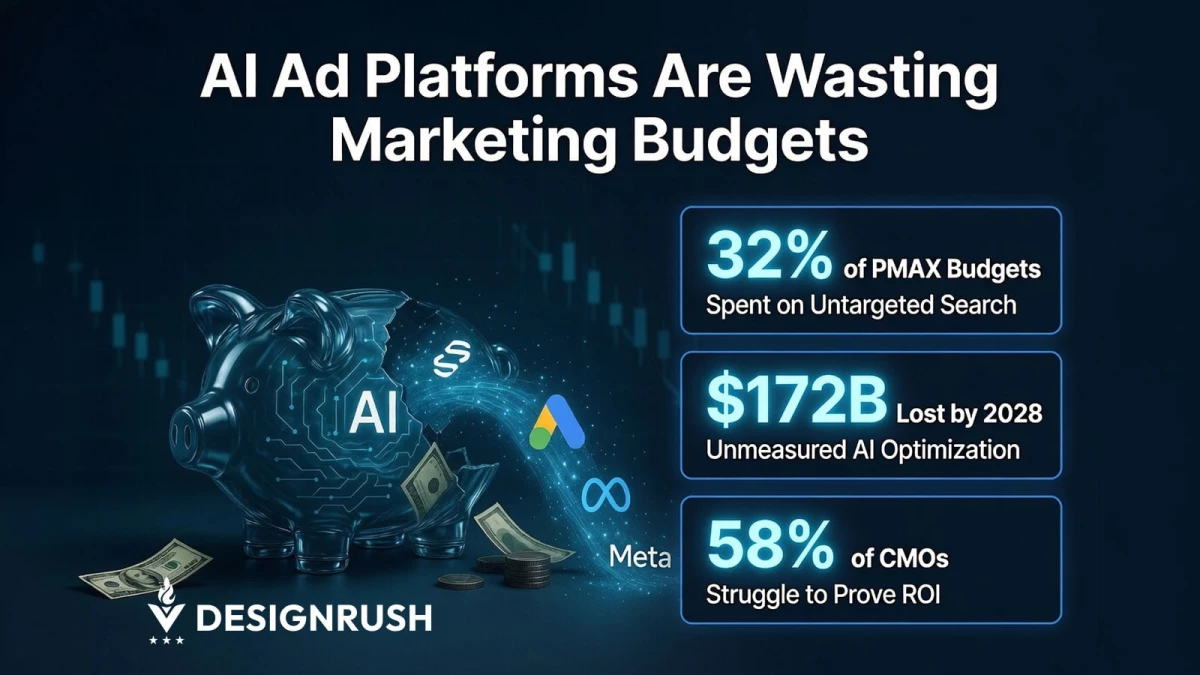

On May 18, Silverback Strategies CEO Neil Welsh spoke at Senior Living Executive Conference (SLEC) 2026, sharing insights on how AI ad platforms were draining senior living marketing budgets.
In his keynote, Welsh revealed that senior living operators were spending more on paid media without seeing proportional movement in occupancy.
His argument was that AI ad platforms were actively redirecting budget away from the conversions that matter.
His presentation is timely as marketing leaders face immense pressure and stagnant budgets in 2026.
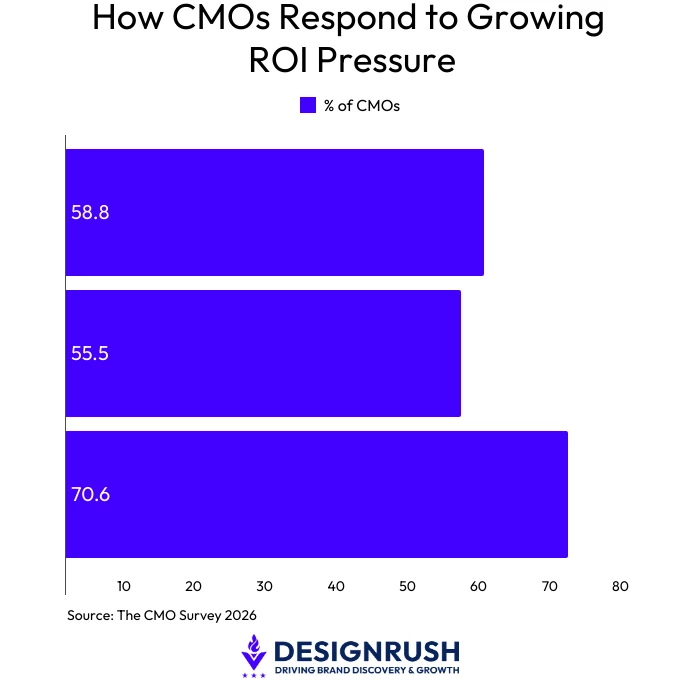
According to The CMO Survey 2026, 58.8% of CMOs feel increasing pressure from their CEO to prove marketing's value, and 55.5% report the same from their CFO.
Under that pressure, 70.6% say they shift focus to short-term impact over long-run gains.
 How AI Ad Platforms Are Redirecting Budget
Google Smart Bidding, Meta Advantage+, and Google Performance Max have steadily handed targeting, bidding, and budget decisions to the platforms.
Meta's latest AI ad products go further, requiring no creative, targeting, or measurement input from the advertiser.
At first, this sounds efficient. However, data compiled by Silverback Strategies painted a different picture.
In senior living, the cheapest conversions are usually people already on the path to move in.
Performance Max captures them through branded search and remarketing, then takes credit for conversions that would have happened regardless.
"The platform reports look great. But we're wasting money on customers that would have converted without the ad cost," Welsh told SLEC attendees.
Although Welsh focused on senior living operators in his talk, he stressed that the problems this industry is facing affect nearly every industry to some degree.
Specifically, he pointed toward three specific patterns driving this waste across marketing budgets simultaneously:
1. Bot Traffic and Fake Conversions
AI ad campaigns learn from conversion data, including conversions that are not real.
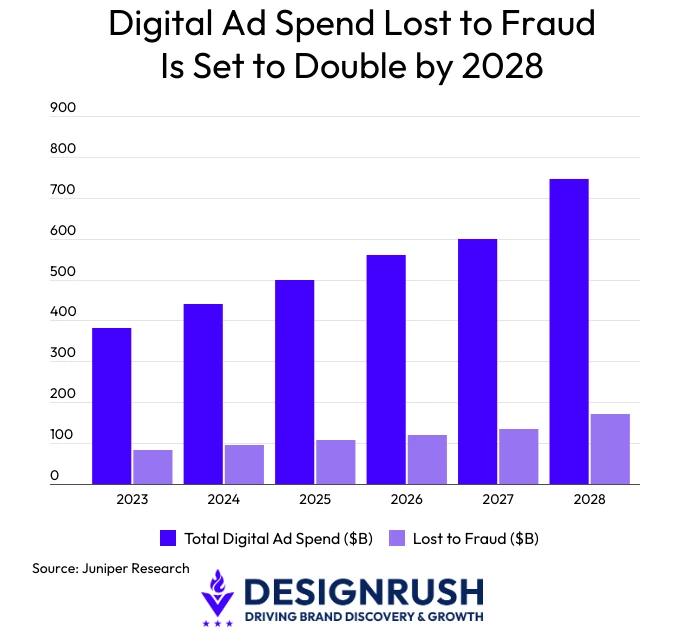
Juniper Research estimates $84 billion in digital ad spend was lost to fraud in 2023, with projections reaching $172 billion by 2028.
 When platforms optimize toward fake signals, they pull budget toward the sources generating those signals, compounding the waste with every campaign cycle.
2. Non-Incremental Branded Search
Welsh told SLEC attendees that an average of 32% of Performance Max budgets is spent on branded search terms that competitors do not even bid on.
These are searches from people already looking for a specific community and likely to convert without the branded search ad.
Instead, the platform counts those conversions. The operator pays for them.
3. Bad Signals Drive Bad Optimization
When platforms only see clicks and form fills, they optimize for form fills. In senior living, form fills are not move-ins.
A platform optimized for low-cost form fills will find them through bot traffic, branded queries, and remarketing audiences already in the pipeline.
So, the reports may look strong on paper, but a deeper dive will reveal that the numbers that actually matter didn’t move in a meaningful way.
The Real Numbers Behind Platform Reports
Welsh shared data from one of his agency’s clients that illustrates how far platform reporting can diverge from reality.
Silverback Strategies found that the client’s branded search showed a reported cost per acquisition of $212. The real incremental cost, measured through incrementality testing, was $1,059.
That was 5x higher than reported.
However, the same client's Demand Gen campaign reported $579 per acquisition, expensive enough that the team was considering cutting it.
The real incremental cost was $157, nearly four times lower.
"They were one quarterly review from killing the channel that was working and scaling the one that wasn't," Welsh said.
A 30-Day Fix to Run Now
Fortunately, most of the waste Welsh describes is fixable.
In particular, he outlined three changes brands and agencies can implement immediately:
- Eliminate waste. Add brand exclusions to Performance Max, turn off search partners, and install bot detection.
- Activate the algorithm. Implement Conversion API, offline conversion tracking, and CRM integration, so platforms optimize toward move-ins instead of form fills.
- Drive incremental growth. Run incrementality testing and media mix modeling to separate campaigns creating demand from those claiming credit.
These three steps only require redirecting what is already being spent toward signals the algorithm can use.
Why Teams Can't Afford to Get This Wrong
AI ad platforms are becoming increasingly autonomous.
But Welsh's keynote at SLEC 2026 is a sobering reminder that autonomy doesn’t automatically lead to accuracy.
Algorithms optimize for the signals they receive, whether those signals reflect meaningful business outcomes or not.
This means brands and agencies alike need to practice better discipline over the signals they set, as well as constantly perform incrementality testing to ensure AI doesn’t drift.
Otherwise, they risk scaling the channels that hurt long-term growth and wasting even what little marketing budget they have left.