
Key Takeaways:
- Marketing budgets dropped 15% in 2024, forcing businesses to demand faster, measurable returns.
- Targeted page improvements like better UX and faster mobile speeds may boost traffic by up to 249% and quote requests by up to 146%.
- A phased website update strategy delivers high-impact results faster and cheaper than a traditional rebuild.
In 2024, marketing budgets hit a 15% year-over-year decline — a new low since the pandemic. That’s according to Gartner, which found that businesses are pulling back on spending while expecting faster, more measurable returns from every investment.
A full website rebuild doesn’t fit that equation. It’s expensive, slow, and often limits resources for months.
However, according to web design and development agency Web Loft Designs, more companies are taking a phased approach with more focused investments.
Why is this happening, what does it look like, and how can agencies help businesses move forward without overcommitting?
Editor’s Note: This is a sponsored article created in partnership with Web Loft Designs.
Why the Old Playbook Doesn’t Work Anymore
Business owners are being asked to grow revenue, maintain customer experience, and stay competitive — all with smaller teams and leaner budgets.
That’s why the traditional approach of tearing down and rebuilding a website from scratch doesn’t add up. The time, the disruption, the diverted attention — not to mention the price tag — all while competitors gain ground with smaller, smarter changes.
What businesses need instead is a site that performs with:
- Clear messaging: Speak to real customer concerns. Skip the fluff.
- Fast mobile speed: Users leave if loading is slow.
- Strong service pages: These should rank locally and drive leads.
- Simple UX: Show what the offer is, why it matters, and how to get it.
Web Loft Designs has seen these same needs surface again and again. Clients aren’t asking for a prettier site; they want one that works.
“Many of our clients come to us saying the same thing: Their website doesn’t clearly communicate what they do or who it’s for. The messaging is confusing, the structure is unclear, and their target audience either doesn’t find them or lands on the site and quickly leaves,” said Marina Marsh, president and founder of Web Loft Designs.
“We work with them to: Define their key audience segments, map out a tailored sales funnel for each group, and craft a clear, focused message that speaks directly to their needs. The result? A website that immediately answers three essential questions: What is it? What’s in it for me? And how do I get it?”
What Brands Should Do About It
This is where strategic phasing comes in, breaking website updates into smaller, high-impact steps.
For example, to drive more organic traffic and generate more leads for an established occupational health and medical testing brand with 3,000 clients across 15,000 nationwide facilities, Web Loft Designs focused on just three existing calls to action.
Several interactions later, the new landing pages saw significant results:
-content-large-webp.webp "Examinetics New Landing Page Design")
Instead of launching a brand-new website, companies can make targeted upgrades like this in weeks, like:
- Redesigning the homepage hero with a stronger message and CTA
- Adding trust signals like reviews and certifications to service pages
- Improving mobile usability and speed, especially on entry points
- Focusing efforts on lead generation, SEO, or conversions
Marsh recommends that companies focus on clarifying their homepage messages to clearly state what it is they want to do and who it’s for. In addition, she added a few more crucial targeted website updates:
“First, simplify navigation and use clear labels, and consider mega-menus for better structure. Second, improve key pages to focus on benefits, not just features. Use clear CTAs. Third, optimize for conversions and try multi-step forms: they feel easier, boost completion, and guide users like a mini-journey.”
The Role of the Agency or Web Partner
Businesses spent $43.5 billion on web design services in the U.S. in 2024, according to IBISWorld. And while most weren’t looking for full rebuilds, many wanted targeted improvements.
Over the past two months, Web Loft Designs’ team has focused on delivering those targeted improvements.
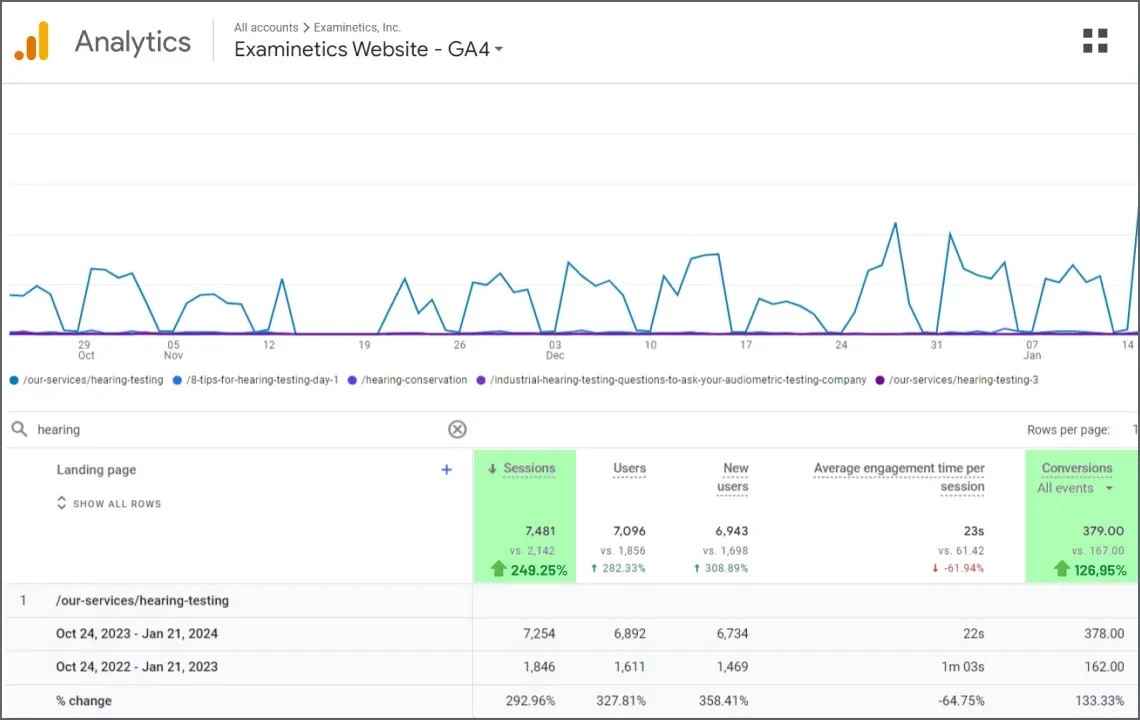
In one case, optimizing just two pages led to a 249% jump in traffic and a 146% increase in quote requests.
So, what should businesses prioritize first when a full rebuild isn’t in the cards? Start with the homepage, Marsh said.
“Clarify homepage messaging to make sure visitors instantly understand: What you offer, who it’s for, and what to do next (a strong CTA).”
She recommended fixing the navigation: removing clutter, renaming vague labels, and using a mega-menu if needed.
“Update Key Pages and rewrite service/product pages to focus on benefits. Add headlines, bullet points, and CTAs to guide users.”
She also pointed to a few quick wins that drive results: streamline forms, add trust signals, optimize for mobile, and use pop-ups wisely to boost conversions without annoying users.
Most businesses don’t need a full rebuild. They need faster load times, clearer messaging, and pages that convert.
As buyer behavior shifts alongside global trade changes, websites must keep up.
A phased approach makes that possible without draining resources.