
“Trace every dollar that came to our bank account over the last 6 months back to the channel that sourced it. Tell me what each channel costs to run and rank them by return.”
“Give me an update on the XYZ project. Every touchpoint across email, Slack, and meeting notes in the last thirty days. What’s outstanding on our side, and does it appear the client is happy?”
Our AI sales agent to me at 8:30 this morning:
"I found decision makers at three companies that appear to have complained about your competitors. I’ve composed emails to each of them. They’re awaiting approval in your drafts folder.”
These are the kinds of interactions I have with our company’s intelligence layer on a daily basis.
None of these conversations would have been possible with an AI-assisted dashboard or a RAG system on top of a sales DB.
They can only happen when every interaction, data source, tool, and process is accessible to your intelligence layer.
What Does It Mean to Go AI-Native?
The easiest way to understand this is to clarify what being AI-native isn’t.
For the most part, companies tend to fall into one of four categories when it comes to AI adoption:
- Chat GP-Wha?: Contrary to what the hype cycles would want you to believe, a significant number of companies still aren’t using AI. At all. In any way. Ever.
- The Tab Switchers: Employees use AI as a chatbot on the side. They copy a task, email the spreadsheet, paste it into their preferred chatbot, and do the same in reverse with the answer.
It genuinely helps, but the work still lives in human hands, and none of it is wired into the company’s tools or data. - The Claude Coders: The company builds real AI systems, like specific workflows and agents that handle some tasks end-to-end. Individual jobs get done by software instead of people.
But it’s a patchwork of point solutions taken on a case-by-case basis, and most of the company still runs the way it always has. - The AI Natives: AI is integrated into everything for any question and every task. AI governance is properly implemented to ensure privacy and access restrictions. Most importantly, the default flips.
Before a human does something, the first question is whether AI can do it. Daily work carries a standing instruction to automate itself, with every employee steadily handing their repeatable tasks to well-regulated AI systems.
The AI agents are proactive and a part of every employee’s day-to-day life.
What Going AI-Native Has Meant to Us
Going AI-native has been the gift that keeps on giving for us at Krazimo. It’s the first step that has actually felt like our ten-person team has fifteen extra employees who work around the clock.
Our sales agents continuously identify new opportunities and are configured to reach out proactively or ping for approval, depending on the nature of the outreach.
Our AI-CFO keeps track of our spend and the ROI on every marketing campaign, Google ad, and more. Best of all, every employee has steadily operated at a higher and higher level as they delegate more responsibilities, while always retaining understanding.
Because if there’s one thing to keep in mind on this journey is to always value the importance of human understanding and taste.
As the now-viral tweet goes, "You can outsource your thinking, but you cannot outsource your understanding."
How to Go AI-Native
1. A Long Look in the Mirror
Attempting to build an intelligence layer on top of a structure that isn’t well mapped out and isn't documented is a recipe for disaster.
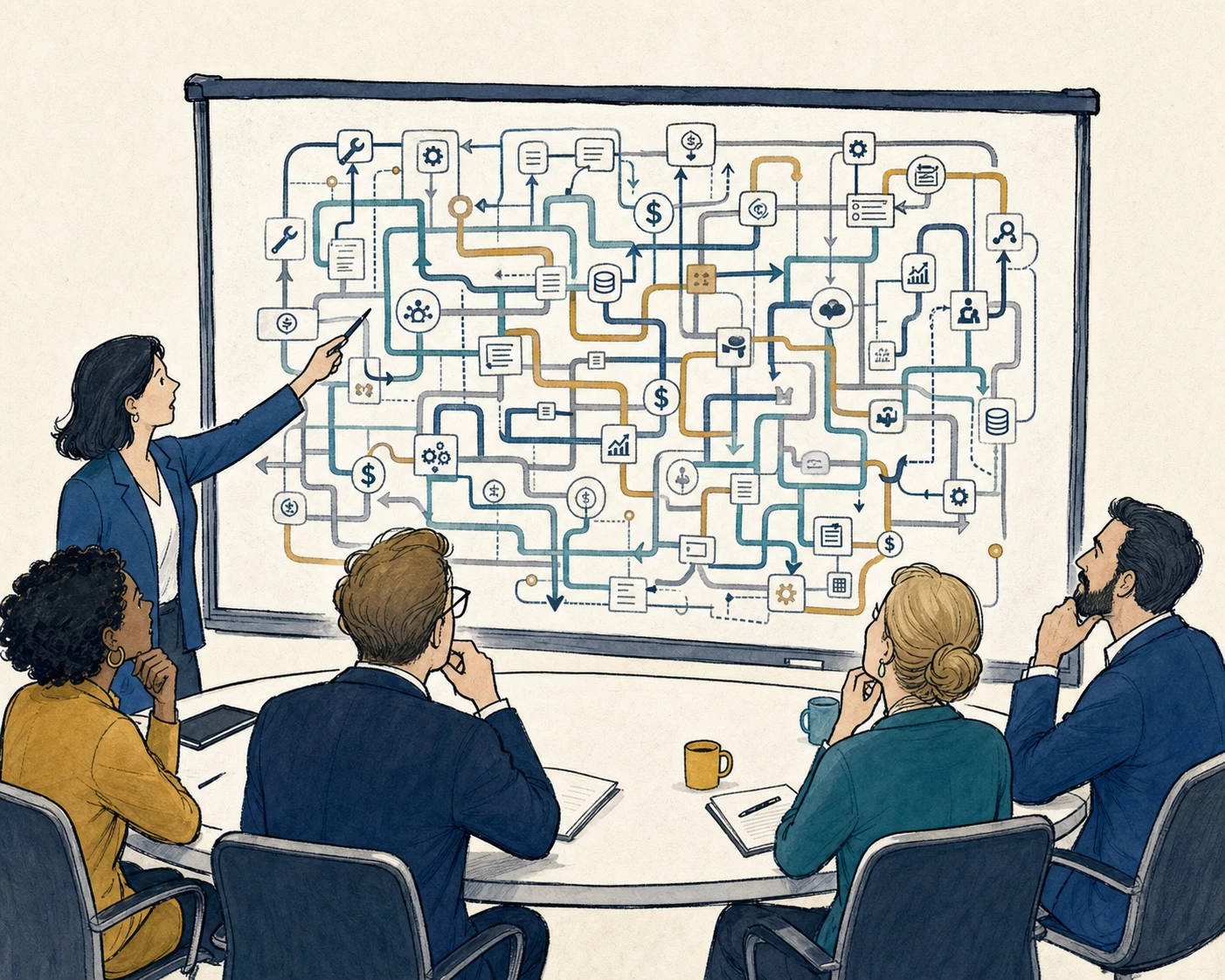
So, the first move is to take a long look in the mirror. Go through your company one function at a time, and for each department, document four things.
- The tools they use: every app, platform, and system they touch to get work done.
- The data they rely on: what they read from and write to, and where it actually lives.
- The money that flows through them: what the function costs to run, and the revenue it drives (directly or indirectly).
- The tasks they do every day: the real, repeatable work, not what it says on the door.
Perhaps the most important step while cataloging the tasks is to define how you measure success for each of them.
I always encourage people to define this early on, before there’s any chance of being swayed by what is easier to measure or manipulate.
You can’t automate what you haven’t understood. This map is the ground everything else will stand on
2. Tool/Data Labeling and AI Governance Structure
With that map in hand, you catalog two things. First, everything the company knows, and, second, everything tools can do.
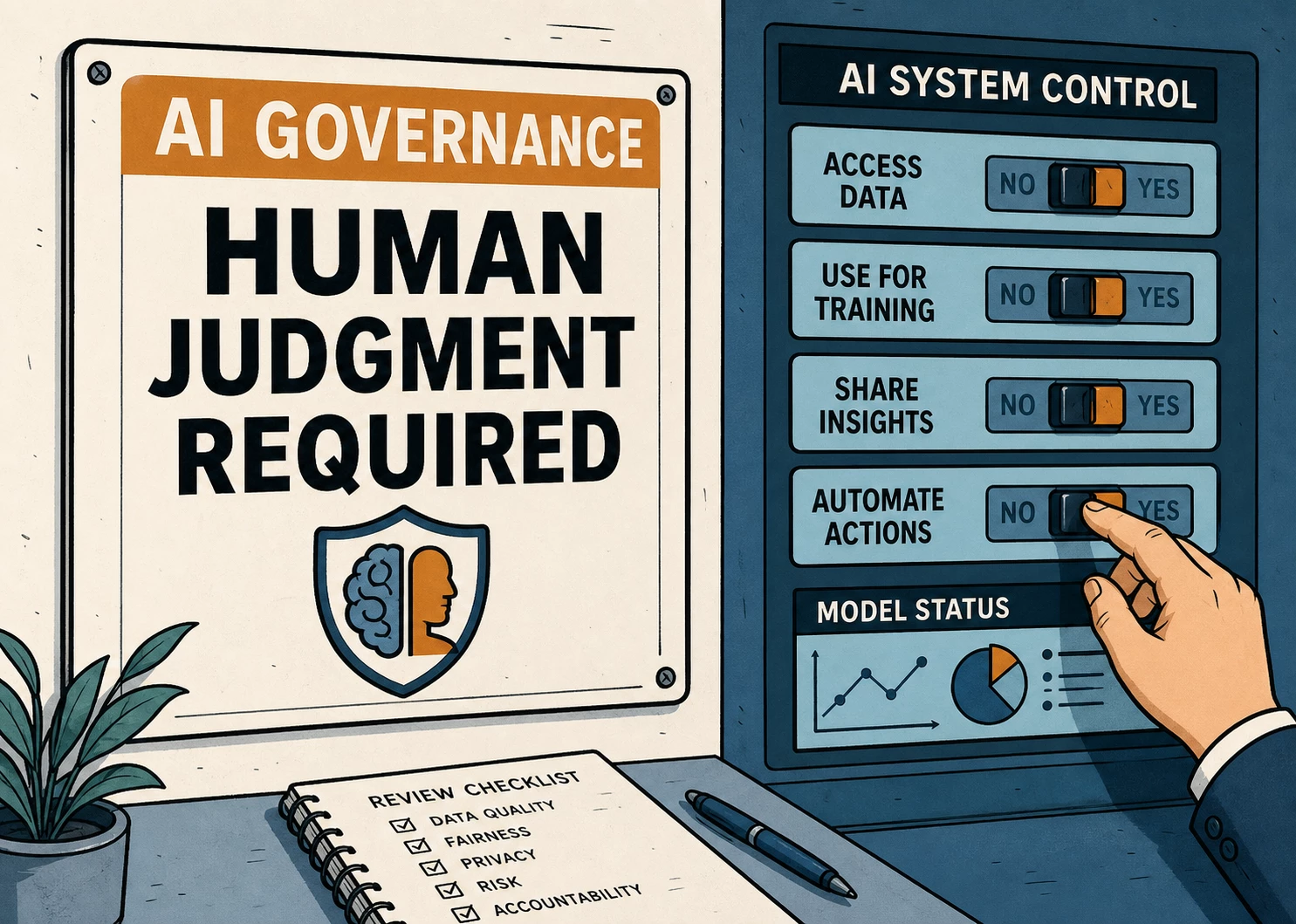
You then decide, precisely, who and what is allowed to touch each piece. This is something you do not want to outsource entirely to AI. It’s the part that takes the most attention to detail; not because it’s cognitively taxing, but because it requires accountability, something no machine or system can take.
Start with what the company knows. It arrives in two forms, and the two are governed differently:
- Living data: The databases that never stop moving: orders, sales, revenue, pipeline, support tickets. This is the company’s current state, true only for this moment.
- Standing knowledge: The material that changes slowly and encodes how you work: training docs, best practices, playbooks, policies, and the reasoning behind past decisions. This is accumulated judgment, and it belongs in one well-kept knowledge base, not scattered across drives and inboxes.
Both feed a knowledge graph that links entities to one another, such as a customer to an order, to an invoice, or a thread where it was discussed.
This matters because a pile of tables and documents is something an AI can search. But a graph is something it can reason over. Publicly exposible summaries of the nature of information in each source are part of the general graph, but the actual content is hidden behind the same access restrictions that have always been in place.
The work is defining the entities and relationships and keeping them clean. Stale or contradictory data doesn’t just clutter the graph. It actively makes it misleading.
Then we do the same for capability.
Inventory every tool the company touches, like the CRM, the bank, the ad platforms, the codebase, and the messaging apps.
Likewise, document how each one is accessed, whether through API, login, or manual steps.
3. Establish Governance
This is the part most teams skip and later regret.
Label every dataset and every tool with who may read it, write, or act with it. Even the rules around those interactions. Do they need to be logged? Do those logs need to be audited?
Record those rules in a form a machine can enforce, not a policy document a human has to interpret.
The non-negotiable rule to keep in mind is that AI inherits the permissions of the person it is acting for.
Every request to the intelligence layer is authenticated as a specific human, and the same access rules that govern your people govern the AI acting on their behalf. If a salesperson can’t see payroll, the AI answering that salesperson can’t either.
This holds for an employee using the system for a specific task or an engineer building a new workflow. If they need access to something they don’t have, they need either approval from someone who does or a standardized process.
Aside from access controls, standardized rules about audit processes, operation logging, human oversight and approvals must also be set in stone.
Label everything and codify every action. The intelligence layer is only as trustworthy as the boundaries you draw.
4. The Reactive Phase
With the governance structure in place, a clean knowledge graph, a full tool inventory, and access rules a machine can enforce, you finally have a system you can reliably experiment on.
The first phase is reactive. Here, the AI acts when you, or an event, ask it to. It comes in two flavors: one that answers and one that acts.
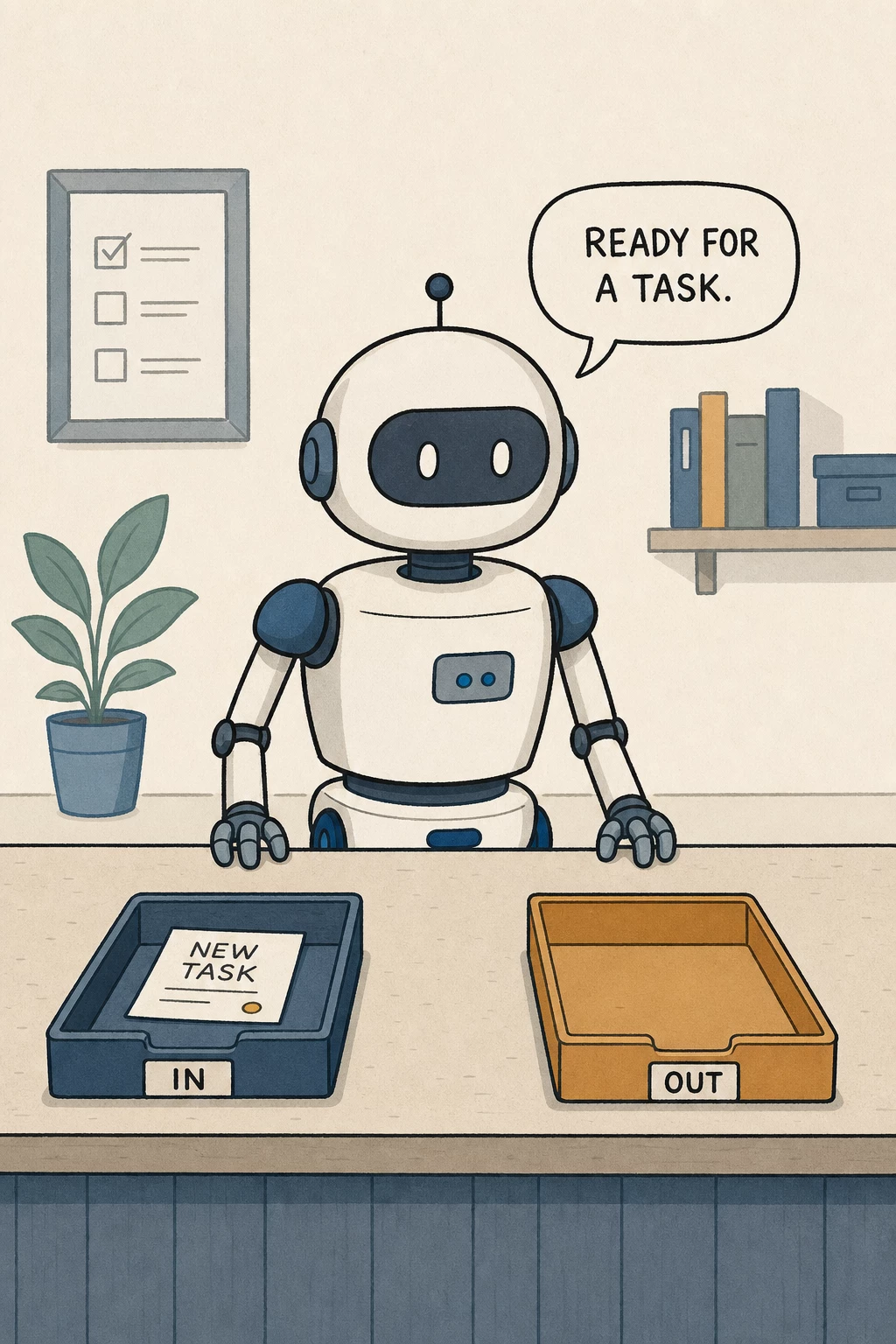
I divide these into two for easy understanding, but the truth is there’s a lot of overlap, and most employees are often talking to one entity.
- The company GPT: One front door to everything the company knows, a single assistant any employee can ask anything and get an answer grounded in the knowledge graph rather than a guess.
It’s built not as a giant model but as a small team. A coordinator reads the question, routes it to the right specialist (the finance data, the CRM, the codebase), and composes the answer.
This orchestrator-and-workers pattern consistently produces the best results.
Two rules keep it safe. First, it reads only through the same permission checks as a human, so a salesperson and a CEO who ask the same question get different answers because their access differs.
Second, every answer carries its evidence, usually in the form of a link to information the questioner can access directly. - The automations: The layer that does work. The rules for a good automation candidate are simple. It runs when triggered, it does one job well, it can be checked by a human, and checking it is less work than doing it (not always the case).
Always prefer a workflow to an agent if it can adequately solve the problem.
At our company, a workflow reconciles every bank transaction against the right invoice and flags whatever is overdue.
But an agent reads a dozen Slack channels and the inbox every few days and keeps each project’s brief current; a combination of workflows and agents build and tune our Google Ads campaigns; an agent drafts a tailored reply to every inbound lead and waits for a thumbs-up before it sends.
Overall, the recipe never changes:
- Standardize the process.
- Hand it to an automated system.
- Keep a human reviewing.
- Automate the review process where possible.
Everything here waits to be asked. That is the foundation. The next phase is where the AI stops waiting.
5. The Proactive Phase
The reactive layer answered what you asked and did what you handed it.
The proactive layer, however, is where long-running agents understand and pursue your company’s goals on their own and initiate tasks themselves.
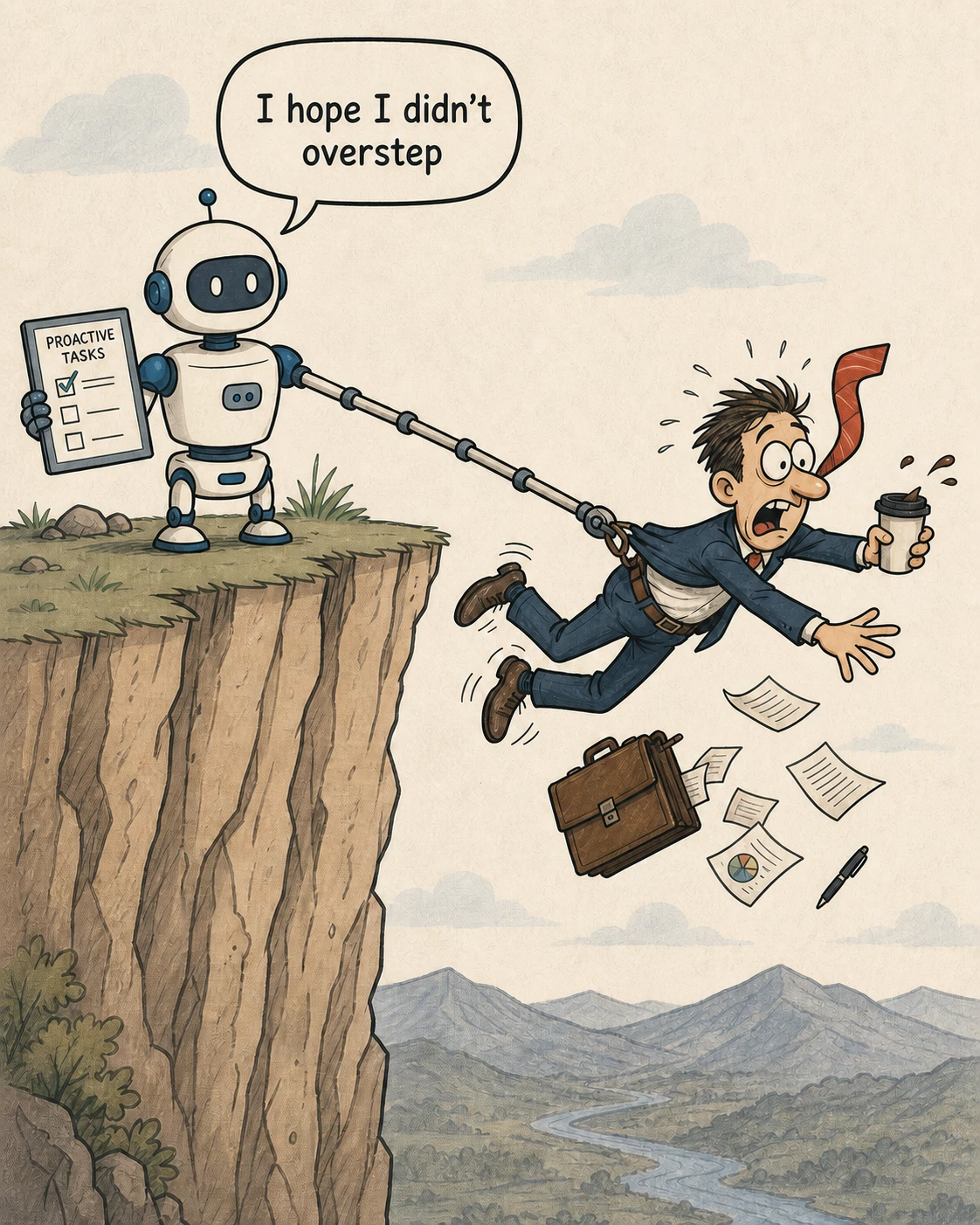
A proactive agent isn’t waiting for a request. It’s always on, watching the business, and it comes to you.
Instead of you asking how the pipeline is doing, it surfaces opportunities you didn’t think to ask about and brings you options instead of waiting for instructions.
This is the reversal at the heart of going AI-native. You stop interrogating your AI, and your AI starts briefing you.
What turns a notifier into a coworker is a goal and a budget. Give an agent those two things and access to company knowledge and tools, and it can run experiments.
That could involve reallocating ad spend toward what’s converting, testing new outreach, chasing a signal before reporting back on what it did and what it cost.
Anthropic’s Project Vend is an interesting case study. They put an AI agent in charge of a real shop with a $1,000 budget and one instruction: to maximize profit.
It worked in stretches. It also made comic mistakes. But we can do better.
Two guardrails keep this from being reckless.
First, the agent acts on its own only inside its limits.
Anything large, outward, or irreversible, like sending a message to an actual client rather than a long-shot lead while posing as you, becomes a proposal that lands on your phone to approve, edit, or reject.
Second, every proposal arrives with its reasoning and evidence attached, so approval is usually very quick.
This is the model most of our AI proactivity runs on. Agents propose, a human taps “yes.”
Going proactive doesn’t have to mean handing over the wheel. But I encourage you to explore this area, because this is when using AI really starts to feel like you’re playing in a different field from your competitors.
6. Monitoring and Experimentation
None of this is worth trusting or safe to run unless you can see what your agents are doing and whether they’re getting it right at any moment.
Monitoring isn’t the thing you bolt on at the end. It must be factored into every decision, from day one.
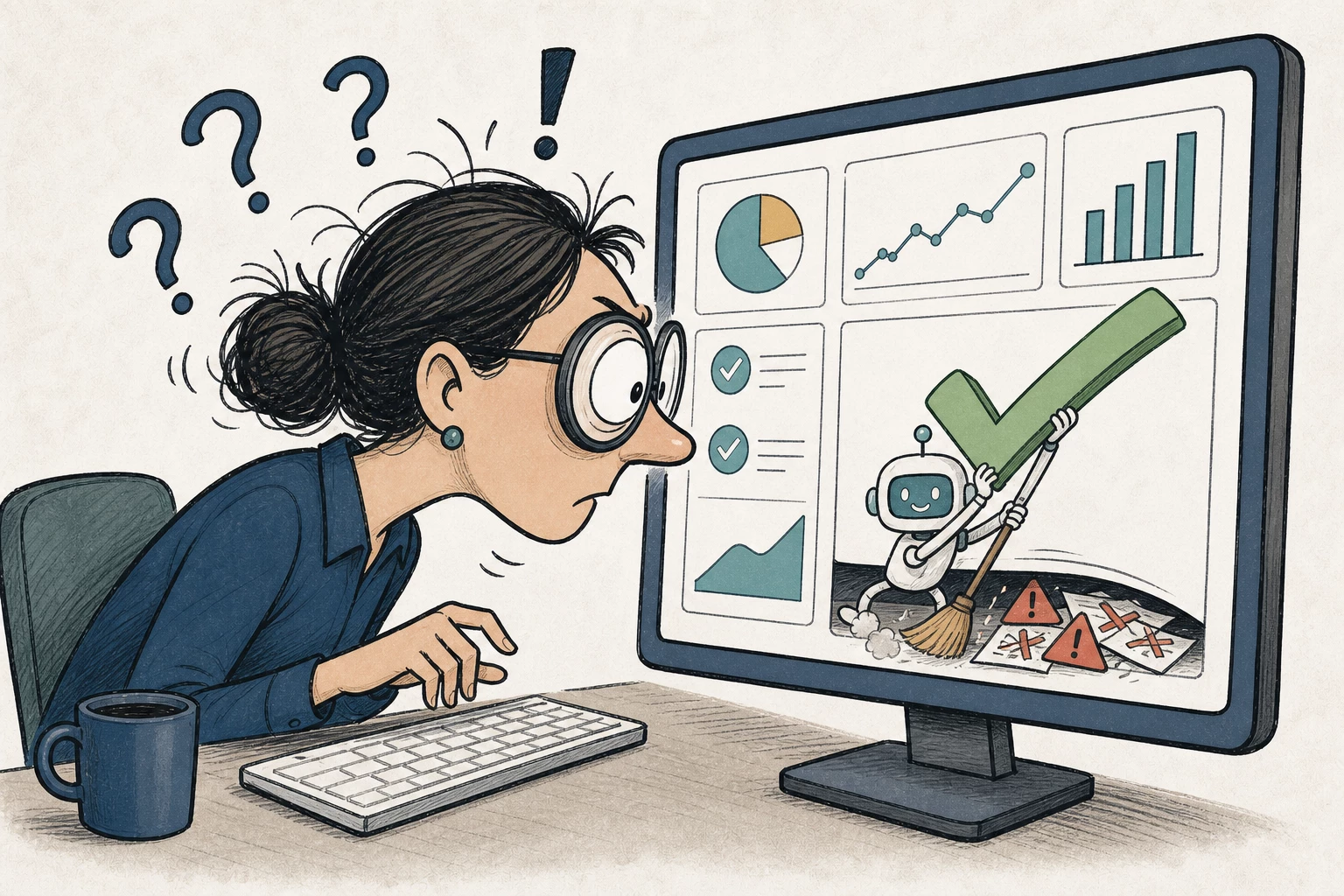
In particular, you are watching three things continuously:
- Are the answers right? Sample what the company GPT tells people and grade it. Is each answer grounded in real data? Can a second agent verify it? A wrong answer someone acts on is more dangerous than no answer at all.
- Are the actions correct? For every task an agent does and every action it takes, was it the right call? This is where the evidence-with-every-action rule pays off: you’re reviewing a decision with its reasoning attached, not guessing after the fact.
- Is it paying off? Track the ROI of each automation and each proactive bet and measure the pre-defined success (this should not be changed easily). A lead the AI handled is not a deal it closed. This is similar to how a support ticket deflected is not one resolved. Measure outcomes, not activity.
Monitoring is what closes the loop, because an AI-native company is never finished.
The same tools that catch errors also catch drift, which is when a model or a process starts to degrade. It surfaces the next thing worth automating, which is whatever your people are still doing by hand. And it tells you when the knowledge graph or a tool has gone stale and needs refreshing.
Every review a human does is a signal that makes the system sharper. Every manual task is the next agent or workflow.
And there’s a compounding payoff most people don’t see coming.
Once the structure, such as the knowledge graph, the codified access rules, the guardrails, and the monitoring, is in place, experimentation stops being risky.
Any employee can set up a new agent, wire it to the data and tools they’re already allowed to touch, and try something.
The access rules keep them in their lane automatically, and the monitoring catches if it misbehaves.
Going AI-native isn’t a few people building automations for everyone else. It’s every person in the company being able to build, test, and ship their own, on rails they can’t fall off.
In other words, going AI-native isn’t a project you finish, but a loop you run.
Becoming AI-Sovereign
Okay, so you’ve understood your company, defined success criteria, set up your governance structures, structured and labelled your data and tools, automated your workflows, set up your monitoring, and your whole company is experimenting and talking to agents on a daily basis.
There are always iterations, but surely your journey is done, right?
Well, it depends.

For most companies, I’d say yes, but there’s a deeper reality every major company must grapple with.
Foundation-model providers are not staying in the model business.
As raw intelligence commoditizes and a half-dozen models, open and closed, converge on the same capabilities, the margin moves up the stack, into applications. So, the labs move up the stack too, into the markets their customers occupy.
This isn’t hypothetical.
Anthropic launched a dedicated product for financial services in 2025, and one for the legal industry in 2026.
In February 2026, it partnered with Figma. Two months later, it shipped Claude Design, a prompt-to-prototype tool aimed at the same design market (pitched at founders and PMs rather than professional designers, for now), and Figma’s stock crashed.
When the platform you build on can see everything you do through it, and needs application revenue to justify its costs, it will eventually compete with you.
This isn’t an AI story. It’s a platform story, and an old one.
Amazon has been accused for years of mining its third-party sellers’ data to launch private-label products that undercut them.
Apple does it so predictably that developers coined a word for it: “Sherlocking”.
Netflix built its own studios on the back of the catalogs that studios had licensed to it.
Platforms that host an ecosystem eventually harvest it. In this case, foundation models are just the newest, and most data-rich, platform to run the play.
For the provider, this is rational. For you, it means the company you’ve handed your data and workflows to has both the information and the motive to move into your business.
That trade might make sense when you’re getting capability you couldn’t build yourself. It becomes a worse trade every year, as the capability gap narrows.
The long-term answer is to bring the intelligence in-house, an open-weight model running on your servers, fine-tuned on your own data, where nothing leaves and the know-how compounds into an asset you own (not something you rent).
Open-weight models are already good enough for the bulk of real enterprise work, such as classification, extraction, summarization, drafting, and most retrieval.
Fine-tuning them on your proprietary data (with techniques like LoRA, which preserve most of the quality at a fraction of the cost) turns a generic model into one that knows your business, keeps your data within your walls, frees you from per-token metering, and protects your data from being on someone else’s roadmap.
None of these are easy.
On the hardest reasoning and the longest agentic tasks, frontier models still lead, and running your own stack demands real infrastructure, time, and talent.
But as we move into a world where raw intelligence is cheap and domain knowledge becomes the only currency, every company will have to decide if it’s really wise to share this hard-won expertise with the frontier labs.
Love it or hate it, the market has decided AI is here to stay, and this is the playing field we’re all on.
But I believe these steps will help companies deploy it the right way, ensuring maximum utility while minimizing significant failures.