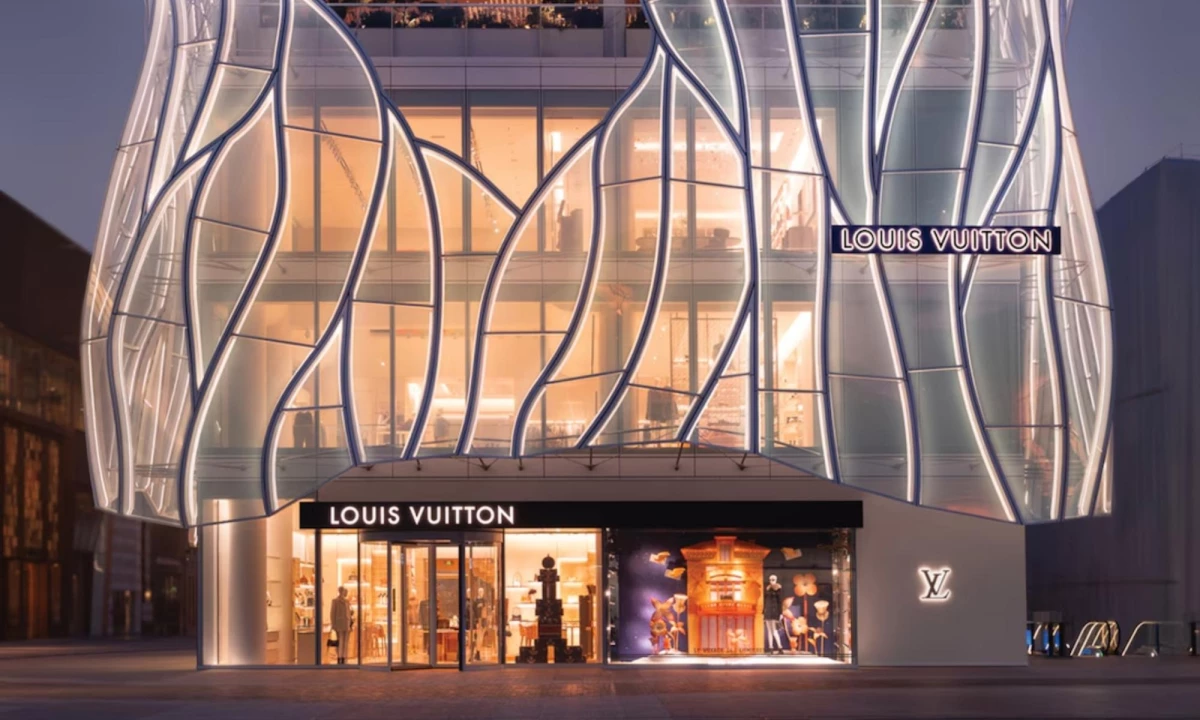

Louis Vuitton lost a key luxury ranking in April.
Five months later, its parent company LVMH lost a much bigger financial one.
Kantar's 2026 BrandZ data from 4.6 million respondents across more than 22,000 brands placed Hermès at the top of France's most valuable brands in April.
Louis Vuitton fell to $87.5 billion from $112 billion a year earlier, a $24.5 billion loss.
On September 15, LVMH fell out of Europe's 10 largest listed companies by market value and lost France's top market-cap spot to L'Oréal.
Its shares have fallen about 37% since the start of 2026, with its market value near $232 billion.
View this post on Instagram
Kantar's France ranking combines financial performance with consumer perception.
"At the heart of the ranking, trust, usefulness, and institutional strength create value," Kantar France President said in the April report.
"At the entry level, brands capable of delivering credible, high-performing, and easily understood innovation emerge.
2026 is not a year of decline for French brands, but a year of strategic clarification."
Kantar's numbers, therefore, read differently from daily share-price movements.
The sequence matters here because brand equity weakened months before the stock market fully repriced LVMH's position.
China Backlash Cracks Consumer Trust
Kantar recorded significant declines at other fashion-driven houses too, including Chanel, Dior, and Céline.
But one market explains most of Louis Vuitton's drop.
Chinese shoppers handed the luxury brand its steepest losses this year, and the brand set that off by itself.
In late June, a Suzhou court ruled that Chinese tea chain Molly Tea infringed seven Louis Vuitton trademarks tied to its four-petal floral motif.
The court ordered Molly Tea to pay 10.3 million yuan, or about $1.5 million, and stop using the disputed logo.
View this post on Instagram
The legal win sparked a consumer backlash in China.
Critics argued that Louis Vuitton was asserting rights over imagery with deeper cultural roots.
Recent estimates from JL Warren Capital put Louis Vuitton's China sales down about 30% in July and 20% to 25% in August.
The dispute adds a reputational layer to Louis Vuitton's brand-value decline.
It shows how legal protection can create commercial friction when local cultural context enters the conversation.
LVMH's market position weakened later, and in mid-September the group exited Europe's top 10.
Bernard Arnault's own fortune has fallen by $65 billion this year, the steepest decline among the world's 500 wealthiest people.
Beauty and experience-led categories are capturing the spending that once went to fashion.
HSBC found that average prices for personal luxury goods in Europe rose 52% between 2019 and 2024.
Louis Vuitton's brand-value decline is one result of shoppers reassessing what a luxury logo is worth to them.
Consumers Rewrite Luxury’s Value Equation
Reuters reported in August that prestige skincare was outselling designer bags in China, where Louis Vuitton's sales fell about 30% in July.
LVMH finance chief Cécile Cabanis said that Chinese spending was essentially flat in the first half of 2026.
L'Oréal shares rose 5% over the same year that took 35% off LVMH, which is how a beauty company ended up worth more than Louis Vuitton's owner.
McKinsey still projects the global luxury market will reach $700 billion by 2030, so the demand is intact, and only the winners have changed.
Shoppers didn't leave the luxury industry; they just moved to the cheapest thing they could buy from a brand they still trust.
A lipstick and a handbag answer the same want, and only one of them still feels worth the money.
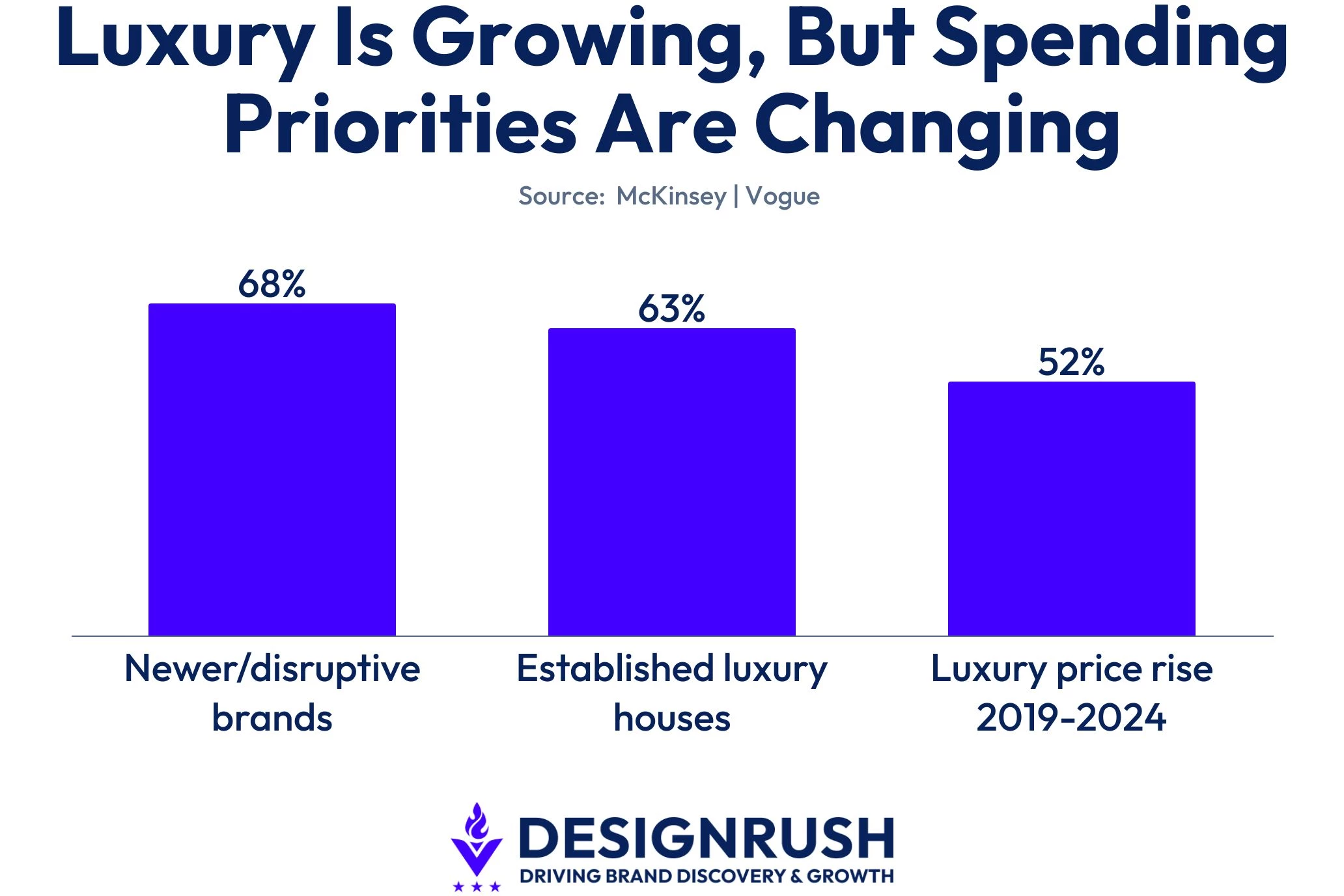
Brand value moves before revenue does, and these three factors are what let marketers catch the drop early.
- Price increases can weaken perceived value. Luxury brands should test willingness to pay alongside brand equity to protect demand.
- Emotional connection now drives desirability. Luxury brands should connect products with identity and aspiration to strengthen full-price demand.
- Luxury expectations differ by market. Global brands should adapt their brand experience to local drivers to protect relevance across major markets.
Luxury brands can't treat brand power as a standalone metric when the definition of value itself is changing.
Our Take: Can Brand Tracking Become a Market Signal?
Kantar's April ranking flagged trouble at Louis Vuitton five months before LVMH lost its place in Europe's top 10.
We think that this fact qualifies brand tracking as an early warning system, provided nobody sells it as a stock forecast.
The risk comes when marketers treat correlation as prediction.
LVMH's valuation also reflects earnings, investor expectations, currency effects, and the performance of every house in its portfolio.
Hermès climbed to the top of the same ranking, which is the cleaner sign that Kantar is tracking something real about consumer preference.
Marketing teams that pair brand tracking with pricing, search behavior, and category demand can see the pressure early enough to act on it.
Louis Vuitton’s brand-value decline raises a similar question for other brands with huge investments in brand equity.
Nike’s S&P 100 exit and its $15.5 billion endorsement commitments show how expensive brand assets face greater scrutiny when market value falls.
Brands need consumer insight that connects perception with commercial performance.
Explore these top market research companies to find teams that track how audiences value brands.