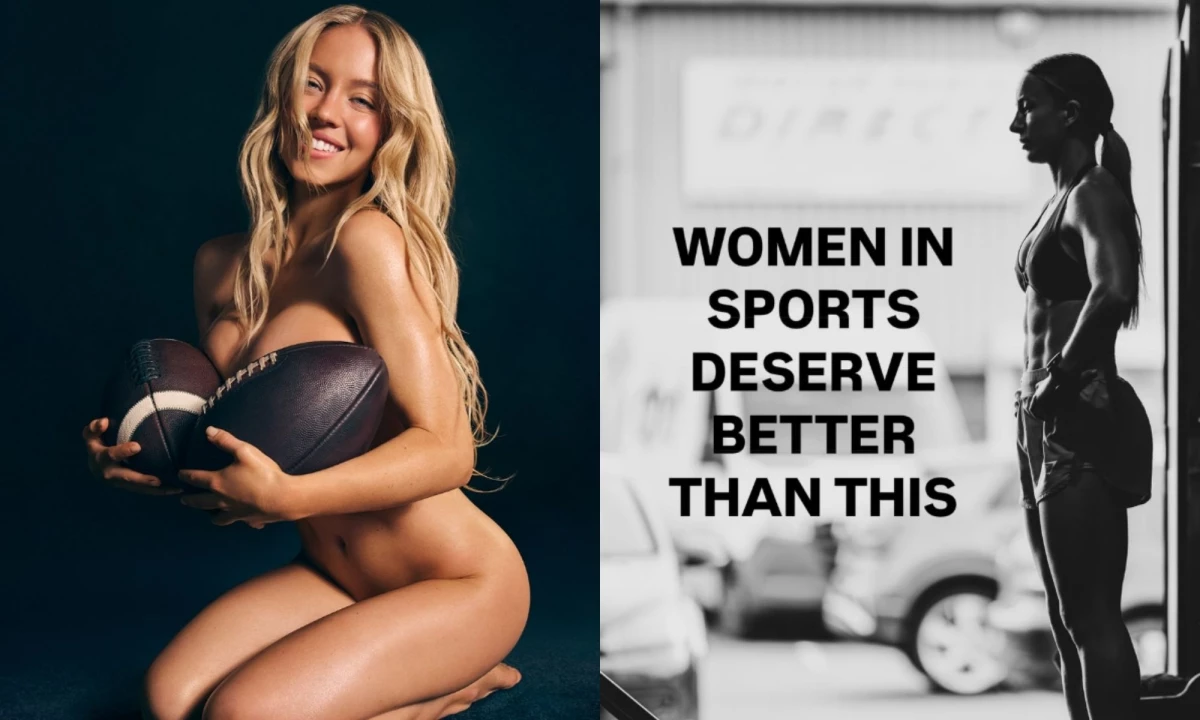

In less than a week, Sydney Sweeney made Novig impossible to ignore.
The sports prediction market's first national campaign has now become a fight over who gets to define women in sports.
The campaign places Sweeney in sports settings while using only equipment to cover her body.
Novig's pitch is simple. Its platform focuses on "Just Sports," with no markets for politics, wars, or deaths.
Female athletes have pushed back with a different message.
View this post on Instagram
They are posting competition footage and athletic achievements under variations of "this is what women in sport look like."
Novig CEO Jacob Fortinsky called the campaign a "very concentrated bet" and said Sweeney could force the company into the national discourse.
She did.
The question now is, did Novig want attention at any cost, or did the attention attach the brand to a fight it never planned to own?
Novig Said "Just Sports." Athletes Disagreed.
The intense backlash created a second campaign around Novig's first one.
Athletes criticized the ad for sexualizing women in sports.
They include Olympic swimmer Ariarne Titmus, British sprinter Amy Hunt, and three-time All-Americangymnast Gracie Kramer.
View this post on Instagram
Their response has also given the backlash a visual identity.
Athletes are posting footage of themselves training and competing to show what their sports look like, contradicting the campaign's sexualized imagery.
The Australian Institute of Sport joined the response with a compilation of women competing across sports and the message "THIS is sports."
View this post on Instagram
Novig's entire brand positioning depends on being seen as a sports company.
Its campaign tagline is "Just Sports," while athletes are effectively answering with their own definition of what sport represents.
The conflict gives the campaign a new meaning.
Novig wanted to distinguish its product through sports, but athletes are challenging the way Novig chose to represent them.
Sweeney's Equity Stake Costs Her Over 200K Followers
The actor is not a traditional celebrity endorser who can walk away when the campaign cycle ends.
She approached Novig about an equity partnership and helped develop the campaign's creative and messaging.
"The campaign was about embracing a fun idea," said the "Euphoria actor in a press release.
"The concept is simple: cut through the noise and put the focus entirely on sports.
This makes the backlash a shared brand story.
Sweeney has financial exposure to the company, while Novig has tied its identity to her image.
Her own audience has also moved in both directions.
Sweeney gained about 50,000 Instagram followers during the first three days after the campaign appeared.
She then lost 136,848 followers on Sunday and another 68,000 on Monday, according to Social Blade data reported by Variety.
The decline represents less than 1% of her audience of more than 25 million followers.
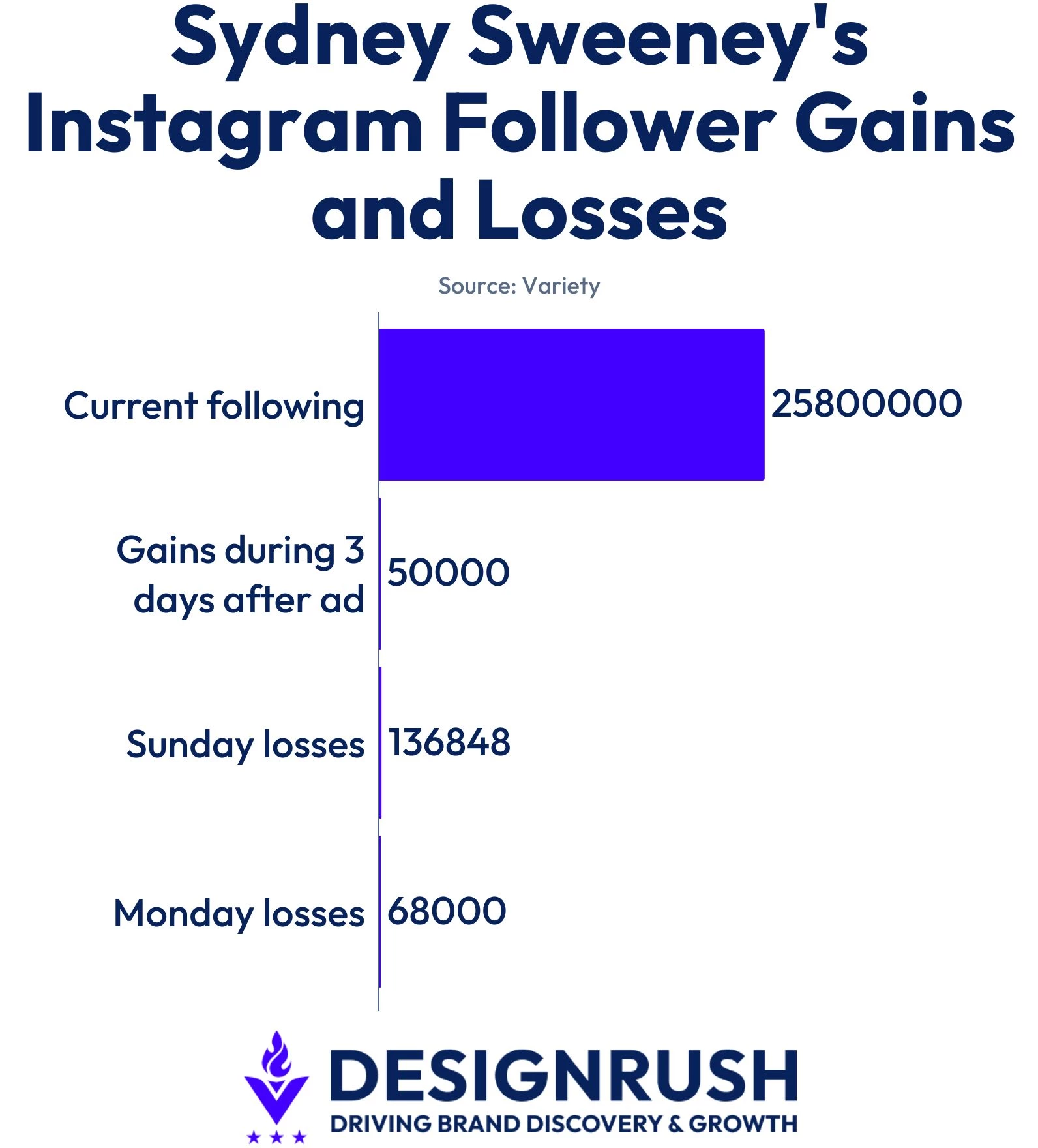
The numbers look dramatic in isolation, but the relative impact on Sweeney's audience remains small.
Sweeney absorbed visible backlash, yet her overall audience barely changed while Novig's visibility surged.
Novig's Awareness Bet Is Already Paying Off
Novig has a strong defense for the campaign. People are talking about the company at a scale it had not reached before.
The ad passed 40 million views on Instagram and 11 million on X.
Google searches rose 1,100% compared with the previous month.
View this post on Instagram
Novig's Instagram post also drew roughly 400 times the views of the company's next-most-viewed video, according to Front Office Sports.
Business Insider also reports social mentions jumped more than ninefold after the campaign launched.
Yet only 4% of social posts directly mentioned Novig.
This split shows the company gained enormous reach, but much of the conversation still focused on Sweeney and the controversy.
The company is also competing from a small position.
Front Office Sports reported that Kalshi held 82% of prediction-market share, compared with 9% for Polymarket, and 2% for Novig.
Novig raised $75 million in a Series B led by Pantera Capital in February at a $500 million valuation.
The funding gave the company capital to compete, but the Sweeney gave it something money cannot guarantee, mass recognition.
The problem is conversion. Novig proved people will look, search, post, and argue about the campaign.
But these behaviors must now go the extra mile to produce lasting interest in its sports platform once the controversy subsides.
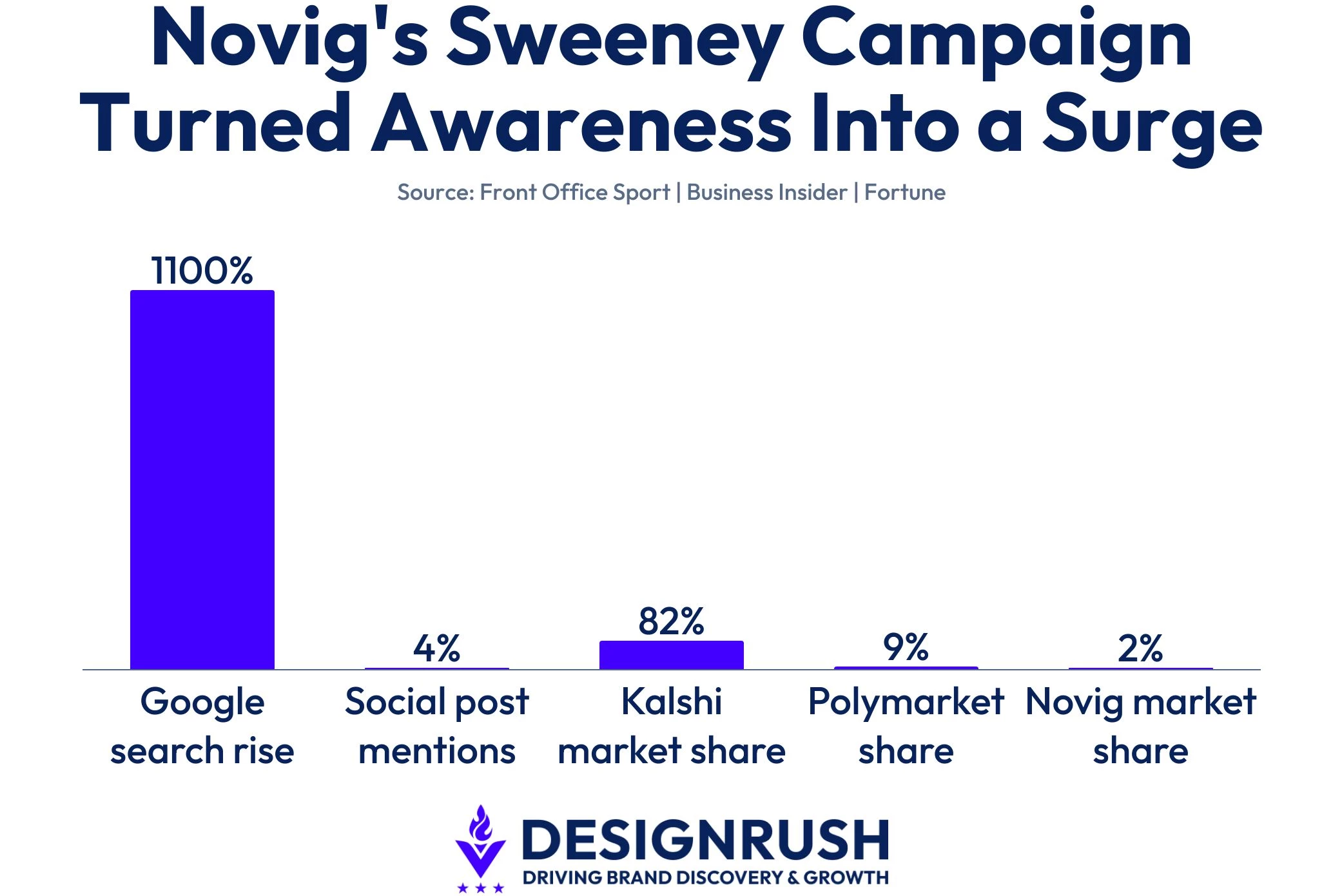
The data suggests Novig has won the awareness battle, but it leaves brand association and customer buy-in unresolved.
- Recognition creates an opening for challenger brands. Brands should connect viral attention to a specific product benefit to turn awareness into consideration.
- Celebrity attention can overpower the brand. Marketers should track brand mentions separately from talent mentions to accurately measure audience recall.
- Controversy can create reach without proving demand. Companies should measure campaign metrics to determine whether viral attention produces business value.
Because a campaign can dominate feeds and still leave the product a forgotten footnote in the internet's memory.
Our Take: Can Ragebait Still Build a Brand?
The tactic can become dangerous when provocation becomes the clearest reason anyone remembers the company.
Novig had a legitimate marketing problem.
Prediction markets are fighting for attention, and Novig entered the fight with far less recognition than competitors.
Sweeney solved the first part quickly.
View this post on Instagram
Her personal image gave Novig a cultural shortcut and created enough controversy to push the company into global conversations.
If audiences remember Sweeney's body and the backlash before they remember why Novig exists, the campaign created fame without enough product meaning.
We think this is where challenger-brand marketing is getting uncomfortable.
A niche company can now manufacture disproportionate attention by creating content designed to provoke a reaction.
But outrage can also make the brand's positioning harder to control.
The next phase of disruption should give audiences something to believe in after the outrage fades.
Otherwise, brands are simply using old provocations to compete for new attention.
The athlete backlash also exposes a wider problem with sports marketing.
View this post on Instagram
Women's sports have spent years demanding recognition for athletic performance, investment, and professional achievement.
Novig's ad has placed its brand directly inside that debate, giving the company a cultural issue to deal with alongside its product messaging.
The campaign shows why challenger brands need creative that can generate attention without leaving the product behind.
Explore these top sports marketing agencies to find teams that can balance cultural relevance with brand strategy.