
Brand Failures and Market Impact: Key Findings
- 71% of consumers say visual consistency influences perceived product quality in beverage and FMCG brands, according to Nielsen. Crystal Pepsi’s mismatch cost brand trust.
- Jaguar’s June 2024 U.S. sales crash to 49 units highlighted risks in electric vehicle (EV) market pivots without dealer and infrastructure readiness.
- 84% of consumers report a willingness to boycott fashion and lifestyle brands seen as ethically out of touch. Calvin Klein’s controversial 1995 campaign confirms this risk.
Why is it such a big deal when a big brand blows it?
Aside from the fact that millions, sometimes even billions, see the mistake within minutes thanks to social media, the real damage comes from lost trust.
According to Edelman’s 2025 Brand Trust report, 80% of people trust the brands they use, and it’s as much of a purchase consideration as quality or price.
But once that trust is lost, it's a long road to recovery.
Acquiring a new customer is five to 25 times more costly than retention, according to a Harvard Business Review article citing Bain & Company findings.
Once brand trust slips, every move is judged more harshly, recovery slows, and the cost, both financial and reputational, can be enormous.
Tone-deaf tweets, social media fails, poorly timed promos, and failed marketing campaigns that tanked millions.
These marketing and PR fails, as well as honest-to-goodness branding mistakes, show how even the most iconic companies can majorly miss the mark.
1. McDonald’s McPizza (1990)
Category: Product Launch
McDonald’s thought it could outpizza the pizza chains. Turns out it couldn’t.
In the early ’90s, the McPizza aimed to break into a new category but clashed with everything McDonald’s stood for. It was slow to make, messy to execute, and no one really asked for it.
Customers were annoyed. Franchisees hated it. The result? A fast fade into obscurity.
For marketers, McPizza is a textbook case of losing your brand’s soul. McDonald’s built its reputation on speed and convenience.
Pizza ovens don’t deliver either. The disconnect was obvious and costly.
View this post on Instagram
What brands can learn:
McDonald’s McPizza is what happens when a brand forgets what it’s built on.
In chasing a new category, the chain sacrificed speed and consistency, the very things it was known for.
It was slow, clunky, and totally off-brand, dashing customer expectations. No surprise it flopped.
And with 79% of consumers saying they’re more loyal to brands that communicate consistently across every touchpoint, as per Salesforce, the disconnect wasn’t just bad optics.
It was simply bad business, and one of those brand failures where a product launch ignored the brand’s own core promise.
2. Crystal Pepsi (1992)
Category: Product Launch
Pepsi launched Crystal Pepsi in 1992 to ride the wellness wave with a clear, “pure” soda.
The problem was, it tasted just like regular Pepsi. The look and flavor didn’t match, and consumers were just plain confused.
After heavy marketing, it got pulled within a year.
This is a classic case of visual and product mismatch. Consumers expect what they see to match what they get. Crystal Pepsi broke this rule and paid the price.
What brands can learn:
73% of consumers are more likely to buy from brands that use high-quality visuals, according to Sproutworth.
Add authentic user-generated content to the mix, and conversion rates can jump by 4.5%.
If your design doesn't match what people expect, you lose trust before you even get a sale.
This made Crystal Pepsi one of the most talked-about bad branding examples in beverage history.
3. Calvin Klein Ad Campaign (1995)
Category: Campaign
In 1995, Calvin Klein ran a gritty campaign showing young models in basement-like screen tests, and critics slammed it as promoting child exploitation.
The backlash was immediate and fierce, triggering a U.S. Department of Justice investigation.
Sure, edgy branding can grab attention, but this is what happens when it crosses ethical lines.
The damage to brand reputation far outweighs any short-term buzz.
What brands can learn:
Consumers are reading between the lines and acting on it. Many now believe brands are pushing political agendas, with 78% saying so in Edelman’s 2024 Trust Barometer.
Meanwhile, 60% are either buying or boycotting to make their views heard.
Brand safety is now a strategic necessity. How a campaign feels can matter more than what it says, and how missteps erode trust at scale.
Nearly 30 years later, these same challenges are back, only now the stakes are higher, the rules are stricter, and the consequences are immediate.
Zara and BrewDog are the latest cautionary tales, both recently banned by the U.K.’s Advertising Standards Authority for violating evolving standards on body image and emotional messaging.
The parallels are clear here. When storytelling ignores social context, a campaign becomes both risky and unsustainable.
4. McDonald’s Arch Deluxe (1996)
Category: Product Launch
In 1996, McDonald’s poured more than $100 million into launching the Arch Deluxe.
It's a so-called “grown-up” burger with fancy sauce, slick packaging, and a massive ad push.
But the audience literally didn’t bite. It clashed with McDonald’s fast, family-first identity and confused core customers.
This shows how even strong brands can falter when they misunderstand their audience.
McDonald’s assumed its core customers wanted sophistication over value and speed, but it was dead wrong.
What brands can learn:
Most consumers won’t give your brand a second chance if trust isn’t there.
In fact, 83% say they won’t do business with a brand they don’t trust, according to Zendesk.
Simply put, trust is table stakes for any purchase today.
McDonald’s Arch Deluxe flop proves that no matter how innovative a product is, if it doesn’t feel true to the brand, customer trust and sales will vanish fast.
5. Reebok Incubus (1997)
Category: Cultural Misstep
Reebok launched a sneaker in 1997 called the Incubus without fully checking the name.
The word refers to a male demon known for sexually assaulting women in their sleep.
Unsurprisingly, consumers were horrified, and the sneaker was pulled soon after launch.
In a February 1997 article, Reebok spokesman Kate Burnham told the L.A. Times that she and the company were “horrified."
“How the name got on the shoe and went forward, I do not know.
We are a company that has built its business on women’s footwear, so to do anything that’s denigrating to women is not what we’re about,” she said at the time.
This is a textbook example of the importance of cultural literacy in branding. A great product name in one market could be a PR fail in another.
View this post on Instagram
What brands can learn:
Industry best practice now calls for AI-driven linguistic and cultural screening before any product goes live.
According to PwC’s 2024 US Responsible AI Survey, 73% of companies use or plan to use AI tools to embed responsible practices, including bias and cultural checks, into their development cycles.
Besides, even a “minor” product recall can quickly run into millions of dollars, according to Elementary.
So, rather than spending upfront on AI-powered cultural screening, just save potential millions and keep your reputation intact.
6. Blockbuster (2000)
Category: Digital Shift
Until the early 2000s, Blockbuster dominated home entertainment.
However, it missed the digital shift and even passed on buying Netflix for $50 million.
Instead, it clung to late fees and physical stores while rivals went online. By 2010, bankruptcy was inevitable.
This is the definitive cautionary tale for legacy brands: adapt or vanish. Blockbuster bet on what made it iconic, but its customers didn't.
What brands can learn:
In 2025, nearly 65% of daily media time for U.S. adults will be spent on digital channels, according to eMarketer.
At the same time, McKinsey reports that U.S. consumers have gained over three extra hours of free time per week since 2019, though about 90% of that time is spent solo.
The biggest gains are in hobbies, shopping, fitness, and social media.
This shift means brands must meet consumers where they are digitally and individually.
By passing on Netflix, Blockbuster forfeited what grew into a $500.76 billion powerhouse.
Its own $55 million empire, on the other hand, tumbled into bankruptcy, cementing its place among brands that failed to adapt to disruption.
7. Polaroid (2000)
Category: Digital Shift
Polaroid, once the king of instant photography, missed the digital wave.
Even after inventing key photo tech, it stuck to analog formats while competitors pushed digital.
By the time Polaroid caught up, it had lost its relevance and market share.
This misstep shows how even pioneers can fall behind when they cling to outdated models.
Polaroid’s nostalgia wasn’t enough to survive the digital era.
What brands can learn:
By clinging to analog, Polaroid's annual sales fell from a peak of $3 billion in 1991 to $2.15 billion by 1997.
Meanwhile, rivals tapped into a $17 billion global digital-camera market in 2003 and achieved gross margins above 27.9%.
This is proof that timely investment in emerging channels can deliver scale and profitability, a lesson learned too late for many failed brands.
8. Starbucks Collapse into Cool (2002)
Category: Cultural Misstep
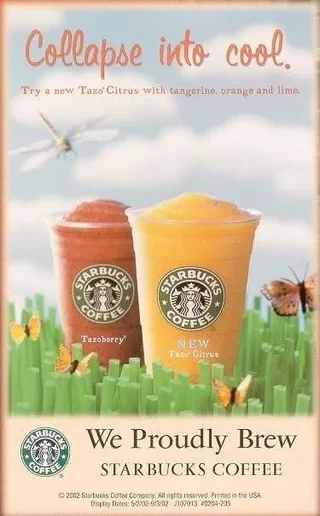
Shortly after 9/11, Starbucks ran a print ad featuring a collapsing coffee cup with the tagline "Collapse into Cool."
What was meant to be trendy came off as painfully insensitive.
The backlash was swift, and Starbucks pulled the campaign immediately. This case highlights how timing and context can either make or break a message.
Even well-meaning branding can backfire if it comes across as tone-deaf to cultural pain.
What brands can learn:
Most consumers (about 93%) say it’s important for brands to stay current with online culture, according to SproutSocial’s recent data.
But jumping on every trend can backfire.
In fact, a third of consumers find it embarrassing, and 27% say it only works within the first day or two.
Starbucks learned the hard way that “Collapse into Cool” after 9/11 wasn’t cool at all.
And the ad is still remembered as one of the worst marketing campaigns that failed to read the cultural room.
9. Bank of America U2 Karaoke Video (2006)
Category: Brand Culture/Internal Marketing
In 2006, two Bank of America executives made a U2 parody video to celebrate a merger. It was meant to boost morale but ended up going viral for all the wrong reasons.
The tone-deaf performance quickly became a symbol of corporate cringe, exposing how internal culture, once private, is now public by default.
Unpolished internal content can erode external perception when shared widely.
It also reinforced a harsh truth. Companies with bad marketing often lose control of the narrative altogether.
What brands can learn:
Internal trust shapes how the outside world sees your brand.
Employees have become some of the most credible ambassadors or biggest detractors.
Companies with high employee trust scores see 29% stronger consumer brand affinity, according to Gartner’s 2025 HR Insights report and Boston Brand Media.
This fiasco reinforced that even internal missteps can land you on the list of companies with bad marketing, especially when behind-the-scenes culture becomes part of the public narrative.
10. Microsoft Windows Vista (2007)
Category: Tech Product
Windows Vista launched in 2007 with high expectations as the successor to Windows XP.
Instead, users faced endless security prompts, bugs, and slow performance.
Vista’s poor reception forced Microsoft to extend XP support and fast-track Windows 7.
The OS became synonymous with frustration, damaging Microsoft’s reputation at a crucial moment in the history of personal computing.
What brands can learn:
Loyalty has its limits. Even devout fans will walk away after repeated bad experiences: 59% after several, and 17% after just one.
Overall, 32% of customers in the U.S. say they’d stop doing business with a brand they once loved after a single misstep, according to PwC.
Recovering a lost customer costs 6–7x more than retaining one, as per SignalMind, and boosting retention by just 5% can lift profits by up to 95%.
Vista is a reminder that product performance is a bottom-line driver, and one of Microsoft’s most public brand failures.
11. Microsoft Kin (2110)
Category: Tech Product
Microsoft launched the Kin phone in 2010 to appeal to younger users focused on social connections.
However, the device came with only a few apps, limited features, and confusing pricing.
It lasted just 48 days before being pulled from stores and resulted in a $7 billion failure.
This was an example of building tech without understanding the audience.
The Kin was too niche, underpowered, and poorly marketed.
What brands can learn:
Microsoft poured about $1 billion into Kin’s development and still booked a $240 million write-off after it flopped in just 48 days.
65% of product flops stem from poor market fit, and embedding early market testing sees 26% higher success rates on key initiatives.
Without this kind of alignment, even tech giants can join the ranks of brands that failed spectacularly.
12. Groupon Super Bowl Ad (2011)
Category: Super Bowl Ad
In 2011, Groupon ran a Super Bowl ad that mocked cause-based celebrity campaigns.
Timothy Hutton casually mentioned Tibetan oppression, then switched to promoting a fish curry deal.
Viewers immediately called it offensive and tone-deaf.
What brands can learn:
The ad’s humor missed its mark and tarnished Groupon’s reputation at the height of its growth.
Run every high-stakes spot through diverse focus groups and sensitivity checks.
Nielsen finds that a strong creative drives up to 86% more sales lift when pre-tested. You don't want to miss this and even turn up negative results.
13. HP TouchPad (2011)
Category: Tech Product
In 2011, Hewlett-Packard rushed the TouchPad to compete with the iPad.
But it lacked apps, ran slowly, and earned poor reviews.
The product was discontinued just 49 days after launch.
HP’s failure stemmed from entering a competitive space without a compelling edge or audience traction.
What brands can learn:
By rushing an undifferentiated TouchPad, HP booked a $1.67 billion write-down in Q4 2011 and ultimately absorbed roughly $3.3 billion in webOS exit costs.
These include steep discounts on unsold tablets before ultimately pulling the product off the shelves.
Brands that bake in lean validation can avoid this fate. CB Insights pins 42% of product flops on no market need.
14. Kodak (2012)
Category: Digital Shift
Kodak invented the digital camera in 1975 but failed to commercialize or prioritize it.
The company focused on its profitable photographic film business instead.
By the time digital photography took off, Kodak had lost its lead. It eventually filed for bankruptcy in 2012.
This is a solid example of legacy protection blinding innovation. The company feared disrupting its own business model and paid the price.
What brands can learn:
Only 29% of CEOs spend more than a third of their time on long-term strategy, and McKinsey found that just 30% invest in new ventures during times of uncertainty.
This is how innovation stalls and competitors catch up.
If you’re sitting on breakthrough ideas, act like it.
Ringfence R&D, back high-upside bets, and build execution into your innovation model before someone else does it better.
15. AT&T 9/11 Tribute Tweet (2013)
Category: Social Media Fail
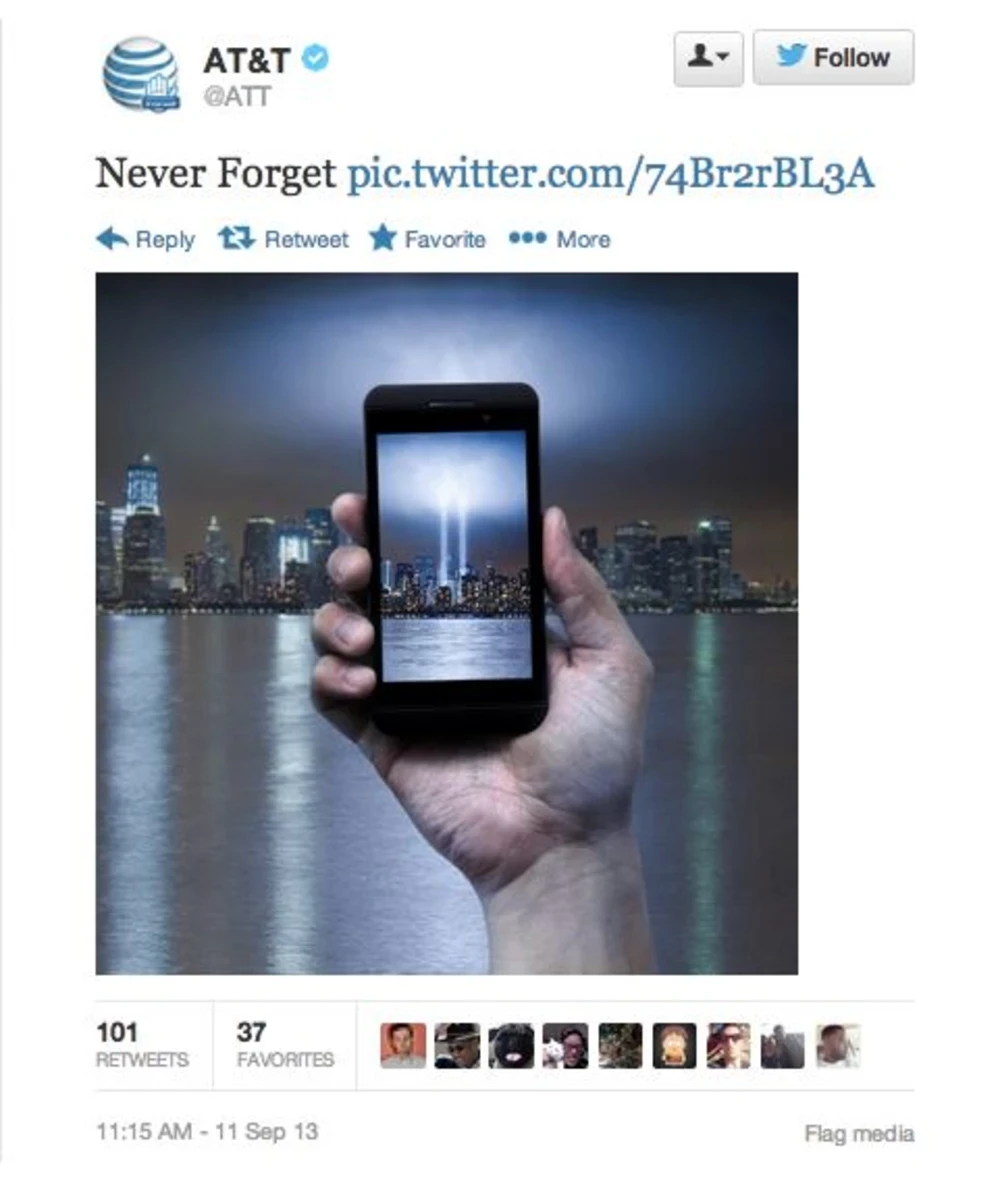
On the anniversary of 9/11, AT&T posted a tribute showing someone using a branded smartphone to capture the Twin Towers’ light memorial.
Critics called it an opportunistic mix of patriotism and product placement, and the tweet was deleted within hours after a strong backlash.
Even with good intentions, emotional moments require extra scrutiny. Social media isn’t the place for subtle branding during national tragedies.
What brands can learn:
This became one of the most cited social media marketing mistakes in recent memory.
Most brands misfire in crises. Forbes found that only 49% had a formal social media crisis plan in 2023, which left them exposed when tone-deaf posts went live.
In emotionally charged moments, inappropriate branding can erode trust.
Dear brands, if you’ve nothing meaningful to say, say nothing.
Instead, especially in moments of tragedy, offer tangible support in the form of donations, resources, and even solidarity.
16. Subway Jared Promo (2015)
Category: Timing Fail/Brand Crisis
In 2015, Subway kept running promos with Jared Fogle, their longtime spokesperson, even after his child exploitation investigation became public.
The timing was disastrous, making the brand look either unaware or indifferent.
The sandwich giant's slow response highlighted how crucial real-time brand monitoring is, especially when reputations are on the line.
What brands can learn:
A 2023 study by Edelman found that 63% of consumers expect a public response within the first hour of a crisis.
Brands that do are 85% more likely to preserve public trust.
When a storm hits, silence can be deadly.
Activate your crisis engine now: stamp your logo quietly, get a clear, empathetic response out fast, and let actions speak louder than hashtags.
17. Samsung Galaxy Note 7 (2016)
Category: Product Safety
Samsung launched the Galaxy Note 7 with high hopes, but battery defects caused the phones to overheat and catch fire.
After several recalls, Samsung pulled the product for good.
The fallout cost over $5 billion and severely damaged consumer trust.
No brand is immune to failure, but how it’s handled defines recovery. Samsung’s delayed response worsened the fallout.
What brands can learn:
According to PwC’s 2025 Trust and Safety Survey, 72% of consumers are more likely to engage with a product that has visible trust and safety measures.
That’s an excellent market advantage.
Don’t wait for regulators or Twitter to flag the problem. Build real-time safety monitoring into your product ops.
Have a tested recall plan, and act fast, because hesitation is more dangerous than failure.
18. Pepsi Kendall Jenner Ad (2017)
Category: Ad Campaign
Pepsi’s 2017 ad featured Kendall Jenner ending a protest by handing a soda to police.
The campaign tried to tap into real protest imagery but came off as trivializing serious issues.
After global backlash, it was pulled within 24 hours.
The campaign failed because it co-opted activism without substance. Consumers demand authenticity, not performance.
What brands can learn:
When you strip social movements of context and meaning, trust crumbles.
Brands should embed purpose in operations and align campaigns with real commitments.
Edelman’s 2024 Gen Z report finds that 84 % of consumers say they need to share values with a brand to even use it.
And nearly 60 % of Zoomers feel a personal connection with people who buy the same brands they do.
But this connection evaporates when values feel performative.
19. Dove Body Wash Ad (2017)
Category: Ad Campaign
Dove’s 2017 Facebook ad showed a Black woman removing her shirt to reveal a white woman underneath.
The image sparked outrage, with critics saying it implied the product could “whiten” users.
This contradicted Dove’s body positivity message and damaged its reputation.
While Dove claimed the ad was misinterpreted, the damage was done.
It now serves as a reminder that brand visuals must be inclusive, intentional, and rigorously tested.
What brands can learn:
Dove's brand perception suffered significantly following the ad's backlash.
The company faced widespread criticism and accusations of racism, leading to a public relations disaster, as per Reuters.
Despite issuing an apology, the incident highlighted the importance of cultural sensitivity and the potential risks of misrepresenting diversity in advertising.
Rigorous review processes should catch tone-deaf elements before they go public. Without this, even well-meaning campaigns risk backfiring and eroding trust.
20. Del Monte Foods (2025)
Category: Digital Disruption / Legacy Retail Collapse
Del Monte, a 139-year-old canned foods giant, filed for Chapter 11 bankruptcy in July 2025.
The brand struggled to stay relevant as consumers increasingly chose fresh, plant-based, and affordable options.
Limited innovation, outdated distribution, and rising competition all played a role in its downfall.
This case highlights the steep price of resisting change in an ever-changing food market.
Tradition alone can’t keep pace with shifting consumer values.
What brands can learn:
Del Monte's bankruptcy filing, estimated between $1 billion and $10 billion in assets and liabilities, underlines the importance of aligning product offerings with current consumer demands.
Its struggles with debt, overproduction, and meeting consumer preferences highlight the risks of not adapting to market changes.
Proactively responding to market trends is crucial for long-term survival.
What to do instead? Legacy brands can’t coast on history. They must innovate.
Think fresh, sustainable, and health-driven. Digital channels are the front door nowadays. Move fast on trends or risk becoming yesterday’s news.
21. Gap Logo Redesign (2010)
Category: Branding Fail
Gap reverted to the original design within a week, proving that brand identity changes must be tested and communicated thoughtfully.
In 2010, Gap replaced its iconic blue box logo with a minimalist Helvetica wordmark. The backlash was swift and fierce.
Within six days, Gap scrapped the redesign and brought back the original, citing customer feedback.
The swift reversal demonstrated how deeply emotional and visual identity is for loyal customers. Rebrands must feel earned, not imposed.
View this post on Instagram
What brands can learn:
Changing your logo overnight is a fast track to customer alienation. Don’t make this huge branding mistake.
A 2025 study by Cropink found that 75% of consumers recognize a brand by its logo.
So, test ideas openly, involve your audience, and prepare them for change.
Let your brand evolve, and don’t shove it down your consumers' throats. This is how you keep trust intact and avoid costly reversals.
22. Jaguar EV Rebrand & Dealer Standstill (2024)
Category: Strategic Misstep / Sales Collapse
In 2024, Jaguar halted retail operations to focus on an all-electric lineup.
It then launched "Copy Nothing," a rebranding campaign that didn't feature any car.
These combined led to sales plummeting to just 49 units sold in Europe this June.
Dealers were sidelined. Infrastructure lagged. The pivot may have sounded bold, but the execution left the brand in neutral.
This case shows what happens when strategy moves faster than execution. A major rebranding needs full alignment across retail, marketing, and operations.
Jaguar's EV and rebranding campaigns have become a textbook marketing fail, where internal ambition outran external readiness.
View this post on Instagram
What brands can learn:
Big shifts require bigger coordination.
If you sideline your partners and under-communicate your strategy, even the most ambitious vision can stall.
These days, the EV brands gaining ground are the ones matching ambition with operational clarity and bringing their stakeholders along for the ride.
Also, make sure your audience is ready when you change something that makes up the essence of your brand identity (like being an automaker and taking the cars out of a major ad).
23. American Eagle x Sydney Sweeney Campaign (2025)
Category: Ad Campaign
American Eagle's summer denim campaign featured the tagline "Sydney Sweeney has great jeans," using a pun on "genes."
This wordplay sparked accusations that the ad evoked eugenics or white supremacist beauty ideals, especially given Sweeney’s blue eyes and blonde hair.
Critics called it tone-deaf and potentially coded propaganda, while others accused the backlash of being manufactured by political actors and part of culture war tactics.
American Eagle responded in a statement by clarifying that “the campaign is and always was about the jeans,” insisting it was meant to celebrate personal style rather than any other deeper ideological meaning.
Meanwhile, PR experts noted that the controversy boosted visibility and gave the fashion giant substantial exposure, though foot traffic dipped in subsequent weeks.
What brands can learn:
Wordplay can backfire without context.
A clever tagline might seem harmless internally, but without testing how it lands across different audiences, it can fuel controversy.
Today’s most resilient brands are the ones pressure-testing creative ideas and preparing crisis responses before launch, not after.
And remember, if your messaging hints at something as loaded as genetics, it can ignite backlash in an instant.
Our Take: Fails Are Major Warnings
If you dig beneath the headlines, these flops share one obvious problem: a serious disconnect.
That is, between what the brand thinks it is and how the audience actually sees it, as well as between big ambitions and cold reality.
That’s why I find these 23 failures so useful. They act as diagnostic tools and show exactly what happens when you:
- Move faster than your operations can handle
- Market a product no one asked for
- Confuse provocation with relevance
- Tinker with identity without a plan
In this DesignRush podcast episode, digital marketer RJ Licata breaks down why brand misfires often start with misaligned audience insight and how to fix it:
If you’re a CMO, brand strategist, or agency leader, treat this list like a heat map.
No matter how big your name is, if you lose the plot, the market will write your story for you.
A failed product or bad ad rarely tells the whole story. Usually, it means your brand is out of sync with your audience, your strategy, or the market.
These brand mistakes reveal warning signs I’ve seen too many brands miss.
Ignoring them is just plain reckless. Success takes focus, honest self-checks, and real alignment across your entire business. Miss these, and no budget or legacy will save you.
Take these failures as a guide. Learn fast. Adapt faster. And keep your brand out of the headlines for all the right reasons.
When your brand’s message is clear and consistent, everything else works harder. These teams specialize in building clarity from the ground up: