
Kodak's Missed Opportunity: Key Findings
- Lost market dominance: Once valued at $31 billion and holding 90% of U.S. film sales, the company filed for bankruptcy in 2012 and exited it less than two years later.
- Wasted chance: Kodak created the first digital camera in 1975, yet leadership kept it under wraps to protect film profits.
- Brand stuck in print era: Even in the 2000s, Kodak tied its digital products to printing instead of completely moving on to online sharing.
- Lesson for CMOs: Innovation should go hand in hand with brand strategy. Don't dismiss an opportunity to expand and lead the market.
Quick listen: Kodak invented the digital camera but failed to brand for the digital age. Here’s the $31B lesson for CMOs in under 3 minutes.
I still remember when the phrase, "Kodak moment," was on everyone's lips.
People would say it whenever something special happens that's worth capturing on film.
In fact, Collins Dictionary defines it as, "A phrase used when taking a picture of someone at a particular moment that will never be forgotten."
And I think this is the most symbolic of what Kodak stood for.
It's a brand that accompanies you during life's most important events.
It preserves memories, turning fleeting moments into something you can hold, revisit, and share for years to come.
Even though younger generations have become interested in film photography once again, Kodak is still in the red.
Its 2025 earnings report warns that it's struggling to survive, with plans to stop pension contributions and seek refinancing.
Its stock dropped more than 25% after this disclosure, with major media outlets predicting its collapse.
"Kodak has no plans to cease operations, go out of business, or file for bankruptcy protection. To the contrary, Kodak is confident it will repay, extend, or refinance its debt and preferred stock on, or before, its due date.
When the transactions we have planned are completed, which is expected to be early next year, Kodak will have a stronger balance sheet than we have had in years and will be virtually net debt free," Kodak clarified in a press release.
In light of this, I think it’s worth looking back to see exactly where the iconic brand went wrong to become one of the biggest failed brands of all time.
A Brand Woven Into History
Established in 1889, Eastman Kodak became part of many historical moments.
During the Apollo 11 mission, astronauts used a custom-built Kodak color camera to capture images of their first steps on the moon.
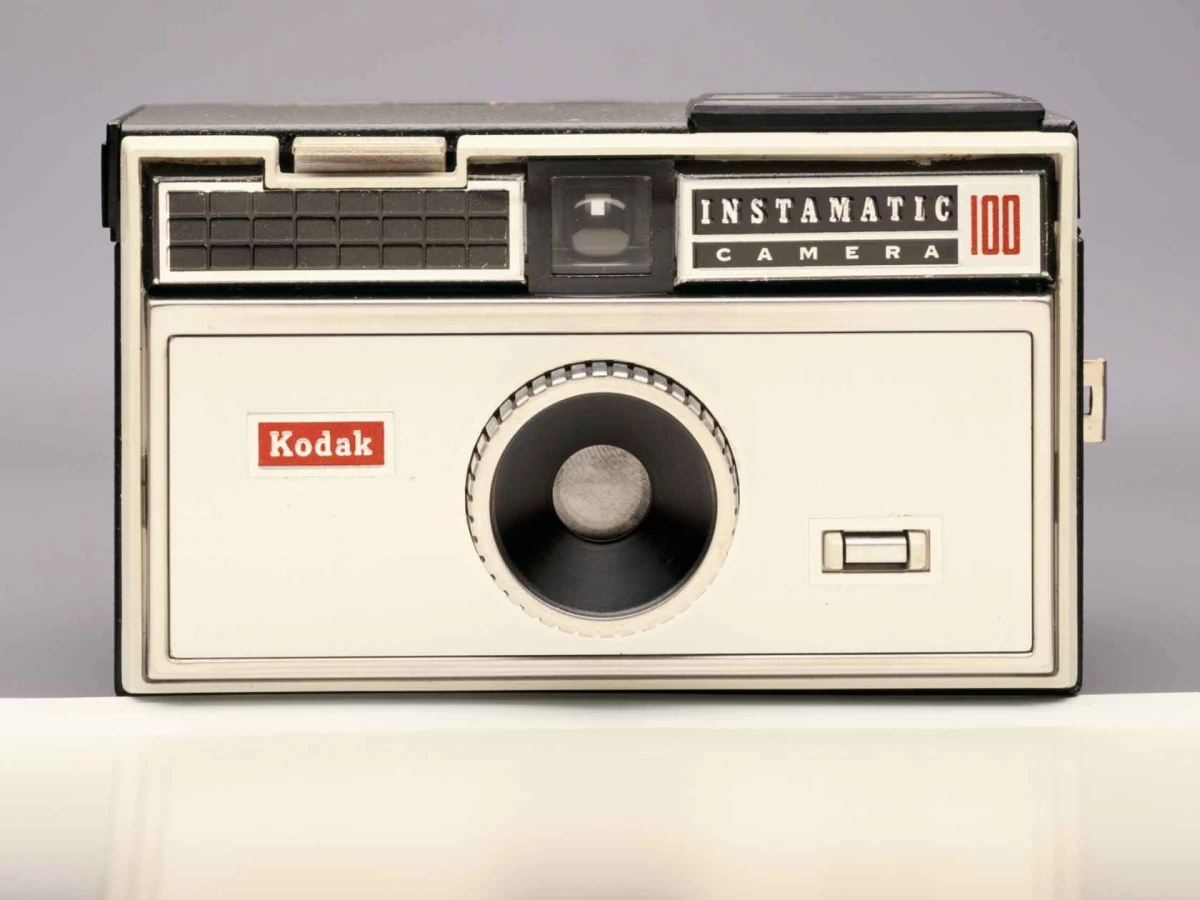
It sold about 50 million Instamatic cameras between 1963 to 1970, employed about 120,000 people in 1973, and had a whopping $10 billion in sales in 1981.
During this period, the company sold 90% of film and 85% of camera products in the market.
And by 1997, its market cap reached $31 billion. Its sheer dominance can't be denied.
A major reason for Kodak's success is how it evolved together with the entertainment industry, producing commercial film products used in Hollywood.
The Kodak 100T 5247 became the medium for many of the most iconic movies in the '70s and '80s, including:
- "Apocalypse Now" (1979)
- "The Shining" (1980)
- "Blade Runner" (1982)
- "E.T. the Extra-Terrestrial" (1982)
- "Indiana Jones and the Temple of Doom" (1984)
Movies using its films have since won more than 80 Academy Awards for Best Picture, with Kodak itself being awarded nine times for its technical contributions.
However, the brand wasn't able to sustain its momentum. Its heyday ended in the late 2000s.
Stuck in the Past
Did you know that Kodak engineer Steven Sasson invented the first-ever digital camera in 1975?
He then presented the product to executives in several departments, including marketing and technical.
Sasson was so advanced that he even thought of the possibility of sending the digital copies of photographs over phone lines. It was truly revolutionary.
But the reaction he got from the marketing department wasn't positive at all.
“Every digital camera that was sold took away from a film camera and we knew how much money we made on film,” Sasson told The New York Times in a 2015 interview.
“That was the argument. Of course, the problem is pretty soon you won’t be able to sell film — and that was my position.”
Sasson's opinion was ignored and his invention shelved. I think this decision was truly instrumental to Kodak's downfall.
It's also pretty accurate to say that this is one of the worst marketing fails in history.
It took Kodak 16 years before it ventured into actually producing digital cameras for photojournalists.
Its Japanese rival, on the other hand, introduced (but didn't release) the Fuji DS-1P in 1988, the first handheld digital camera with a 16MB internal memory card.
In 1990, the first digital camera, Logitech's Dycam Model 1, was finally commercially released in the U.S.
Kodak had the foundations of the digital camera in 1975, but it didn't release its own product until 1991.
Its leaders simply didn't have the foresight to see that digital photography meant freedom from printing, and people would buy convenience.
Moving Too Slowly, Too Late
The Kodak story is often oversimplified as ignoring the digital evolution. But in reality, it entered the digital imaging market aggressively in the 1990s.
Under CEO George Fisher, Kodak developed innovations like image sensors and scanners, as well as focused on imaging and pushed digital into the brand’s product line.
Though it still couldn't seem to let go of the concept of physical photos, it launched the Kodak Personal Picture Maker for home printing in 1999.
The company also rolled out its own line of digital cameras, starting with the EasyShare in 2001. It even launched online photo-sharing site Kodak Gallery after acquiring Ofoto.
By 2005, Kodak was the No. 1 seller of digital cameras in the U.S.
But globally, it was still trailing Canon and Sony, and its margins were thinner than in its film heyday.
The strategy was to transition gradually, offering both traditional film products and digital solutions so consumers could shift at their own pace.
This caution kept short-term revenues steadier but slowed its brand evolution.
The market, meanwhile, was moving quickly toward instant digital sharing, a behavior Kodak didn’t fully embrace in its brand narrative.
By 2007, Kodak’s financials were under strain from the decline of film, price pressure in digital cameras, and heavy restructuring costs. This marked its last annual profit.
Within a few years, smartphones with increasingly sophisticated cameras began eroding the standalone digital camera market that Kodak had just come to dominate.
It still led in areas like megapixel image sensors and operated thousands of retail printing kiosks.
The problem was that its brand and much of its consumer-facing strategy were still built around printing photos.
Hey @Kodak! Needed some last minute pics, and found that it’s way past time to upgrade the printing kiosk at your @Target store 955! Staff super sweet but the printer is barely sputtering. pic.twitter.com/1QYkmTX6b9
— Miya Shay (@miyashay) June 9, 2018
On January 19, 2012, Eastman Kodak Company filed for Chapter 11 bankruptcy protection in New York.
It exited bankruptcy in October 2013, a smaller company centered on commercial printing, packaging, functional printing, and professional services for businesses.
It no longer sold consumer cameras, and its brand licensing became one of the few consumer-facing remnants.
This marked a complete departure from the mass-market photography business that had defined Kodak for over a century.
While the company survived, it did so as a fraction of its former size and without the cultural presence that “Kodak moments” once represented.
How Brands Can Avoid Being the Next Kodak
When consumer behavior changes fast, a cautious repositioning can be fatal.
The iconic brand's gradualism meant that even with strong digital camera sales, it wasn’t leading the culture of digital photography.
Instead, its brand identity lagged behind where consumers were heading.
It tried to pivot several times, even going as far as launching its own crypto, the KodakCoin, at the height of the crypto boom in 2018.
But it didn't stick. Kodak was lagging behind its competitors too much.
To protect brand relevance and market leadership, brands must ensure innovation shapes the brand story as much as it shapes the product.
Here are some steps so you don't end up being the next company that misses a huge opportunity:
- Let innovation lead your identity: If your R&D team creates a breakthrough, make it the centerpiece of your brand’s next chapter rather than a quiet add-on.
- Don’t wait for the market to force your hand: Transition your brand narrative before consumer behavior fully shifts. This builds authority instead of forcing a reactive pivot.
- Retire outdated positioning with intent: Protecting legacy products too long can make your brand synonymous with the past rather than the future.
- Anticipate cultural adoption: Kodak had the tech, but it didn’t align with how people wanted to use it. Test messaging, channels, and product fit early to ensure the innovation resonates with real-world behavior.
- Measure risk in relevance: Short-term profit protection can cost long-term brand equity. Build decision-making models that balance both.
Even market leaders can miss their moment when product and brand teams aren’t in sync.
Don't be afraid to go to an expert for help.
Many times, CMOs and internal teams fail to see the big picture because they fear making costly branding mistakes.
Turning to someone outside and hiring experts can bring a fresh perspective and uncover blind spots.
It can also move the brand forward with strategies grounded in objectivity and experience.
Remember that agencies are in a unique position to bridge this gap and ensure innovation actually translates into market momentum.
Great ideas can stall without the right go-to-market plan. These teams ensure your product launches with impact and stays competitive: