
Agency Culture Key Findings:
- Scaling without clarity leads to burnout, diluted creativity, and broken trust.
- Saying “no” to misaligned work protects morale and long-term client results.
- AI can’t replace cultural nuance. Human strategy still leads.
Only 33% of employees worldwide are thriving, according to Gallup’s State of the Global Workplace Report.
It’s a sharp warning for leaders attempting to grow without addressing culture, clarity, and alignment.
Agency growth often stalls not because the ideas aren’t good, but because internal systems don’t evolve fast enough to support expansion.
When ambition outpaces structure, teams break down: execution slips, morale drops, and creativity becomes reactive rather than strategic.
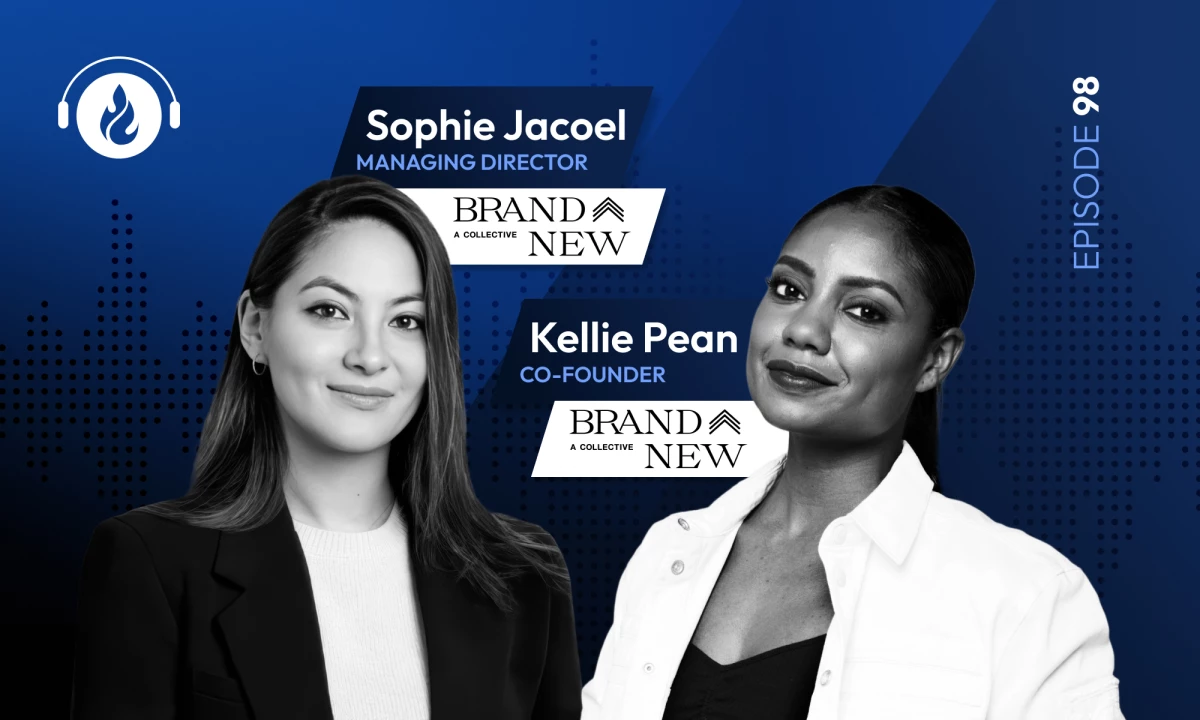
In Episode 98 of the DesignRush Podcast, Brand New: a collective co-founder Kellie Pean and managing director Sophie Jacoel share how they’ve scaled without breaking what makes their agency work: culture, trust, and shared purpose.
Listen on Spotify or YouTube to hear how they scale smart, not fast.
Slow Growth, Strong Foundation
While many agencies chase rapid expansion, Brand New has built its growth strategy around intentional pacing and internal alignment.
Why? Because scaling too quickly without the systems to support it leads to burnout, turnover, and diluted creative work, risks the leadership team is not willing to take.
For co-founder Kellie Pean, real growth is about readiness.
“I’d rather go slow and get it right than just ball out because I can.”
She likens their approach to marathon training, where consistent output and recovery build long-term performance.
“We just talked about a marathon. You train by adding miles on your runs… You're building endurance,” Kellie adds.
Managing Director Sophie Jacoel echoes the danger of unchecked scaling. Without structure, she notes, agencies lose clarity, and with it, client trust.
By scaling deliberately, Brand New protects its creative quality, team morale, and reputation, ensuring that growth enhances its core, rather than undermining it.
Culture as Operating System
Culture is about how the team operates, makes decisions, and shows up for each other.
Both Kellie and Sophie emphasize that culture at their agency is rooted in trust, structure, and emotional intelligence, especially during high-growth periods.
They’ve built a flexible, high-performance environment where expectations are clear, and leadership adapts to individual needs.
“It takes a certain type of grit and mentality to work for Brand New. We are all high-performing individuals… I can’t teach that,” Kellie says.
For them, culture also means recognizing life outside of work, especially as parents and multi-hyphenates. But that flexibility comes with built-in accountability.
Sophie notes that while their hybrid structure offers autonomy, success still depends on communication and shared ambition.
“It’s about finding the balance of showing up and meeting each other in the middle… We create the space, but it only works if the team is aligned.”
Brand New prioritizes culture as function, baked into how they work, not just how they feel.
Client Partnerships Start with Listening
Strong client relationships are built on trust, shared ambition, and the willingness to listen before solving.
Kellie and Sophie stress the importance of treating client relationships like long-term collaborations, not transactional projects.
Sophie explains that who the agency is and how they work matters just as much as the final creative.
“Ultimately, yes, the creative matters — that’s table stakes. But… you spend more time with your clients than your family. So they want to know who they're working with.”
That emphasis on people-first connection means the Brand New team approaches discovery differently.
Instead of leading with their capabilities, they focus on understanding the client’s model, context, and internal goals.
Kellie adds that the agency’s reputation is built on the clarity and conviction that comes from true partnership.
This approach pays off in long-term retention. Many of their clients have worked with Brand New since its earliest years, a testament to the agency’s alignment-first strategy.
Saying No Is a Strategy
Growth often tempts agencies to overextend, taking on clients or categories outside their core strengths in the name of revenue.
Kellie and Sophie say protecting creative integrity means knowing when to say no.
Their approach: focus on what they do best and be honest about what they don’t.
“We’re not going to shoot ourselves in the foot pretending we have expertise in an area that we don’t. We have expertise in enough areas,” Sophie says.
Kellie adds that creative energy is finite, and stretching too wide dilutes the impact of the work.
Saying yes to every opportunity can quickly lead to mediocrity.
“Yes doesn’t get you excellence.”
Instead, Brand New commits to doing fewer things, better, concentrating their efforts where they can lead with confidence, depth, and cultural fluency.
That kind of restraint, they say, builds trust with clients and protects team morale, because no one is being asked to fake expertise or burn out proving something they’re not built to deliver.
Use AI to Support the Work
AI has introduced powerful tools into agency workflows, from writing assistance to meeting recaps and content planning.
Automation doesn’t replace the cultural nuance and emotional intelligence that real strategy requires.
Brand New uses AI in supportive ways but remains clear on its creative limits.
Kellie emphasizes that no amount of automation can replicate lived experiences.
“That is like humanity over everything. That's the nuance of my personal lived experience that a robot is not gonna give me.”
Sophie agrees, saying AI hasn’t yet matched what her human teams bring to the table, especially when it comes to depth and resonance.
“For right now, I'm yet to see AI do what I see my human teams do.”
They’ve built guardrails around how it’s integrated, letting it streamline processes, while ensuring that voice, values, and brand storytelling remain human-led.
Retention Is the Real Metric
While many agencies focus on acquisition and visibility, Brand New says the most meaningful indicator of success is retention of both clients and team members.
Sophie shares that some of Brand New’s client relationships have lasted since the agency’s earliest days, a rarity in an industry known for constant turnover.
“There can be no better measurement of success in my mind.”
According to Kellie, retention is a signal that the work, the team dynamics, and the client alignment are all functioning at a high level.
“When your clients are excited to work with you, that kind of validation is very important.”
That long-term trust is earned through consistency, clear expectations, and culture that supports both autonomy and accountability.

About the Guests
Kellie Pean Co-Founder, Brand New: a collective
Kellie is an award-winning brand strategist with over 15 years of experience across Diageo, The Hollywood Reporter, and now Brand New — the culture-first agency she co-founded in 2017. Known for her focus on operational clarity, brand storytelling, and human-first leadership, Kellie leads the agency’s growth strategy and creative direction across entertainment, fashion, beauty, and regulated industries.
Sophie Jacoel Managing Director, Brand New: a collective
Sophie brings deep agency and brand experience from 72andSunny, adam&eveDDB, and ATTN:, where she led high-profile campaigns for Google, Etsy, 1800 Tequila, and Amazon. At Brand New, she oversees business development, client relationships, and team operations — with a sharp focus on long-term retention, clear process, and building emotionally intelligent client partnerships.
Why Clarity, Culture, and Trust Still Win
Brand New offers a counter-model:
- Grow when you’re ready
- Stay grounded in your values
- Protect what makes your work matter
Success isn’t about chasing every pitch or adopting every new tool. It’s about knowing your lane, building systems that support your people, and delivering creative that’s both resonant and relevant.
Culture is infrastructure. And growth isn’t progress unless it sustains the people and partnerships behind it.
For founders, strategists, and team leaders navigating fast growth, this episode is a reminder that clarity is the foundation for everything else.


-preview-webp.webp)