
Microsoft's Vista Mistake: Key Findings
- Big, undelivered promises: The hype around Vista's performance and security fell when users encountered a slow-loading interface, bugs, and endless prompts.
- Low enterprise adoption: Only 8.8% of businesses used Vista 18 months after launch, preferring to stay on Windows XP.
- Image crisis: Apple’s “I’m a Mac” ads defined Vista as a dud, forcing Microsoft into defensive campaigns.
- Fast retreat: Windows 7 was launched less than three years later to win back consumer trust.
- Lesson for CMOs: Trust is built when product reality matches what a brand promises.
Quick listen: Windows Vista proves why CMOs must keep promise and product in sync. Here’s the $70-billion lesson in under 3 minutes.
When your brand promise isn’t backed by product reality, the fallout compounds quickly.
Microsoft learned this the hard way.
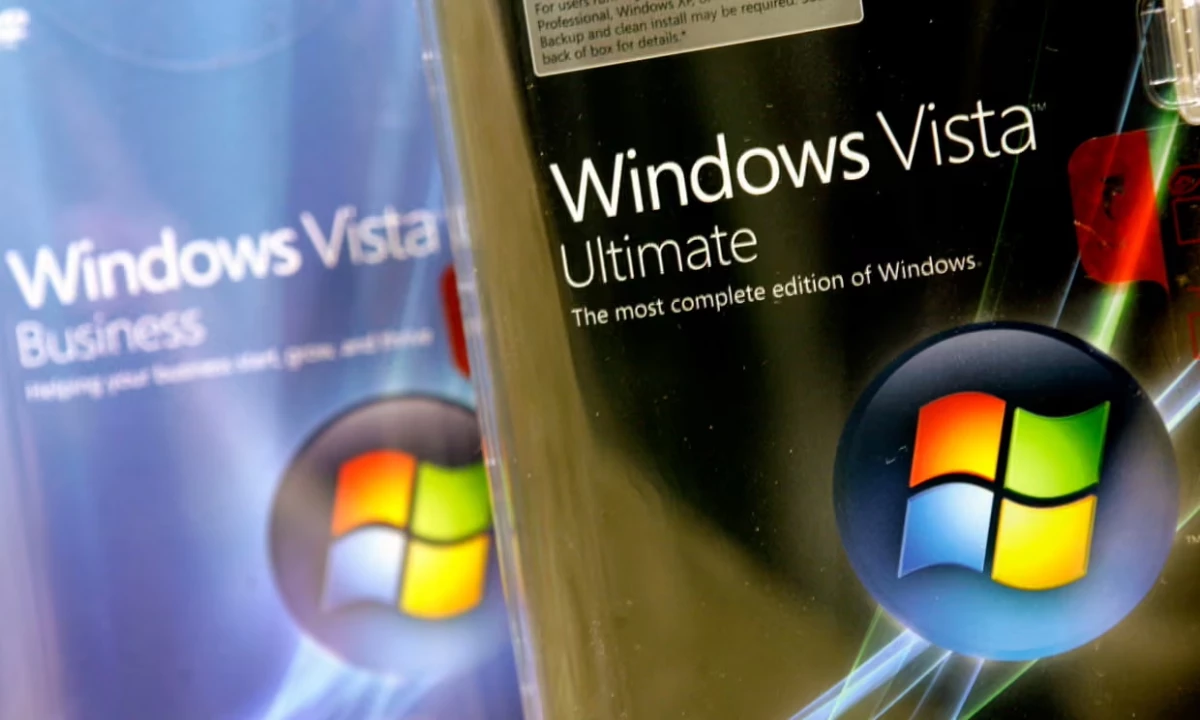
Windows Vista was billed as the next-generation OS to “wow” users with breakthrough performance, visuals, and security.
It was supposed to solidify Microsoft’s reputation as a market leader. Instead, it became one of its biggest marketing fails.
The company spent five years and enormous marketing dollars touting Vista’s revolutionary potential.
“Windows Vista and Microsoft Office 2007 will transform the way people work and play,” Microsoft Chairman Bill Gates said in a press release on January 29, 2007, one day before the official launch.
"Millions of consumers had a hand in helping us design, test and create the most exciting versions of Windows and Office we’ve ever released.
Windows Vista and Microsoft Office 2007 squarely address the needs and aspirations of people around the globe,” he added.
In a late 2006 research study commissioned by Microsoft Corp. and conducted by International Data Corporation (IDC), the OS was projected within a year to "drive significant economic growth" in the U.S.
"The study’s findings indicate that Windows Vista will provide a foundation for the information technology market moving forward, creating more than 100,000 new jobs and driving $70 billion or more in revenues for Microsoft’s partners and the industry at large," Microsoft stated.
But when release day came, the product simply couldn’t live up to the massive marketing hype.
As part of the public launch of Windows Vista (2006), on 29th January 2007, performers from the Grounded Aerial Dance Theater recreated the Windows Vista logo on the side of the Terminal Building - a 7 storey warehouse building on the west side of Manhattan, New York City. 🎭🏙️ pic.twitter.com/Svq9C0JjnG
— Windows On Windows (@wowstartsnow) September 12, 2024
Vista’s debut was highly anticipated, yet it swiftly became synonymous with disappointment and frustration.
Despite Microsoft’s promises of cutting-edge features and security, users encountered a far less rosy reality.
Vista launched with widespread hardware and software compatibility issues and a notorious appetite for computing resources.
Many PCs that were advertised as “Vista Capable” struggled to run the bloated OS effectively.
And instead of a faster, sleeker experience, early adopters often got sluggish performance.
Even Vista’s much-touted new security framework backfired, bombarding users with so many intrusive and irritating permission pop-ups.
In short, Vista’s user experience didn’t match Microsoft’s grand promises, undermining consumer confidence from the get-go.
Tellingly, here in 2025, Microsoft is still polishing basic user experience elements.
Microsoft is finally improving Windows 11’s dark mode https://t.co/ZhJzPFaeAv
— The Verge (@verge) August 18, 2025
It’s only now close to making Windows 11’s dark mode consistent across the entire system, nearly a decade after introducing the feature.
Apple, by contrast, rolled out a unified dark mode years ago in macOS Mojave, showing how small details can reinforce brand perception of polish.
Microsoft needs to remember that users have long memories when an experience feels half-baked.
A Fractured Trust and a Fast Retreat
The gap between Windows Vista’s marketing fail quickly eroded public trust. Early word-of-mouth was brutal.
Consumers and IT departments alike began avoiding Vista, or even downgrading new PCs back to the familiar Windows XP.
By mid-2008 (a year and a half post-launch), Vista’s enterprise adoption was stuck at 8.8%, an alarmingly poor uptake for a flagship product from the king of operating systems.
"Vista showed that cutting corners on stability testing can wipe out years of brand equity overnight. The OS had ambitious goals, but instability overshadowed everything else," said Anton Zenkov, VP of Software Development at custom software development and quality assurance company, Kanda Software.
"In custom or purpose-built software, reliability isn’t a nice-to-have — it’s the baseline. Users will abandon even the smartest features if the foundation doesn’t hold. The true differentiator isn’t how many features you launch, but how consistently those features work under real-world pressure."
This shows active customer resistance, fueled by feelings of betrayal.
A guy named Anthony brought a copy of Windows Vista Home Premium in 2007, then destroys it with a paper shredder. pic.twitter.com/4HXzaehKH9
— BobPony.com (@TheBobPony) January 30, 2024
To make matters worse, Microsoft’s competitors seized the narrative.
Apple launched a series of scathing “I’m a Mac, I’m a PC” TV commercials with Justin Long that gleefully portrayed Vista as buggy, bloated, and user-unfriendly.
These ads punched where it hurt, reinforcing the public perception that Microsoft’s shiny new OS was a dud.
My favorite one is where it showed the PC (Microsoft) investing heavily in advertising as opposed to fixing Vista's problems.
To push back, Microsoft rolled out its “I’m a PC” ads, an attempt to reclaim control of the Windows story after Apple’s jabs.
It even ran a “Mojave Experiment” stunt (where people were tricked into praising Vista when presented under a code name) to prove Vista wasn’t as bad as everyone thought.
It's like the blind taste tests that brands normally do, except it failed to drive the point home.
These efforts were mere Band-Aids on a bleeding bullet wound.
Once a brand promise is broken so visibly, no amount of clever ads can fully repair the damage.
Even casual users knew the name Vista was practically tech shorthand for failure. Microsoft had little choice but to go into damage-control mode.
Behind the scenes, the company raced to do what would have been unthinkable a year prior: replace Vista as soon as possible.
Windows 7, originally slated for a much later timeline, was pushed out at an accelerated pace.
By late 2009, just less than three years after Vista’s debut, Windows 7 hit the market, effectively putting the former out to pasture.
The Vista name was so toxic that not using it became a selling point for its successor.
Following the release of the poorly received Windows Vista, Microsoft had some work to do to reinstate trust in the operating system, and Windows 7 was a roaring success. Here's why. https://t.co/HggIxf3iiY
— Tom's Hardware (@tomshardware) August 14, 2025
It’s also worth noting that Vista did introduce some genuine innovations, which paved the way for the success of Windows 7, including:
- An improved integrated search function
- A sleek Aero Glass visual interface
- Groundwork for better security
But these technical merits didn’t matter in the face of broken trust.
Vista taught Microsoft and the entire industry a humbling lesson. Once you lose your customers’ faith, even good features can’t save you.
The operating system that was meant to carry Microsoft’s legacy forward instead became one of the most remembered branding mistakes in modern history.
Promise and Reality Must Align
For CMOs, product marketers, and brand leaders, the story of Windows Vista offers a practical example of the perils of overpromising and underdelivering.
Vista’s launch was supposed to drive over $70 billion in revenues and usher in a new era of PC greatness.
Instead, it nearly cost Microsoft its reputation in the OS market. The fallout illustrates two sides of the same coin
Here’s what went wrong:
- Broken promises hurt trust: Customers who bought “Vista Capable” PCs discovered they couldn’t run the full experience, and many felt duped.
- Competitors seized the moment: Apple’s “I’m a Mac” ads didn’t create the frustration, but they amplified it perfectly, leaving Microsoft on the defensive.
- Adoption collapsed without confidence: Only 8.8% of enterprise machines ran Vista 18 months after launch, a clear sign that businesses simply didn’t buy in.
But there were also lessons in how Microsoft turned the page:
- Fix it quickly: Windows 7 positioned itself as the solution Vista should have been.
- Show you’re listening: The “Windows 7 was my idea” campaign reframed the brand as shaped by real user feedback, with a jab at Apple, of course.
- Prove it with delivery: Vista’s reputation couldn’t be saved with ads alone, but Windows 7’s stability and performance rebuilt loyalty.
Brand trust is fragile, but not irreparable. If you stumble, own it, listen hard, and deliver something better.
Customers will forgive a mistake, but they won’t forgive being ignored.
Vista showed how quickly even a dominant brand can lose ground when marketing and product are out of sync. The numbers and facts tell the story:
- 20 million copies sold at launch, but abandoned within years
- Only 8.8% enterprise adoption in 1.5 years
- A forced retreat to Windows XP while waiting for Windows 7
Don’t let a glossy campaign outpace what your product can deliver.
Be the voice in the room that pressure-tests claims, aligns with product teams early, and ensures that what’s promised is what customers actually experience.
Microsoft eventually repaired its brand with Windows 7, but it came at a cost — billions spent on recovery and years of reputation damage.
The smarter move is prevention. Keep promise and reality aligned from the start.
Because once trust is broken, no ad campaign can buy it back.
A strong launch means nothing if the product can’t back it up. These agencies help ensure what you build matches what you market: