
SaaS Website Metrics: Key Findings
- SaaS websites now carry more weight in long buying cycles, forcing teams to measure how quickly users move from interest to engagement.
- Five key metrics guide web success in 2026: time-to-traction, demo request conversion, return visitor rate, scroll depth, and engagement-to-opportunity ratio.
- The global SaaS market is expected to reach $1.25 billion by 2034, proving that smarter web performance is becoming as important as product strength.
The Software As A Service (SaaS) industry is entering a new growth phase defined by scale and complexity.
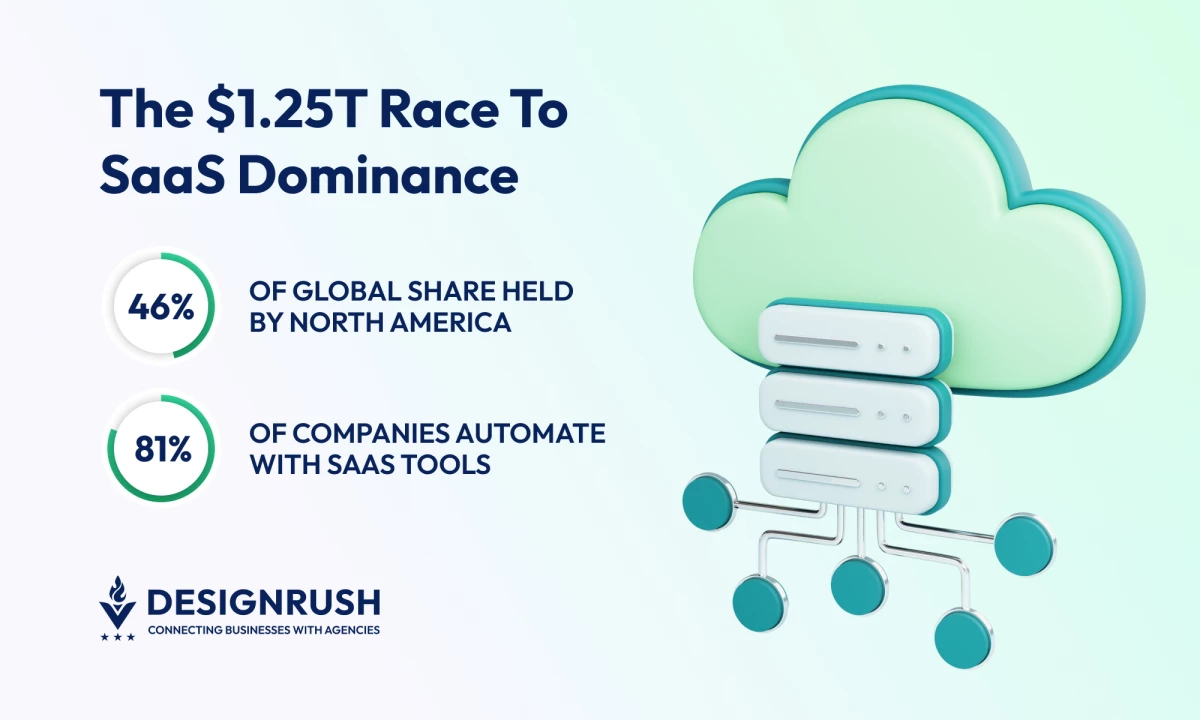
The global SaaS market is projected to reach $1.25 trillion by 2034, growing at a compound annual rate of roughly 13%, according to Precedence Research.
The sector is expected to surpass $412 billion by the same year in the U.S. as it continues to lead global adoption and innovation.
North America alone is forecasted to hit $211.7 billion by 2026, up from $164.8 billion in 2024, maintaining its 46% share of the global market.
More than 30,800 SaaS companies now serve millions of users, and 81% of organizations report automating at least one business process through SaaS applications.
With SaaS adoption nearing maturity in many industries, performance now depends on execution.
For SaaS brands, the website is where that performance starts, in how well it explains, qualifies, and converts.
Editor's Note: This is a sponsored article created in partnership with Baunfire.
Baunfire, a Silicon Valley agency that designs high-performing SaaS and B2B websites, identified five metrics that show whether a site is actually doing what it’s supposed to.
“These are the numbers that tell the real story,” Yagmur Ilgen, creative director at Baunfire, told DesignRush.
“They show whether your site helps people understand what you do and why it matters. Good data should reveal action, not vanity.”
1. Time-to-Traction: Measuring Momentum
Time-to-traction tracks how quickly visitors engage with key content or take a meaningful action.
Studies show that users on average stay on a page for only about 54 seconds, but it often takes minutes for them to convert.
Improving layout clarity, hierarchy, messaging, and personalization can raise early engagement.
A 2025 AI and Digital Trends report from Adobe found that 87% of organizations using AI-driven personalization are already seeing stronger customer engagement.
Baunfire said the goal isn’t to rush visitors but to guide them better.
“When a website speaks their language and reflects their needs, people stop browsing and start engaging, and ultimately, converting,” Ilgen explained.
2. Demo Request Conversion: Turning Curiosity Into Action
A high demo request rate means the site creates confidence.
But most SaaS brands still lose potential buyers because of long forms, vague calls to action, or pages that stop the flow instead of keeping it going.
Baunfire’s internal data shows that shortening forms and simplifying messages can potentially lead to sizeable increases in conversions.
The digital agency recommends combining microcopy, progress indicators, and post-submit experiences that reinforce the next step instead of ending the interaction.
3. Return Visitor Rate: Building Familiarity
When deals take months, returning users are the clearest sign of growing intent.
Forrester reports that B2B buyers are more likely to convert if they experience interactions from the vendors themselves and not from third-party sellers.
Product experts carry the most weight, helping buyers understand real value through hands-on demos or free trials that show what the product can do.
And since pricing is always the top concern, a site that’s upfront with clear plans and updated resources, like pricing pages or real use cases and reviews, can keep visitors coming back.
When buyers can find clear pricing and expert guidance in one place, the website becomes part of how they decide. Ilgen said that clarity builds confidence.
“People return because the site helped them believe what they’re seeing and who they’re hearing it from, and that’s trust in motion right there,” Ilgen shared.
4. Scroll Depth: Reading Engagement in Motion
Scroll depth measures how far visitors explore content and where interest fades.
Baunfire uses scroll tracking to test how structure, storytelling, and placement affect engagement.
For instance, scrollytelling gives visitors a reason to stay longer and explore more, often lifting engagement, time on site, and conversions compared to static pages.
Adjusting CTAs to match the rhythm of how people read, not where designers think they should click, often leads to faster gains.
5. Engagement-to-Opportunity Ratio: Showing Real Impact
This metric connects marketing performance to sales outcomes.
Comparing engagement data with CRM results allows teams to see how effectively site activity translates into new opportunities.
For Baunfire, this number is where creative strategy and business results meet, showing whether storytelling, UX, and data are working together to drive growth.
How SaaS Website Metrics Shape Performance in 2026
SaaS websites are no longer judged by traffic spikes.
What matters is how consistently they move people through the journey: informing, persuading, and converting along the way.
“The best sites we build evolve with behavior,” Ilgen said.
“They respond to what users do, learn from the data, and keep refining the experience. This is how you build momentum that lasts.”
In 2026, SaaS success will depend on how clearly teams connect insight with design.
Metrics mean nothing without interpretation, and interpretation fails without empathy for how users make decisions.
Baunfire’s framework combines analytics, creativity, and human understanding to help SaaS brands measure performance and make it matter.
In related news, check out these insights about how you can adjust your website visibility in the age of AI search.