-details-webp.webp)

Optimizing B2B SEO for AI Search: Key Findings
- AI search is replacing traditional SERPs, forcing B2B marketers to adapt to a world where answers come directly from AI without a visible results page.
- Content must be structured for machine understanding, with clarity, authority, and alignment to how AI interprets buyer intent, rather than keyword density.
- Visibility now depends on multi-platform distribution, prompt testing, and continuous optimization to stay in AI-generated answers.
It wasn’t too long ago when Google was the ultimate answer for when you needed to find something on the Internet.
That’s no longer the case today.
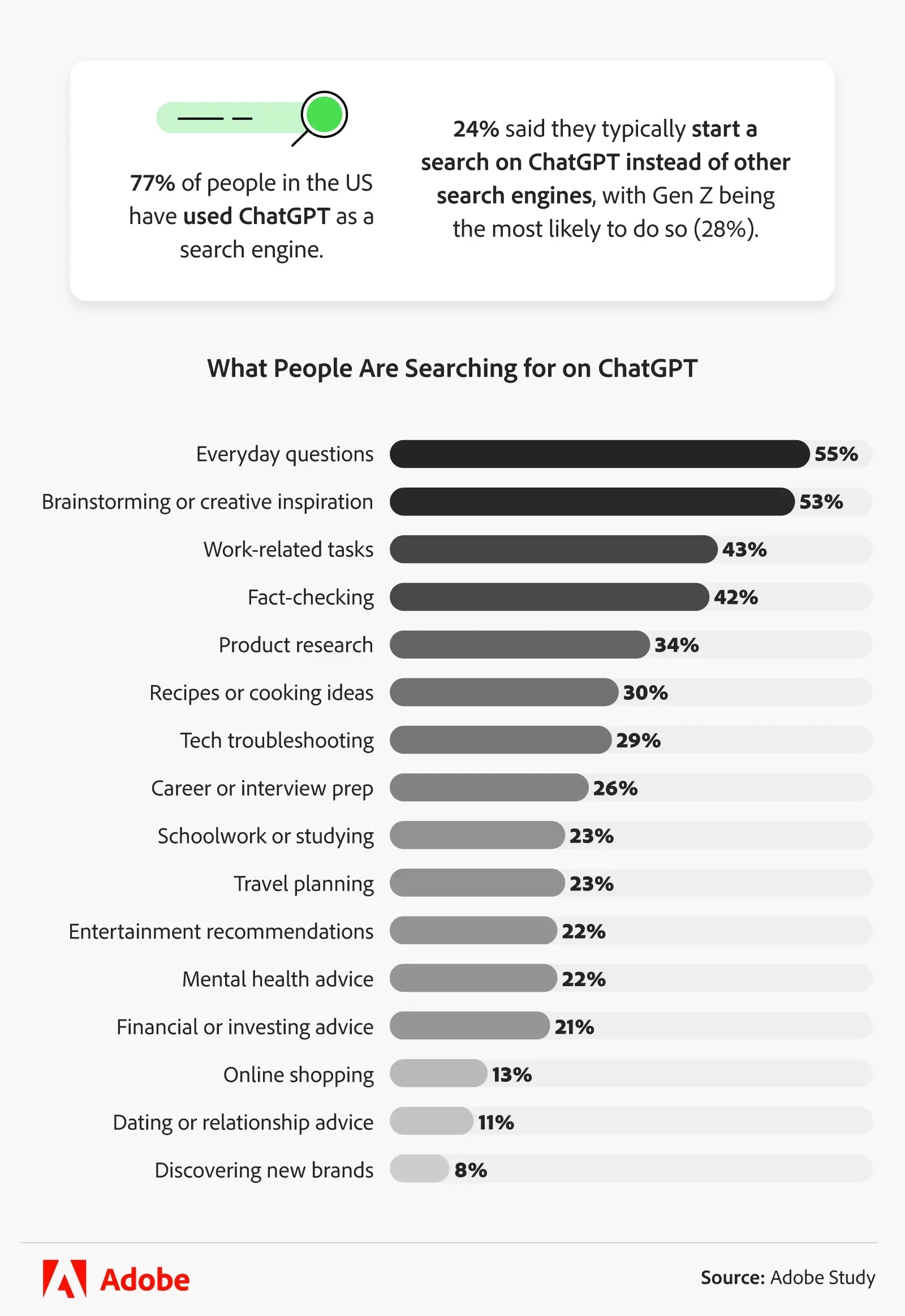
77% of Americans are using AI tools like ChatGPT as a search engine, with 24% typically starting their online searches with ChatGPT instead of traditional search engines, as reported by Adobe.
Editor's Note: This is a sponsored article created in partnershio with Baunfire.
And why wouldn’t they?
If a user were to ask something like, “What are the best supply chain risk management solutions for mid-sized manufacturers in the U.S.?,” AI search would generate a direct, multi-paragraph answer drawn from multiple sources.
This eliminates the need for users to sift through several webpages to find the answer they’re looking for.
In light of this, B2B marketers must now answer a new question: “How do we surface in an environment where the search results page may never appear?”
Designing a New Playbook
Ranking on the SERPs used to be so simple. You just needed to choose the right keywords and earn the right backlinks.
AI search tools like ChatGPT, Perplexity, and Google’s Search Generative Experience (SGE) are flipping that script on its head.
To be fair, search algorithms have always been moving towards semantic understanding.
We went through this from pure keyword searches to long-tail searches, and eventually full-on questions.
AI search only served to dramatically accelerate this evolution.
“Instead of scanning for exact matches, AI looks for patterns, concepts, and contextual cues that align with the user’s search intent.
This demands content that mirrors expert reasoning: connecting ideas, evidence, and context in a way that machines can interpret as genuinely helpful,” said Juan Sanchez, Head of Partnerships at Baunfire.
In other words, the most “helpful” answer might not use the exact keyword at all, yet still meet the searcher’s need perfectly.
This is why the old habit of stuffing target keywords into every header and paragraph is no longer yielding the results it used to provide.
This is why agencies like Baunfire are prioritizing treating B2B SEO more like a part of a larger dataset.
After all, AI search extracts, summarizes, and repackages. SEO tactics should adjust to this by making content machine-readable and machine-usable.
The irony here is that while AI threatens to anonymize brand voices, it also rewards those who invest in distinct, high-quality content that focuses on Experience, Expertise, Authoritativeness, and Trustworthiness (EEAT).
To do this, have your team upgrade these key parts of your SEO strategy:
1. Map Buyer Questions, Not Keywords
Today, “What do we want to rank for?” is less important than “What does our buyer actually want to know?”
Sit down with your sales and customer success teams to list the most common and most complex questions your buyers ask.
Then create detailed, well-structured answers in articles, FAQs, and even long-form social media formats.
AI search thrives on direct, authoritative responses. So the more direct and comprehensive your answers are, the more likely AI search will treat you as a “primary source” worth quoting.
2. Optimize for Featured Content Snippets
Many AI tools still pull data from Google’s “position zero” answers. To make your content snippet-ready, ensure you:
- Use clear headers that match searcher questions.
- Write concise, bullet-point answers before expanding into detail.
- Embed tables or charts for data-heavy queries.
For example, if you’re answering “What are the best risk management solutions for manufacturing?”, you might lead with a three-point list before unpacking each recommendation in detail.
“Snippet optimization is about structuring information so that search algorithms can instantly identify authority and relevance. So don’t just answer a question. Anticipate the next three questions the reader will have and embed those answers seamlessly into the same content block,” said Sanchez.
3. Publish Across AI-Friendly Platforms
If your content only lives on your website, you’re essentially throwing a dinner party and forgetting to send invitations.
This is why top-performing B2B companies post across different platforms and websites.
Think of it as “content syndication for machines.” The more places AI can find you, the more likely you’ll end up in its stitched-together answers.
That said, post your most valuable insights on:
- LinkedIn: Not just personal profiles, but company pages and niche industry groups.
- Industry wikis or public knowledge bases: Many AI models pull from these faster than from brand-new blog posts.
- Guest posts in well-ranked niche publications: If AI trusts the host site, your content inherits some of that trust.
4. Track and Adjust Based on Prompt Testing
Here’s the dirty secret about AI search: you don’t know how visible you are until you act like a user.
That means running the exact prompts your buyers might type into different AI models and seeing if you show up.
When you don’t, study the answer you do get:
- Which sources are cited?
- Are they quoting competitors, trade publications, or data aggregators?
- Can you create or update content in those same places?
The important thing here is that your team treats this as an ongoing experiment. AI search is constantly evolving, so content that shows up today might vanish tomorrow.
The only way to keep your seat at the table is to keep testing the menu.
Lead the B2B Conversation Before You’re Left Behind
If the last decade of SEO was about learning how to dance with Google’s algorithm, the next one will be about learning how to converse with AI’s collective brain.
That means having experts like Baunfire adjust your SEO efforts to balance what buyers are typing and how AI interprets it — all while making sure your brand voice is part of the answer.
And those who stubbornly rely on the old approach to SEO? They’ll find themselves spending years trying to insert themselves into conversations that have already moved on.
So treat AI visibility as the new front line of B2B marketing. Because the winners won’t just be the ones who get found.
They’ll be the ones who stay remembered.