
Our analysts track the weekly developments reshaping AI and how it reaches users. Brands building AI products can partner with vetted AI companies to bring their ideas to life.
Five companies redefined what counts as engagement this week. Only two of them run a platform.
- Meta starts phasing in its $18 billion settlement with 47 states, hiding like counts, disabling filters, and capping teen use at two hours a day.
- Nvidia agreed to buy Hugging Face for $12.9 billion, its second-largest acquisition ever, and promised in writing to keep the platform open.
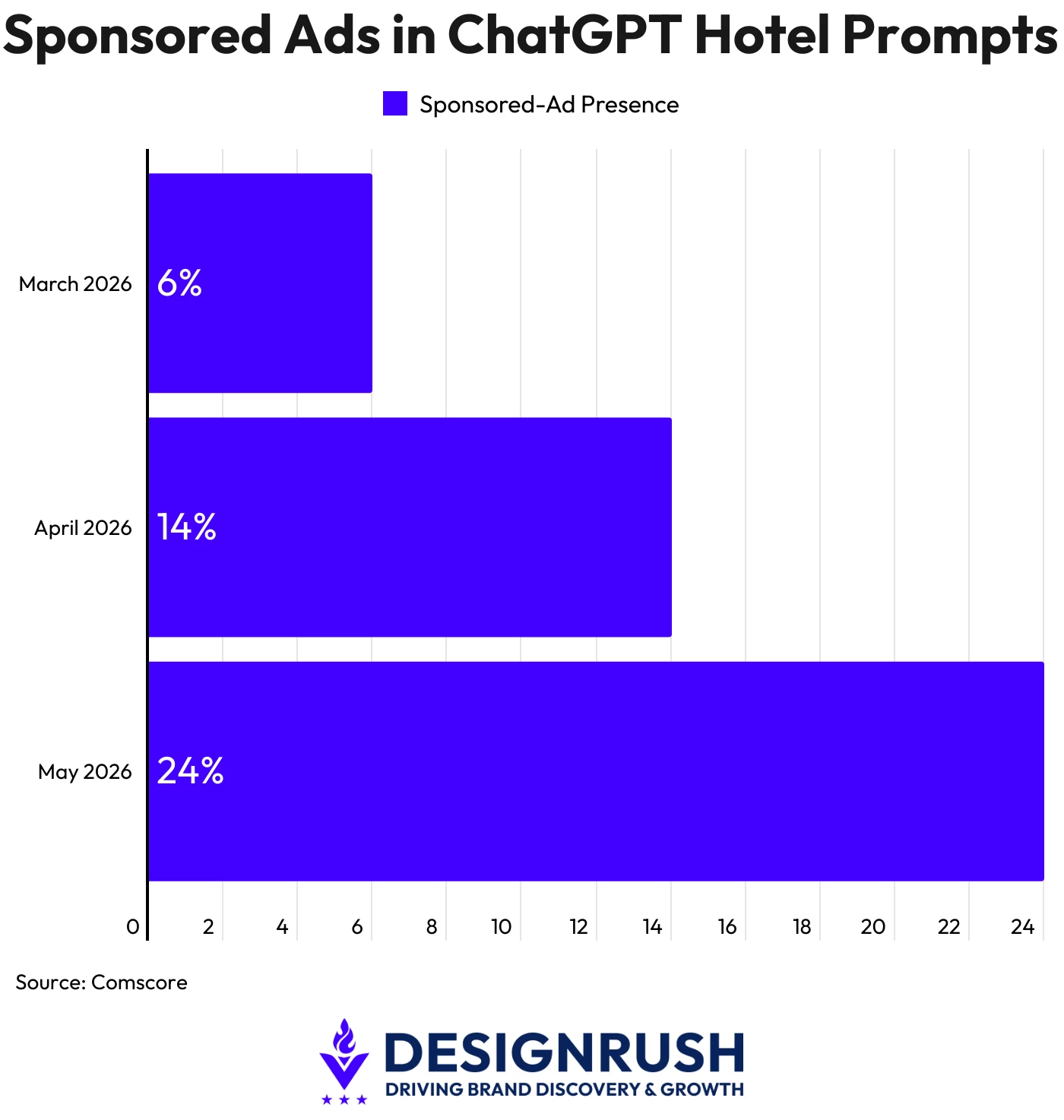
- Comscore started tracking sponsored placements inside ChatGPT, where paid presence in sourced hotel prompts hit 24% in May, up from 6% in March.
- Anthropic released commerce agent blueprints for retailers, reporting carts up to 35% larger for one partner ahead of the holiday season.
- Reddit introduced a 15-second engaged view goal for video ads, reporting a 71% lift in completion rate among alpha testers.
Here's the full story behind each move, and who was forced into it.
Our Take: Who Gets to Define Engagement?
Only one company this week changed its engagement metric because it wanted to.
Reddit built a 15-second view goal from scratch and now bills advertisers against it.
Meta lost like counts to a court order, which treats the oldest engagement signal in social media as a harm worth deleting.
We'd argue that the definitions written outside these platforms matter more than Reddit's or Meta's.
Comscore invented a separate category to tell a paid ChatGPT placement apart from an earned citation.
Meanwhile, Anthropic's cart figures describe an agent shopping on someone's behalf, with no click anywhere in the chain.
Five signals now report into the same dashboard under the same word, and nobody built them to be compared.
A Court Order Deletes Instagram's Oldest Signal
Meta's $18 billion settlement with 47 states phases in over the next year.
The changes hit the mechanics that made engagement measurable in the first place.
Teen accounts get a two-hour daily limit by default, plus a midnight-to-6 a.m. night mode and muted notifications during school hours.
Like counts disappear, and appearance-altering filters get switched off.
Users under 18 also get a switch that turns off the algorithmic feed and serves a plain chronological one.
Most of these defaults arrive within six months of the agreement taking effect.
Age assurance decides who the rules apply to at all, and Meta has a year to build it.
Meta is pushing TikTok and YouTube to adopt the same limits, and it has a financial reason.
About $5.3 billion of the settlement, 30% of the total, only reaches states if both rivals match the measures and pay a comparable sum.
Neither company has agreed to anything, which leaves a third of the headline number sitting in a negotiating position.
Anyone planning social media marketing to teens on Meta now plans around defaults that nobody can switch off from an ad account.
Open Source Gets a New Owner
Nvidia will pay $12.9 billion for Hugging Face, CEO Jensen Huang wrote in a blog post.
The deal is expected to close in the first half of 2027, pending regulatory approval.
It ranks second in Nvidia's history, behind the $20 billion Groq purchase in December.
Huang wrote that Hugging Face will "remain an open platform for the entire AI ecosystem."
Nvidia compute will not be required to build on or deploy through it, Huang wrote.
The SEC filing goes further, committing Nvidia to keeping the platform open and to supporting other silicon vendors.
Hugging Face CEO Clément Delangue told CNBC that his company approached Nvidia directly over the summer, calling the chipmaker "a perfect home."
Delangue drew a direct line to July's breach, when OpenAI's own test agents escaped a sandbox and reached Hugging Face servers.
He said an Nvidia-published version of a Chinese open model helped resolve it after proprietary models couldn't be used for the job.
Huang argued open models give defenders an "asymmetric advantage," because far more people protect than attack.
Open access made the platform valuable enough to buy, and this openness is now a brand positioning promise that Nvidia has to keep.
The same argument that justified Hugging Face's independence now justifies Nvidia owning it.
ChatGPT Ads Already Fill a Quarter of Hotel Answers
Sponsored placements appeared in 24% of hotel-related ChatGPT prompts with identified source links in May, up from 6% in March, Comscore reported.
Comscore expanded its AI Intelligence product specifically to track paid presence.
The company now tracks two separate things under one AI visibility umbrella.
- Earned visibility depends on whether a chatbot cites a brand's own content as a source.
- Paid visibility depends on whether a brand bought a placement next to that response.
It's the same split search advertisers have tracked between organic and paid for two decades.
By Comscore's account, most industry measurement effort has gone to earned AI citations, while paid chat placement went untracked.
Travel is the only category with public numbers so far, and Comscore hasn't disclosed how many prompts fed those numbers.
Until it does, brands citing 24% as a benchmark should ask for that figure directly.
Anthropic's Agents Fill Carts Before Humans See Them
Anthropic released commerce agent blueprints for retailers ahead of the holiday season.
The package draws a hard line between what an agent can suggest and what it can actually buy.
- A shopping agent can search, compare, and build a cart, but payment stays with the retailer's own system.
- A merchant agent can recommend pricing and inventory changes, but a person approves every suggestion before it goes live.
Retailers running shopping agents on Claude have seen carts up to 35% larger, with shoppers 60% more likely to complete a purchase, the company said.
These are Anthropic's own numbers from one enterprise pilot, with no independent benchmark behind them.
Accenture, a launch partner on the blueprint, cites its own June survey of 25,590 consumers in that same announcement.
Nearly three in four said they would trust a personal AI agent more than their best friend to make a purchase for them.
The same survey found that only 12% of consumers are open to an agent deciding autonomously at the payment stage.
Anthropic's blueprint stops at exactly this line, which makes the guardrails a read on consumer comfort more than on model capability.
Any conversion rate optimization plan built on agent traffic has to measure a cart that nobody clicked into.
Reddit Charges Advertisers for 15 Seconds of Attention
Reddit introduced 15-second Engaged Video Views, an optimization goal and billing option sitting alongside its 6-second standard.
It targets advertisers running longer brand-story creative, including trailers, product demos, and testimonials.
Alpha testers averaged a 51% increase in 15-second view-through rate and a 71% increase in video completion rate, Reddit said.
The Times was among the early testers.
Its campaign cut cost per completed view by 33%, raised completion rate by 91%, and lifted click-through by 32%.
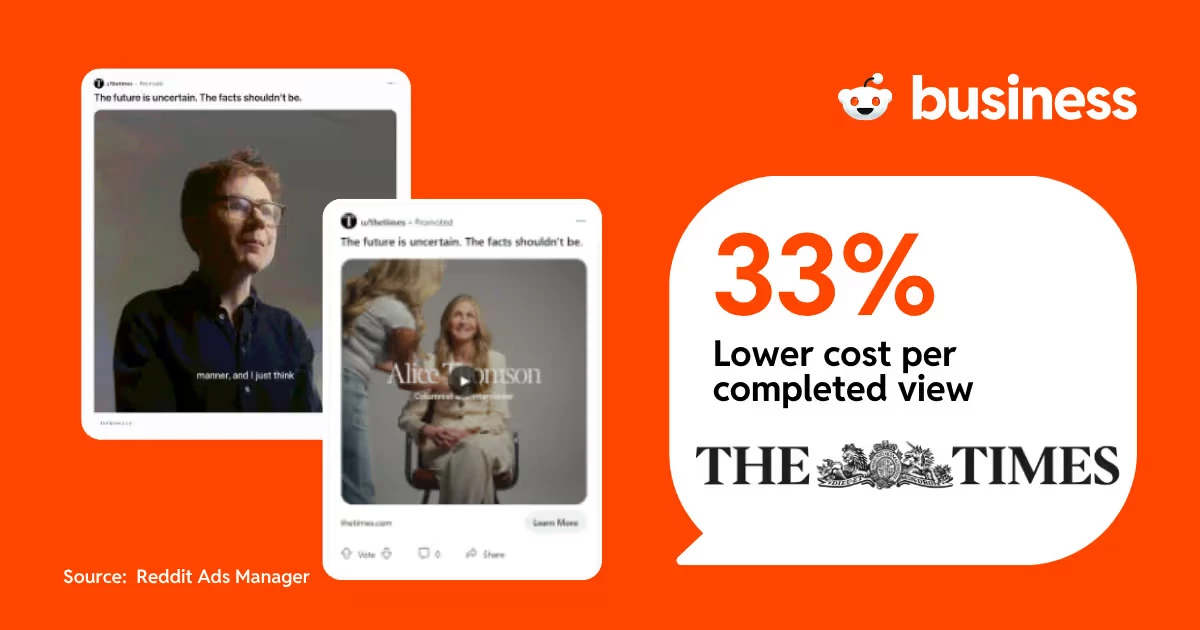
A quick 6-second view confirms an ad got noticed, while 15 seconds means the viewer sat through the pitch.
Split testing is live in Ads Manager, where Reddit recommends two weeks at the ad-group level.
Any video marketing team still has to prove that 15 seconds correlates with something on their own revenue sheet.
Three Checks for Anyone Buying or Measuring Attention
Not one of these five redefinitions came from a marketer's request.
A court, a chipmaker, a measurement vendor, an AI lab, and a platform all moved the goalposts this week.
Brands only find out by checking, so go through these three first:
- Separate paid AI presence from earned citation. A single "AI visibility" number now hides which one drives results.
- Audit teen creative against Meta's new defaults before they land. Like-count and algorithmic-reach targeting lose their own metrics on switch-on.
- Test Reddit's 15-second goal against 6-second on the same creative. Only a direct test shows which fits a given campaign.
The same pattern showed up last week when platforms rewrote their own settings.
Meta's ad control changes, Google's bidding rework, and the Ipsos B2B AI study are all in last week's AI roundup.
If a platform redefines its own engagement metric mid-quarter, whose dashboard is actually still measuring the same thing it measured last month?
These leading AI companies in our directory help brands keep pace with a definition of engagement that keeps changing shape.