
AI tools can now copy popular video games and creative software, making free versions available to anyone.
In recent weeks, hundreds of unofficial versions of popular titles, including Halo and Grand Theft Auto: Vice City, have appeared in web browsers.
Anyone with the right link can now play these console classics on a laptop, straight from Chrome or Safari.
A developer has also released seven free alternatives to Adobe apps, such as Photoshop.
On the gaming side, Fallout studio Bethesda reportedly already sent a legal notice over an AI-made Fallout game.
The cases raise concerns about IP protection and software costs as AI makes games, creative tools, logos, and campaigns easier to replicate.
Below, we'll examine how these copies work, what the law protects, and the steps that marketing and legal teams can take to manage the risks.
Browser Ports Put Game IP in Focus
A port is a game rebuilt to run on a different device, and in this case, the device is a browser tab.
Players can load versions of games such as Halo and Call of Duty: Black Ops online, and some reportedly run well.
Some projects use decompilation, a process that reconstructs readable source code from a finished program.
Most of the ported games date from the PlayStation 2 and PlayStation 3 eras, when consoles ran on a fraction of the memory a browser tab uses today.
Video game news site Kotaku credits Claude Opus 5.5, which developers can leave running overnight to decompile a game, for much of the surge.
Every game is moddable now! I packaged everything Claude learned modding Terraria and Age of Empires into universal-modder: skills + tools that let Claude Code mod almost any game you own. Engine recon, decompiling, @fal sprites/3D/audio, testing in the real game, even the showcase video. https://t.co/mNYIMNkWFA
— Rehan Sheikh (@rehan_shei) September 30, 2026
Developer Mitchell Hynes built the Halo browser version on earlier decompilation work by other modders.
Hynes said that players logged nearly 20,000 games across 115 countries within the first five hours.
His site asks players to load a disc image of their own copy, since it hosts no Halo game data.
Kotaku likened the cleanup to the pirated DVD era, with publisher legal teams chasing one browser copy after another.
Unofficial copies can spread internationally within hours, giving brand owners little time to assess possible infringement and reputational risks.
Viral Mashups Raise Brand Questions
Modders alter existing games, while a mashup combines elements of different titles.
AI tools may help create some of these projects, but it is not always clear how much AI contributed to a specific mod.
On September 29, creator Tobyn Jacobs, known for large-scale paper art and cutouts, posted a video showing Minecraft running inside Elden Ring as a mod.
I put the entire of game minecraft into elden ring as mod. its runs on Mac. https://t.co/CojefjxtLn
— Anime Girl Worshiper (@TobynJacobs) September 29, 2026
Jacobs said the mod includes 1,600 Minecraft items and working redstone, the game's circuit system.
The video drew more than 16 million views in two days, although Jacobs had not announced a download or release date.
Jacobs joked that people should "wait 'til I get a DMCA," referring to a copyright takedown notice.
Another modder, Deltaroo, put Mario from Super Mario 64 into Elden Ring and posted an early build on GitHub.
One public guide claims that combining two games can take around three to four hours, though the time required will depend on the project.
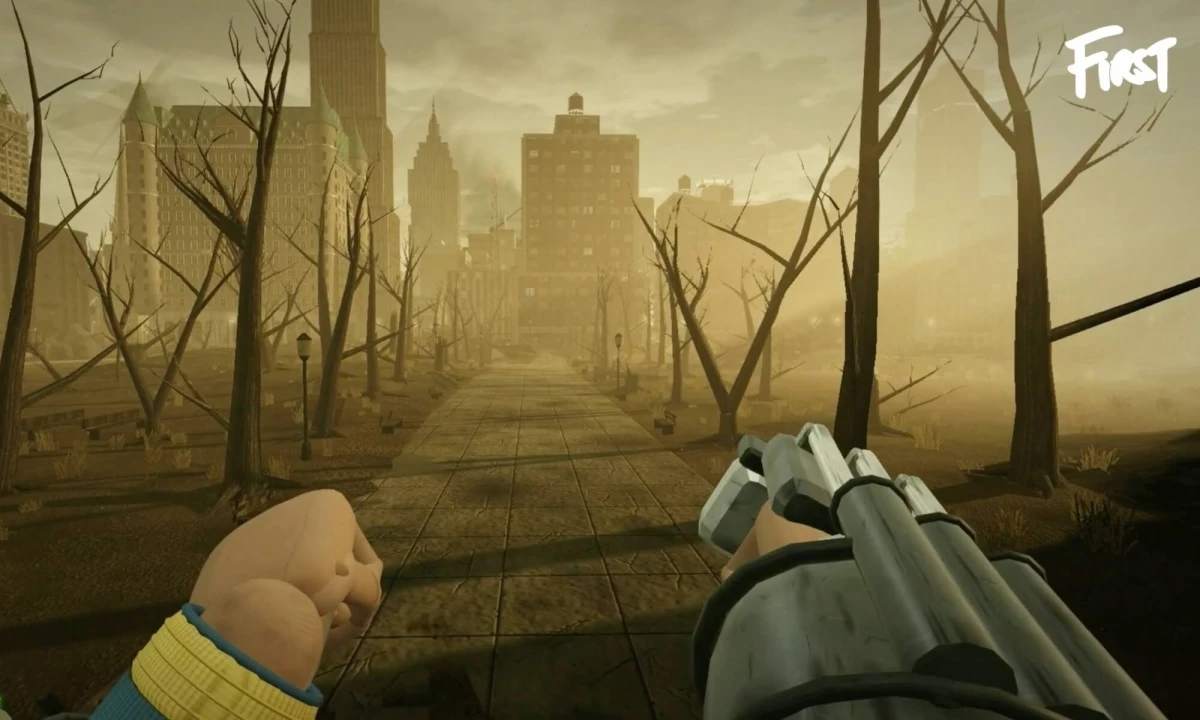
Meanwhile, self-styled AI creative Chris First built Fallout: New York, a browser game, using Claude Opus 5.5 in five days.
He said the game draws every building, weapon, and face and creates every sound from code, with no image or audio files.
His September 28 reveal drew more than 3.5 million views, yet First abandoned the project by October 1.
First said that Bethesda had sent him a cease-and-desist letter.
He posted the letter with a jab at the studio, so the takedown drew its own round of attention.
Fan projects can attract new audiences while raising questions about licensing, brand association, and enforcement.
Hey, @BethesdaStudios how about you make a Fallout game instead so I don’t have to?😂 Sorry to everyone who enjoyed the game! But the suits got involved and the fun is over. https://t.co/11A7VaDp6x
— CHRIS FIRST (@chrisfirst) October 1, 2026
Bethesda already pays fans royalties for approved Fallout 4, Skyrim, and Starfield add-ons, with about $10 million paid out so far.
A standalone browser game like Fallout: New York falls outside this program, so brand licensing deals may need a lane for AI-built fan games next.
Marketing and legal teams can decide in advance which fan projects they'll license, tolerate, or take down.
Free AI-Built Apps Challenge Software Budgets
Brandon Thomas, an Atlanta engineer with 15 years of experience, released ArtCraft, a suite of seven free alternatives to Adobe apps.
PhotoCraft is designed as an alternative to Photoshop, while FilmCraft targets Premiere.
The suite also includes alternatives to Illustrator and InDesign, which are widely used in agency design work.
Thomas said he built ArtCraft in Rust with Claude Opus 5.5, as a free, open-source alternative to Adobe’s subscription-based creative tools.
He has shared that Adobe's cancellation fees pushed him to start the project.
Adobe has faced legal scrutiny over allegations that it made subscriptions difficult to cancel and concealed early termination fees.
In March 2026, Adobe agreed to a proposed $150 million settlement with the U.S. Justice Department.
A Gizmodo review also found glitches in PhotoCraft, which Thomas himself describes as early alpha software.
PhotoCraft's roadmap estimated its readiness for professional work at 25% to 35% on October 5, rising to about 45% by October 10.
The free Photoshop alternative still lacks features such as Content-Aware Fill.
And Thomas plans to fund development by selling access to ArtCraft's paid AI generation tools.
Thomas' free Microsoft Office alternatives, WordCraft and GridCraft, put their own readiness for real work at around 60% and 50%, respectively.
SOMEONE REBUILT ALL OF ADOBE 100% FREE. Free, open-source alternatives to the full Creative Cloud suite are now live, rebuilt from scratch in pure Rust by the ArtCraft team. Photoshop → PhotoCraft Illustrator → VectorCraft Premiere Pro → FilmCraft After Effects → EffectCraft Lightroom → LightCraft InDesign → DesignCraft Acrobat → PrintCraft No subscription. No telemetry. Native apps for macOS, Windows and Linux. Most are early alpha or in development, but the interfaces match the workflows you already know and the code is on GitHub. Here i drop the link, adobe is COOKED fr → https://t.co/H0YKNxPyMk Save it, don't sleep on this 🔖
— Yasir Ai (@AiwithYasir) October 8, 2026
Even unfinished, free alternatives still give procurement teams another option to raise during software renewals.
Agencies will still need to weigh reliability, compatibility, support, and workflow requirements before switching tools.
Clean-Room Claims Remain Untested in Court
Copyright, patents, trademarks, and trade dress protect different types of intellectual property.
Whether a game port or software alternative infringes those rights depends on the assets, development process, and applicable law.
Activision reportedly had footage of an AI-assisted Modern Warfare 2 rebuild disabled after a copyright report.
Bethesda parent company ZeniMax Media framed its Fallout: New York notice around its duty to enforce its trademarks.
A cease-and-desist letter demands that a creator stop an activity, but it's not a court ruling.
Taking down one version also does little to stop the next one from appearing.
ArtCraft describes its apps as clean-room reimplementations built from public specifications and observed behavior, with no Adobe code or assets.
However, this approach does not automatically eliminate legal risk.
Patents can protect qualifying inventions, while trade dress may cover distinctive product appearances.
Case in point, Adobe holds thousands of patents, but how they might apply to ArtCraft remains unclear.
As Ars Technica reports, software interfaces can also raise questions about similarity to established products.
No legal action against ArtCraft has been reported yet, so its legal position remains untested in court.
Brands should seek legal advice before challenging suspected infringement, taking into account the assets involved and the relevant jurisdiction.
The developer behind free, open-source alternatives to Adobe software is now taking on Microsoft Office. Brandon Thomas, the creator of the ArtCraft project, has unveiled three more tools designed to replicate Microsoft’s most popular apps: >WordCraft – an alternative to Microsoft Word. >GridCraft – an alternative to Microsoft Excel. >DeckCraft – an alternative to Microsoft PowerPoint. he wants to give people free alternatives to expensive software subscriptions using AI And he’s not stopping at Microsoft and Adobe. Autodesk alternatives and other subscription-based software could also be part of the plan.
— Pirat_Nation 🔴 (@Pirat_Nation) October 11, 2026
Marketing, legal, and procurement teams can prepare now without waiting for these disputes to be resolved in court:
- Document AI use in vendor contracts: Require disclosure of AI use, asset provenance, and ownership responsibilities.
- Review protection for key brand assets: Assess trademarks, design rights, and other protections for logos, interfaces, and creative materials.
- Monitor for unofficial copies: Track brand names, misspellings, downloads, and browser-based versions across search, app directories, and social platforms.
These steps can help teams assess potential infringement and determine the appropriate response.
Our Take: Can Takedowns Keep Up With AI Clones?
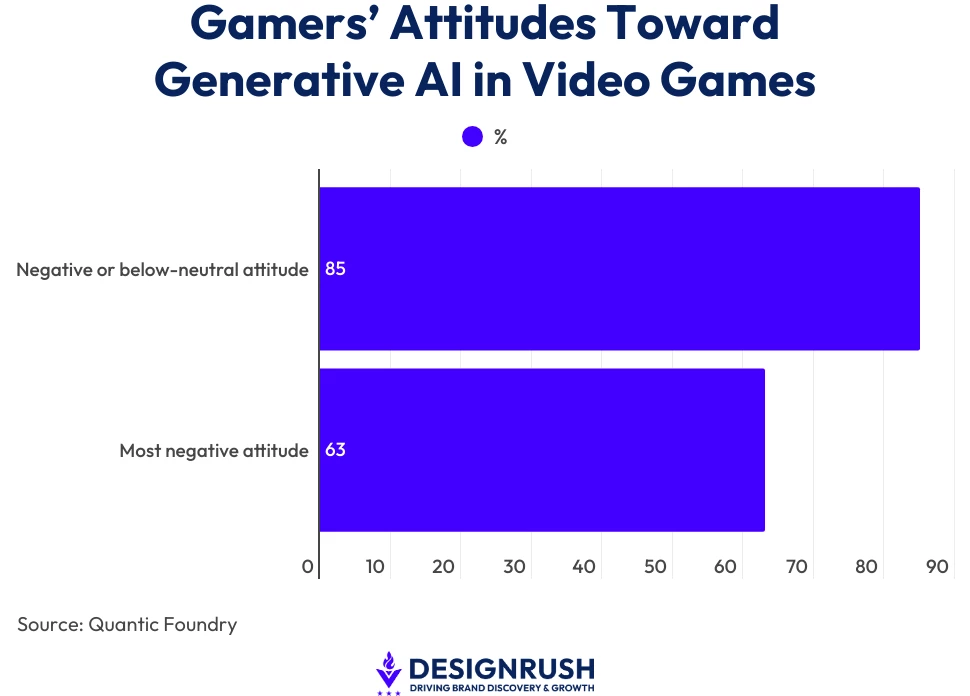
Gamers say they dislike AI in games, yet they keep flocking to AI-built copies of the titles they grew up with.
A late 2025 Quantic Foundry survey of 1,799 gamers found that 85% felt negatively about generative AI in video games.
First built Fallout: New York in five days, and his reveal surpassed 3.5 million views before Bethesda's letter forced him to pull it.
Truthfully, we don't see legal letters holding the line, since the next copy is always just one prompt away.
Sega faced its own fan rebuilder in Christian Whitehead, who kept remaking classic Sonic games on his own engine.
So, the company hired him, and his 2017 Sonic Mania earned some of the franchise's best reviews in two decades.
Adobe and Bethesda could protect their brand reputation the same way, by offering their loudest copycats a job or a license.
Sometimes, companies need to be creative in finding solutions to recurring problems.
Brand leaders protecting creative assets in an AI-driven market need agencies that build distinctive identities.
Explore these top branding agencies in our directory.