
Amazon Web Services (AWS) is putting $1 billion into a new Forward Deployed Engineering group, with AI engineers working inside customer teams to get systems into production faster.
The engineers will typically work in pods of five or six during 45-day customer engagements, and AWS expects the group to eventually employ thousands.
Demand for that kind of talent is rising well beyond AWS.
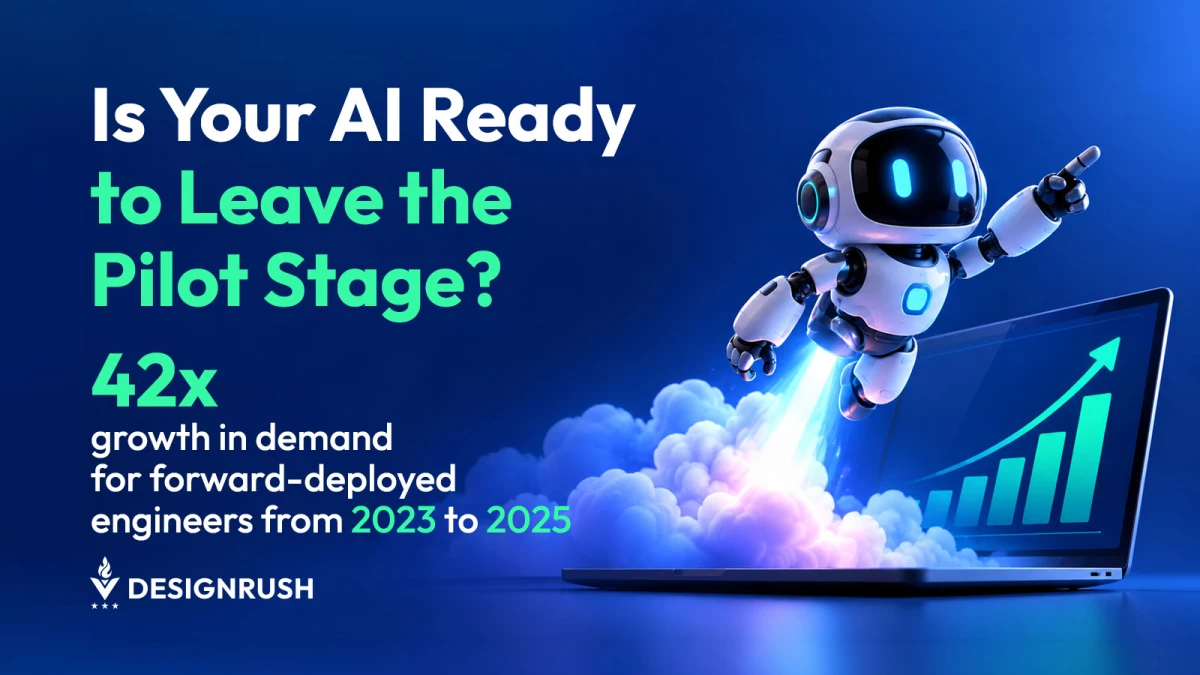
LinkedIn data cited by Reuters shows demand for forward-deployed engineers and similar roles grew 42-fold from 2023 to 2025 as more companies tried to move AI out of the pilot phase.
Customer Paradigm has spent years working across AI, business automation, and enterprise integrations.
One of those projects paired its team with Amazon’s machine-learning group to connect Amazon Personalize with Magento.
The agency’s founder, Jeff Finkelstein, worked on that project and has since advised companies on how to decide whether an AI project is ready to move beyond a pilot.
"While the hardware will keep improving and new models will continue to arrive, what doesn't change is the business problem you're trying to solve," he says.
AWS Forward Deployed Engineering Moves AI Into Production
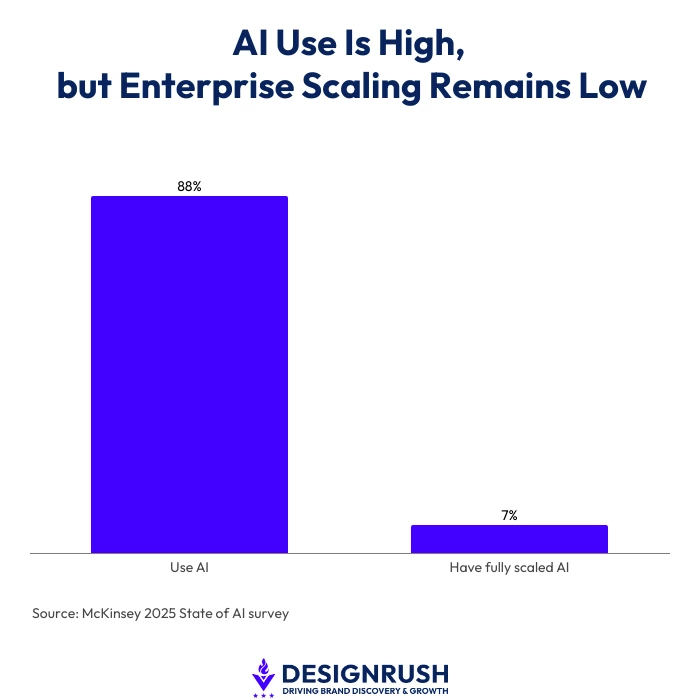
Despite 88% of respondents saying their organizations regularly use AI in at least one business function, only 7% said it had been fully scaled across the organization, per McKinsey’s 2025 State of AI survey.
AWS’s new unit is designed for that next step, with engineers working alongside customer business, engineering, and security teams to build AI systems around existing data, governance, and processes.
The company says the model can cut deployments from months to days and leave customers able to operate and extend what was built.
"A lot of times people treat it as this bright, shiny object and they don’t focus on what really matters to that end customer," Finkelstein says.
AWS leaders examine why AI prototypes stall before production and what teams need to build reliable systems at scale:
Enterprise AI Integration Depends on Existing Systems
Once AI reaches production, it has to work with the software and data the business already relies on.
In Customer Paradigm’s Amazon Personalize project, historical store data was sent to AWS to train a private recommendation model, with the results returned to the ecommerce site for customers to see.
Integration gets more complicated when an AI tool needs information from another application or has to trigger an action somewhere else.
Finkelstein starts with the data involved, especially when systems touch customer, medical, or financial information.
Cost, response time, resilience, and control also become part of the decision once people have to rely on the system.
"You need to figure out how it can fail. How can you mitigate that? And then finally, latency," Finkelstein adds.
In a recent DesignRush Podcast episode, he pointed to incorrect dates, failed API connections, weak warehouse Wi-Fi, and employees using a system in unexpected ways as problems that can surface after a controlled test.
What Companies Should Prove Before Scaling AI
AWS says success for its new engineering group will be measured by how quickly customers can build products or gain new skills.
"Build in processes that show quick and early results and early wins, and that's going to get people on board and behind the system," Finkelstein says.
That leaves companies with three things to prove before expanding the scope:
1. A small test works in the real workflow
Finkelstein recommends starting with a limited piece of the work. In one example, recovering 30 minutes of an employee’s time each week can be enough to show that an automation is useful before more is built around it.
2. The team can run what gets built
AWS says its engineers are meant to leave customers able to operate and extend the systems they develop, rather than depend indefinitely on the embedded team.
3. The economics still work at production scale
Finkelstein has warned that some tasks may cost more to automate with AI than to leave with people, especially once a prototype becomes something the business has to operate every day.
But even with those checks in place, leaders still have one decision to make.
If AI works technically but fails to improve the business, what exactly is there to scale?