
Meta is being forced to make something unusual for a social platform. It must make stopping scrolling easier.
The company agreed to pay up to $18 billion over 10 years while adding restrictions that change how teens use Instagram and Facebook.
The agreement follows the federal trial we previously covered, which put Meta's engagement design and its potential impact on young users under scrutiny.
The trial began on August 18 in Oakland before U.S. District Judge Yvonne Gonzalez Rogers and was settled before it could reach a verdict.
It focused on allegations that Meta designed its platforms in ways that encouraged addictive use among children and teens.
The settlement agreement covers 52 attorneys general across U.S. states, territories, and the District of Columbia.
Meta's announcement lays out the user experience (UX) design changes in unusual detail.
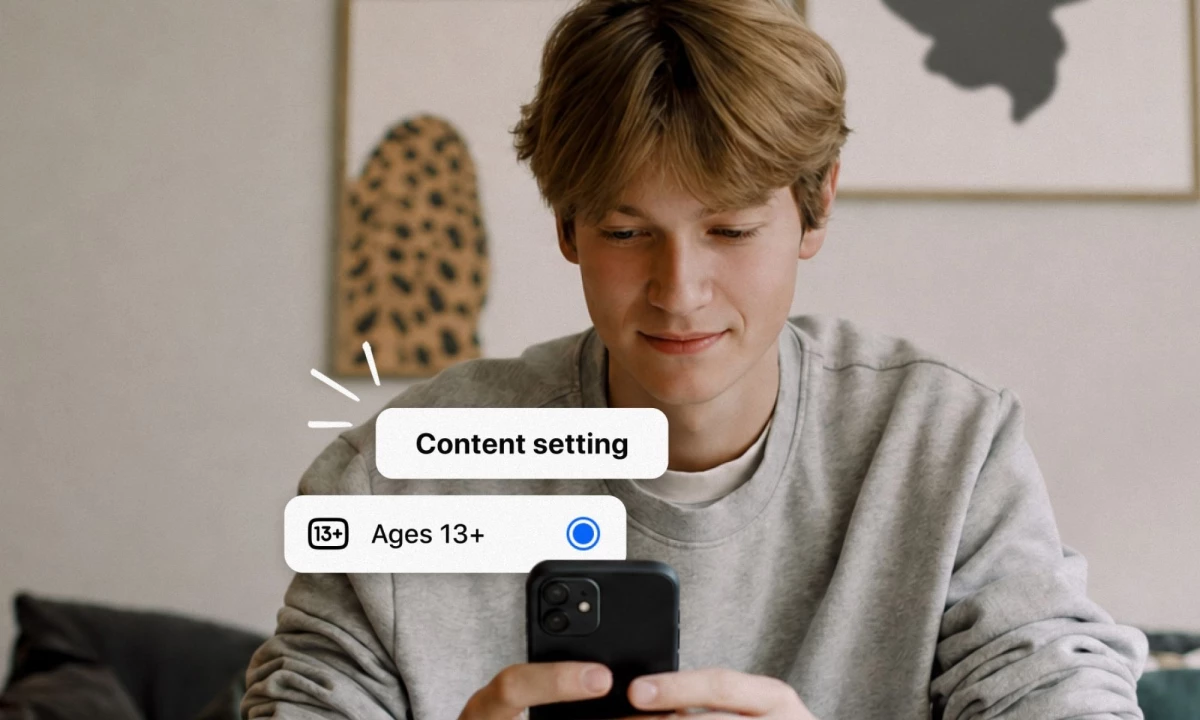
Teens will get prompts every 15 minutes of continuous use, with additional alerts once daily use hits 60 and 90 minutes.
Meta Chief Legal Officer C.J. Mahoney framed the restrictions as a template for competitors, not a Meta-only fix.
"Our new Time Limit commitments, Night Mode features and usage limits during school hours set the right path forward for our whole industry," Mahoney said.
Parents can also select a non-algorithmic feed, disable autoplay, and hide likes and reactions by default for their children.
The same product mechanics that keep people scrolling must now create regular opportunities for them to stop.
Meta Puts a 2-Hour Limit on Teen Scrolling
The settlement rewrites the app interface itself.
It sets a two-hour daily limit for teens across Facebook and Instagram, with parental permission required to disable it.
- Night Mode will block access from midnight to 6 a.m.
- School Mode will mute most notifications from 8 a.m. to 3 p.m.
Direct messages sit outside the daily cap, Night Mode, and the school-hour notification rules.
Hidden likes remove another familiar feedback mechanism.
Teens lose the public scoreboard that Instagram has run since 2010, and brands lose a free read on which creator posts are actually performing.
The agreement also adds stronger age assurance and restrictions on certain cosmetic surgery and extreme makeup filters.
Meta says most of the terms must remain in place for 10 years.
The Time Limit and Night Mode commitments begin with five years, with stronger requirements if TikTok and YouTube join the framework.
A legal settlement now dictates specific choices inside a social product, which makes UX design a compliance question.
Meta Ties $5.3 Billion to TikTok and YouTube
In an open letter, Meta has given TikTok and YouTube a reason to adopt the same restrictions.
But the strategy cuts both ways.
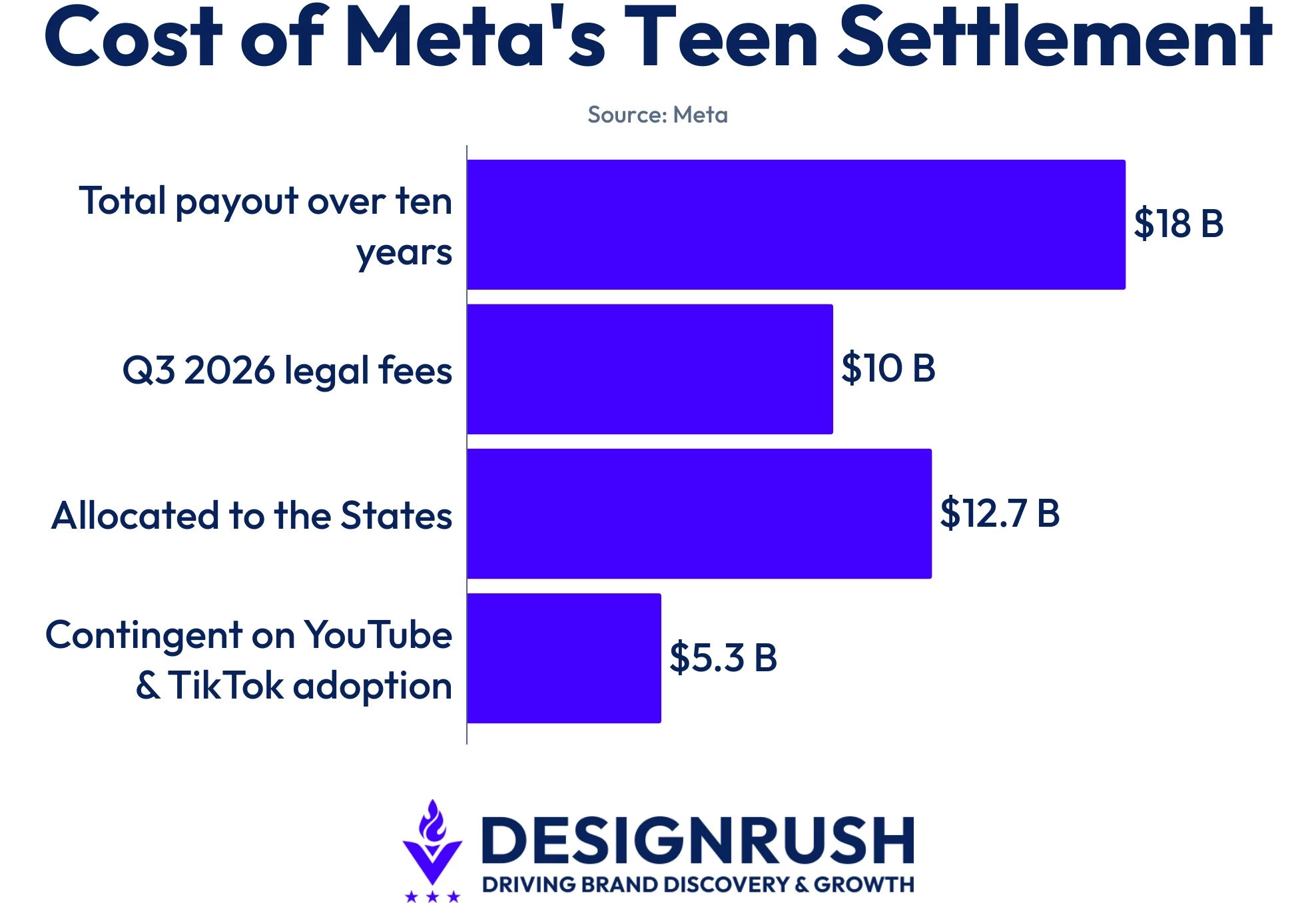
Thirty percent of the settlement, roughly $5.3 billion, is conditional on the two platforms adopting the same protections and making matching payments.
If both companies join, Meta's five-year commitments for Time Limit and Night Mode will extend to 10 years.
The daily limit would tighten to one hour per app, and Night Mode would run from 10 p.m. to 7 a.m.
"This framework will only work if all our peers join us," Mahoney explained.
"Because teens move fluidly across dozens of apps, we need an industry-wide solution.
We therefore call on our industry peers, TikTok and YouTube, to implement this new framework, right away."
Is Meta trying to lead the industry, or make sure its competitors can't keep winning attention with fewer restrictions?
The company is effectively asking TikTok and YouTube to accept the same product friction while linking their participation to a financial condition.
If TikTok and YouTube agree, Meta gets a more level playing field.
If they refuse, Meta can still position its own restrictions as a standard that the others have rejected.
This move makes the contingency one of the most strategically interesting parts of the deal.
Meta may be using regulation to set the rules of competition around attention.
The $18-Billion Deal Changes Social Product Design
The financial terms show how large the intervention is, but the product requirements explain why it matters to marketers.
The agreement calls for up to $18 billion in payments over 10 years.
Meta will pay $12.7 billion to states in annual installments over the next decade.
The company expects to record a separate legal charge of about $10 billion in Q3 2026.
The agreement also creates an independent research foundation and requires annual compliance reviews by an independent auditor for five years.
These requirements add outside scrutiny to product design decisions that have historically been controlled inside each platform.
The agreement shows how regulation can affect the mechanics that determine attention.
- Regulators can now dictate attention mechanics. Platforms should audit engagement features to identify where UX could face new policy demands.
- Defaults can change user behavior. Teams should examine app features and social feedback to create products that support intentional use.
- Cross-platform rules can alter competition. Companies should prepare for shared standards to reduce the advantage of engagement mechanics that competitors can no longer use freely.
When product design affects public concerns, marketers need to understand the interface as part of the brand experience.
Our Take: How Should Brands Adapt to More Friction?
Brands will need to make each piece of content work harder when platforms introduce more interruptions.
A 15-minute prompt, disabled autoplay, and less personalized feeds can reduce passive consumption.
We expect that the pressure to hit the first seconds of branded content hardest, since teens now get a scheduled exit ramp every quarter hour.
Teams should then front-load the value of a post, make the premise obvious, and give users a reason to keep watching.
The temptation will be to get louder, which is how Reels and TikTok already trained brands to front-load the hook and hope for the best.
This makes the feed harder to tolerate at the exact point that platforms are handing teens more chances to leave.
Brands that hold attention on the strength of the content itself will do better as users get more control over their feed.
The settlement arrives while Meta pushes businesses deeper into its apps, with more than 1 million already running its AI chatbots on WhatsApp and Messenger.
Brands looking to adapt their social strategy to changing platform rules can explore these top social media marketing agencies.