
Yahoo Scout Answer Engine: Key Findings
- The internet pioneer is introducing a built-in answer engine, placing AI responses directly inside Search, Mail, News, Finance, and Sports.
- The rollout relies on Anthropic and Microsoft partnerships, combining Claude’s reasoning with Bing’s web grounding.
- Scout focuses on everyday consumer use cases, keeping users inside Yahoo products where questions already arise.
One of the internet's first consumer platforms is joining the AI search era.
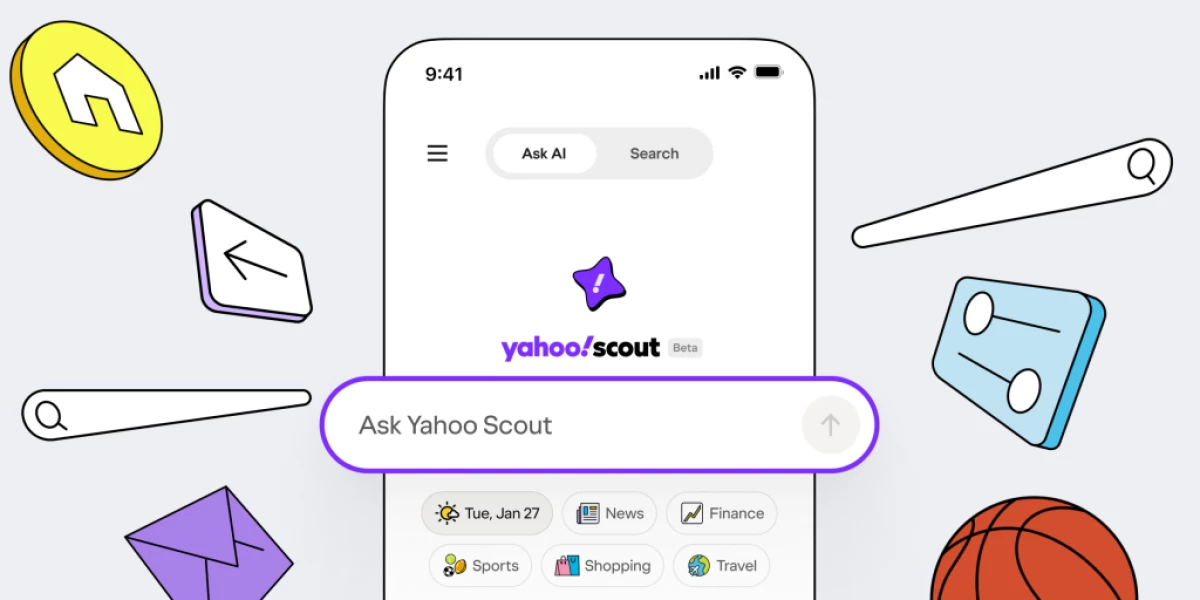
Yahoo is rolling out a new answer engine called Scout, placing AI-generated responses directly inside its core consumer products.
The beta launch brings Scout into Yahoo Search and across its wider network of brands, making it available to roughly 250 million U.S. users on desktop and mobile.
 The launch reflects a practical decision for the legacy brand.
Instead of asking people to change how they search, Yahoo is fitting its AI answer engine into existing consumer habits.
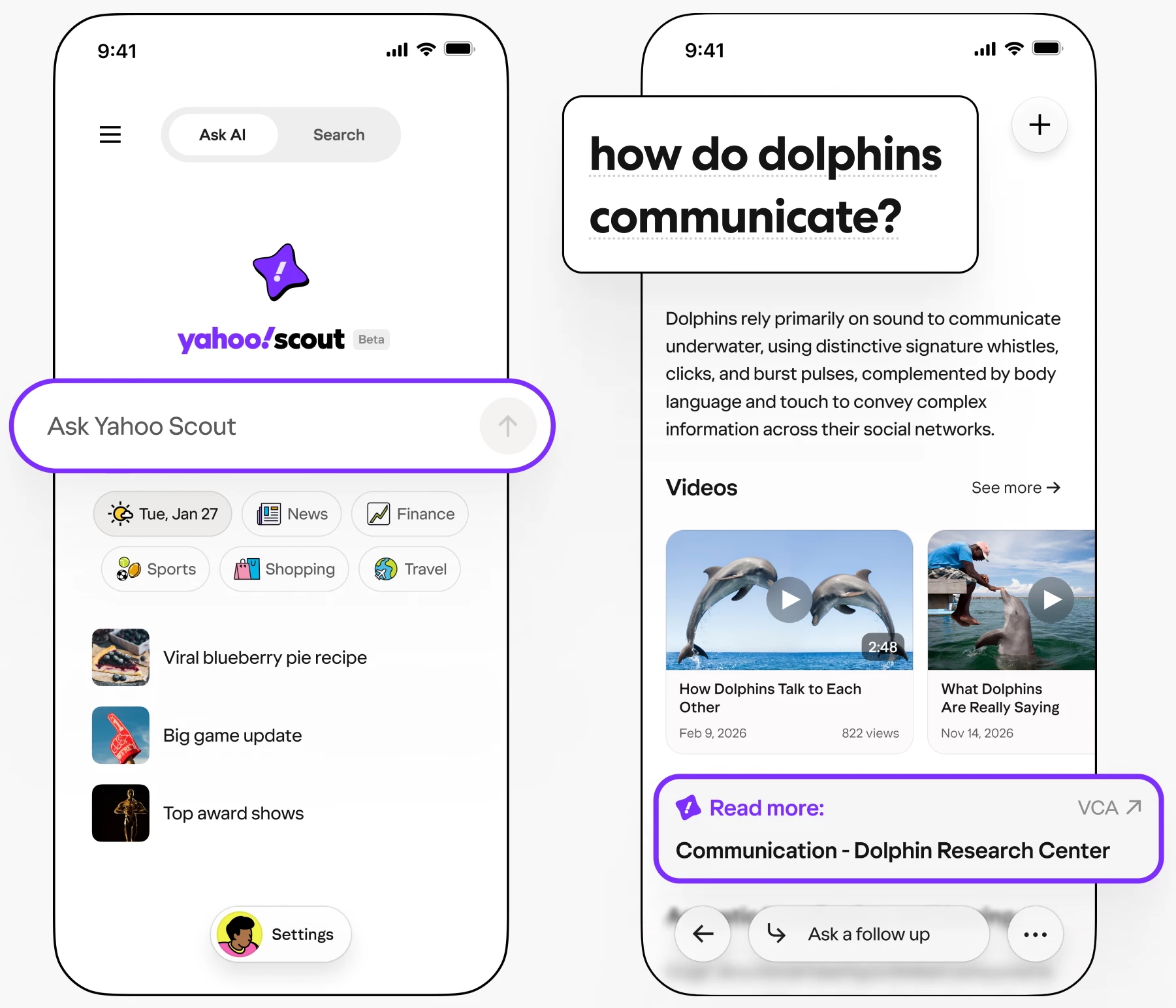
Yahoo Scout surfaces responses inside familiar environments like email, news articles, sports scores, and financial pages.
The tool pulls from the company's own content and long-standing search data, presenting information in clean formats like summaries, tables, and lists with visible sources.
The answers appear where questions naturally come up, without requiring a new workflow.
An Answer Layer Across Yahoo
Alongside the answer engine is the launch of the Yahoo Scout Intelligence Platform, which quietly powers new features across Mail, News, Finance, and Sports.
In Yahoo Mail, Scout will generate summaries that help users scan long threads.
In Sports, it'll break down games and matchups, while it'll highlight key takeaways within articles in News.
Finance users, on the other hand, will see Scout embedded into market coverage, offering quick context around earnings, price movement, and analyst activity.
A feature called “More from Yahoo Scout” will also let readers dig deeper into stories by asking follow-up questions without leaving the page.
The common denominator here is placement. Scout can be accessed where people are already using Yahoo’s platforms without adding extra steps.
The Partnerships Behind the New AI Engine
Yahoo confirmed that Scout is built primarily on Claude, the AI model developed by Anthropic.
It handles AI reasoning and explanation, two qualities the company sees as essential when answers are meant to guide decisions and not just retrieve facts.
Scout also draws on Yahoo’s long-standing relationship with Microsoft through Bing’s grounding API, which helps anchor responses in authoritative web sources.
Yahoo is also participating in Microsoft’s Publisher Content Marketplace pilot, signaling an effort to balance AI answers with attribution and publisher visibility.
These tech partnerships show that Yahoo is combining third-party AI systems with its own data, content, and distribution, which is more practical than trying to recreate the full stack on its own.
Yahoo’s Approach Feels Familiar
Scout's advantage lies in the fact that it's informed by years of user behavior across email, sports, finance, and news, shaping how its answers are given.
Instead of chasing abstract queries, Scout focuses on practical questions:
- What does this earnings report mean?
- What changed in the forecast?
- Is this product worth buying?
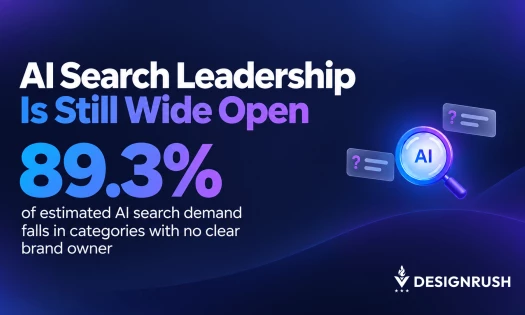
Artificial intelligence has become a core expectation nowadays.
Adoption has climbed steadily over the past few years, reaching about 88% in 2025 as companies embed AI into everyday tools.
This raises the stakes for platforms like Yahoo, where AI needs to work quietly, reliably, and at scale inside products people already depend on.
Yahoo Scout's rollout points to how answer tools actually fit into daily routines.
- Meet users where questions are formed. The answer engine should match how people naturally seek clarity.
- Placement matters as much as capability. Usefulness depends on answers appearing at the right moment and in the right place.
- Design for understanding. Many users are asking questions about what’s already on their screen, without needing to start a separate search.
This strategy allows Yahoo to scale AI gradually across its network, adjusting tone, depth, and use cases by vertical instead of forcing one uniform answer experience everywhere.
Our Take: What Is Yahoo Really Competing For?
I think Yahoo is competing for relevance here.
It’s trying to stay present during everyday check-in moments, when someone scans their inbox, follows a game, or checks the market before closing their laptop.
The open question now is whether Yahoo Scout's quiet presence becomes really useful for its users, as even tech giants encounter problems in rolling out AI tech.
For instance, Apple had a difficult time upgrading Siri, so much so that it had to rely on Google Gemini to power it.
Brands and publishers adapting to AI-driven discovery often work with partners who understand how content, context, and user behavior intersect.
These vetted AI development agencies support organizations navigating answer-based experiences across consumer platforms.