
AI Search Adoption and Visibility: Key Findings
- Roughly half of consumers now use AI-powered search tools, changing how people gather information and evaluate brands before making decisions.
- Strong rankings alone no longer guarantee visibility, as AI summaries increasingly influence which brands are seen first.
- Search visibility is now split across systems, requiring brands to account for both traditional search engines and AI-driven answers.
AI-powered search is becoming a common starting point for online research.
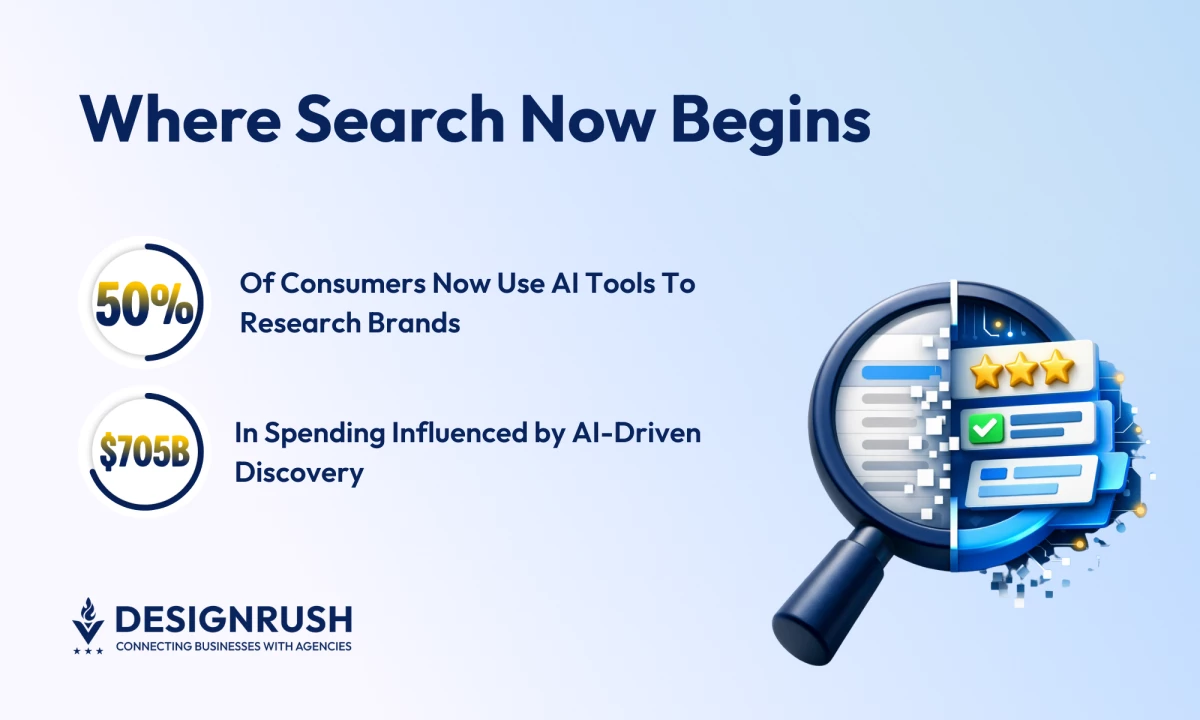
McKinsey reports that about 50% of consumers now use AI-based tools such as ChatGPT, Gemini, and Google’s AI Overviews when researching products, services, and brands.
This behavior is changing discovery and is expected to influence as much as $750 billion in consumer spending over the next few years.
And it’s already visible inside Google Search, where Gemini 3 Flash is rolling out as the default model for AI Mode, expanding how AI-generated answers appear across global results.
Gemini 3 Flash is starting to roll out as the default model for AI Mode in Search globally.
— Google (@Google) December 17, 2025
AI Mode can now tackle your most complicated questions with greater precision — without compromising speed. ⚡
With this upgrade, AI Mode becomes an all-around more powerful tool, better… pic.twitter.com/u1MsVUI6cb
Editor's note: This is a sponsored article created in partnership with Rock Salt Marketing.
As a result, some brand decisions are being made without a click at all, based on how AI platforms describe options, features, and reputations.
“People are getting answers earlier in the discovery process,” Ridge Anderson, co-founder at digital marketing agency Rock Salt Marketing, told DesignRush.
“If a brand isn’t showing up in those answers, it may not matter as much how strong their rankings look on paper.”
In practical terms, brands now need to track how AI summarizes their products and services, since they often determine which options consumers notice before visiting a website.
Why SEO Still Plays a Central Role
Traditional search engines continue to drive most organic website traffic.
Technical SEO, site architecture, and authoritative content remain critical signals for credibility and relevance across Google, Bing, and similar platforms.
What has changed is the path to discovery.
AI-powered search pulls from a wide mix of sources, including publisher articles, reviews, forums, and other third-party content.
In many cases, a brand’s own website represents only a small portion of the material used to generate AI responses.
Rock Salt Marketing notes that this creates a gap between ranking well and being cited in AI-generated answers.
“We see brands doing everything right in traditional SEO and still getting left out of AI answers,” Anderson said.
“AI uses many signals across the web, so brands have to think about consistency, credibility, and context everywhere they show up.”
As more decisions happen before a click, AI search visibility has become as important as performance on owned pages.
Where Answer Engines Change the Equation
Answer Engine Optimization (AEO) focuses on how information is interpreted and summarized by AI systems.
This includes how clearly topics are explained, how consistently brands appear across trusted sources, and whether content answers real user questions in plain language.
McKinsey estimates that 20 to 50% of traditional search traffic could be affected as discovery moves earlier into AI-driven experiences.
Remaining site visits are more likely to come from users who already have context and preferences formed elsewhere.
Rock Salt Marketing treats AEO as part of ongoing SEO best practices and strategy, not a totally separate discipline.
“People don’t prompt LLMs the same way they do with traditional search engines,” Anderson explained.
“They ask follow-ups, they compare options, and they expect clear explanations. Brands just have to meet that kind of behavior.”
The focus now should be on understanding how users phrase questions in AI tools and ensuring brand content supports these conversations naturally.
Rock Salt Marketing points to several areas where brands are already adjusting:
- Clear, structured content. AI systems favor straightforward explanations over dense keyword targeting.
- Consistency across third-party sources. Reviews and community content influence AI visibility as much as owned media.
- Integrated SEO and AEO efforts. Traditional optimization supports traffic, while AI optimization shapes discovery before the visit.
Brands that treat AI visibility as part of search strategy are better positioned to maintain reach as behavior continues to change.
Are Brands Prepared for Search Without the Click?
McKinsey notes that only a small share of brands actively track AI search performance, leaving many without visibility into how they’re being represented.
Most still measure success by rankings and sessions, even as decisions shift upstream into AI summaries.
What’s missing is a clear view of how brands appear when consumers ask questions, compare options, or look for recommendations inside AI tools.
This blind spot often delays response as demand patterns change.
The issue is structural, as many brands still split search, content, PR, and performance into separate teams, even though AI systems draw from all of them at once.
Until these functions align around how answers are produced, brands will keep managing channels in silos while discovery happens elsewhere.