
AI-Driven Search Visibility for Brands: Key Findings
- 95% of U.S. companies are now using AI, showing how quickly businesses can adopt new tech to stay competitive.
- AI visibility tracking gives brands a fresh view of their presence in AI-driven search results, complementing traditional SEO.
- Brands that align content with AI-cited attributes like credibility, structure, and topic relevance earn more citations (and trust) in AI-generated answers.
AI adoption is climbing fast, with 95% of U.S. companies now using generative tools, an increase of 12 percentage points in just a year, according to Bain & Company.
That uptake has changed how teams think about visibility, even as interest in LLMs grows.
It’s created a split reality for SEO: keywords remain the anchor, but a new layer is forming as brands track how they appear in generative answers long before a user reaches their site.
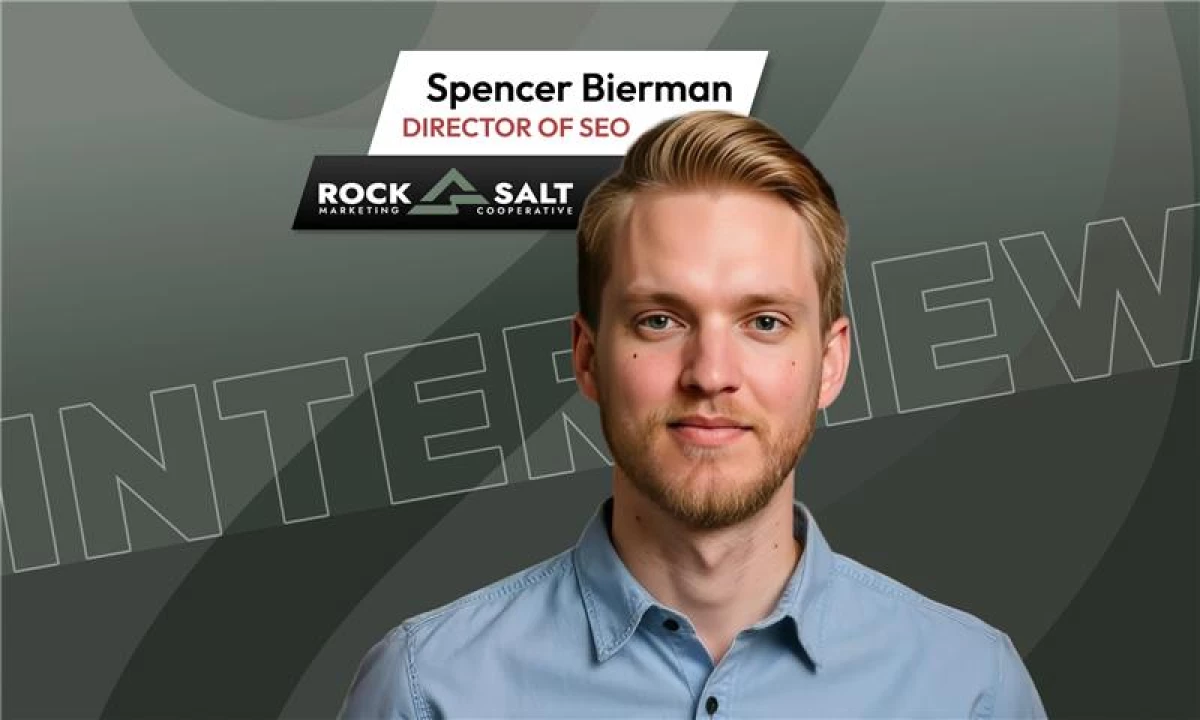
In our interview, Spencer Bierman, Director of SEO at Rock Salt Marketing, explains how teams can expand their analytics with prompt tracking and AI visibility insights.
At the same time, they continue to keep traditional keyword performance at the center of their strategy.

Who is Spencer Bierman?
Spencer Bierman is Director of SEO at Rock Salt Marketing, where he leads strategy across content, search visibility, and competitive analysis. He’s helped clients across industries build data-driven SEO programs that drive real business results. Known for his practical mindset and focus on long-term growth, Spencer brings a mix of creativity and discipline to every engagement.
Editor's Note: This is a sponsored article created in partnership with Rock Salt Marketing.
Traditional keywords and SERP metrics still drive most site traffic, but AI visibility tracking adds a new layer.
Bierman tells DesignRush: “We see it as an additional visibility lens rather than a replacement for traffic data.
It provides clients with insight into how their brand appears in AI searches and how this early exposure influences trust and consideration before a site visit even occurs.”
This approach uncovers patterns and opportunities that standard SEO tools alone can’t capture.
Working with AI-driven search means thinking beyond individual keywords.
Spencer explains that LLM searches are too variable to track one-to-one queries, so his team measures visibility by topic.
“Another key insight was that you don't need to go after being cited on the exact citations that are currently performing, though that’s always a plus; you can also produce content that is in the same vein or has similar qualities to earn that visibility,” Bierman says.
For clients, this approach has tangible benefits.
How Brands Track Their Presence in AI‑Generated Answers
By monitoring which sources and content types are cited most often in AI-generated answers, Bierman’s team can identify patterns behind high-performing content.
Aligning client content to those attributes, such as credibility, structure, and topic focus leads to more frequent citations and improved brand exposure within generative search results.
Rock Salt Marketing Launches AI SEO Services for LLM Search Visibility
— Newsfile (@newsfile_corp) November 19, 2025
Full Story: https://t.co/3MHMnvi0Q9
#rocksa#AIsearch#AISEO#GenerativeSearch#LLMOptimization#SearchEngineOptimization#RealEstate#Travel
For Bierman, the value of prompt monitoring is not just in tracking visibility but in uncovering insights that traditional SEO tools often miss.
He points out that most prompts are question-based extensions of core keywords.
Standard tools rarely capture brand sentiment or how a brand is discussed within AI-generated answers.
This focus on perception refocuses attention on brand awareness and reputation, elements that have always mattered, but were not always prioritized in SEO strategy.
And the payoff can be significant.
Brands that align content with these insights see improved credibility and trust within AI responses, even when traditional link signals are weaker.
In other words, prompt tracking rewards brands that are consistent, authoritative, and structured in their content approach and gives them an early edge in generative search experiences.
Reporting for Prompt Monitoring: Adding a New Visibility Lens
Bierman explains how his team integrates AI visibility into reporting:
“With our AI SEO services, we’ve added AI prompt and visibility tracking into our reporting using Scrunch, an industry-leading analytics partner,” Bierman says.
We see it as an additional visibility lens rather than a replacement for traffic data.”
This allows clients to understand how their brand is being seen in search tools.
That first impression can build trust and shape decisions before someone even visits their site.
This framing helps clients understand AI visibility as a complement to traditional SEO, rather than a replacement.
One key lesson Bierman highlights?
Prompt tracking is too granular, and visibility must be measured by topic.
“We learned to focus on topics, not individual prompts,” Bierman says.
“LLM searches are too variable to track one-to-one queries, so we measure visibility by topic.”
Rather than monitoring every possible prompt, the focus shifts to broader thematic visibility, covering topic clusters and content types that generative AI is likely to reference.
How Keywords and Prompts Work Together
As to how brands combine prompt data with keyword tracking, Bierman says:
“AI prompt tracking complements keyword tracking instead of replacing it. Most prompts are question-based extensions of core keywords.
What traditional tools miss is brand sentiment: how brands are discussed in AI answers.”
This approach surfaces insights that standard SEO tools might miss, such as brand perception in AI responses, rather than just ranking positions.
Bierman outlines a clear workflow for integrating AI visibility with traditional SEO.
His team starts by researching AI prompts and audience behavior to understand how people phrase queries and what they’re really looking for.
Next, they track brand presence across LLM platforms and analyze citation patterns along with brand sentiment.
The team then identifies attributes of highly cited content and creates (or refines) client content to match those characteristics.
Finally, they monitor shifts in AI visibility and sentiment over time, giving brands an ongoing view of how their presence evolves within generative search experiences.
What Other Brands Can Learn
For marketing and SEO teams looking to expand their visibility approach, Bierman emphasizes traditional keyword tracking and SERP performance remain the foundation.
Here’s what to remember:
Prompt monitoring and AI visibility should be added as an additional layer to understand how a brand appears in generative search contexts.
“The biggest myth we hear is that AI-driven search is replacing traditional SEO or already drives the most traffic,” Bierman says.
“In reality, it’s an added layer, not a replacement. Keyword rankings in traditional search engines, site performance, and content quality still do the heavy lifting.”
The focus should be on topics, entities, and content attributes rather than individual prompts or keywords alone.
Teams should continually monitor and refine content to manage brand sentiment, credibility, and citation potential in AI-generated answers.
“The three metrics that matter most to our clients are conversions, ROI, and competitive performance [...] how they stack up against others in their space,” he explains.
And why does this matter?
When you combine traditional SEO metrics with AI visibility, you see things more clearly.
It’s how brands identify blind spots, boost credibility, and stay visible in both human and AI-driven search.