DesignRush
  • Trending Brand News
  • AGENCY DIRECTORY
    Featured
    Branding & Creative
    Website & Interface
    Marketing
    Software & App
    IT Services
    Featured
    • Web Design Companies
    • Web Design Companies
    • Digital Marketing Agencies
    • Digital Marketing Agencies
    • Software Development Companies
    • Software Development Companies
    • Mobile App Development Companies
    • Mobile App Development Companies
    • Web Development Companies
    • Web Development Companies
    • SEO Agencies
    • SEO Agencies
    • AI Companies
    • AI Companies
    • UI/UX Design Agencies
    • UI/UX Design Agencies
    • PPC Agencies
    • PPC Agencies
    • Branding Agencies
    • Branding Agencies
    • Google Ads Agencies
    • Google Ads Agencies
    Featured
    Branding & Creative
    • Digital Agencies
    • Digital Agencies
    • Branding Agencies
    • Branding Agencies
    • Creative Agencies
    • Creative Agencies
    • Product Design Companies
    • Product Design Companies
    • Logo Design Companies
    • Logo Design Companies
    • Graphic Design Companies
    • Graphic Design Companies
    • Packaging Design Companies
    • Packaging Design Companies
    • Video Production Companies
    • Video Production Companies
    • Public Relations Firms
    • Public Relations Firms
    • Design Agencies
    • Design Agencies
    • Reputation Management Companies
    • Reputation Management Companies
    Branding & Creative
    Website & Interface
    • Web Design Companies
    • Web Design Companies
    • eCommerce Development Companies
    • eCommerce Development Companies
    • Web Development Companies
    • Web Development Companies
    • WordPress Web Design Companies
    • WordPress Web Design Companies
    • WordPress Development Companies
    • WordPress Development Companies
    • Magento Development Companies
    • Magento Development Companies
    • Shopify Development Companies
    • Shopify Development Companies
    • UI/UX Design Agencies
    • UI/UX Design Agencies
    • Small Business Website Design Companies
    • Small Business Website Design Companies
    Website & Interface
    Marketing
    • Digital Marketing Agencies
    • Digital Marketing Agencies
    • SEO Agencies
    • SEO Agencies
    • PPC Agencies
    • PPC Agencies
    • Social Media Marketing Companies
    • Social Media Marketing Companies
    • Search Engine Marketing Agencies
    • Search Engine Marketing Agencies
    • Email Marketing Agencies
    • Email Marketing Agencies
    • Small Business SEO Companies
    • Small Business SEO Companies
    • Local SEO Companies
    • Local SEO Companies
    • Google Ads Agencies
    • Google Ads Agencies
    • Advertising Agencies
    • Advertising Agencies
    • eCommerce SEO Agencies
    • eCommerce SEO Agencies
    • Media Buying Agencies
    • Media Buying Agencies
    • Content Marketing Agencies
    • Content Marketing Agencies
    • Lead Generation Companies
    • Lead Generation Companies
    • Video Marketing Services
    • Video Marketing Services
    Marketing
    Software & App
    • Software Development Companies
    • Software Development Companies
    • Offshore Software Development Companies
    • Offshore Software Development Companies
    • Outsourcing Software Development Companies
    • Outsourcing Software Development Companies
    • Mobile App Development Companies
    • Mobile App Development Companies
    • VR & Augmented Reality Companies
    • VR & Augmented Reality Companies
    • AI Companies
    • AI Companies
    • Android App Development Companies
    • Android App Development Companies
    • iPhone App Development Companies
    • iPhone App Development Companies
    • Blockchain Development Companies
    • Blockchain Development Companies
    • Software Testing Companies
    • Software Testing Companies
    Software & App
    IT Services
    • IT Services Companies
    • IT Services Companies
    • IT Outsourcing Companies
    • IT Outsourcing Companies
    • Managed Service Providers
    • Managed Service Providers
    • Cybersecurity Companies
    • Cybersecurity Companies
    • Big Data Analytics Companies
    • Big Data Analytics Companies
    • Cloud Consulting Companies
    • Cloud Consulting Companies
    • Staff Augmentation Services
    • Staff Augmentation Services
    • SharePoint Consultants
    • SharePoint Consultants
    IT Services
  • List Your AgencyFind An Agency
  • Marketplace
  • Awards
    • All the Latest Winners
    • Website Design
    • Logo Design
    • Print Design
    • App Design
    • Packaging Design
    • Video Design
List Your AgencyFind An Agency
Trending Brand News
  • Latest News
  • Interviews
  • Podcast
  • Trends
  • Trending Brand News
  • How to Build AI Apps That Scale: 3 Expert Principles for Success
Receive our Newsletter
Join over 70,000 B2B decision-makers growing their brands
Receive proposals from qualified agencies
Get Proposals
4 min read

How to Build AI Apps That Scale: 3 Expert Principles for Success

AI promises transformation, but without resilient architecture, hidden costs can turn prototypes into liabilities.
Artificial Intelligence 4 min read
1,903
How to Build AI Apps That Scale: 3 Expert Principles for Success
Article by Enrique Jose TabuenaEnrique Jose Tabuena
Published Aug 28 2025
|
Updated Dec 10 2025
Share

Scaling AI Apps: Key Findings

  • 42% of companies are abandoning AI projects in 2025 due to systems that fail to scale beyond prototypes.
  • Scalable success depends more on architecture than on model complexity.
  • Modular, hybrid, and adaptive designs help teams avoid failure and build AI that lasts.

Across industries, AI apps are pitched as game-changers, promising to transform customer experiences, streamline operations, and unlock new revenue.

That’s true, but only sometimes.

In 2025, AI failures are on the rise. According to S&P Global Market Intelligence data reported by CIO Dive, 42% of companies have abandoned most of their AI initiatives, up sharply from 17% in 2024.

The reasons go beyond technical glitches.

McKinsey’s 2025 State of AI report shows that organizational structure plays a major role in whether AI scales or stalls.

And the companies that succeed are the ones that stay organized around data and risk.
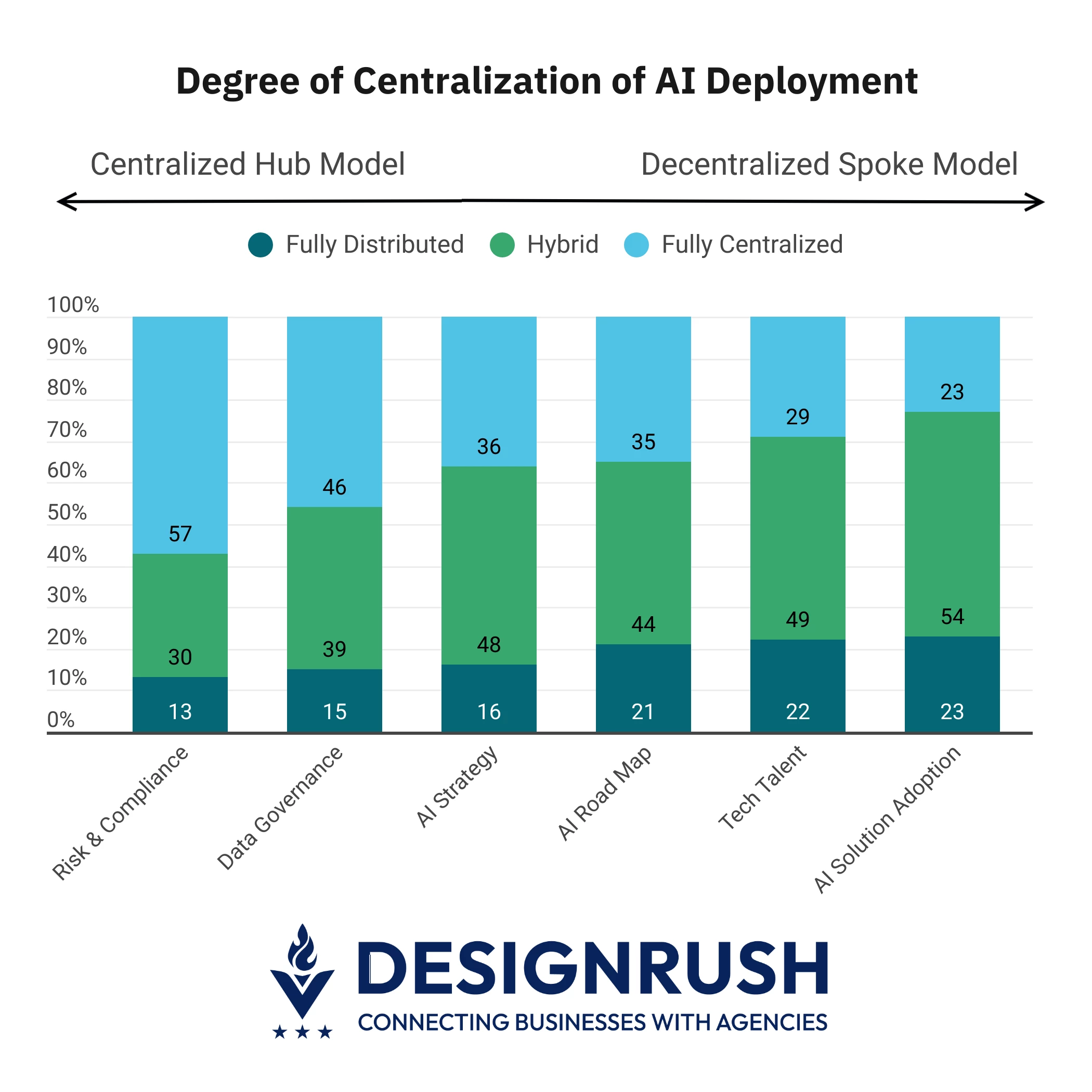
How Organizations are Structuring AI Deployment | Source: McKinsey

Even with so many abandoning AI initiatives, 58% of companies are still sticking to their AI plans, according to the same CIO reporting.

So what separates those who succeed from those who stall? Smart planning and architecture.

Flashy prototypes can win headlines, but sustainable systems require careful design choices that anticipate real-world constraints.

Check-in ✅ to the future! AI streamlines hospitality with smart bookings, room controls, and concierge bots. Using semantic analysis, it anticipates guest needs, resolves issues, and boosts profits. Redefine hotels🏩globally with unforgettable, conversational stays!#TravelTechpic.twitter.com/fzs6RxQCeO

— Suffescom Solutions Inc (@suffescom) May 20, 2025

In particular, three architecture principles have emerged as critical for AI longevity.

These are what separate the AI apps that scale successfully from those that quietly collapse:

  • Modular system design: Enables flexibility and faster upgrades without full rebuilds
  • Hybrid compute strategies: Balances performance and cost by optimizing where models run
  • Continuous learning workflows: Keeps models relevant through real-time adaptation and monitoring

This is something firms like Suffescom Solutions, a leading AI and Web3 consulting company, see across the companies they advise.

They know that success hinges less on model novelty and more on infrastructure that can bend without breaking.

“The biggest ROI from AI doesn’t come from the model itself," said Mr. Gurpreet Singh Walia, CEO at Suffescom Solutions.

"Rather, it comes from how well the AI development process scales, adapts, and stays reliable under pressure. Without that foundation, even the most advanced algorithms will collapse under real-world demands.”

So what exactly is causing these failures, and how can teams prevent them before it’s too late?

Let’s look at where AI systems typically break down at scale, and the architecture principles that prevent it.

The True Cost of AI at Scale

Big ideas aren’t the culprit behind these failures. Typically, it’s that the systems can’t handle the pressure.

And when they crack, the weak points tend to show up in three places:

1. Inference Costs

Large language models are computationally hungry. A prototype running a few queries may look smooth. But when millions of users interact daily, the bill can rival payroll. Organizations discover too late that the cost per request makes the business model untenable.

2. Model Brittleness

Models shine when tested against the same data they were trained on. Real life is messier. Customer behavior shifts. Market trends evolve. Even small changes in input data can throw predictions off.

3. Fragile Pipelines

Data comes from sensors, transactions, and human behavior; all of it is noisy and inconsistent. If monitoring is weak, problems go unnoticed until they reach the customer.

These failures can easily influence profit margins, as well as erode trust inside organizations and among end users.

In other words, they turn promising apps into team headaches and business liabilities.

Designing for Long-Term Scalability

Avoiding these pitfalls requires architecture built for growth.

Not every organization needs the same blueprint, but three important principles stand out:

1. Build with Modularity and Flexibility

AI systems should be assembled like Lego sets, not poured like concrete. Each component, from data processing to monitoring, should be replaceable.

That way, teams can upgrade or swap parts without tearing down the whole system.

#AI, encouraging predictive intelligence, gives you the privilege of mining a complete analysis of prospects' sentiments. By inoculating AI prowess into business operations, we help our clients #boostROI and enhance sales analytics support, customer engagement, etc.#AIsolutionspic.twitter.com/hDPvkp8yWi

— Suffescom Solutions Inc (@suffescom) May 8, 2024

Consider feature engineering. If pipelines are separated from model-serving layers, engineers can refine inputs without causing downtime in the app.

This adaptability reduces the risk of costly rebuilds, and research backs it up.

According to a 2024 study in the Journal of Manufacturing Systems, a company used a smart, buildable AI system to test for leaks. They could quickly swap out parts of the system to handle different products, making the work faster, easier, and cheaper.

If your AI app needs to grow, change, or get better over time (and most do), choosing mobile app development with a modular design is a smart way to keep everything running smoothly without breaking.

2. Adopt Hybrid Compute Strategies

Running everything in the cloud is simple. It’s also expensive. A hybrid compute strategy helps balance cost, speed, and system resilience.

  • Lightweight models can live at the edge, reducing latency and cutting cloud calls.
  • Heavy models can remain in the cloud, where they have access to more compute power.
  • Model distillation or mixture-of-experts can trim resource use while maintaining accuracy.

Together, these choices act like financial tuning knobs, helping teams deploy AI efficiently without burning through budget as user traffic grows.

3. Enable Continuous Learning Workflows

Static models are like frozen food. They deteriorate the longer they sit. Real-world AI must be fed fresh data.

That’s why Suffescom Solutions conducts constant monitoring, retraining, and drift detection.

Best practices include:

  • CI/CD for ML pipelines. Updates flow regularly rather than in disruptive batches.
  • Automated retraining. New data fine-tunes models without waiting for quarterly overhauls.
  • Human-in-the-loop validation. Algorithms improve while people retain oversight.

Think of it like building a habit: the more your AI learns from real-world use, the better it gets at doing its job reliably.

Engineer AI That Thrives at Scale

Poor AI design undermines trust, slows innovation, and weakens adaptability.

But it doesn’t have to.

As we’ve seen, the systems that succeed are built to work well in the long-run. This is because they:

  • Roll out faster
  • Require fewer rebuilds
  • Handle change resiliently

When teams embrace modular design, hybrid compute, and continuous learning, they sidestep the scaling issues that derail nearly half of AI projects today.

Follow these principles, and you won’t just build AI that works.

You’ll build AI that grows, adapts, and endures.

👍👎💗🤯
Tags:
app development 
suffescom solutions 
Enrique Jose Tabuena
Senior Editor

Enrique Jose Tabuena is DesignRush's Senior Editor who has over a decade of experience in content strategy, creative copywriting, and SEO. He holds a Bachelor of Arts in Communications, Image and Sound Production from Ateneo de Manila University. Passionate about bridging brands and audiences through strategic storytelling and innovative marketing techniques, Enrique leverages his expertise to deliver insightful content for DesignRush's media platform.

Follow on: LinkedIn Send email: enrique@designrush.com

Latest Artificial Intelligence News

view all
  • multi agent growth graph
    Artificial Intelligence

    What It Takes to Build Multi-Agent Systems That Work at Enterprise Scale

    By Alexey Spas  |  1 day ago  |  5 min read
  • Infographic showing AI adoption results: 88% use AI, 29% scaled it, with 66% efficiency gains but only 20–30% revenue growth.
    Artificial Intelligence

    SiteGround Debuts Coderick AI as Businesses Turn AI Builds Into Systems

    By Ilze-Mari Gründling  |  1 day ago  |  4 min read
  • ai adoption in healthcare graphs
    Artificial Intelligence

    70% of Providers Have AI Plans, But Teams Aren’t Set Up to Use Them

    By Ryan de Smidt  |  3 days ago  |  3 min read
  • Infographic showing brands missing out on AI overviews, with stats: 58% increase, 8% clicks, and usage split (40% generative AI, 20% maps, 15% Google Maps).
    Artificial Intelligence

    Why AI Overviews Matter More Than Traditional Search Rankings

    By Ilze-Mari Gründling  |  1 week ago  |  4 min read
view all

Most Popular Artificial Intelligence Stories

  • Voice AI market growth graphs
    Artificial Intelligence

    Voice AI Agents Are Replacing Contact Centers in 2026: Here’s What That Means for CX Leaders

    By Ryan de Smidt  |  2 weeks ago  |  5 min read
  • Artificial Intelligence

    Gartner Warns: 40% of Agentic AI Projects to Fail by 2027 and Here's Why

    By Enrique Jose Tabuena  |  1 month ago  |  5 min read
  • A drive thru employee at Burger King wearing a headset talking to AI assistant "Patty"
    Artificial Intelligence

    Burger King's AI Assistant 'Patty' Coaches Drive-Thru Friendliness in 500 Stores

    By Katherine Maclang  |  1 month ago  |  3 min read
  • ai agent growth graphs
    Artificial Intelligence

    How AI Agents Are Transforming Business Communication in 2026

    By Ryan de Smidt  |  3 weeks ago  |  4 min read
DesignRush

DesignRush is the premier agency directory, awards platform, and media hub connecting brands with top agencies in software, app development, design, and marketing. We deliver vetted reviews, insights, and trends to drive business growth.

For Businesses

  • Agency Categories
  • Agency Ranking Methodology
  • Trending Brand News
  • FAQs

For Agencies

  • Benefits Of Listing With Us
  • Submit An Agency
  • Sponsorship
  • All Agencies

About DesignRush

  • Team & Story
  • Contact Us
18117 Biscayne Blvd
Miami, FL 33160
United States
© DesignRush 2026, All Rights Reserved
  • Sitemap
  • Terms of Use & IP
  • Privacy Policy
  • Accessibility
  • Fraud Protection
s