
AI in B2B Websites: Key Findings
- AI works best when aligned with specific business goals, driving better engagement and higher-quality leads.
- Expert input remains essential to maintain content quality, brand consistency, and accurate data.
- Avoid overreliance on fully automated AI tools or predictive models without a proper strategy and clean data.
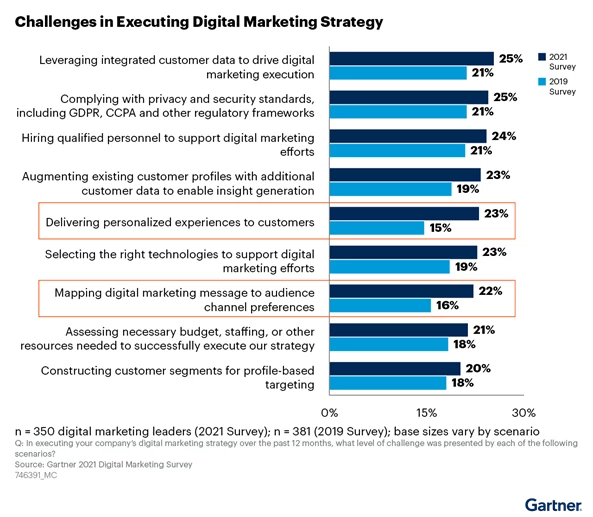
63% of digital marketing leaders still struggle with personalization, according to a survey by Gartner.
And yet only 17% use AI and machine learning across the function.
Editor's Note: This is a sponsored article created in partnership with Bop Design.
Companies like Bop Design have observed this trend across multiple industries: organizations that integrate AI into a well-defined web strategy often see stronger, measurable results.
Meanwhile, those who adopt AI without direction struggle to see impact.
When AI is applied strategically through personalization, chatbots, and SEO intelligence, B2B websites can shorten sales cycles, increase marketing-qualified leads, and improve overall engagement.
Sites that rely solely on static content, basic contact forms, or manual keyword research often struggle to connect with decision-makers or convert leads effectively.
The key turning point comes from matching specific AI capabilities to clearly defined business goals.
When done thoughtfully, a B2B website can engage target accounts in real time, guide visitors through the buying journey, and rank for high-intent searches.
Here’s a look at the three tactics that make this approach successful, and the missteps to avoid.
Turning AI Into a Website Growth Engine
AI Tactic #1: Personalization that aligns with user intent
Instead of filling the site with generic “personalized” widgets, the marketing team took a different approach.
They used an AI-powered platform to fine-tune CTAs, product suggestions, and recommended resources based on each visitor’s real-time browsing behavior.
The team combined behavioral analytics with CRM data to tailor the experience to where a visitor was in their buying journey.
This approach was important because aligning content with what someone is actively looking for keeps them engaged and naturally encourages them to take the next step.
The result was a noticeable lift in engagement, with visitors spending more time exploring the site and bounce rates dropping by 19% within the first three months.
“Personalization isn’t just about dropping a visitor’s company name on a page. It’s about really understanding where they are in their journey and showing them content that fits,” said Jeremy Durant, business principal at Bop Design.
“AI can help with this, but only if you have the right data and know what signals to look for.”
AI Tactic #2: Conversational chatbots that qualify, not just greet
Rather than using a basic chatbot that simply repeated website copy, the team took a more strategic approach.
They trained an AI bot using FAQs, product information, and sales qualification criteria.
This allowed the chatbot to do more than just greet visitors. It could:
- Ask targeted questions to segment leads
- Serve tailored content depending on whether someone was researching
- Making decisions
- Book demos directly on the sales team’s calendar
In just six months, this chatbot was responsible for generating 31% of all inbound demo requests, all without increasing the sales development rep headcount.
AI Tactic #3: Using AI to boost SEO with smarter content insights
The content team focused on using AI tools to uncover keyword opportunities their competitors were missing.
These tools helped identify gaps in their content, suggested related keywords, and offered ideas for internal linking to make the site more visible for high-intent searches.
Writers then added their expertise and brand voice, ensuring the content was credible and relevant.
This approach led to a 42% increase in organic traffic from valuable keywords within the first year.
Avoiding the Overhyped Traps
Not every AI promise lived up to expectations. The team found a few common pitfalls along the way:
- Fully automated content often lacked the authority and nuance needed for B2B audiences, meaning it needed significant editing before it was ready to publish.
- One-click AI web design tools sometimes produced layouts that didn’t align with the company’s brand guidelines or unique style.
- Predictive lead scoring only became reliable after a thorough cleanup and standardization of CRM data, highlighting that good data is essential before AI can help.
“AI can be powerful, but it all comes down to your data. If your CRM data is messy or inconsistent, the predictions won’t be reliable. Taking time to clean up your data first makes all the difference,” said Durant.
Bringing It All Together
AI holds a lot of promise for B2B websites, but it’s not a silver bullet.
Success comes from understanding where AI truly adds value and where human insight must lead the way.
Personalization that matches user intent, chatbots that qualify leads thoughtfully, and SEO tools that guide smarter content creation are all practical ways AI can boost results.
But it’s just as important to recognize AI’s limits, like the need for expert input on content quality, brand consistency in design, and clean data for reliable predictions.
Ultimately, companies like Bop Design showed that AI works best when it’s part of a clear strategy focused on business goals.
When used thoughtfully, AI becomes a powerful partner that helps B2B marketers create better experiences and drive meaningful growth.