
Effective AEO Strategies: Key Findings
- AI-powered search tools retrieve and cite content differently than traditional search engines, creating a visibility gap for brands that have not adapted their strategy.
- Maintaining visibility in AI-powered search requires the same SEO foundations that drive organic rankings, extended to passage-level content optimization.
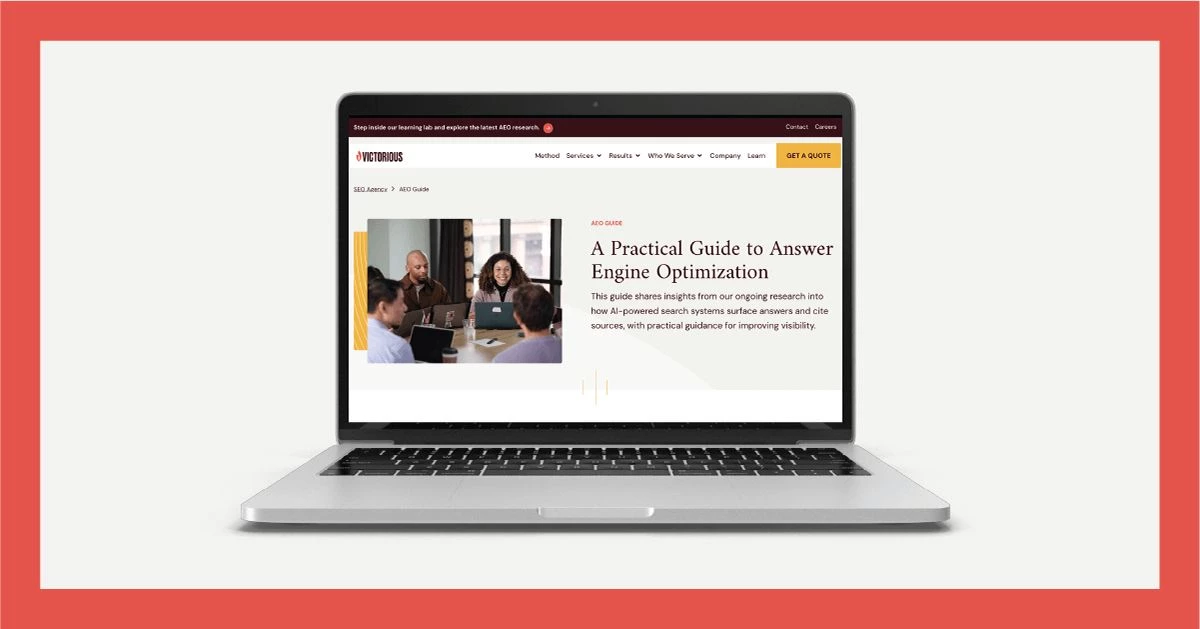
- Victorious’ AEO Guide shares proprietary research and practical guidance for building brand visibility across both AI-powered and conventional search.
Search is no longer a single channel. Buyers now encounter brand answers in Google AI Overviews, ChatGPT, Perplexity, and Claude before they ever click a link.
For brands that built their visibility strategy on traditional search alone, that shift creates a measurable gap.
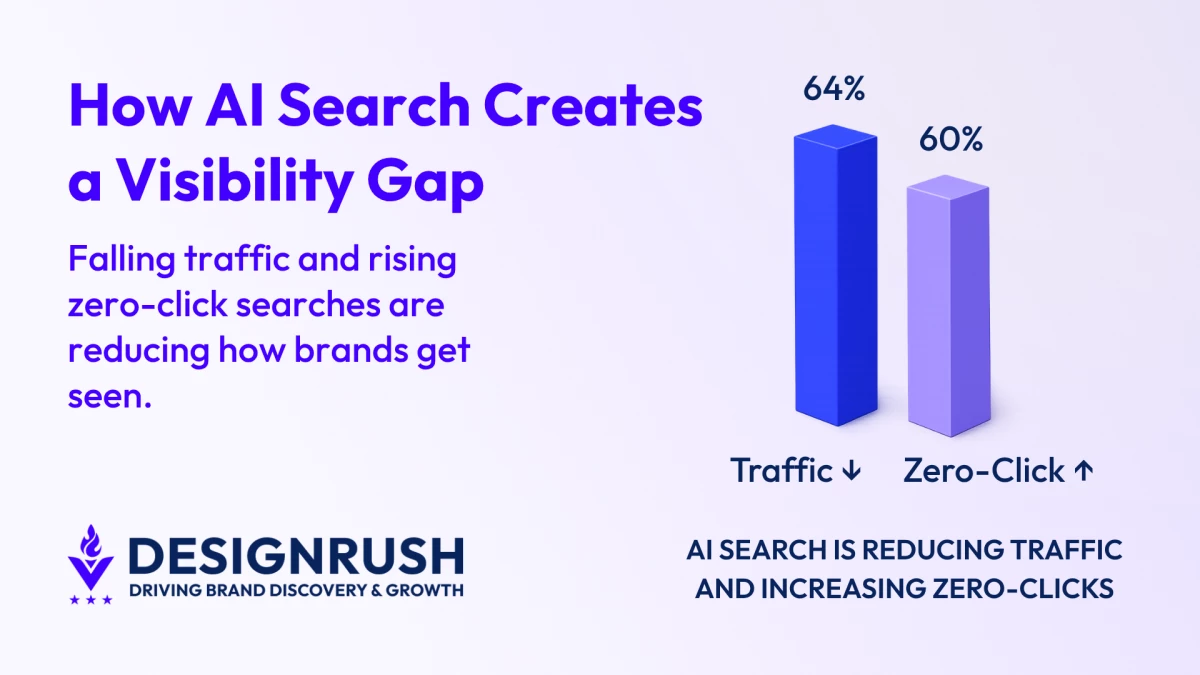
According to a report from Forbes, websites have seen anywhere from a 15% to 64% decline in organic traffic since the launch of AI Overviews.
To make matters worse, about 60% of all searches do not generate clicks at all.
Editor's Note: This is a sponsored article created in partnership with Victorious.
Given this, Victorious, a 5x SEO Agency of the Year with 12 years in enterprise and technical SEO, has launched the AEO Guide to help marketers and agencies close it.
The resource draws from the agency’s ongoing research into how AI-powered search systems retrieve and cite content, paired with practical guidance for building visibility across both AI-powered platforms and conventional search.
Most available guidance on answer engine optimization (AEO) covers definitions and general best practices.
The Victorious AEO Guide goes further, sharing findings from structured internal experiments and a retrievability scoring system the team built to measure whether content is structured for AI citation.
The guide is designed to evolve as Victorious’s research does, with the agency updating it regularly.
Opening the Doors to AEO Research
The AEO Guide covers six areas that together form a complete AEO strategy:
- How AI retrieval works
- Technical readiness
- AEO content strategy
- Measuring AI visibility
- Securing internal buy-in
- Using entity signals to maintain strategic focus as AI search continues to shift
Three pieces of proprietary research distinguish the guide from general AEO content available elsewhere.
The first is Victorious’s retrievability scoring system, a framework built to evaluate whether individual pages and passages are structured for AI citation.
The system examines content at the passage level because AI systems break content into smaller chunks and evaluate each independently.
A page can rank in organic search while containing zero passages an AI system will cite.
The second is a published study of 1,540 real-world queries examining how Google AI Overviews and AI Mode differ in citation behavior.
Victorious found that the two Google AI experiences frequently pull from different sources for the same query, a finding with direct implications for how brands prioritize content optimization.
The third is a marketer-facing entity glossary that defines the terminology underpinning AI search without requiring a technical background to use it.
“AI hasn’t replaced search, but it has reshaped brand discovery,” said Victorious Head of SEO Strategy Mark Wesley.
“To maintain visibility in a fragmented search environment, you need a unified strategy that works across AI-powered platforms and conventional search experiences.”
Putting the Methodology to Work
The AEO Guide also documents the approach Victorious uses with clients across industries, showcasing the effectiveness of the strategies shared.
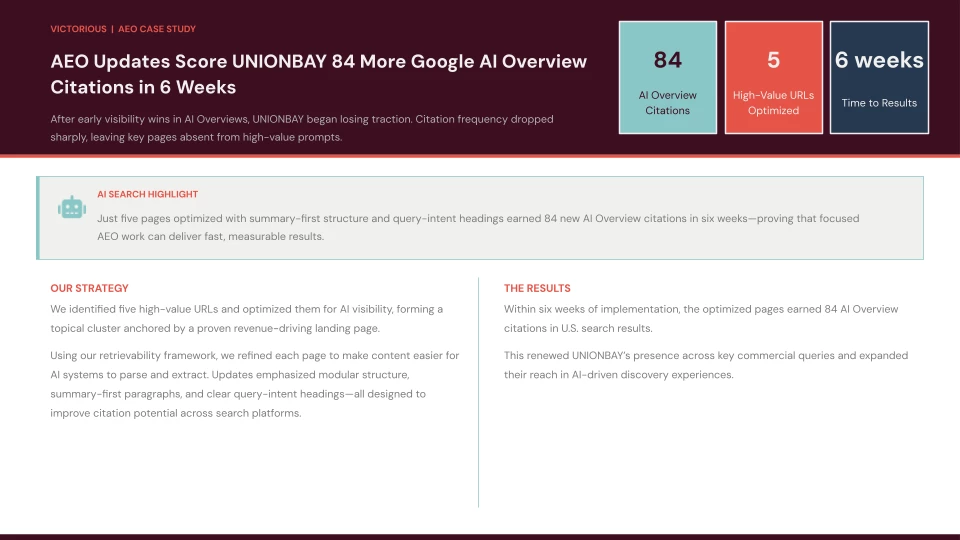
One example of this is the work Victorious did for UNIONBAY, an apparel brand, which had earned early visibility in AI Overviews.
But as competitors optimized for the same terms, citation frequency dropped and key pages stopped appearing in high-value AI search results.
Victorious applied its retrievability framework to five high-priority URLs, focusing on three structural changes:
- Modular content organization that allows AI systems to extract passages independently,
- Summary-first paragraph structure that leads with the answer before supporting detail,
- Query-intent headings that align section labels with how searchers actually phrase their questions.
Within six weeks, the five optimized pages earned 84 AI Overview citations in U.S. search results, restoring UNIONBAY’s presence across key commercial queries without rebuilding content from scratch.
UNIONBAY is one example across a broader body of client work.
Clients in telecom, financial services, cybersecurity, and higher education have collectively earned thousands of AI Overview citations using the same methodology documented in the guide.
Building Visibility That Holds
As AI-powered search continues to evolve, brands that treat AEO as a bolt-on tactic will struggle to sustain citation visibility.
Victorious’s AEO Guide reflects a different approach; one grounded in ongoing research, built on the same authority signals that drive organic rankings, and updated as the discipline develops.
And this matters because content that isn’t cited might as well not exist at all.