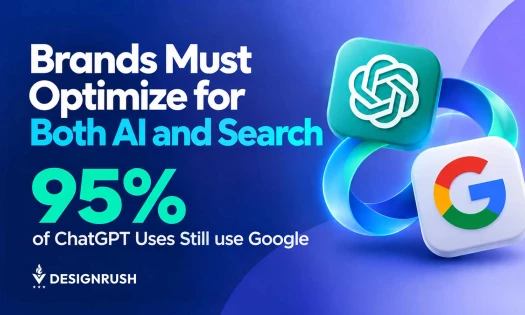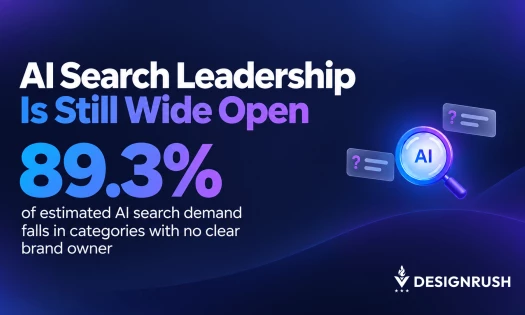

Procurement and buying research is starting earlier inside AI answers.
A prospect can ask which vendors fit a use case, which product claims hold up, and where to buy before a sales team sees intent.
Traffic from AI sources to U.S. retail sites grew 393% year over year in the first three months of 2026, according to Adobe Analytics.
For executives, this makes AI discovery a revenue and access issue.
Buyers are starting more of their research inside AI systems, but brands only benefit if those systems can read the right pages, understand the offer, and send prospects toward the correct next step.
Jordan Brannon is President and Co-Founder of Coalition Technologies, a digital agency that works with eCommerce and B2B brands across search, websites, and online growth.
He says the problem is that many teams are increasing content spend before checking whether large language models can access their pages, interpret their positioning, and connect them to the right purchase path.
“If a brand is not showing up anywhere in any major LMs, the first thing I'm going to look for is some kind of technical blocker,” Brannon tells DesignRush.
In episode No. 142 of the DesignRush Podcast, Brannon explains why AI search performance starts with technical access, clear brand language, website function, and reputation.
Watch the full episode now on YouTube or listen on Spotify.

Who Is Jordan Brannon?
Jordan Brannon is President and Co-Founder of Coalition Technologies, a digital agency focused on search, web development, eCommerce, and AI discovery.
Brannon advises retail and B2B brands on the technical and content systems that influence visibility, revenue, and buyer trust online.
The AI Discovery Gap Behind Online Growth
For years, the company website sat at the center of how search demand turned into revenue, from initial research through to purchase or demo requests.
That path is becoming less direct.
Brannon says AI tools are changing how buyers gather information before they reach a brand-owned channel.
“They're essentially really cutting out the website, which is this webless web concept we're talking about, is a future where you could be in ChatGPT or in Gemini and doing all of the things you used to do through a website or even through some apps,” Brannon says.
For executives, that changes the role of search visibility.
The question isn't just about whether the brand ranks. It's whether AI systems can access the right information, describe the business correctly, and guide the buyer toward the right next action.
That makes AI discovery a leadership issue.
A company may know how much it spends on SEO, content, paid search, and website updates. It may know how much traffic those channels produce.
But it may still not know how often AI tools are excluding the brand, misreading the offer, or sending buyers toward a competitor’s buying path.
So, the website still matters, but its job is changing.
Brands need to treat the site as a source of structured information for AI systems and as a high-trust destination for buyers who still need proof before they act.
He says that means thinking about the website in two ways.
“One is that feed. That offers data and experience and functionality to AIs and to agents,” Brannon says.
“And two, as a place of brand loyalty and brand differentiation, similar to where we were maybe 15 or 20 years ago with websites where something unique was offered to your consumers."
That is where many AI search programs start to break down.
A brand may invest in more content, more tools, and more reporting, while the underlying system still gives AI platforms incomplete, inconsistent, or outdated information.
According to Brannon, brands risk missing three issues when they treat AI discovery as a content or rankings project instead of a business visibility system:
1. Reading AI Search Like a Standard Reporting Channel
AI search visibility is harder to measure with the same confidence leaders expect from other marketing channels.
Paid media and SEO both come with established performance signals like spend efficiency, rankings, and traffic. Sales teams can see leads, pipeline, and revenue.
AI search does not give leaders that same level of operating clarity today.
“But right now, ChatGPT and Claude and Perplexity and others really don't offer meaningful insights into what users are actually doing, what they're prompting, when you're showing up,” Brannon says.
That creates a management problem.
If the C-suite expects AI search to behave like a traditional dashboard channel, the company may wait for clean reporting before fixing issues that are already affecting discovery.
Brannon says leaders need to understand how prompt behavior works.
“The next thing that I would really highlight is a lack of understanding about how users prompt today,” he says.
Buyers rarely stop at a single question. Brands can surface in one AI answer and vanish in the next, or be presented in a way that undermines the buying case.
That makes the prompt path harder to ignore.
If leadership only reviews traffic, lead volume, or last-click attribution, it may miss where AI tools are already influencing demand before the website visit.
For CEOs and CMOs, AI reporting should raise three questions earlier:
- An access issue: Can AI systems crawl, read, and interpret the company’s most important pages?
- A visibility issue: Is the brand showing up for the prompts that matter to its buyers, products, services, and categories?
- A control issue: Is the brand being described in a way that supports trust, accuracy, and revenue?
The practical work starts with what the company can control.
That includes technical access, content structure, updated product and service pages, third-party references, and the way AI tools describe the brand during buyer research.
DesignRush’s guide to technical SEO audits explains how crawlability, indexation, site structure, duplicate content, mobile performance, speed, and structured data can affect search visibility.
2. Publishing More Content Before Cleaning the Brand Record
Many brands respond to AI search pressure by producing more content.
Brannon says that can miss the real issue.
For companies with years of digital marketing activity behind them, the problem may be the amount of old information already online.
“One of the biggest issues we have is that because people have been doing digital marketing and producing content to their website and to other websites for the better part of fifteen or twenty years, is they have this massive inventory of uncurated, untracked, frankly, unpaid attention to content that's out there,” Brannon says.
That inventory can affect how AI systems understand the brand.
Old service pages and inconsistent product descriptions are common. Add weak third-party mentions and outdated site structure, and the result is a fragmented brand signal that systems struggle to interpret.
For a startup, the risk is often trying to be known for too many things too quickly.
For an established company, the risk is different. Years of campaigns, pages, PR, partner listings, reviews, and directory profiles may describe the business in too many ways.
Brannon says this can make the brand harder for AI systems to define.
“And as a consequence, if you go broad, you tend to be less relevant because the AI can't really define your entity well enough,” Brannon says.
That issue becomes commercial.
If AI tools can’t connect the company to a category, problem, product, service, or a buyer need, the brand may lose qualified demand even if it has strong content volume.
For Brannon, the answer starts with discipline.
“So being disciplined about how you describe your product or your service or your brand and really making sure that you have a key message around your offering in the market that can be very helpful in getting you to show up inside of an AI prompt response that much sooner,” he says.
This makes content governance a C-suite issue.
The company needs to know which pages still support the business, which ones need updates, and which outside references are shaping how AI tools understand the brand.
That work should include:
- A content inventory: Which pages, articles, case studies, product pages, and service pages still matter?
- A brand language review: Is the company described consistently across its site, PR, social channels, partner pages, and directories?
- A buyer intent review: Does the content answer the questions buyers now ask inside AI tools?
- A technical review: Can AI systems access and understand the highest-value pages?
Without that ownership, the business may keep funding content production while AI tools learn from outdated or unclear information.
DesignRush’s article on AI SEO tools explains how teams are tracking brand mentions, citations, share of voice, and visibility across AI-generated answers.
3. Winning AI Mentions While Losing the Buyer
Getting mentioned in an AI answer is not the end of the problem.
Brannon says the next risk appears after the brand shows up.
AI tools do not simply answer a question. They can suggest the next comparison, the next product detail, the next buying action, or the next place to purchase.
“I think one of the biggest stories that's not talked a lot about in LLM marketing right now is how do you navigate the sequence of prompt responses that are offered by the LLM to the human," Brannon says.
That sequence can affect revenue.
A brand may appear in the answer, but the next prompt may send the buyer toward a purchase path the company cannot fulfill.
Brannon gives the example of a large online subscription brand that shipped products directly to customers.
During a ChatGPT-focused campaign, Coalition found that the AI answer was steering users toward a local pickup option.
“We found that ChatGPT said, you can buy online here, but they'll actually allow you to pick it up in store. And so ChatGPT's prompt for the human was buy from a retailer who offered in-store pickup,” Brannon says.
That created a business problem because the brand did not have local stores.
The company was part of the AI conversation, but the recommended action favored a different purchase path.
For leaders, this means AI search work cannot stop at visibility.
AI tools pull from product pages, policies, reviews, and third-party mentions when explaining availability, pricing, and support. If those sources are inconsistent or outdated, the output inherits the confusion.
That makes structured product and policy pages more important than ever, along with active review monitoring and accurate external listings.
Reputation carries the same risk. A brand can surface in an AI answer and still lose trust if old complaints or outdated claims sit louder than current information.
Brannon says this is already happening.
“Then I think the third thing that's so critical is watching your reputation in the era of AI search,” he says.
He gives the example of a jewelry brand that appeared for a key term, only for ChatGPT to bring in a negative source.
“They were ranking for a particular term, but ChatGPT said this particular claim that they make about their product is gimmicky, and I use that word, gimmicky. And the source of it was a five-year-old Reddit thread.”
That kind of answer can undercut demand before a buyer reaches the brand.
The risk is not just whether the company is visible. It is whether the AI answer supports the sale.
That can reveal three problems early:
- A purchase path issue: AI tools may recommend a buying action the brand does not support.
- A product clarity issue: Key details may be missing, unclear, or spread across too many pages.
- A reputation issue: Old criticism or weak third-party context may influence the answer.
If leaders only look at traffic, it may miss where the buying decision is being influenced before the visit.
The brand may be named in the answer, but still lose the customer.
What Leaders Should Fix First
AI search can create pressure to buy new tools, adopt new terms, and increase content budgets quickly.
Brannon warns against reacting too quickly to every new acronym.
“Honestly, I think a lot of the new terms, the new acronyms and even the new strategies are being promoted by venture capitalists and private equity-backed groups that are looking at this as a new money opportunity.”
For CEOs, CMOs, and founders, the first step is to identify where the system is breaking.
Brannon points to three priorities.
The first is technical access.
“Yeah, probably three things I would focus on. One would be that technical barrier. Is there something where you're just blocking your content from being accessible to an LM?” he says.
That audit should show whether key pages, product information, service pages, resources, and structured data can be accessed and understood.
The second is content inventory.
Brands need to review what they have already published, decide what still supports the business, and update pages that can help AI systems connect the brand to the right buyer questions.
That includes old blog posts, product pages, category pages, service pages, case studies, help content, directory profiles, and third-party references.
The third is reputation.
AI tools may use older sources, forum discussions, reviews, and third-party content when explaining a brand. If the company does not monitor that context, it may lose trust in the answer.
This means the work starts before the next traffic push.
Check whether AI systems can:
- Access the site
- Review old content
- Clean up brand language
- Strengthen product and service pages
- Audit how AI tools describe the company
- Watch reputation sources that may affect buyer trust.
That is why AI discovery cannot sit only inside content production or SEO reporting.
It touches website infrastructure, brand governance, product information, reputation, and revenue operations.
Brands that need help with AI discovery, technical SEO, and content structure can work with an experienced SEO agency to find what is blocking visibility before increasing traffic spend.