
Each week, our analysts track the developments reshaping organic visibility and AI discovery. Brands building search programs can partner with vetted SEO agencies for strategic implementation.
ChatGPT brand recommendations make users 2.5 times more likely to visit within seven days, per new Similarweb research.
Google, for its part, released its June 2026 spam update.
Meanwhile, Graphite found that AI systems consuming their own outputs are converging on the same answers.
This was the week the GEO playbook started working against itself. Here's what search news looked like this week.
ChatGPT's Hidden Traffic Impact
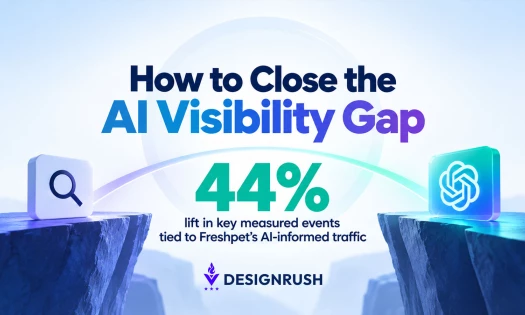
A ChatGPT brand recommendation drove users to visit that brand at 2.5 times the rate of a competing one within seven days, per a Similarweb report.
The study tracked only genuine new interest, counting users who hadn't visited the brand in the prior four weeks and never named it in their prompt.
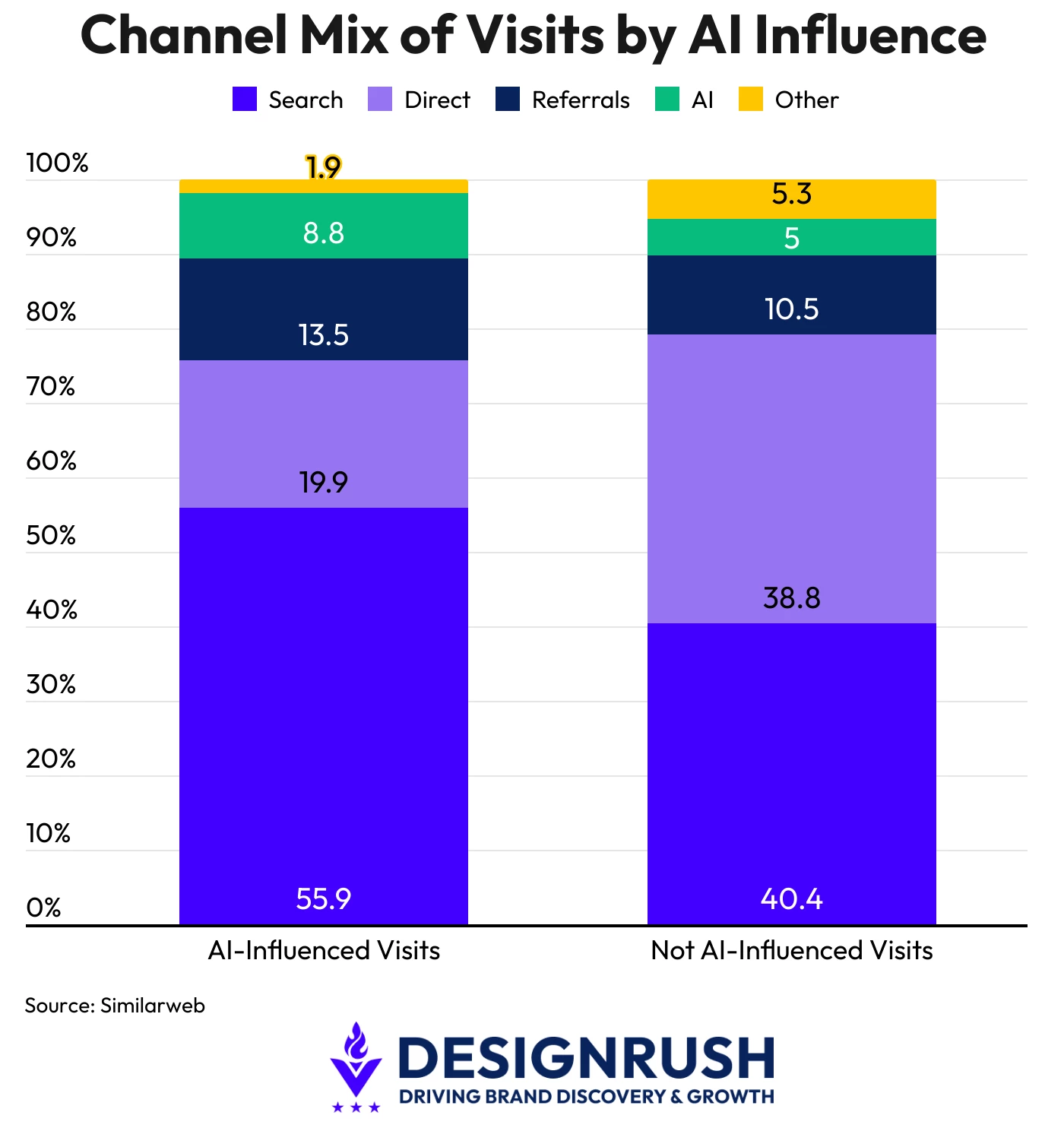
These visits don't show up where marketing teams expect them to. Instead of appearing as AI referrals, they scatter across other channels:
- 55.9% of AI-influenced visits arrived via search
- 19.9% arrived via direct traffic
- A fraction showed up as AI referrals
AI-influenced visitors engaged more deeply once they arrived.
They viewed an average of 12 pages and spent 11.8 minutes on the site, compared to 6.5 pages and 5.6 minutes for standard visits.
The finance data shows how directly a recommendation shapes behavior.
After an American Express recommendation, 7.2% of users visited the brand, while 3.1% chose a competitor.
When Capital One was recommended instead, 14.2% visited that brand while 3.8% went to the alternative.
The AI answer picked the destination, but analytics logged the visit as organic search, not a ChatGPT referral.
Google's June 2026 Spam Update
The search engine released its latest spam update on June 24, applying it globally across all languages.
It targets sites breaking spam policies, though it leaves out link spam and site reputation abuse.
The update likely formalized what began on June 19, when an unconfirmed ranking change hit sites with reported traffic drops of 30% to 50%, black hat and white hat alike.
Sites trying to diagnose the damage face two problems at once. First, recovery is slow.
Google says it can take months even after a site returns to compliance, and a traffic loss with no entry in the Manual Actions report signals an algorithmic shift, not a penalty.
Second, the data needed to diagnose it is missing.
The Page Indexing Report has been frozen at June 11 for two weeks, so pages still crawl and index normally while performance reporting sits stuck.
GSC Page indexing report 7 days lagged pic.twitter.com/wjyFAZk9Wu
— Barry Schwartz (@rustybrick) June 18, 2026
Sites seeing ranking shifts should review Google's spam policies to find what triggered the change.
Then, wait for the reporting delay to clear before drawing conclusions.
AI Search on Two Fronts
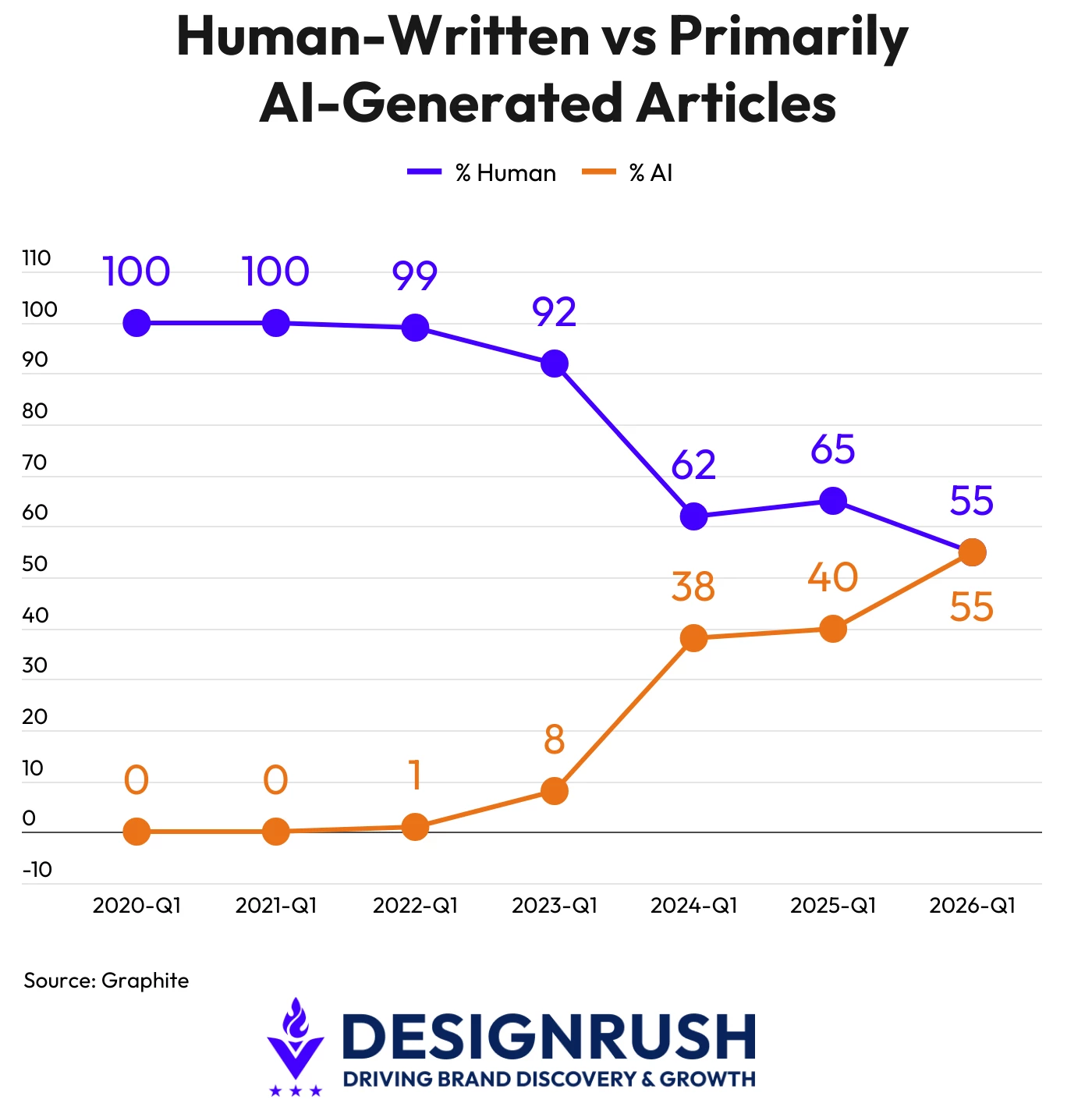
AI tools retrieving AI-generated content are producing narrower, more repetitive answers, according to Graphite research.
The pattern, called collapse, is when every response to a prompt converges on the same entities in the same order.
Across 1,528 simulations, 79.6% ended in collapse.
Models cited their own AI-authored content 38.9% of the time, against 7.4% for human-written sources.
AI detection tools flagged 42.7% of ChatGPT references in June 2026 as AI-generated, up from 38.9% in January, and the share keeps rising.
The content that resisted collapse was longer, more specific, grounded in unique entities that no other source mentioned, and written from firsthand experience.
These traits build entity authority that carries across platforms.
Google's LLM patent describes exactly this kind of system, building entity characterization across websites, reviews, maps data, and social sentiment.
Consistent representation across those surfaces compounds the same content investment.
Even so, search traffic is fragmenting faster than entity systems can pull it back together.
Three Rivals Gain on Google
Google still holds 90% of the search market, but AI-driven changes are pushing users in opposite directions.
ChatGPT now ranks as the top free app on iOS, pulling research queries away from search.
DuckDuckGo, a privacy-focused search engine, saw its install rate rise 75% since Google's I/O announcement, as users opt out of AI-powered results.
"Google is force-feeding AI with no way to opt out. As a result, their results are getting worse, not better," CEO Gabriel Weinberg said in a statement back in May.
Microsoft's Bing crossed 1 billion users for the first time, capturing search volume that previously had no real alternative.
Three platforms are gaining on Google for three different reasons, so no single optimization fixes all of them.
SEO Industry Insights
Google published a policy document on AI governance, and one section caught publishers' attention immediately.
The company says it's exploring new partnerships and value-exchange models, including pilots with sites whose content keeps AI responses fresh and factual.
Amsive VP of SEO & AI Search Lily Ray said every creator whose work trains or grounds AI should be paid by how often it's used, arguing Google's pilots don't go far enough.
The voluntary commitment drew skepticism.
The U.K.'s CMA already legally requires Google to give publishers the same transparency and control that the company is now piloting by choice.
ChatGPT's behavior is shifting at the query level, too.
It's asking 90% fewer follow-up questions after changes to GPT-5.5, according to Peec AI data shared by CPO Malte Landwehr on LinkedIn.
A 50% drop hit in late May before recovering in mid-June, which makes this week's shift the bigger one.
Fewer follow-ups mean fewer chances for a brand to enter the consideration set after the first answer, and this first response is increasingly the only one.
All of these developments reward the same response, which is content that only you can produce, starting with three moves:
- Set up a branded search baseline. Pull branded query impressions from Google Search Console before launching any AI visibility campaign.
- Rewrite one section on your three highest-traffic pages. Replace generic claims with firsthand data or an original observation no competitor has published.
- Audit your entity consistency across sources. Check that your Google Business Profile, review platforms, and directory listings describe your brand the same way.
The same investment addresses collapse resistance and entity authority at once.
Our Take: Is the GEO Arms Race Self-Defeating?
Brands scaling content to win AI citations are flooding the reference pool until it stops meaning anything.
Keep in mind that a crowded pool rewards specificity, not volume, so the harder everyone optimizes the same way, the less any of it works.
The 2.5x visit multiplier shows what's actually at stake.
Users significantly more likely to choose AI-recommended brand
— Similarweb (@Similarweb) June 24, 2026
Across all three industries we studied, users who saw a brand recommended by ChatGPT were significantly more likely to visit that brand's website in the following week.
>> pic.twitter.com/wVLaJH0iCy
A user sent to one brand by name arrives ready to act, while a name surfaced because every AI repeats the same three does not.
Collapse doesn't erase this visit. It erases what made it worth having.
The win goes to the brands publishing what only they can, firsthand data and original reporting that the model hasn't seen a hundred times already.
For a breakdown of Bing's AI citation reporting, the CMA transparency mandate, and Claude's Brave Search dependency, check out last week's SEO roundup.
If ChatGPT recommended your brand today and the user visited your site tomorrow via Google, would your analytics know?
These leading SEO agencies help brands stay visible as AI systems change which content gets cited and which gets filtered out.