
Whenever Google completes a core update, it’s normal to see a bit of volatility in the SERPs.
However, the most recent one shook things up far more than most experts expected.
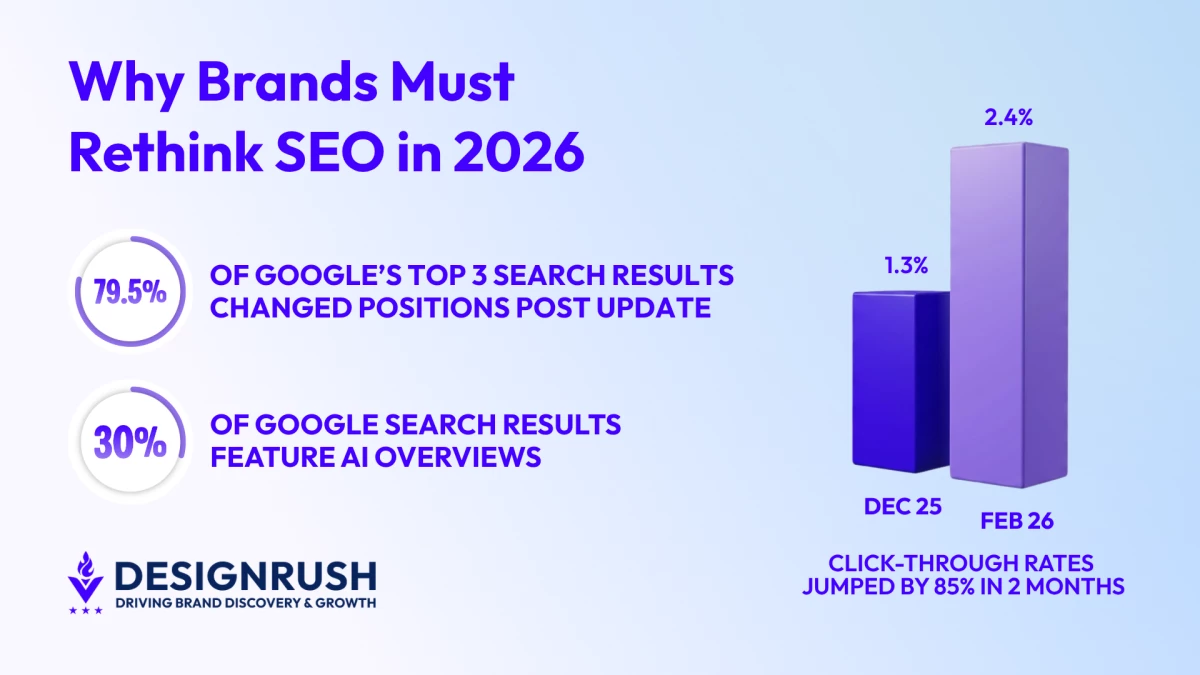
In fact, 79.5% of Google’s top three search results changed positions during the March 2026 core update rollout, according to Search Engine Land.
That makes the update one of the most disruptive ranking swings marketers have seen in years.
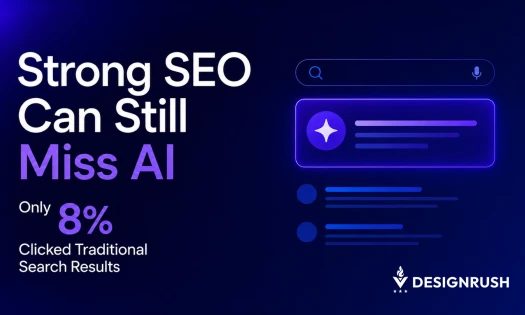
Meanwhile, AI Overviews (AIOs) are also pulling clicks away from traditional listings.
Click-through rates for links with AIOs jumped 85% between December 2025 and February 2026, going from 1.3% to 2.4%, per a different Search Engine Land report.
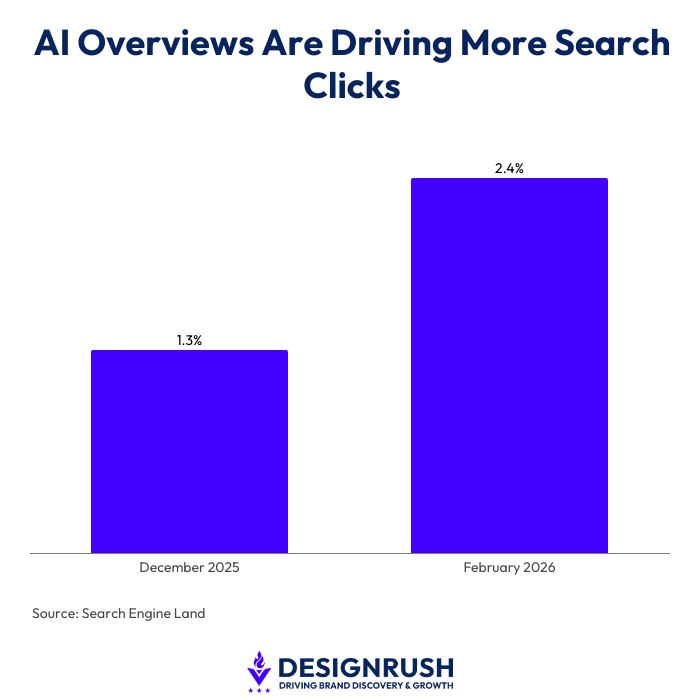
Taken together, both show that rankings now shift faster, and AI answers resolve queries without clicking on a blue link, all while technical demands keep growing.
For brands that have made it their mission to build stable rankings over the years, the game of online search has become far harder to predict than anticipated.
Having spent more than 25 years helping businesses improve their search visibility through technical SEO, conversion optimization, website development, and digital marketing strategy, ForeFront Web believes that many companies are still approaching SEO as if the old rules apply.
The company’s SEO Lead, Gabrielle Schneier, says that brands are now competing inside two search systems at once, where traditional rankings matter alongside AI-generated answers that shape visibility.
“Most brands still treat SEO like a content problem first. But when rankings move this fast and AI systems are choosing which sources to surface, technical structure becomes the difference between visibility and invisibility.”
Schneier adds that many of the ranking declines the agency investigates today stem from technical architecture issues rather than content quality alone.
These range from crawl inefficiencies, weak internal linking structures, duplicate content signals, and poor topical organization frequently prevent websites from fully benefiting from otherwise strong content strategies.
"In our audits, we routinely find websites with excellent content that still struggle to earn visibility because search engines cannot efficiently understand how pages relate to one another," adds Schneier.
"The strongest-performing sites typically combine high-quality content with clean architecture, strong internal linking, schema markup, and clearly defined topical authority."
And with Google announcing the roll out of its May 2026 core update, marketers need to rethink their strategies around structured data, crawlability, AI crawler accessibility, entity relationships, content architecture, and emerging protocols such as llms.txt.
Search Experience Optimization Is Replacing Traditional SEO
Many organizations are beginning to shift from traditional SEO toward Search Experience Optimization (SXO), a broader strategy focused on how brands appear across Google Search, AI Overviews, ChatGPT, Gemini, Perplexity, YouTube, LinkedIn, and other discovery platforms.
Rather than optimizing rankings alone, SXO focuses on visibility across the entire search journey.
This includes technical SEO, structured data, entity development, content architecture, digital PR, and brand authority signals that help AI systems understand who a company is and why it should be cited.
As AI-powered search continues expanding, brands that build strong digital entities and consistent authority signals are increasingly outperforming competitors that focus exclusively on keyword rankings.
For marketers, ranking volatility is only part of the problem, particularly as users are now getting answers directly from Google before they ever reach a website.
The earlier Search Engine Land study also pointed to changing user behavior, as more users rely on AI-generated summaries instead of clicking through traditional search listings.
“Brands are realizing that ranking first no longer guarantees attention,” Schneier explains.
“AI Overviews are changing user behavior because people are getting answers faster without needing to click through multiple pages.”
AI-generated answers are becoming part of everyday search behavior, with DesignRush’s latest SEO statistics report finding AI Overviews now appear in roughly 30% of Google search results and nearly three-quarters of problem-solving queries.
SEO teams are already restructuring pages around how AI systems extract information, interpret authority, and surface answers.
ForeFront Web breaks down how AI is going to affect the future of search:
Entity SEO Is Becoming a Competitive Advantage
Search engines increasingly evaluate websites through entities rather than keywords alone. An entity can be a business, person, product, service, or concept that search engines can clearly identify and connect across the web.
Brands that establish strong entity relationships through schema markup, digital PR, authoritative content, Google Business Profiles, social platforms, and third-party mentions are often better positioned to appear in both traditional search results and AI-generated answers.
As Google's Knowledge Graph and AI systems evolve, entity optimization is becoming one of the most important long-term investment brands can make.
Many brands are now discovering that strong content alone no longer guarantees visibility.
Pages that rank traditionally but fail to appear inside AI Overviews often lack clear entity relationships, direct answer formatting, topical depth, or the technical signals AI systems use to interpret authority.
Answers may be difficult to extract, where intent may be unclear, or site-wide authority signals may lack consistency.
“When a page performs in traditional search but gets ignored by AI systems, the issue is usually structural,” Schneier adds.
“AI platforms prioritize clarity, extractable answers, intent alignment, and authority signals across the entire site.”
In 2026, SEO and its associated trends depend far more heavily on structure, crawlability, and intent alignment. Google’s AI systems favor pages that are easy to interpret and tightly connected to search intent.
If this is not adhered to, weak technical signals can limit visibility even when rankings remain high.
YouTuber, Neil Patel, delves into why keyword rankings in are no longer enough in the age of AI-generated answers:
Technical SEO Matters More in 2026
Schneier advises brands to resist the urge to immediately rewrite content after rankings drop.
Instead, brands should approach volatility as a technical triage process focused on identifying foundational weaknesses before changing messaging or copy.
“We treat ranking drops like a systems problem first,” Schneier says.
“You confirm the decline is real through analytics and Search Console data, then work through crawlability, indexation, internal linking, architecture, and performance before touching copy.”
Content struggles to perform consistently when search engines cannot efficiently crawl pages, understand site structure, or connect related topics across a website.
ForeFront Web discusses why SEO ranking needs to be strategic:
The SEO Fixes Brands Should Prioritize First
As AI search tools become more prominent, technical SEO is becoming harder for brands to ignore.
Brands should focus on crawlability and indexation first to ensure important pages remain accessible to search engines and AI systems.
Likewise, internal linking and site architecture follow closely behind because they help search platforms understand topical relationships across a website.
“Before rewriting content, brands need to fix the foundation,” Schneier explains.
“Sites with weak architecture, crawl issues, or poor intent alignment struggle to benefit from content updates no matter how strong the writing is.”
Schneier also recommends improving structured data, schema markup, page performance, and intent alignment to strengthen both usability and AI interpretation.
She adds that technical SEO is entering a “higher standards” era where websites must be easier not only for users to navigate, but for AI systems to process efficiently.
Search Engine Land discusses five SEO strategies to move the needle in the age of AI search:
Why Pages Miss AI Overview Citations
AI visibility requires different signals than those of traditional rankings.
AI systems evaluate content based on clarity, structure, topical authority, citation consistency, and the ability to provide concise answers that can be easily summarized.
Organizations looking to improve AI visibility should focus on:
- Structured data implementation
- Entity optimization
- Question-and-answer content
- Expert-led thought leadership
- Topical authority development
- Digital PR and brand mentions
- Clear content hierarchy
- Strong internal linking
At the same time, local search is also evolving
Google Business Profile optimization, review management, local schema markup, and location-specific authority signals are becoming increasingly important as AI systems summarize local businesses directly within search experiences.
DesignRush findings add that Google still controls roughly 90% of the global search market, but users are interacting differently with results as AI-generated summaries become more prominent across the search experience.
Traditional rankings still matter, but AI-generated answers determine which brands get cited, summarized, and surfaced first.
“The brands showing up consistently in AI Overviews are usually making their information easier to interpret,” Schneier says.
“Clear formatting, concise answers, structured content, and strong authority signals all improve the chances of being surfaced.”
Marketers are also expanding toward broader “search everywhere” strategies where authority is built across multiple platforms instead of relying entirely on Google rankings.
Search Engine Land explores five ways to get cited in AI overviews:
Search Visibility Now Depends on Authority
Brands are now dealing with a situation of fragmented search behavior and rising technical expectations.
Google’s AI-driven results are compressing the traditional search funnel by giving users summarized answers before they ever reach a website, leaving fewer opportunities for brands that rely heavily on organic traffic alone.
“Visibility now depends on technical consistency across the entire digital ecosystem,” Schneier adds.
“Brands need strong site health, clear topical authority, and broader platform presence if they want stability during periods of rapid change.”
The brands holding visibility most consistently are not publishing the most content. They are building clearer site structures, stronger topical relationships, and cleaner technical foundations that AI systems can interpret with confidence.
Technical stability combined with broader authority is quickly becoming one of the few reliable ways to maintain visibility during periods of heavy search volatility.
ForeFront Web’s Scott Kasun, explains the major components that make up effective SEO that brands need to know as well as the costs they can expect to pay for online success:
Why Brands Must Rethink SEO in 2026
Google’s search ecosystem is evolving faster than most marketing teams can comfortably adapt to. Rankings are shifting more aggressively, AI-generated answers are expanding, and technical standards continue rising with every update.
The pressure is also fueling investment across the industry, with brands increasing spending around search visibility, AI adaptation, and broader Search Experience Optimization initiatives.
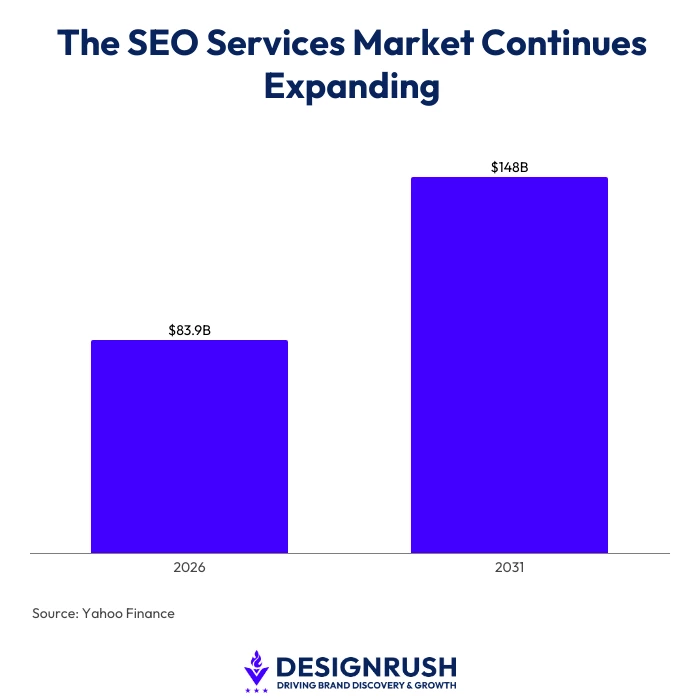
As a result, the SEO services market is now valued at $83.9 billion and is expected to reach as much as $148 billion (about $460 per person in the US) by 2031, according to Yahoo Finance.
The future of search belongs to organizations that can clearly communicate expertise, authority, trust, and relevance across both traditional search engines and AI-powered discovery platforms.
"Winning in 2026 requires more than publishing content,” Schneier concludes.
“Brands must build technically sound websites, establish strong digital entities, create authoritative content ecosystems, and develop visibility strategies that extend across the entire search experience."
Companies that embrace AI search optimization, entity SEO, and search experience optimization today will be better positioned to maintain visibility as search continues evolving.
For executives, the bigger change is operational rather than technical.
And as AI continues to change how information gets surfaced online, discoverability is becoming the biggest competitive advantage all brands need to succeed.