
With 6 billion people expected to engage with the tournament, the FIFA World Cup has become the most contested advertising canvas on earth.
And for the first time in the event's history, it arrived on North American soil, which changed the creative calculus for almost every brand in the field.
The 15 campaigns featured here represent the strongest advertising the tournament cycle has produced so far across formats, budgets, and brand categories.
Here is what made them stand out.
1. Nike: '12 Weeks of Football' and 'Rip the Script' by Wieden+Kennedy
Nike opened its World Cup campaign with a 12-week social platform.
It features 42 autographed Polaroid photographs of Ronaldo, Haaland, Mbappé, Kim Kardashian, Travis Scott, and LISA of BLACKPINK.
"Rip the Script" arrived weeks later, a six-minute film starring over 30 players and cultural figures on a Hollywood-style studio set that falls apart when the players take over.
By launching the social platform first, Nike successfully captured early attention and built an invested audience that gave the hero film immediate momentum once it dropped.
2. Adidas: 'Backyard Legends' by LOLA USA
Directed by Mark Molloy through SMUGGLER and created by LOLA USA, the five-minute film stars Timothée Chalamet as a street football recruiter.
Also featured in the star-studded cast are Messi, Bad Bunny, Bellingham, Yamal, Trinity Rodman, and AI de-aged versions of Beckham, Zidane, and Del Piero.
Adidas has already sold approximately $292 million in 2026 World Cup products ahead of kickoff, with CEO Bjørn Gulden identifying the U.S. as the brand's biggest long-term opportunity.
3. LEGO: 'Everyone Wants a Piece' by Wieden+Kennedy Amsterdam
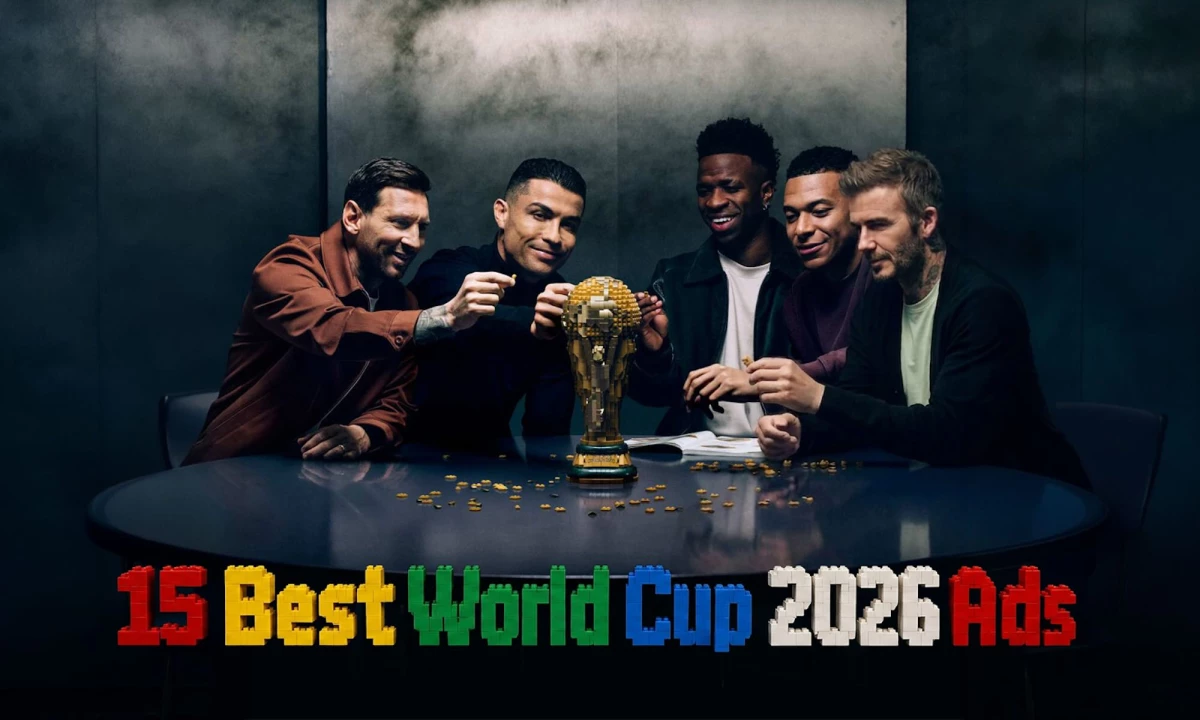
Created by LEGO's in-house team and Wieden+Kennedy Amsterdam, the spot places Messi, Ronaldo, Mbappé, and Vinícius Jr. around a table building a LEGO version of the World Cup trophy.
The campaign generated 314 million views across the players' accounts within 24 hours, with fans describing it as a moment "generations will talk about."
The film ends with a child completing the build, a creative decision that reconnects an A-list cast to what the brand actually stands for.
4. Coca-Cola: 'Bubbling Up' by WPP Open X
The first of three films in Coca-Cola's "All the Feels" platform, "Bubbling Up" depicts a fan's pre-tournament excitement taking over a crowded elevator.
Developed with WPP Open X, the campaign's anthem is a reworked version of Van Halen's "Jump" featuring J Balvin, Amber Mark, Steve Vai, and Travis Barker.
The campaign shows Coca-Cola knows how to center the fan.
This made "Uncanned Emotions," the second film in the series, the more puzzling creative decision of the cycle, drawing criticism for its extensive AI visuals.
5. FOX Sports: 'Miracle' by Special US
Directed by Lance Acord of Park Pictures and created with Special US, the campaign opens in the 97th minute of an imagined World Cup final with Pulisic scoring the winner for the U.S. on home soil.
Tom Brady, Zlatan Ibrahimović, and Mike Eruzione pull in audiences across the NFL, international football, and American sports history.
DAIVID, a creative intelligence company, ranked it the top-performing World Cup campaign of the pre-tournament window, and the fictional U.S. victory gave American viewers a reason to invest in the World Cup.
6. Lay's: 'Epic Watch Party' by Slap Global
Lay's headlined its "No Lay's, No Game" platform with "Epic Watch Party," a film from Hungryman and Slap Global.
It stars Messi, Beckham, Putellas, Thierry Henry, and Steve Carell surprising real shoppers in a supermarket.
Running across 90 global markets, the campaign extends into a WhatsApp channel where all five stars share live reactions and behind-the-scenes content throughout the tournament.
CMO Jane Wakely described it as adding "flavor and community to the moments of togetherness" that define the World Cup, and the multi-touchpoint structure keeps Lay's present past the film's launch.
7. OpenAI: 'Messi Mode'
OpenAI partnered with Messi for a campaign timed to the World Cup, with the first piece of content showing him using ChatGPT to recolor his hair in Argentina's blue and white.
The company also added the prompt to ChatGPT Images' styles collection, giving fans the opportunity to recreate the look themselves.
Moneycontrol, citing OpenAI data, reported more than 17 million World Cup-related prompts globally in the past week, while the campaign's bigger goal is making those daily questions a habit.
8. Budweiser: 'Let It Pour' by Grey Global
Directed by Steve Ayson of MJZ and created by Grey Global, the film stars Erling Haaland and Jürgen Klopp and is set to Joe Cocker's "Feelin' Alright."
The campaign will run across 40-plus countries as the centerpiece of the brand's wider "Budstalgia" platform.
Haaland is playing in the World Cup for the first time, giving his presence in the campaign a personal arc that runs through the tournament.
Klopp's retirement from club football also keeps the partnership neutral during a competition that is built on national identity.
9. Powerade: 'Power Your Fate' by WPP Open X
Created by WPP Open X and led by AKQA, the hero film stars Lamine Yamal and Rodrygo Goes, visualizing their training as cultural art forms from their home countries.
The campaign also opened a four-year sponsorship cycle running through the Women's World Cup 2027 and the LA 2028 Olympics, giving the creative a years-long runway outside of the tournament.
While most brands have built campaigns to peak in July, Powerade structured theirs around three major sporting events with the World Cup as the opening chapter.
10. Pepsi MAX: 'Football Nation' by Big Time Creative
Developed with Big Time Creative, the hero film features Beckham, Mohamed Salah, Vinícius Jr., Alexia Putellas, Lauren James, and Florian Wirtz.
The campaign was built around the football vs. soccer tension and the idea that fans define how the sport is experienced, though it drew some criticism for its AI visuals along the way.
The wider platform extends into creator-led content and social activations running throughout the tournament's 39 days.
11. Michelob ULTRA: 'The Superior Match'
The national campaign places Messi, Christian Pulisic, and Billy Bob Thornton in a hotel lobby showdown built around the idea that "Superior is Worth Playing For," giving the stars actual characters to inhabit.
It extends into a fan-voted "Superior Player of the Match" trophy designed with artist Victor Solomon, awarded after every match, and a Pitchside Club activation traveling from Santa Monica to New York City.
SVP of Marketing Ricardo Marques explained the thinking behind the campaign's scale.
"The FIFA World Cup 2026 is one of those rare moments that unites the world and ignites the passion of the game," he said.
12. AXE: 'Smell Your Best When You Look Your Worst' by LOLA Madrid
Developed by LOLA Madrid, AXE's first-ever World Cup campaign rolls out across seven films throughout the summer, each following a superfan from a different country.
The first spot, "Airplane," features a Mexican supporter whose neighbors help him build an oversized trophy costume to wear to the match.
Global Brand Director Caroline Gregory told DesignRush the idea came directly from watching fan behavior during the tournament.
"During the World Cup, guys are all in on football. They're not thinking about attraction. That was exactly the opportunity," she said.
13. Visa: 'Tap In'
The campaign stars Jason Sudeikis alongside Yamal, Haaland, Pulisic, and broadcaster Andrés Cantor, using the "tap-in" as a metaphor for how modern fans consume sports, quickly and across multiple screens.
The rollout includes Visa's first global football-inspired art collection, with artists from six continents exploring how football moments travel through creator communities.
The campaign follows Visa's earlier co-activation with Marriott Bonvoy, reinforcing the brand's strategy of staying visible across high-attention sporting events through layered, celebrity-led marketing.
14. Coca-Cola: 'No Better Feeling'
The final film in the "All the Feels" trilogy, "No Better Feeling" places José Mourinho, J Balvin, and commentators Peter Drury and Luis Omar Tapia alongside everyday supporters.
Where "Uncanned Emotions" put the product front and center, "No Better Feeling" gives that spot to the fans, using the brand's talent to extend its reach across music, commentary, and management.
Together, the two films show what the Coca-Cola platform is capable of when the product stays in the background, and the feeling takes over.
15. Illumination: 'Minions and Monsters'
Timed to the World Cup's opening week, Illumination released a teaser for "Minions and Monsters," placing Mbappé inside a match between the Minions and a team of monsters.
The Despicable Me franchise has generated over $5.5 billion at the global box office, and the July 1 film release lands during the tournament's group stage.
The teaser reaches fans of both Minions and football, making it a strong example of cross-audience marketing within the tournament window.
World Cup 2026 and the Advertising Lessons That Hold
Several things defined the campaigns that earned the most attention, and a few of them are worth noting for brands and agencies that are planning their next major activation.
The first is that putting the fan's experience at the center of the creative was the single biggest factor across this year's strongest work.
Adidas set the game in a backyard before a stadium was involved, while Lay's made the watch party the whole campaign, and AXE built seven films around real fan behavior with no celebrity talent at all.
The second thing worth noting is how the best brands handled their campaign structures.
Nike's decision to lead with a social-first strategy and hold the hero film back was definitely the most interesting move we saw this year, and is being discussed among marketing circles.
Running Polaroids, a 12-week content platform, streetwear collaborations, and "Rip the Script" as one project is a great way to keep Nike present from the opening week through to the final.
Lay's ran a global platform and a U.S.-specific campaign simultaneously, and Coca-Cola ran three films across a six-month window.
The brands generating conversation in week three were the ones that had built activation strategies with this kind of range right from the beginning.
The campaigns that used celebrity talent most effectively also chose people that fit their brand positioning, and did a good job of putting narrative fit before anything else.
Budweiser cast Haaland because this is his first World Cup, giving the campaign a personal brand story that will run through the entire tournament.
Illumination partnered with Mbappé because he is one of the sport's biggest names right now, and the football tie-in gave the Minions teaser the biggest possible boost.
The final observation is about where the money has gone.
According to Nielsen, U.S. soccer fans over-index on social media use by nearly 20% compared to the general population.
Forty-nine percent of fans ages 18 to 34 also recall World Cup sponsor branding from social media, compared to 39% from TV broadcasts.
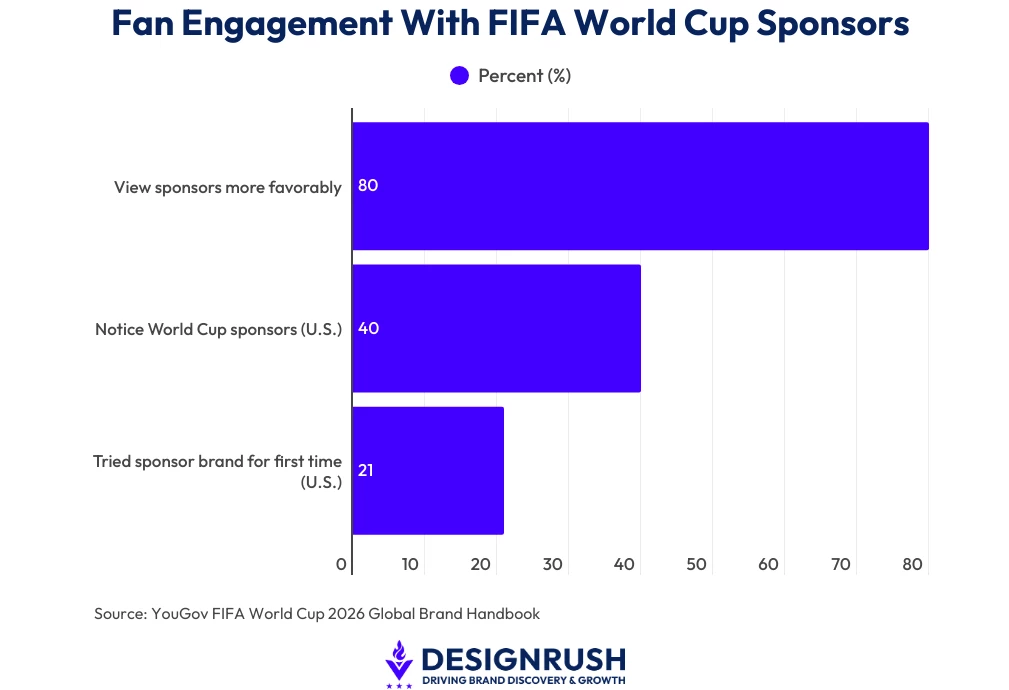
YouGov also found that in some global markets, more than 80% of likely World Cup followers view tournament sponsors more favorably.
This means that the audience disposition is there from the outset, and the creative determines whether brands capitalize on it.
For brands planning their next major activation, a few lessons from this cycle are worth studying:
- Build in checkpoints to adjust the campaign mid-flight: A rolling structure works best with a mechanism for reading what's landing and redirecting resources toward it.
- Give the campaign a reason to be talked about more than once: A single launch moment competes for attention for a day, while a structure with multiple reveals competes for weeks.
- Loop fan-generated content back into the campaign itself: The campaigns that made audience reactions part of the material extended their reach without a new production budget.
The tournament has now begun, and the brands that got the work right before kickoff have already earned a head start that is difficult to close.
Our Pick: Nike and LEGO
We think the standout campaigns of this cycle made decisions that went against the instinct of most brands at this scale, and put the right level of trust into the outcome.
Nike's choice to hold its hero film back and build audience investment through the Polaroid platform first is probably the most notable marketing move we've seen in the tournament buildup.
Whether the model holds up across all 39 days remains to be seen, but the sequencing decision is a memorable case study regardless of the final result.
LEGO's "Everyone Wants a Piece" also understood that the cast itself is the distribution channel.
The players' own accounts generated over 300 million views in 24 hours, making it one of the most efficiently distributed campaigns of the entire cycle.
Both campaigns understood that scale only works when there is something honest underneath it, and we can see this reflected in the work.
Our early analysis of which World Cup campaigns were landing ahead of kickoff identified several of these brands as the ones to watch, and the tournament's opening week has confirmed those early calls.
Brands planning campaigns around major global sporting events need creative partners who understand how to build sustained presence across the full tournament window.
Take a look at the top sports marketing agencies in our directory.