
B2B Website Redesign: Key Points
- Messaging drives design. B2B sites fail when visuals come before a clear messaging hierarchy that answers buyers’ top questions fast.
- Confusion kills conversions. A pretty site without clarity slows sales cycles, erodes credibility, and wastes marketing spend.
- Redesigns must start with strategy. Map the buyer journey, prioritize proof, and then layer design on top to drive real business results.
The #1 reason B2B website redesigns fail is starting with design before defining the message.
Too many brands obsess over layouts, colors, and imagery before answering three critical questions:
- What do we do?
- Why does it matter?
- Why should we be trusted?
The result? A site that looks impressive but leaves buyers confused, and revenue on the table.
And the data backs it up.
According to Forrester research, websites that combine great UX with aligned messaging can see a 200% boost in conversion rates, while Google data shows that 88% of users are less likely to return after a bad experience.
Without a clear messaging hierarchy that answers buyers’ top questions fast, even the most beautiful website will quietly fail to convert.
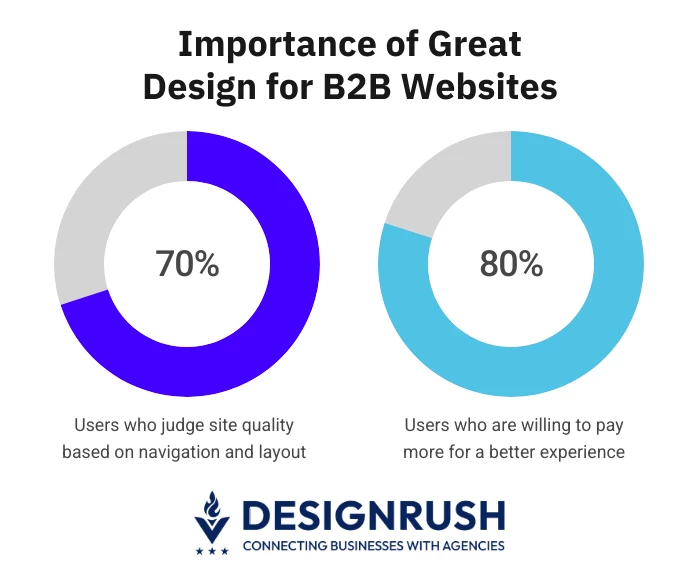
A website isn’t a digital art project. It’s the first handshake a buyer has with your brand, the place where credibility, clarity, and conversion either align or collapse.
That’s why award-winning web design agencies, like Digital Silk, focus first on messaging hierarchy and user journey before they touch a color palette.
The Cost of Getting Redesigns Backwards
Redesigning a site without a clear messaging spine is like hosting a conference with no agenda.
People show up, but they have no idea where they go or why they should even stay.
The cost of this approach for B2B brands goes beyond frustration:
- Lost credibility. When visitors land on a visually rich site but can’t figure out what you do, their confidence drops fast.
- Slow sales cycles. Confusing messaging forces sales teams to do extra explanation, which drags out conversions.
- Wasted resources. Endless rounds of design changes occur because the team is trying to fix strategy problems with colors and fonts.
And according to Digital Silk CEO & Founder Gabriel Shaoolian, all of these issues result in a budget that bleeds on two fronts:
“When messaging is weak, marketing is forced to overspend on campaigns just to capture attention, and sales teams lose momentum explaining what should already be clear.
The real danger is that these costs remain hidden until the quarterly reports arrive, and by then the losses are already baked in.”
In short, every month your website confuses prospects is a month where competitors are earning meetings you should have had.
Why Messaging Hierarchy Must Come First
Research from the Nielsen Norman Group shows users often decide whether to stay or leave within 10 seconds. In that moment, your site must:
- Make it clear what your company does.
- Prove you can be trusted to do it well.
- Lead the visitor to the next logical action.
Fail in any of these, and more than likely, buyers will move on.
This is why messaging hierarchy matters. It ensures your most important information appears first, dictates what belongs on the homepage, where proof points appear, and how the journey flows from awareness to conversion.
How to get your messaging hierarchy right:
- Start with the buyer’s top three questions. “Who are you? Can you solve my problem? Can I trust you?” Your homepage should answer these instantly.
- Define a clear narrative path. Map the sequence of information visitors need as they move from homepage to product pages to conversion points.
- Prioritize proof strategically. Place case studies, certifications, and testimonials exactly where doubt is most likely to arise.
- Pressure-test for clarity. Give the draft hierarchy to someone unfamiliar with your brand. If they can’t explain what you do and why it matters in under 15 seconds, revise.
Get these right, and B2B redesign stops being a guessing game.
How a Strategic Redesign Drove Growth for Devensoft
M&A software company Devensoft was facing mounting issues with its website, including low visitor-to-client conversion rates, misalignment with its target demographic, outdated navigation, and poor accessibility.
The site also failed to effectively communicate the capabilities of its software platform.
Faced with these issues, the company turned to Digital Silk for web design and optimization services.
To improve usability for Devensoft’s intended audience, Digital Silk redesigned the website to create a UI/UX focused on the needs of M&A professionals.
The agency also emphasized placing the focus on Devensoft’s core messaging, while supporting it with clear conversion funnels and strategically placed CTAs.
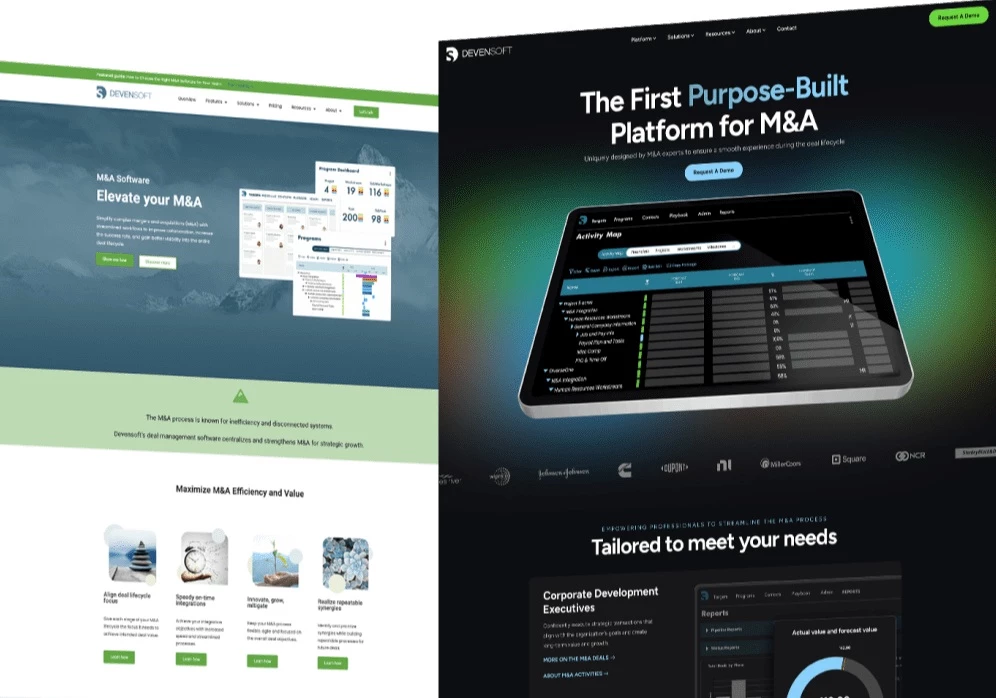
Within one year of the new website’s launch, Devensoft achieved significant and sustainable improvements in key metrics:
- Active users increased by 45.9%
- Engaged sessions rose by 46.65%
- Engagement rates climbed by 1.88%
- 49% of users spending more time on the site
Redesign for Influence, Not Vanity
B2B leadership should view a redesign as an operational investment in credibility and growth.
Because at the end of the day, a website is a front-line business tool, shaping credibility and guiding buyers long before a sales conversation begins.
The structure and story behind it should be defined through a clear messaging hierarchy before any design work begins.
That’s what determines whether buyers stay past those critical first 10 seconds, or move on to a competitor.