-details-webp.webp)

Key Takeaways:
- B2B buyers spend just 17% of their journey engaging with suppliers face-to-face, making your website the frontline of influence.
- Most B2B sites fail to convert because of poor UX, unclear messaging, and a lack of brand differentiation.
- Bop Design’s redesign for Glassdome proves the impact of strategy-led design, driving a 60% traffic boost and 50% more engaged sessions in three months.
Gartner research shows, B2B buyers spend just 17% of their time engaging directly with suppliers.
Outside of this time, they’re doing their own research, and without your input.
That makes your website one of the most critical conversations you’re not in—unless it’s strategically designed to speak for you.
Yet, just 16% of B2B websites are effectively built to support revenue goals, according to Sitecore’s Websites 2025 report.
Most aren’t just missing opportunities. They’re actively driving potential leads away through poor UX, unclear messaging, or a lack of differentiation.
Glassdome, a carbon footprint measurement and production monitoring software provider, had an original site that fell into many of the same traps plaguing today’s B2B websites.
These included unclear messaging, poor UX, and a lack of differentiation—issues that kept traffic low and leads even lower.
But after a strategic redesign by Bop Design, an award-winning B2B web design agency & marketing firm, the company saw measurable changes:
- 60% jump in organic traffic
- Nearly 50% more engaged sessions within just three months
The team behind Glassdome’s transformation includes Daniela Warren, Rachel Cunningham, and Laura Magnuson of Bop Design.
Together, they reveal the three most common mistakes that sabotage B2B websites — and more importantly, what to do instead to attract, engage, and convert leads.
Editor's note: This is a sponsored article created in partnership with Bop Design.

About the Experts
Daniela Warren, Rachel Cunningham, and Laura Magnuson drive Bop Design’s B2B practice with complementary expertise. As Design Director, Daniela leverages over 15 years in corporate communications, most recently in energy and SaaS, to translate complex goals into clear visual strategies. Rachel, Content Marketing Director for more than a decade, pairs a BS in Management (Boston College) and an MA in English (CSU Long Beach) with deep SEO, social media, and UX know‑how, producing white papers, eBooks, articles, infographics, and style guides that inform and persuade. Laura, Art Director for seven years at Bop and a designer for over 15 years, holds a BA from San Diego State University and a string of awards earned working with Procter & Gamble and U.S. News & World Report. Together, they fuse precise visuals and targeted messaging to deliver measurable B2B impact.
Daniela says companies face three bottlenecks that consistently hold them back: outdated platforms, inconsistent branding, and cluttered user journeys. This often leads to issues with:
- Performance: An inflexible CMS and slow performance, often caused by oversized images and poor mobile optimization, leading to outdated content and weak SEO.
- Brand Positioning: Many B2B companies struggle with brand consistency, whether they need a full overhaul or a design refresh aligned with their existing visual system.
- User Experience: Confusing navigation and content overload make it hard for visitors to understand offerings, driving frustration and high bounce rates.
“When visitors struggle to learn what a company can deliver, or can’t quickly confirm if their needs can be met, this leads to frustration and increases bounce rates. Making a great first impression and capturing quality leads both start with clarity,” she adds.
But the problems don’t stop there.
Beyond these challenges, companies often trip up on three key redesign mistakes:
1. Generic Messaging That Weakens the Brand
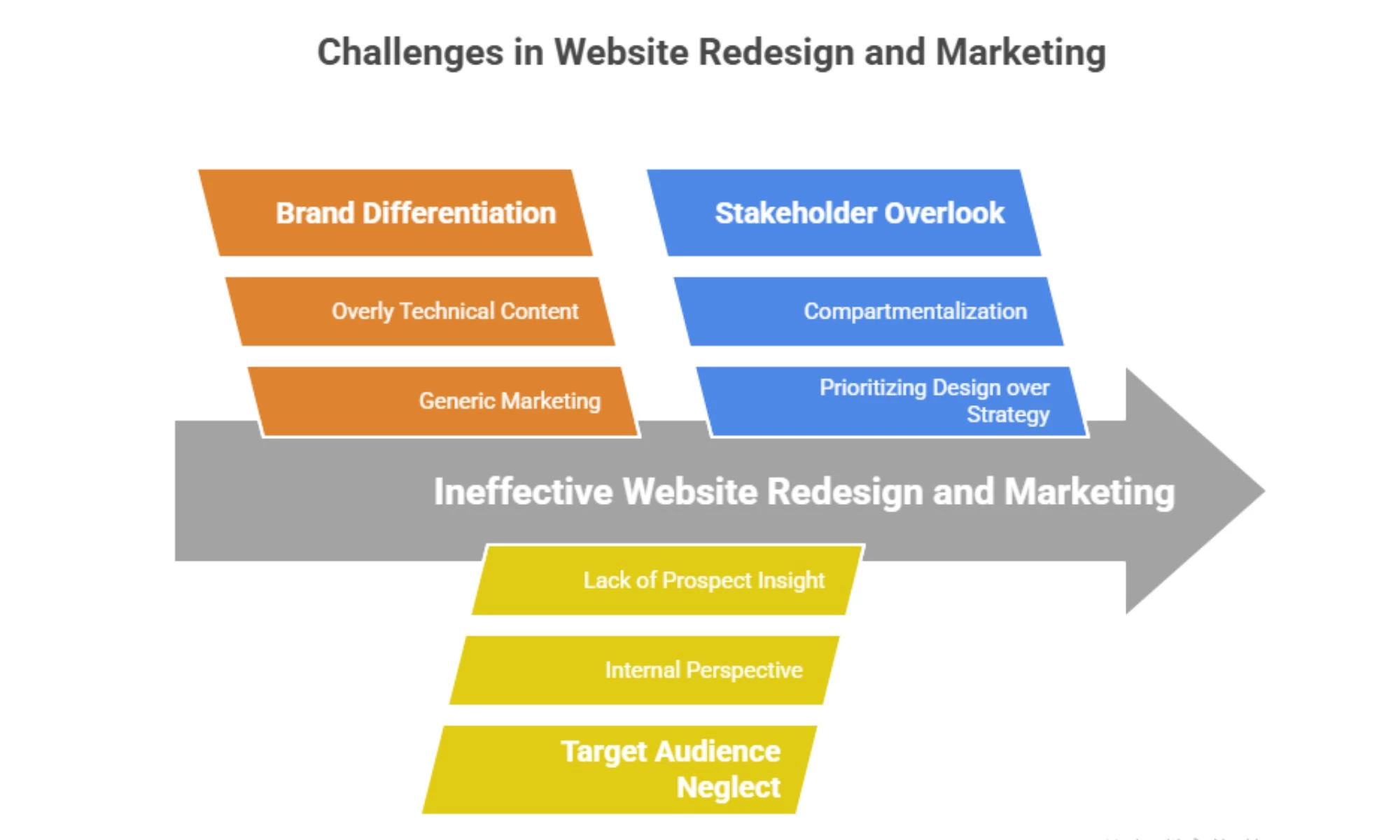
According to Daniela, many companies struggle to differentiate themselves from their competition during their redesign and/or development projects.
“Their marketing efforts either come off sounding too generic or are overly technical or detailed. We work with our clients to understand their business goals and translate their business proposition into lead generation-focused content and design.”
2. Ignoring the Needs of the Target Audience
Another common pitfall, she notes, is forgetting the target audience. Teams can get too close to their messaging and lose sight of how first-time visitors experience the site.
“We strive to understand the pain points and priorities of potential leads and use that information to help brands clearly communicate to their intended audiences,” she says.
3. Excluding Key Stakeholders from the Process
A third issue that often derails website projects is a lack of cross-functional collaboration. Daniela explains that some marketing teams compartmentalize the redesign process and fail to get buy-in from key stakeholders along the way.
“Working in isolation and prioritizing design over strategy, at best leads to a few missed opportunities and at worst leads to a complete project re-start if critical input is overlooked.”
Turning Glassdome’s Site Around
While these missteps are common, the right strategy can fix them. Glassdome is a case in point.
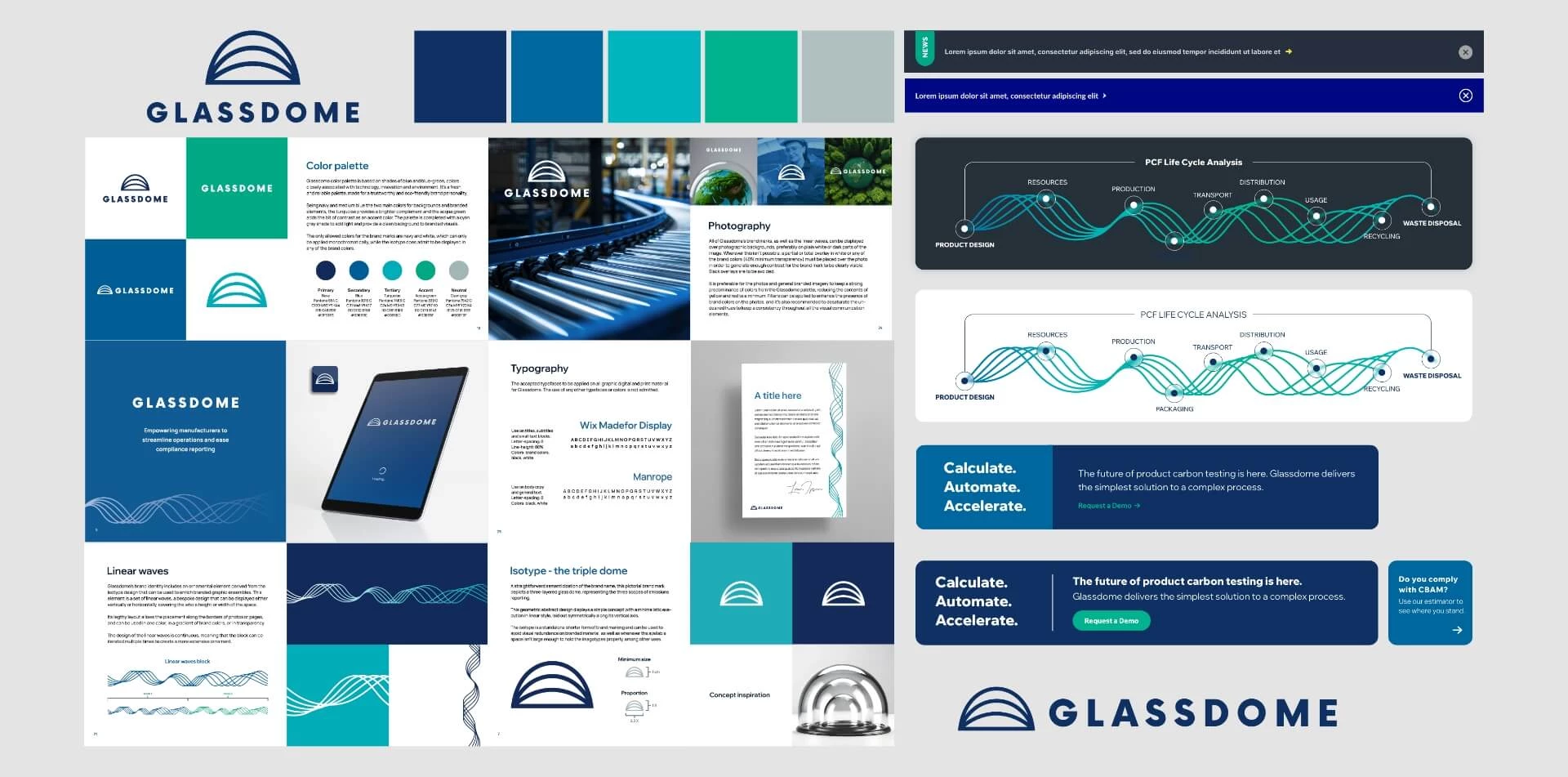
When Glassdome approached Bop Design, the company was struggling with a website that lacked clear messaging, failed to highlight key differentiators, and depended on expensive external support for routine updates.
Furthermore, it wasn’t generating traffic or leads.
The carbon footprint measurement and production monitoring software provider needed a website that would resonate with a more technical, engineering-focused audience.
So, Bop provided a complete visual re-do and a content strategy built around targeted messaging, industry-specific pages, and SEO-driven copy. The website was rebuilt on WordPress with a backend that allowed the internal team to manage updates independently.
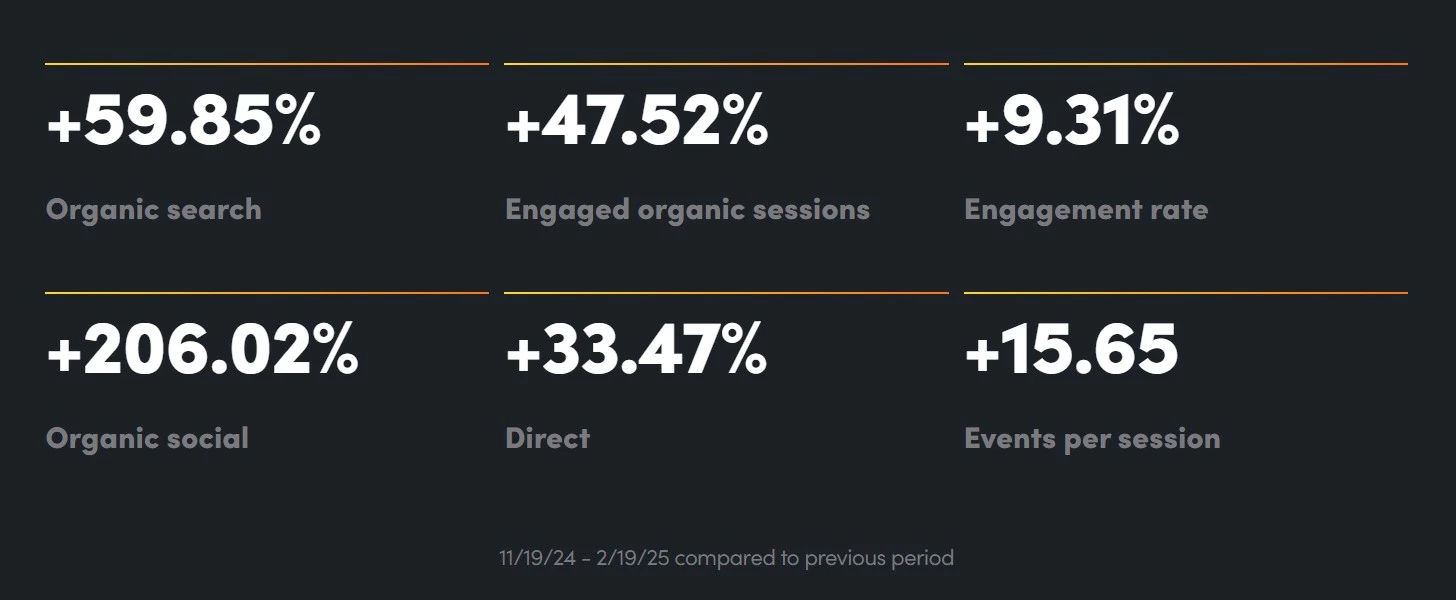
Within three months of launch, organic traffic rose by nearly 60%, engaged sessions increased by 48%, and direct traffic grew by 33%. Qualified leads started coming in the first week.
“We introduced a new visual identity that helped differentiate their brand from the competition while also appealing to a more tech-savvy audience,” Daniela explains.
Building on those results, we asked the Bop Design team about their approach to working closely with clients and how they integrate new technology without compromising user experience.
Advocating for Clients and Mobile-First Design
Rachel says being a strong client advocate means giving honest advice when needed to protect the brand’s long-term success.
“Don’t be order takers, especially when the client is requesting something potentially damaging to their brand. We want them to be successful, and sometimes it means we need to have a difficult conversation, but in the long run, it’s best for the client and our agency.”
If your website looks dated, isn’t mobile-friendly, or gets traffic but no leads, it’s probably time for a redesign.
Laura points out that these issues often stem from a confusing user experience or unclear calls to action that don’t align with the visitor’s needs:
- Outdated design or inconsistent visual standards
- Competitors’ sites look cleaner and more modern
- Not mobile-friendly — Google ranks on mobile first
- Poor mobile UX damages SEO performance
- High traffic, low leads = confusing user journey
- CTAs or forms may be unclear or broken
“It's also important to make sure that your unique value proposition is clear and aligned with the user's needs,” she adds.
With so many moving parts in a redesign, it’s easy to overlook the basics, but as Laura points out, ignoring one key element in particular can tank both conversions and search performance.
“With 50% of users browsing websites on mobile devices, many sites still suffer from broken layouts, hidden information, and poor interactions on smaller screens, leading to a significant drop in conversions.
Additionally, Google prioritizes the mobile version of a site for rankings. If your website isn’t mobile-optimized, it could negatively impact your search engine visibility and conversion rate,” she explains.
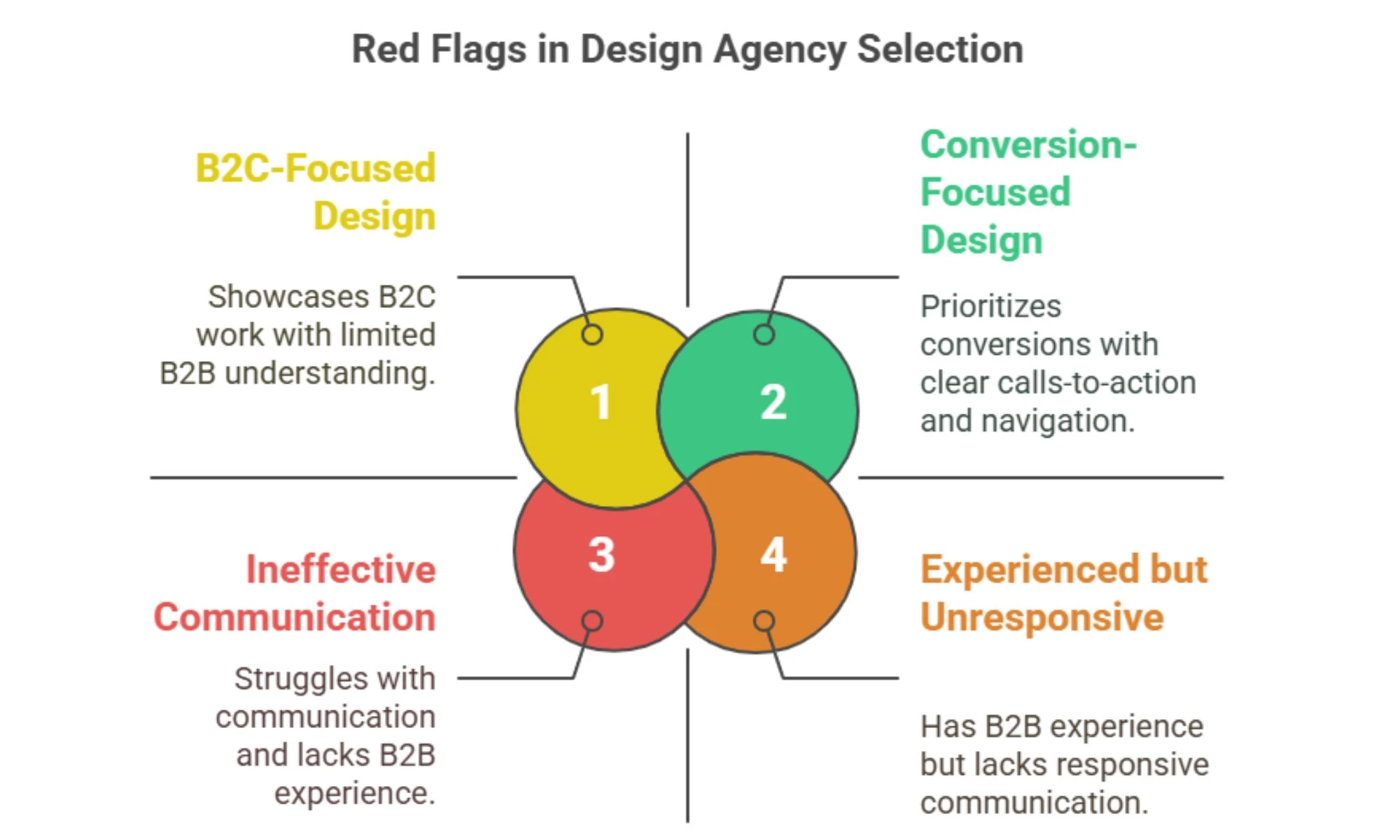
And when it comes to choosing the right design agency to work with, Laura stresses the importance of ensuring the team understands strategy, B2B experience, and maintains clear communication throughout the project.
Mobile responsiveness isn’t just a design detail, it’s a business imperative. Companies that overlook it risk losing visibility, credibility, and leads.
Fortunately, the right agency can help you spot and fix these gaps before they become costly problems.
And as the team at Bop Design shows, real results come from getting the strategy and execution right.