
Avoiding Tech Debt Pitfalls: Key Findings
- According to Forrester, 75% of organizations will face moderate to severe technical debt by 2026.
- Rushed MVPs often backfire, creating brittle code, lost trust, and stalled growth.
- Dedicated product teams with shared context and full-time focus build traction-ready Version 1s.
By 2026, 75% of organizations will be grappling with moderate to severe technical debt, according to Forrester.
The fallout? Frustrated users, broken trust, and bloated codebases no one wants to touch.
Most SaaS founders can’t afford that risk, especially since 88% of users drop off after a poor-quality experience, as Google reported.
Keith Shields, co-founder and CEO of Designli, said the industry’s obsession with “launch fast and fix later” has quietly become “startup kryptonite.”
Non-technical founders should rethink their Version 1, not as a rushed minimum viable product (MVP), but as a foundation for trust, traction, and long-term growth.
Editor's Note: This is a sponsored article created in partnership with Designli.
Why Rushed Launches Can Undermine Growth
While the rush to launch often feels like a rite of passage, many SaaS founders sabotage their product.
According to Shields, the industry has normalized approaches that sound agile but often backfire fast.
“Over the past decade at Designli, I have watched a troubling pattern ossify into gospel: 'Ship a fast and cheap MVP, learn, then iterate.’ It sounds reasonable, even virtuous, yet in practice it has become startup kryptonite,” he said.
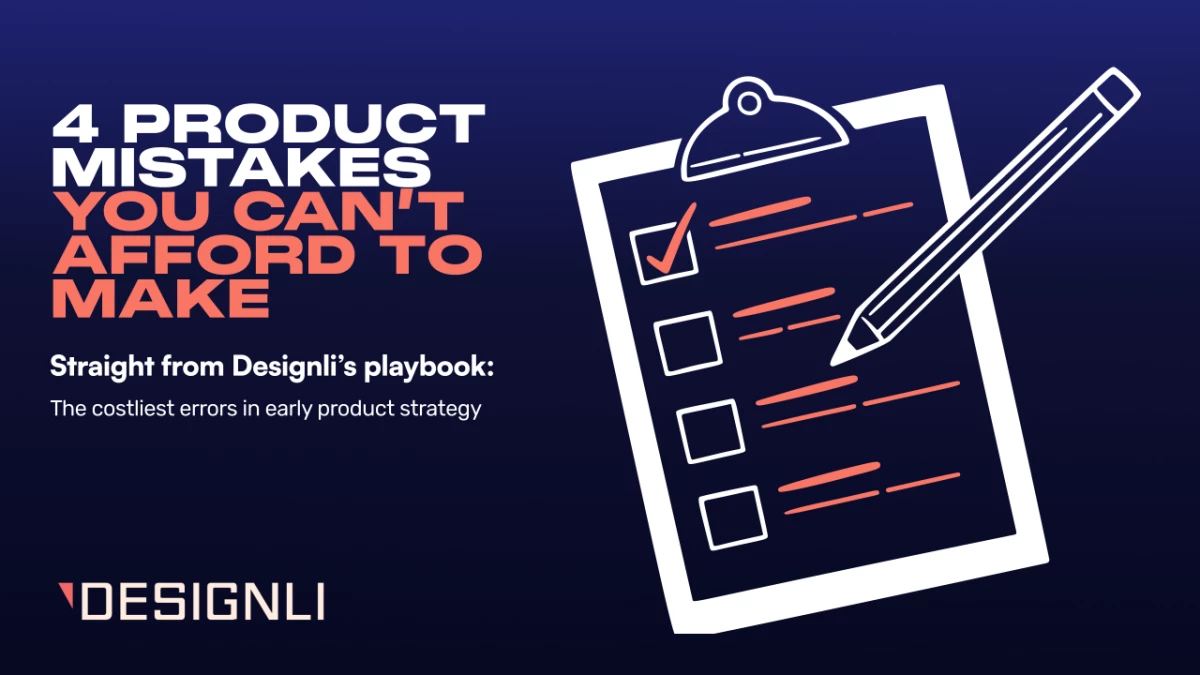
As per Designli’s new manifesto, here are four product mistakes founders can’t afford to make:
- Speed Without Strategy: Rushing an MVP without a clear hypothesis generates noise, not learning, and piles on technical debt.
- Cheapest Vendor Trap: Fast, cheap builds often fail under pressure—think “six-pack abs in seven minutes.”
- Traction Over Trust: Quick launches may skip trust-building, but users won’t stick without it.
- Part-Time Teams, Full-Time Risk: Freelancers and part-timers lose context, slowing future iterations.
-content-large-webp.webp "Product Mistakes Founders Cant Afford")
Each mistake above wastes time, breaks trust, and slows growth. A brittle Version 1 drives users away, weakens investor confidence, and leaves teams stuck rebuilding instead of scaling.
Founders who avoid these missteps protect momentum and keep their product moving forward.
What It Takes to Ship a Strong Version 1
Turning an idea into a live product is equal parts thrill and pressure. There’s the adrenaline of shipping that first feature, and the crash that follows when dashboards show users aren’t engaging.
In those moments, it becomes obvious: product quality and user trust aren’t things you fix later. They’re built from the start.
One analysis found that 70% of startups fail due to poor product quality because a subpar product can quickly erode customer trust.
The “ship fast, learn fast” mindset has its place. But rushing out an MVP without a clear plan often generates noise instead of insight, and brittle code that’s costly to scale.
-content-large-webp.webp "Building Quality Products Early")
Worse, it trains teams to optimize for motion rather than traction.
A solid version 1 requires thoughtful execution from a team aligned with outcomes and fully focused on the product. That includes:
- Designers who sweat the details, including every interaction, every screen, and every user path.
- Senior engineers who know when AI helps and when it bloats, focusing on accelerating delivery without compromising stability.
- Product leaders who tie every decision to user behavior and business goals, not just building features, but validating impact.
When the team shares context, long-term focus, and true ownership, the results speak for themselves: faster clarity, cleaner handoffs, and a product that earns real trust internally and externally.
In Designli’s experience, first‑time founders often bring vision without the technical toolkit to execute it.
That’s where all‑in, cross‑functional teams prevent scenarios like getting “ghosted three weeks before launch” or shipping prototypes that crumble under real‑world use.
Products saddled with brittle code, where adding a button breaks Stripe, demand more than quick fixes.
Hypothesis‑driven sprints, ruthless measurement, and senior engineers at the helm rebuild the architecture and user confidence.
This isn’t patchwork; it’s proof that rigorous process and unwavering quality turn trauma stories into redemption arcs.
Together, these tailored approaches ensure that greenfield projects and recovery efforts move forward with clarity and confidence.
By aligning expertise, process, and ownership, teams bypass common pitfalls and focus squarely on delivering a scaled product.
The result is a Version 1 that survives and paves the way for sustained growth.
Founders prioritizing stability and trust in their first version don’t just launch—they lead. That’s what sustainable traction looks like.