
McDonald's AI Holiday Ad Backlash: Key Findings
- McDonald's Netherlands pulled its AI Christmas ad after three days following social media backlash over "creepy" visuals and cynical messaging.
- Coca-Cola's holiday struggles show a pattern of consumer rejection, especially when it used AI to revive an iconic commercial.
- Research shows 76% of consumers worry about AI misinformation, revealing growing fatigue with AI-generated brand content.
McDonald's Netherlands is the latest brand to learn that AI-generated advertising can backfire fast.
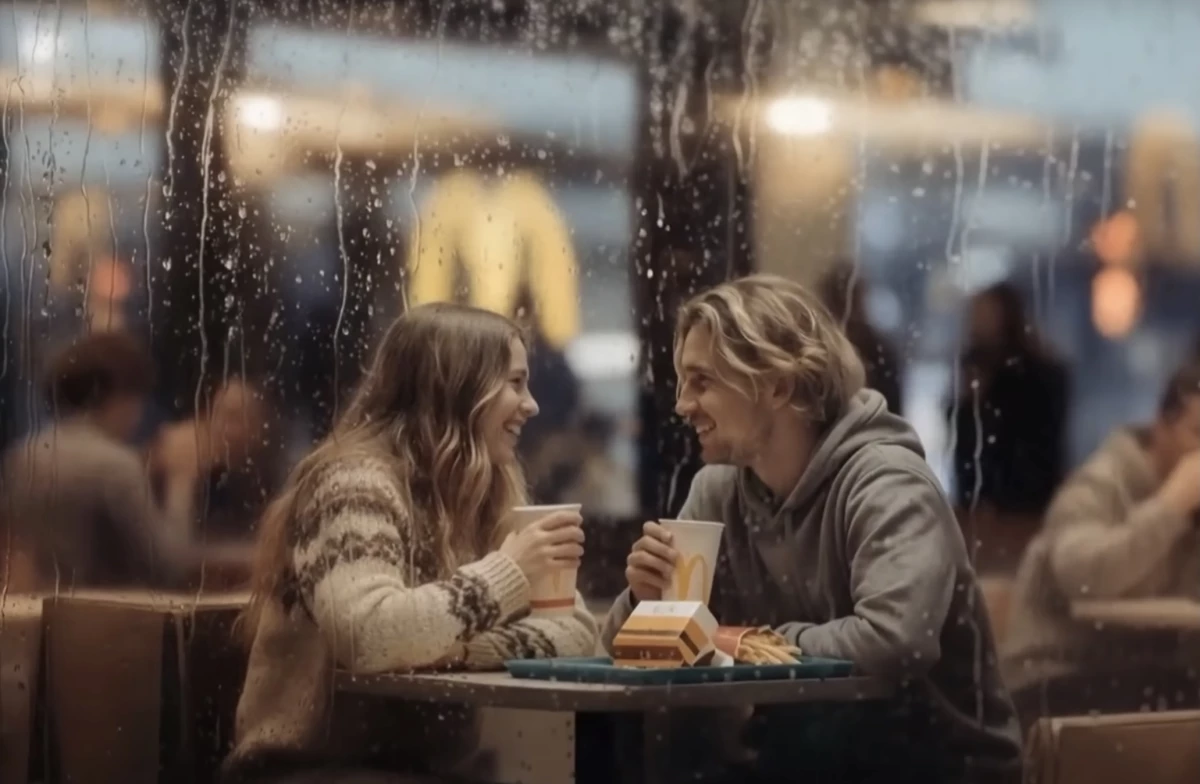
The fast food chain pulled its fully AI-generated Christmas commercial just three days after it was released, following widespread consumer backlash.
The short was produced by U.S.-based The Sweetshop Films and local ad agency TBWA/Neboko.
The 45-second spot featured people experiencing holiday disasters such as exploding Christmas trees, Santa causing traffic jams, and other mishaps.
A reworked version of "It's the Most Wonderful Time of the Year" plays with altered lyrics, calling Christmas "the most terrible time of the year."
The commercial then advised customers to "hide out in McDonald's till January's here."
Social media users called it "creepy," "poorly edited," and "inauthentic," with film critic Richard Roeper even panning the ad on X.
If they were going for creepy, depressing, deeply unfunny, clumsily shot, poorly edited, and inauthentic — nailed it! https://t.co/qH7drYVTJ3
— Richard Roeper (@RichardERoeper) December 8, 2025
McDonald's initially disabled comments on the YouTube video before removing it from all platforms.
This negative reaction shows how quickly audiences can sense when a brand misjudges the mood, especially during emotionally loaded seasons like the holidays.
Speed and novelty may grab attention, but without careful creative judgment, they can just as easily erode brand trust instead of building it.
The Coca-Cola Parallel Nobody Learned From
McDonald's isn't the first major brand to face backlash from AI use this season.
Coca-Cola's 2025 "Refresh Your Holidays" campaign used generative AI to reimagine its iconic truck ads, triggering negative reactions from viewers.
This includes critics claiming the brand sacrificed nostalgia for algorithms.
It's becoming apparent that, more often than not, when brands use AI to recreate beloved holiday traditions, audiences reject the artificial nostalgia.
A McDonald's spokesperson told NBC News the ad "was intended to reflect the stressful moments that can occur during the holidays in the Netherlands."
However, they also acknowledged that "for many of our guests, the season is 'the most wonderful time of the year.'"
In the end, the company framed the incident as "an important learning as we explore the effective use of AI."
Why AI-Generated Ads Are Being Rejected
Public skepticism toward AI in advertising is already high, and the response to this campaign reflects this unease.
Research from full-service agency Digital Silk shows 76% of consumers are concerned about misinformation from AI tools.
Meanwhile, 70% of Americans also say they have little to no trust in companies to make responsible decisions about AI use in products.
The Sweetshop Films CEO Melanie Bridge, however, defended the work in a now-deleted LinkedIn post.
She said the project required "10 people, five weeks, full-time" and involved generating "thousands of takes" to create usable footage.
However, audiences only see the finished product, which looks artificial and feels emotionally hollow.
The sloppy editing used to hide AI's continuity problems left viewers disoriented.
And the short and rapidly changing scenes became an obvious sign that they were watching AI-generated content.
The message of this ad is “the holidays suck” and it’s solution is to spend as much time in McDonald’s as possible. Forget your friends and family…have a Big Mac.
— The Art of SpongeBob (@ArtofSpongebob) December 8, 2025
The song is poorly written, almost certainly written by AI because it doesn’t fit the original rhythm at all and at… https://t.co/MTR2i7XG6y
McDonald's AI ad disaster offers critical lessons for marketers who are learning how to use generative tools:
- AI can't replace emotional resonance: When visuals look off, audiences will definitely notice.
- Nostalgia only works when it feels genuine: Using AI to recreate beloved traditions risks turning comfort into uncanny discomfort.
- Efficiency doesn’t justify brand risk: Faster or cheaper production still carries real reputational consequences.
A Quantum Workplace study found that employees who frequently use AI reported higher burnout levels at 45% compared to 38% for infrequent users and 35% for those who never use AI at work.
The data suggests that AI fatigue is real for both creators and consumers.
Our Take: Can AI Replace Human Emotion in Holiday Advertising?
McDonald's and Coca-Cola both tried using generative AI to modernize holiday marketing without losing emotional connection.
Both brands failed.
I think the issue isn't that AI can't create engaging visuals.
It's that holiday advertising works because of real emotion, and audiences know the difference between genuine feeling and something that looks manufactured.
Brands rushing to adopt AI for creative work should consider whether the technology serves the story or replaces it.
Here, we can see that the production companies' defense of human oversight couldn't overcome the artificial-looking result that turned audiences away.
In other news, McDonald's USA proved nostalgia works when it's authentic, partnering with The Grinch for a multichannel holiday campaign that drove engagement.
Need creative partners who understand when technology serves emotion instead of replacing it?
Check out our top creative agencies that balance innovation with authentic storytelling in our directory.