
Google's Nano Banana Pro: Key Findings
- Google Ads now includes an AI image generator that creates 2K and 4K resolution visuals with studio-grade controls.
- The model maintains consistency across up to 14 input images and renders accurate text in multiple languages, addressing key challenges in ad creative production at scale.
With 88% of marketers using AI daily, Google’s integration makes professional-grade AI visuals a standard for advertisers.
Google has just embedded its most advanced AI image generator directly into its advertising platform.
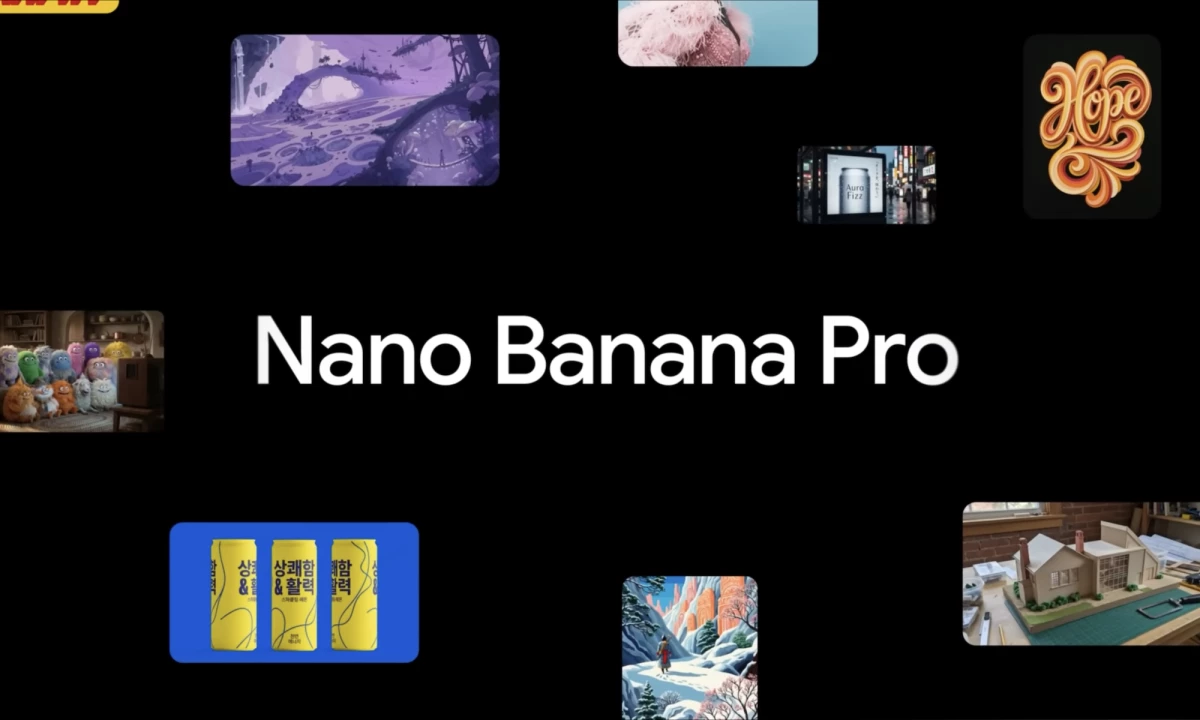
Nano Banana Pro creates studio-quality visuals with 2K and 4K resolution.
It also comes with advanced controls for lighting and color grading, as well as text rendering in multiple languages.
The tool is rolling out across Google Ads, Slides, Vids, and Workspace, letting advertisers create high-resolution visuals without switching tools.
The timing is perfect, as creative production has become a bottleneck for teams running multi-variant and localized campaigns.
Nano Banana Pro addresses this by letting teams produce campaign-ready assets in-house.
A New Level of Control for Creatives
The feature set is what separates Nano Banana Pro from earlier AI image generators.
Nano Banana Pro goes beyond text-to-image generation, with specialized controls to tweak specific parts of an image.
Users can adjust lighting, bokeh, focus, and color grading to match specific brand guidelines.
Nano Banana Pro's ability to render text is also significantly advanced.
It can generate legible text in multiple languages with various fonts, textures, and calligraphy styles.
This solves a persistent problem with AI-generated visuals, where text often appears as garbled or unusable.
Advertisers can also translate copy inside the image while keeping the design intact.
It handles multi-image layouts, blending up to 14 inputs while keeping consistency across multiple users.
This makes it perfect for building lifestyle campaigns, product mockups, and brand stories where all the visuals need to feel consistent.
A New Baseline for AI Use in Advertising
According to CoSchedule's 2025 survey, 88% of marketers now use AI tools daily, up from 37% a year earlier.
The AI image generator market also reached $376.8 million in 2025.
And it's projected to grow to $1.09 billion by 2032, driven largely by demand from advertising, e-commerce, and media sectors.
Google's decision to embed Nano Banana Pro directly into its ad platform capitalizes on this momentum.
The integration also ties into Google's wider push toward agentic advertising tools.
The company recently launched new AI agents, Ads Advisor and Analytics Advisor, that generate campaign recommendations and performance diagnostics.
There's also AI Max for Search, which uses broad match and keywordless targeting to expand audience reach.
These tools signal Google's strategy to automate campaign production and management.
Here's what this means for agencies and brands:
- Studio-quality creative moves in-house: Agencies can produce campaign-ready assets without needing external vendors, which will greatly reduce production timelines and costs.
- Localization becomes scalable: Multilingual text rendering will allow brands to generate localized ad variants in mere minutes.
- Testing capacity expands: Rapid asset generation enables more creative tests, letting teams refine visuals using real-time performance data.
Malay Parekh, CEO at Unico Connect, believes the impact extends beyond workflow efficiency.
"Nano Banana Pro removes the production barriers that have historically limited how agencies scale creative testing," he explains.
"The ability to generate studio-quality visuals with precise brand controls directly in Google Ads means teams can now iterate on campaign assets in hours instead of weeks.
This is something I believe will radically change the economics of performance marketing."
Agencies that adopt AI ad creative tools early can gain extra capacity to deliver more output with smaller teams.
At the same time, brands will also get more freedom to test ideas that were previously too expensive or time-consuming.
Our Take: Can AI Match Human-Led Campaigns?
I think Google made the right move by focusing on integration.
Now, advertisers can create, edit, and deploy images without leaving Google Ads, which removes the kind of workflow friction involved with using standalone tools.
The creative controls are impressive, especially lighting and color grading, which will help distinguish amateur visuals from professional campaign assets.
And I don't think anyone should fear that this will totally take humans out of the equation.
Brands will still need creative directors to ensure outputs align with visual identity, even if AI is handling the production work.
I also think it's important to point out that Google is giving everyone access to the same tools.
And so, the real difference will come from teams who can turn these tools into better ideas, faster decisions, and smarter creative choices.
Ready to bring AI-powered creativity and automation into your campaigns?
Explore DesignRush’s top AI automation agencies and companies to find the right partner for your brand.