
In 2026, companies can launch a B2B website fast.
Using AI and no-code tools, what once took weeks of planning and development can now happen in a matter of hours.
As a result, website builders are racing to modernize their offerings.
For example, Wix recently introduced Harmony, a platform that combines AI-generated website creation with drag-and-drop editing in the same workflow.
The release shows how quickly AI website tools are moving beyond simple layout generation.
HubSpot's Spring 2026 Spotlight followed with updates arguing that better buyer outcomes come from CRM context, not faster content generation.
Meanwhile, Relume, an AI website builder, generates full sitemaps and wireframes in seconds and exports them directly to Figma or Webflow.
For B2B marketing and sales teams, these are not marginal improvements.
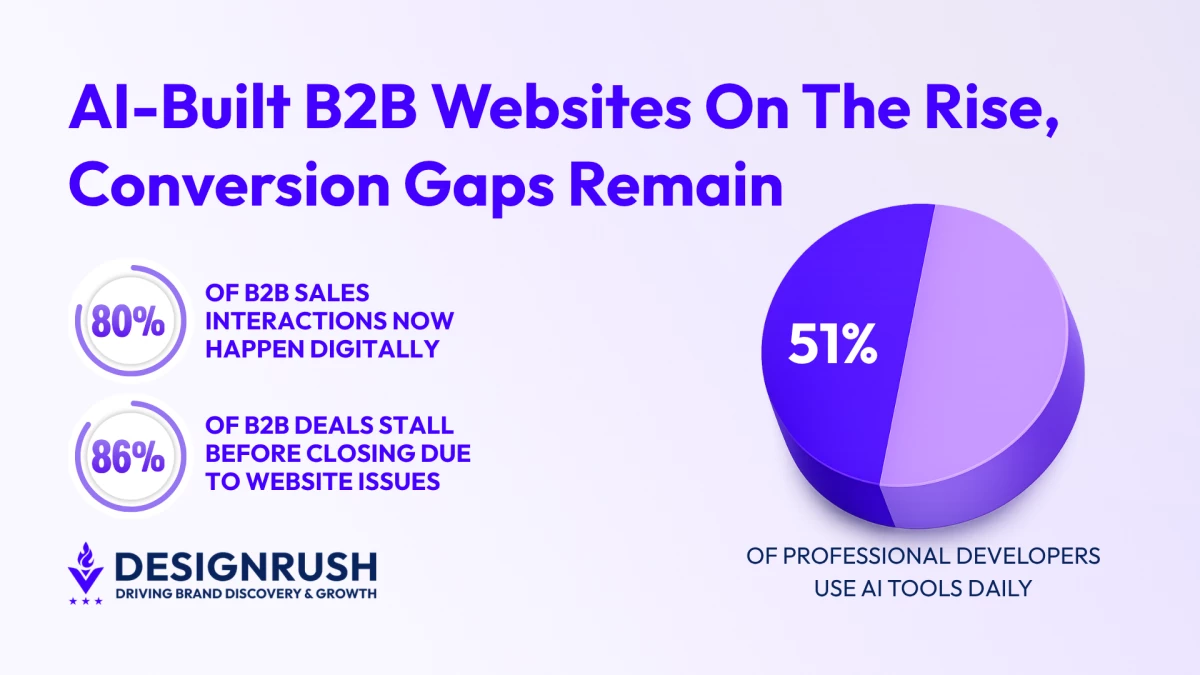
With Gartner reporting that 80% of B2B sales interactions now happen digitally, the website carries more of the sales motion than any other channel.
When every company can launch a credible-looking B2B website in hours, launch speed stops being a competitive advantage.
What separates a site that generates a pipeline from one that generates traffic is something these tools do not produce on their own.
What AI Website Builders Do Well
AI website builders offer tangible productivity gains, which is why they’ve earned their place in B2B web design.
Structural planning, which once consumed the first week of a project, now happens before the first client meeting ends.
For certain use cases, they deliver real value without meaningful trade-offs. These typically come in the form of:
- Campaign landing pages where speed to launch matters more than buyer research,
- MVP validation sites testing demand before full investment,
- Basic service pages with clear, single-intent visitors.
Where AI Hits a Wall in B2B
However, AI isn’t a cure-all.
According to Paul J. Scott, Founder and Chief B2B Website Strategist at award-winning B2B agency GoingClear, the speed AI tools offer can’t replace the value and context experienced professionals provide.
"AI gets us to the first draft faster. But, the strategic decisions about who the buyer is, what they need to understand, and in what order still require human judgment," noted Scott.
That’s because the B2B buying cycle asks more from a website than any prompt can specify.
A B2B website needs to move a specific buyer through a specific decision at a specific stage of the sales cycle. AI tools are unable to get the context needed for that.
When you compare the two methods side by side, the differences are evident.
| What AI Builds | What Strategy Requires |
| Sitemap from a prompt | Sitemap built around buyer intent |
| Common layout patterns | Conversion sequence matched to sales motion |
| Generated brand voice | Positioned point of view |
| Fast first draft | Research-backed information architecture |
| Template-based structure | Buyer journey mapping |
1. Architecture Requires Buyer Intent, Not Prompts
A sitemap generated from a business description reflects what the company offers.
But a sitemap built around the buyer journey reflects how a prospect actually evaluates a solution.
It captures what questions they ask at each stage and what friction points stall the decision. Those are different documents.
The first can be automated. The second requires research, buyer interviews, and strategic judgment.
GoingClear's redesign of ReadSpeaker AI started with buyer persona mapping and journey research before a single screen was designed.
The resulting website presents complex text-to-speech technology as a credible enterprise solution.
The AI had no access to the buyer context that shaped it.
"A sitemap built from a prompt reflects what a company sells. A sitemap built around a buyer reflects how they actually make decisions," Scott explained.
"Those are fundamentally different documents, and the difference shows up in the pipeline."
2. Conversion UX Is a Strategy Decision
AI website builders generate layouts based on common patterns.
But common patterns produce averageconversion rates.
The sequence that moves a skeptical B2B buyer from consideration to commitment cannot be prompted.
It requires understanding who the buyer is, what they fear getting wrong, and how the sales motion works.
3. Brand Storytelling Cannot Be Generated
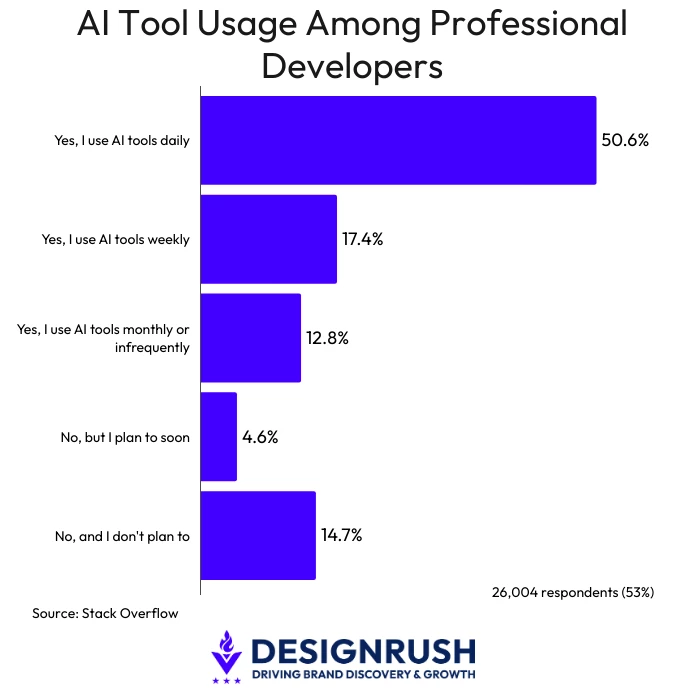
With 51% of professional developers now using AI tools daily, according to a Stack Overflow survey, AI-generated content is becoming the default across B2B web design.
Buyers are developing sharper instincts for what feels generic.
 When a buyer is considering a six-figure deal, a website that reads like it was written from a prompt loses that buyer before the conversation starts.
The components that make a website memorable rather than replaceable include brand voice, positioning clarity, and the particular way a business expresses its point of view.
"When every B2B website starts from the same AI prompt, they start to sound the same, and buyers notice quickly," added Scott.
"The brands that stand out are the ones that have a clear point of view and the discipline to lead with it consistently."
What Happens When Everyone Can Launch a B2B Website
When B2B website development required significant time and budget, the barrier filtered out low-effort execution.
AI tools have removed that filter. 86% of B2B deals stall before closing, and website friction is a contributing factor in most of those cases.
The market is filling with sites that load fast, look polished, and convert poorly. The structural issues sit below the surface:
- Buyer journeys that were never mapped
- Value propositions built around what the company sells rather than what the buyer needs to decide
- Brand voices indistinguishable from the AI prompt that generated them
GoingClear's G³ Framework (Getting Eyes, Giving Knowledge, Growing Pipeline) was built around that divide.
Every engagement starts with the buyer journey before any design begins, which is exactly what AI tools skip.
The Sites That Convert Are Built Around the Buyer
As AI website builders get faster, cheaper, and more capable, polished websites are becoming easier to produce.
Buyers evaluating a six-figure decision do not reward speed to launch. They reward clarity, credibility, and a site that anticipates what they need to know before they ask.
More B2B websites now start from the same prompts and patterns. The companies that stand out are the ones that sound like they understand their buyers.
A site built around a buyer journey stands out, and that’s built from a prompt that blends into it.