
AI use among U.S. small and midsize businesses has jumped to 78%, up from 48% in July 2024, per Intuit QuickBooks' 2026 AI Impact Report.
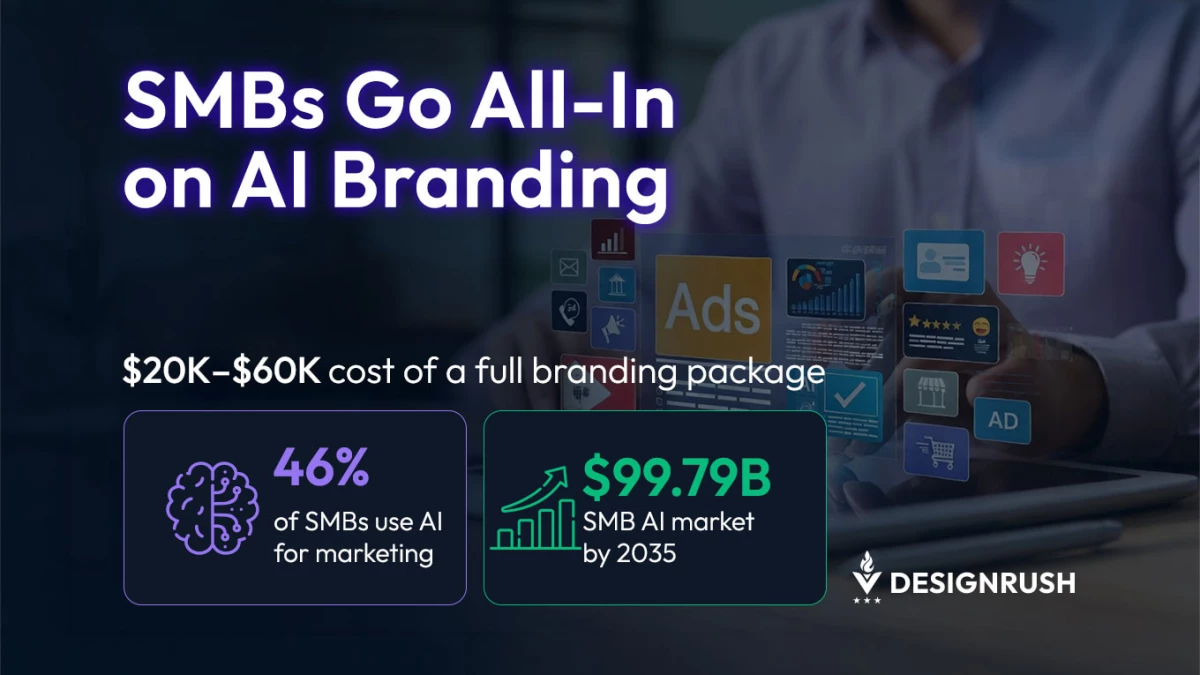
Of those, 46% use it specifically for marketing.
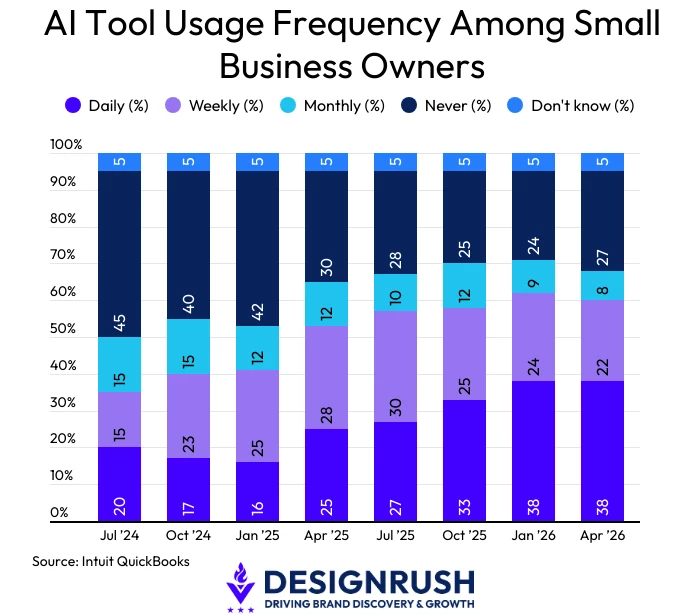 That adoption is colliding with one of the oldest barriers in small businesses.
A full branding package ranges from $20,000 to $100,000 or more. On top of that, a custom business website might cost between $8,000 and $40,000, depending on its size.
There are 36.2 million small enterprises in the United States, accounting for 99.9% of all U.S. firms. Yet for most of them, professional branding remains out of reach.
So how do you build a brand when the cost of looking credible exceeds your first year of revenue?
Why SMB Branding Has Always Been Expensive
A logo, a visual identity, a website, and a collection of marketing assets are necessary when building a brand from the ground up.
Traditionally, that used to imply hiring agencies, designers, or both.
Full branding packages run $20,000 to $60,000 at mid-tier agencies, according to DesignRush's branding cost breakdown.
Web design adds another $8,000 to $40,000 for a custom business site.

Clancy Clarke, CMO at Design.com, an AI-powered design platform for entrepreneurs, said small businesses cannot afford to outsource design at the start.
"They end up with a logo from Fiverr and a website that doesn't convert, and by the time they can afford better, the bad first impression has already done damage," Clarke says.
For a business operating on tight margins, the traditional cost of professional branding often determines whether it gets done at all.
What AI Changes About the Execution
Small businesses spend an average of $78,000 on advertising annually, or around 37% of their whole marketing budget.
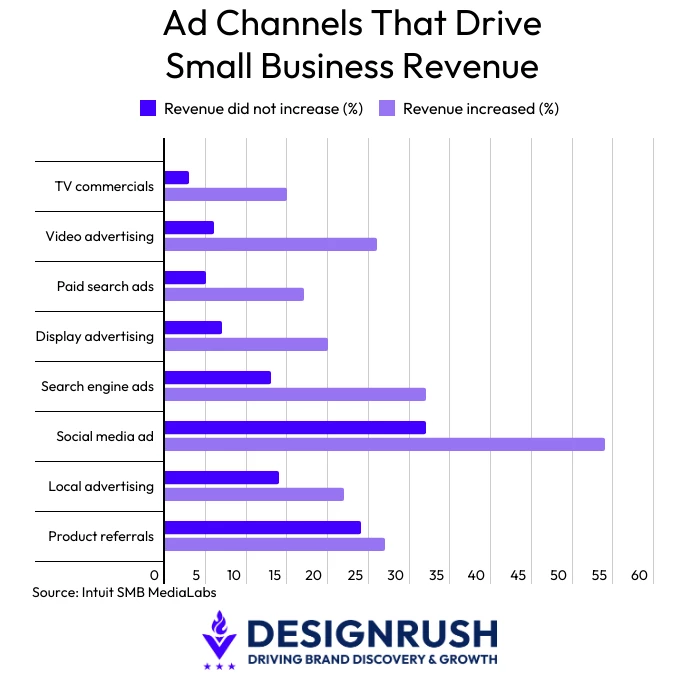 Much of that spend goes live before the brand behind it is consistent enough to convert.
A paid campaign can drive traffic. It cannot fix a logo that looks like a template or a website that does not load on mobile.
"Small businesses don't have weeks to wait for a designer or thousands to spend before they know if the product will sell. They need something professional today," Clarke says.
AI compresses the production phase for entrepreneurs who cannot yet afford an agency.
However, the output is merely a beginning point that a business may improve, test, and expand upon without having to pay for each iteration.
Determining which course is best for the brand is what calls for judgment, and that is where strategic expertise still has a place.
Where Human Judgment Still Matters
Speed does not automatically produce strong brands. AI can generate a hundred logo variations. It cannot decide which one builds the right associations for a specific market.
"AI quickly gets you 80% of the way there. The remaining 20%, what the brand stands for, who it's talking to, and what feeling it needs to leave, is still a human decision," Clarke adds.
Human judgment is still needed for market distinctiveness, brand voice, and design consistency. AI removes the production bottleneck that comes before those decisions.
The decisions worth slowing down for are the ones that call for strategic judgment:
- Define the brand position before generating assets. A clear positioning statement reduces iterations and produces stronger starting points.
- Test visual identity against the specific buyer, not general taste. A logo that looks good in isolation may signal the wrong thing in a specific industry or price tier.
- Build a brand guide before scaling content. AI-generated assets gradually drift and fragment in the absence of defined constraints for color, typography, and tone.
Brands that made conscious decisions early on about their values and applied those decisions consistently across all touchpoints are the ones that endure over time.
The Risk of Not Moving at All
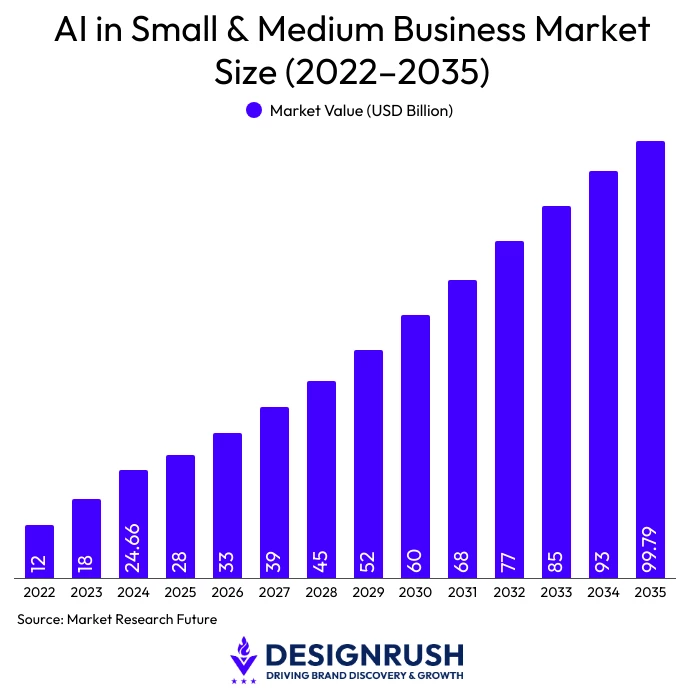
The global AI market for small and medium-sized businesses will reach $99.79 billion by 2035, per projections by Market Research Future.
 Branding has long served as a statement of trust. A company's website, logo, and overall visual identity convey to potential customers that it is legitimate, reliable, and worthwhile.
Delaying those signals means losing out while a buyer is considering whether to get in touch.
AI did not create that problem. It removed the last legitimate excuse for not solving it.
Agility has always been a competitive advantage for small enterprises, and AI-powered branding reinforces it.
Most founders will find that enough to launch and compete. Agency-level strategy still adds value, but mostly once a brand grows complex enough to need it.
Instead, AI-powered branding covers the early gap, the stretch where first impressions are made, market positions form, and buyers decide who is worth a second look.
And a brand that looks credible from day one earns the runway to grow into something worth investing in properly.