
Creativity at Scale: Key Findings
- Enterprise teams are adopting low-code platforms like Framer to move faster, testing small projects that prove creativity doesn’t need complex workflows.
- Simplifying processes through features like on-page editing and analytics helps large teams collaborate in real time, keeping quality consistent across scale.
- By shaping products around enterprise feedback, Framer shows how listening to users can turn everyday pain points into innovations that speed up creativity company-wide.
By 2025, 70% of new applications developed by enterprises will use low-code or no-code technologies, according to Gartner.
It’s a striking leap from less than 25% just two years ago, and it shows how creative work is being redefined across organizations.
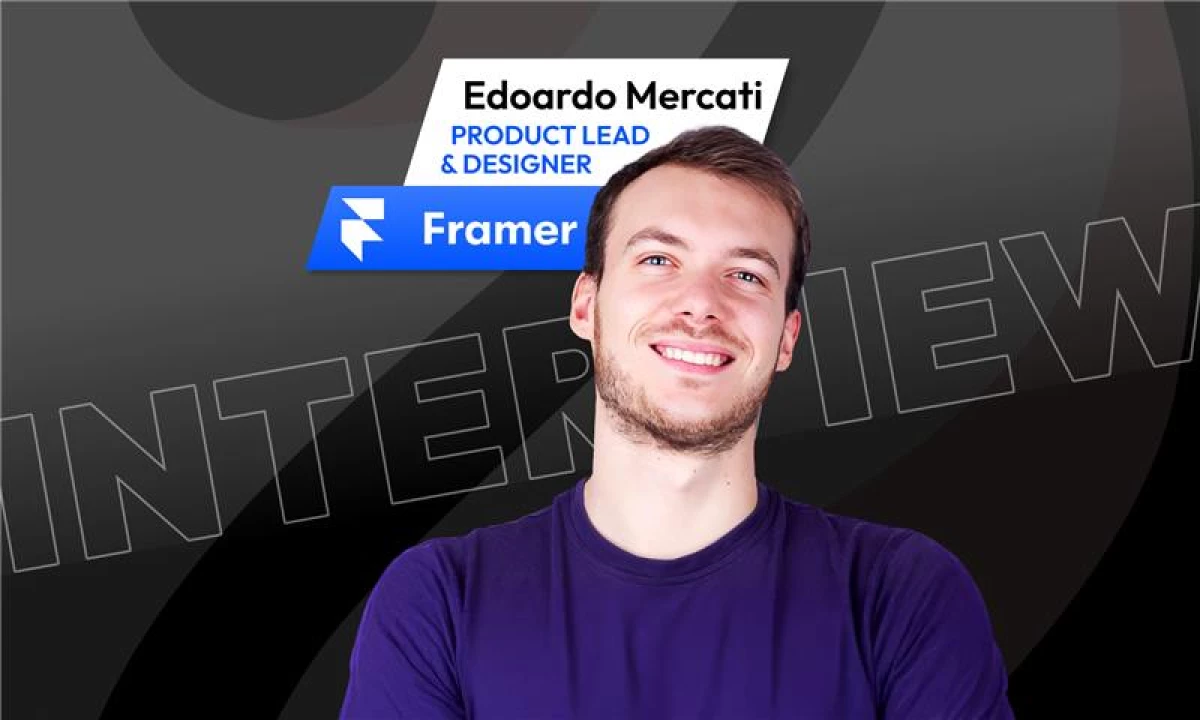
For Edoardo Mercati, Product Lead at Framer, a no-code platform for building interactive websites, this shift is changing how teams think about design itself.
Enterprises are realizing that creativity doesn’t have to be slowed down by process. When the tools get out of the way, ideas move faster.
Low-code platforms like Framer are helping teams take creative control.
They can test ideas, make changes, and publish faster, without getting stuck in long development cycles.
In this interview with DesignRush, Mercati shares how enterprise teams are rethinking the way they design and collaborate.
Additionally, he explains why success depends on keeping the experience simple and intentional, two principles he sees as key to designing for scale.

Who is Edoardo Mercati?
Edoardo Mercati is a product lead and designer at Framer, where he helps shape tools that let anyone design and publish beautiful websites without code. Based in Amsterdam, he’s passionate about making creativity on the web effortless and accessible. Before Framer, he designed digital experiences for companies like bunq and Backbase.
Focus on Small Wins to Prove the Big Idea
Enterprise transformation rarely happens all at once.
According to Mercati, it usually begins with something small: a campaign or landing page that tests the waters.
“It usually begins with a small project, like a campaign or landing page,” Mercati says.
“Teams see they can go live with a production-ready site in days rather than weeks, and the quality often surpasses what they get with developer-heavy workflows.
That momentum quickly scales into full adoption.”
Starting small lets teams build confidence early. When results come quickly, it proves that design-led workflows can move faster without sacrificing craft.
This is often what convinces larger organizations to embrace change.
Simplify the System, Amplify the Work
As organizations grow, complexity often slows them down.
Mercati shares that progress comes from removing friction so teams can focus on the work itself.
“We’ve built features that remove friction for large teams,” Mercati says.
“On-page editing allows non-designers to edit and add content directly on the site itself, without needing to open the app.
Advanced Analytics gives marketers the ability to optimize campaigns in real time, and enterprise infrastructure upgrades ensure security and compliance at scale.”
Simplicity matters because it keeps teams aligned. When everyone can edit, publish, and analyze in the same place, projects move faster and decisions stay connected.
This efficiency makes it easier for large organizations to maintain quality at scale.
Keep Pricing and Process Simple
Working with major brands has taught Mercati that complexity is rarely the answer.
Large organizations don’t want complicated pricing models or bloated workflows; they want clarity and speed.
“We’ve shaped our partnerships around transparent pricing and outcome-driven value, while emphasizing that Framer helps them move faster without compromising their brand integrity,” Mercati says.
Simplicity is what helps big teams make decisions quickly.
When processes are clear, stakeholders can align faster and focus on results instead of managing logistics.
For Mercati, keeping things straightforward is what keeps projects moving.
Let Enterprise Needs Shape the Roadmap
The best ideas don’t come from inside the product team. They come from the people using it.
Enterprise clients, in particular, have shaped many of Framer’s most impactful updates.
“Enterprise clients have directly shaped our roadmap,” Mercati says.
“On-page editing came from a simple insight: marketing and content teams were losing time waiting on designers and developers.”
This insight changed how Framer approaches product development.
The team began focusing on removing the small barriers that slow creative work, making it possible for anyone to edit and publish content without waiting on others.
Enterprise feedback also shaped tools like Wireframer and Workshop, built to help teams move faster while keeping design quality intact.
From there, stronger CMS and security features followed, so even large, complex sites could run seamlessly on the platform.
Design for Scale by Keeping It Simple
As low-code tools reshape how teams build online, the challenge for large organizations is learning how to stay creative at scale.
For Mercati, that comes down to simplicity, speed, and trust.
When the tools disappear into the background, teams can focus on craft, not process.
And when platforms evolve around real collaboration, they help creativity scale without compromise.
In the end, designing for enterprise is about making it easier, so great ideas can move faster.
Curious if no-code is the right fit for your team?
Read our full strategic guide on how to create an app to see if it's worth the hype.