
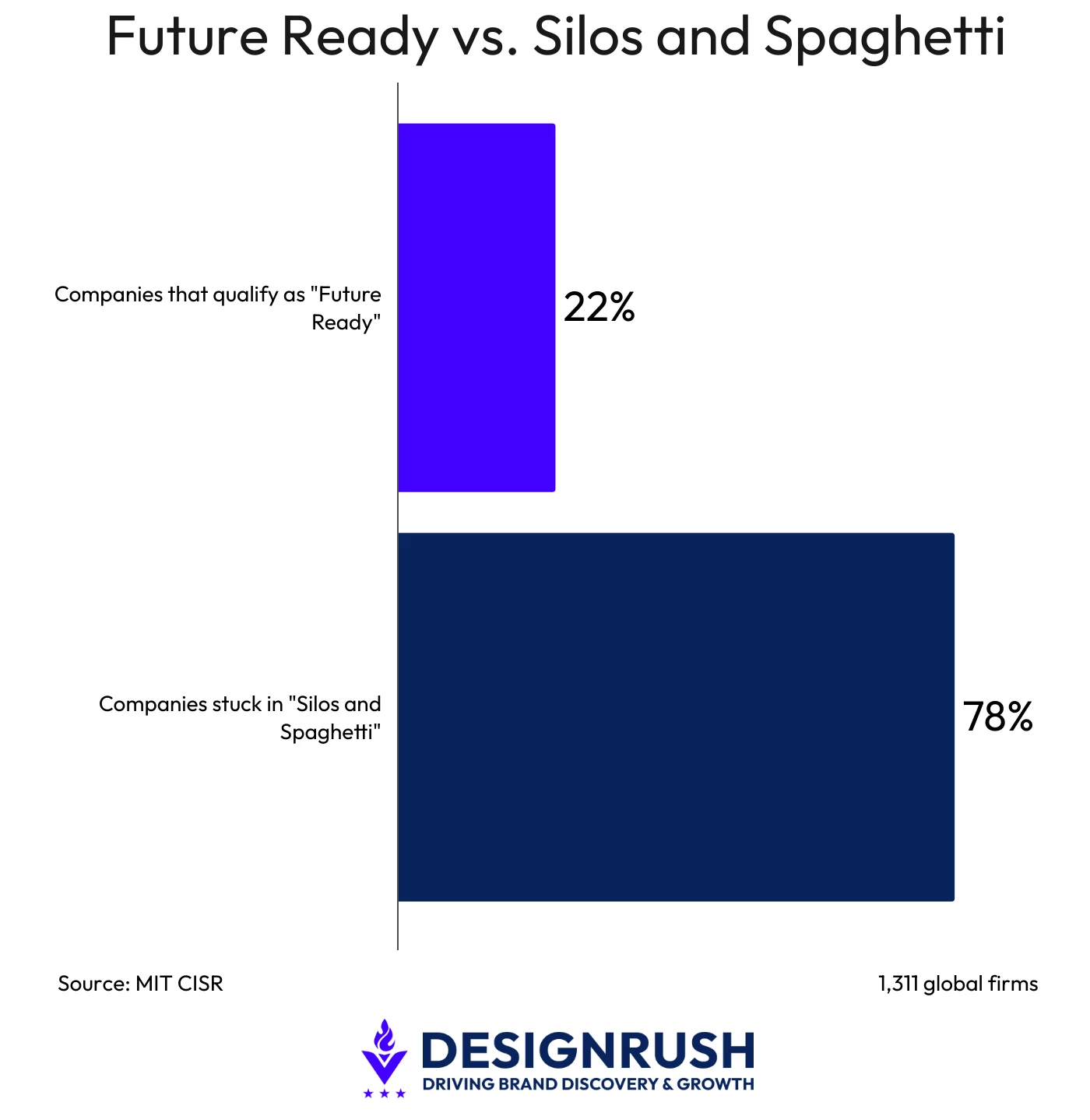
Only 22% of companies qualify as “Future Ready,” according to MIT CISR research across 1,311 global firms, posting higher revenue growth and net margins than the rest.
The remaining 78% sit in what researchers call the “Silos and Spaghetti” quadrant, where disconnected systems drain budget and stall growth.
But why do so few make it out of that quadrant?
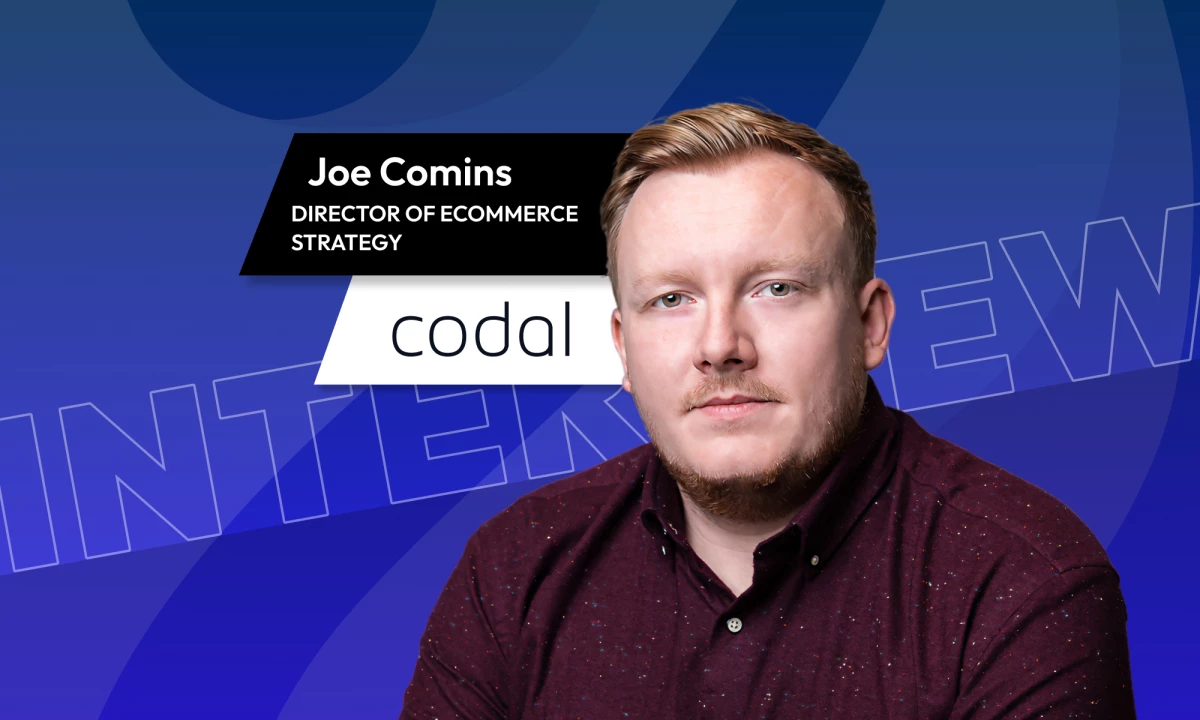
Joe Comins has audited enough of these ecosystems to understand where unification efforts break down.
In this DesignRush interview, he explains what enterprise fragmentation looks like, how to decide what to fix first, and why the CFO is the right person to own the unification program.

Who Is Joe Comins?
Joe is the Director of eCommerce Strategy at Codal, where he helps enterprises and private equity-backed companies untangle fragmented digital ecosystems before they invest in new ones.
Codal has led consolidations across PE portfolios, retail, and B2B commerce, including multi-brand consolidations spanning more than 150,000 SKUs.
Great Tools, Poor Connections
The fragmentation Codal encounters in enterprise audits rarely starts with bad decisions. Most often, it starts with good decisions made independently, over years.
"What we usually see is a messy scramble of great tools that are being underutilized, the result of brands attempting to modernize over many years and many initiatives with different leaders," Comins says.
"What you end up with is a decoupled, siloed stack of enterprise tools without the central utilization needed to empower their actual value."
That pattern repeats in a few predictable ways, according to Comins. Like a monolithic system that treats eCommerce as an afterthought, creating bottlenecks that are expensive to undo.
Rigid technical constraints that force costly custom coding to bridge systems that standard integrations should handle.
Or disconnected front- and back-end systems that create manual workflows and block your ability to scale.
These failures usually share a common cause. The handoffs between tools were never formally designed or assigned to anyone.
And the gaps compound into platform sprawl, fragmented product data, and disconnected system communication.
Not All Broken Connections Are Equal
Knowing the ecosystem is fragmented is only half the problem. The harder question is what to fix first.
Before scoping any integration project, Codalstarts with three questions to separate what moves the business from what can wait.
- What data connectivity empowers better business decisions? If the data isn't moving, the decisions aren't sound.
- What integrations support customer growth and revenue? Focus on the value it drives, not the technical lift it requires.
- What else creates touchpoints of delight, enhancement, and insights that a customer will remember? These come last, once the foundation holds.
"By weighing every potential project against its direct impact on business outcomes, you can separate mission-critical blockers from non-essential feature rollouts," Comins says.
That sequencing also stops costs from compounding.
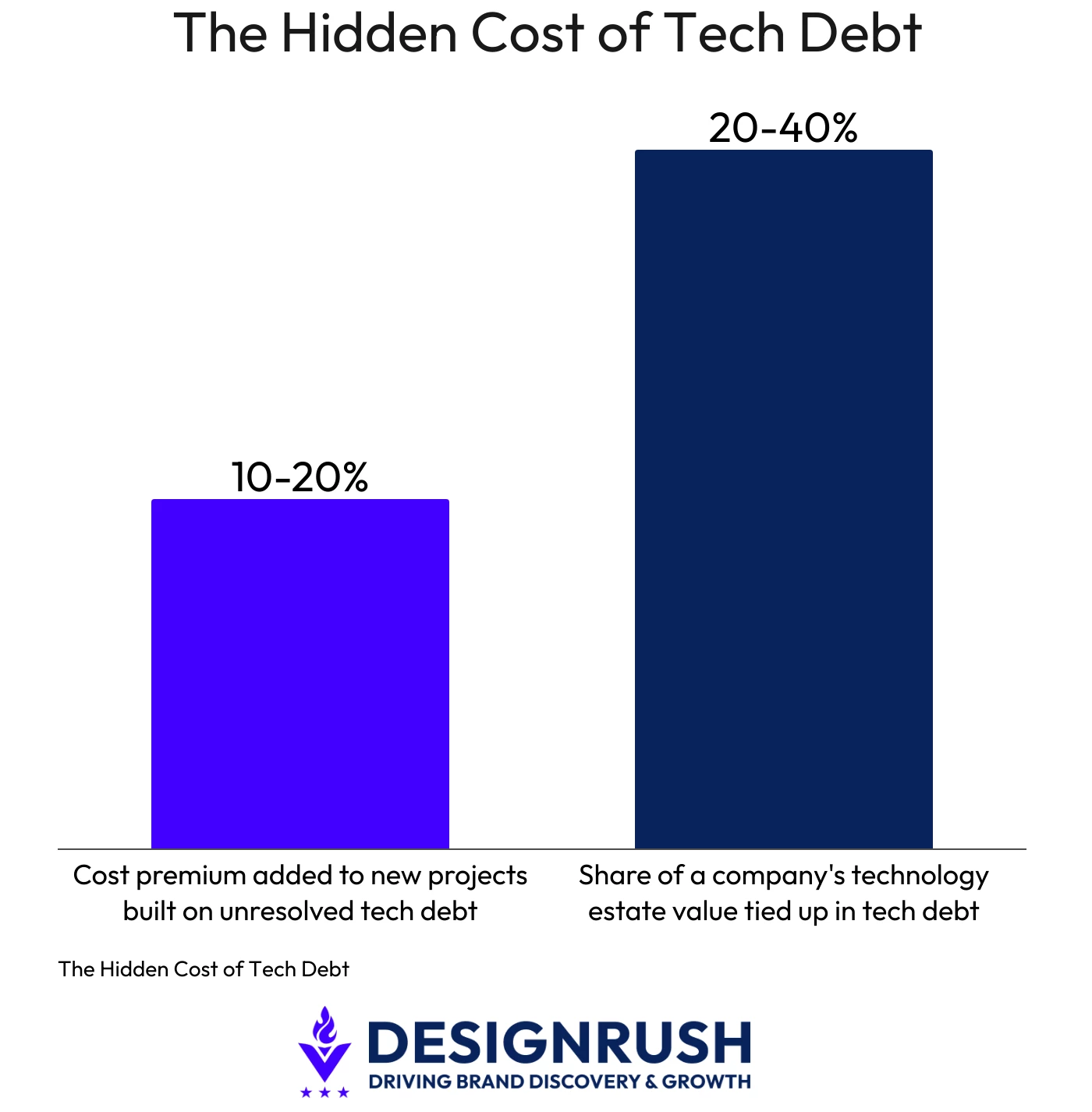
Unresolved tech debt adds a 10-20% cost premium to every new project built on top of it, according to McKinsey research.
The debt itself can account for 20 to 40% of a company's entire technology estate value before depreciation.
Every quarter spent waiting raises the price of fixing it later.
"From there, you can tackle technical complexity by adopting a phased approach," Comins adds.
"Focus on building a stable core foundation before layering on secondary capabilities instead of risking it all on a high-stakes, all-at-once overhaul."
The Cost That Hides in Delayed Projects
Fragmentation has a visible cost and a hidden one.
The visible cost is what breaks. The hidden cost is what never gets built because the data to support it never arrives.
"Without accurate data moving between your systems, you’re making big decisions based on uninformed feelings, fleeting thoughts, or just copying others in the industry to keep up," Comins says.
Beyond strategic blind spots, operational drag compounds in ways most finance teams never fully price in.
Integration challenges cost an average of $6.8 million annually in lost productivity and delayed projects, according to the MuleSoft Connectivity Benchmark Report.
Older platforms consume budget through maintenance contracts and licensing fees that should go toward new capabilities.
"Rigid systems also drag down speed-to-market, while legacy architecture creates hidden customer friction," Comins says.
"And your internal IT team is stuck fixing manual input errors instead of focusing on the things that actually drive growth."
For organizations already stretched across hundreds of disconnected applications, that cost rarely shows up as a single line item.
It accumulates through delayed projects, manual workarounds, and initiatives that stall before they reach the market.
That matters even more as companies add AI. Agents deployed onto fragmented foundations inherit the confusion of the underlying system and execute it faster.
Unification Is Not Integration
Many organizations treat ecosystem unification as a larger version of a standard integration project. Comins says that framing leads to the wrong outcome.
Traditional integrations connected two systems so they could exchange data. Point-to-point connections multiplied over time, each adding a dependency that made future changes harder.
"Traditional integrations, especially on-prem, used to be everything to a business. But that setup created monoliths and vendor lock-in that are hard to break out of," Comins adds.
A composable stack changes the dynamic. No single tool owns business processes unilaterally, and teams are no longer held hostage by how it's always been.
Teams can swap individual systems without triggering enterprise-wide change management cycles, making incremental change easier to manage.
The Golden Data Triangle
For enterprises ready to stop accumulating applications and start connecting them, sequencing matters as much as the tools chosen.
"Start by connecting your business tool, the ERP, and your digital tool, the eCommerce platform, using an iPaaS solution to drive the data between them," Comins says.
"Then you can expand by integrating your WMS with the ERP, and linking your ERP, eCommerce, and PIM platforms together to create a golden-data triangle."
Core systems that are unlikely to change should anchor the architecture. Flexible processes should connect the systems that may change over time.
Without that separation, every new tool addition forces a reassessment of what came before it, slowing execution and increasing risk with each change.
"With data, you finally understand your business better than ever, so you can actually use data-driven reasoning for decision-making," Comins adds.
"Then, you get scale, which gives you the ability to move faster, connect your online and offline experiences, and meet your customers where they are."
CFO Ownership Changes Everything
Programs that stall split ownership among IT, product, and operations, with no single stakeholder accountable.
Programs that succeed put a CFO in charge, not for financial control, but for a different kind of perspective.
"Their questions and vision are less technical and more business focused and long-term than a product manager or an IT team leading the project," he says.
That framing changes how the program gets sold internally. For the CFO, the focus is on cost efficiencies and bottom-line savings.
But, for trading and marketing teams, the argument shifts. The new agility and autonomy will make their daily work easier.
"To keep the momentum steady, plan in phased steps so your board and technical teams don't panic over an all-at-once overhaul," Comins says.
"Then prioritize hands-on training so your teams feel confident and supported before the switch happens."
Without establishing formal ownership and sequencing, the ecosystem grows by workaround, one quick fix at a time.
What Unification Unlocks
What a unified ecosystem enables goes beyond fixing what is broken. Comins describes it as a sequence rather than a single outcome, one that starts with clarity and builds toward scale.
Scale gives a business the ability to move faster, connect online and offline experiences, and meet customers where they are instead of guessing at what they need.
The last piece is layered intelligence.
"This is where you enable things like semantic search, complex personalization, organic-feeling touchpoints, and experiential enablement, all with a clear view of growing your revenue," Comins says.
Some enterprises will read that list and start pricing out the tools, although they were never the bottleneck.
The real work is deciding who owns the ecosystem, what needs to connect first, and what foundation has to be in place before the next tool gets purchased.