
Agentic AI Reality Check: Key Findings
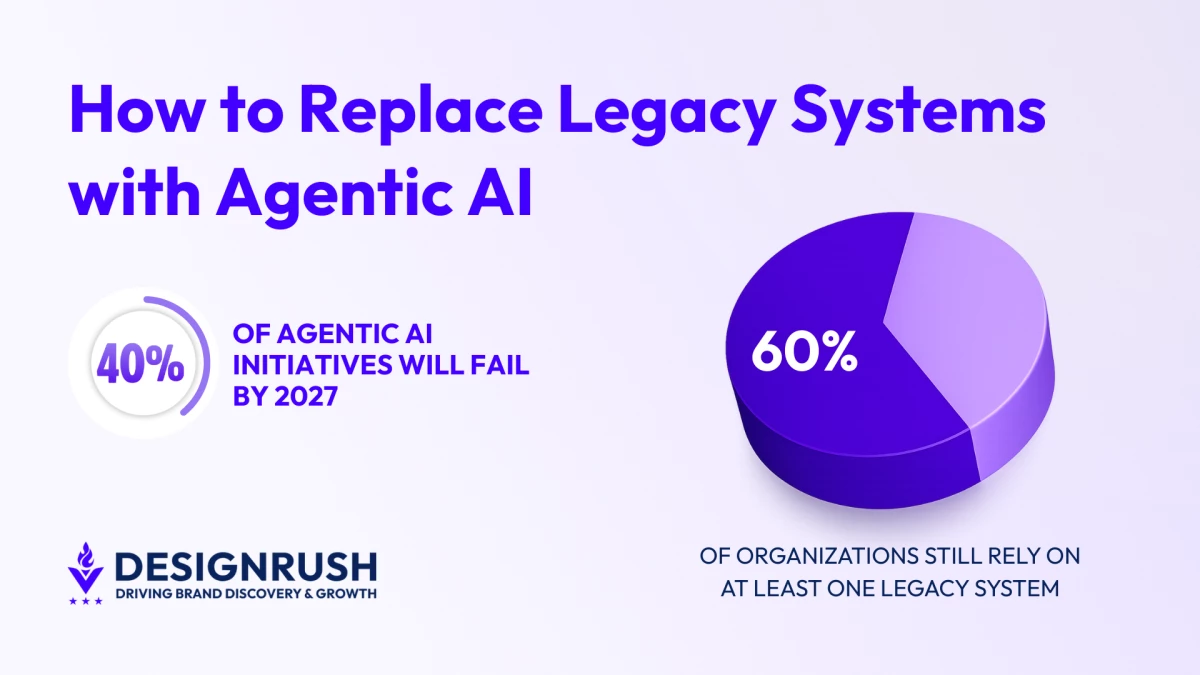
- Over 40% of agentic AI projects are expected to be canceled by 2027, largely because companies are automating workflows that were already broken.
- More than 60% of organizations still rely on at least one legacy system, making agentic AI attractive but also dangerous when processes remain misaligned.
- Organizations that skip readiness assessments scale inefficiency faster, turning agentic AI into a liability instead of a multiplier.
AI is often marketed as the best solution for companies looking to modernize faster, automate smarter, and bypass years of incremental process improvement.
Unfortunately, that may not be the outcome most agentic AI projects will achieve.
According to a report from Gartner, experts estimate that over 40% of agentic AI initiatives will be canceled by 2027.
Gartner Newsroom: Gartner Predicts Over 40% of Agentic AI Projects Will Be Canceled by End of 2027 #GartnerNewsroomhttps://t.co/4iizqTQjLg
— Gartner (@Gartner_inc) June 25, 2025
Why?
Although Gartner’s experts cite several reasons, one of the biggest is that many companies are asking agentic AI to automate workflows that are already broken.
That’s because some don’t immediately realize that agentic AI magnifies whatever it touches.
If built on a solid foundation, it will yield results. If built on top of a misaligned or broken system, agentic AI will only accelerate the problems that already exist within these systems.
That pattern is a familiar one for experienced agencies, like Codal, an award-winning design and development consultancy that partners with enterprises to make this transition.
“Agentic AI has intelligence built in and can be consistently modified to meet a company’s specific needs,” says Stephen Yi, Managing Director of Engineering and Product at Codal.
“It also improves over time as it learns from human feedback.”
In other words, these systems are only as effective as the data they consume.
Luckily, these challenges aren’t inevitable.
With cleaner workflows, stronger data, and smarter planning, organizations can give agentic AI a real shot at success.
Why Enterprises Turn to Agentic AI to Modernize
Agentic AI appeals to organizations struggling with aging infrastructure and rigid automation.
And there are a lot of these companies.
Based on industry estimates, over 60% of organizations still use at least one legacy system.
And for leaders staring down over a decade of technical debt, agentic AI is appealing because it allows for:
- Customization without full rebuilds. Agentic AI allows teams to adapt workflows on top of existing systems instead of dismantling them piece by piece.
- Flexibility as processes change. Unlike rule-based automation, agentic systems can adjust as inputs, exceptions, and requirements evolve.
- Orchestration across complexity. Multi-agent setups replace linear task chains with coordinated systems that can handle variation and interdependence.
“Legacy workflows are traditionally based on a set of pre-defined heuristics that are static in nature,” Yi explains.
“They may meet a majority of a company’s needs. However, they’re lacking in customization.”
Agentic AI can be customized to a company’s needs and improves over time through human feedback.
3 Common Reasons AI Initiatives Break Down
If agentic AI is so adaptable, why do so many initiatives still collapse?
According to the experts at Codal, three core issues often lead to failure:
1. Broken Workflows
Many enterprise processes evolved from necessity and convenience.
In most workplaces, these processes are a tangled web of workarounds and exceptions on top of more workarounds and exceptions.
Even worse, most don’t have proper documentation on why such workarounds and exceptions were needed in the first place.
When teams automate these workflows without fully understanding them, AI agents inherit confusion.
The system may execute faster, but it does not execute better. In some cases, it simply fails more efficiently.
2. Data Readiness Gaps
Agentic AI depends on clean, consistent, and well-governed data. That requirement is often underestimated.
“While agentic AI is often viewed as an autonomous turnkey solution, most people underestimate the effort required to prepare and validate data that is used to train the agents,” Yi says.
"Because again, AI tech isn’t magic. You have to train it to work properly."
So, don’t count on getting by with poor data quality, inconsistent transformations, or missing validation layers.
These will undermine even the most sophisticated models.
3. Model Misuse
Another failure point lies in overreliance on generic agentic AI models.
Off-the-shelf agents may perform adequately in broad scenarios but struggle in domain-specific workflows.
Without fine-tuning, contextual training, and feedback loops, these models make confident decisions with an incomplete understanding, which can lead to disastrous outcomes.
Overall, these three issues point to a pattern.
Agentic AI struggles because they overestimate readiness, rather than an overabundance of ambition on the part of the organization.
Determine If You Are Actually Ready for Agentic AI
Before investing in agentic systems, leadership must confront a harder question.
Is the organization ready to support these agentic AI initiatives?
After all, just because leadership says it’s time to adopt AI, it doesn’t mean that the organization is ready to do so without issue.
“Companies that rely on a surface-level understanding of agentic AI without properly evaluating the applicability to their particular use case will likely struggle to meet their goals,” Yi says.
How can enterprise leadership accurately assess if their organization is ready?
Before initiating AI adoption, check the following:
- Data readiness: The quality of your data should be in a state that can effectively train AI models.
If data quality cannot support reliable decision-making today, autonomous agents won’t do so tomorrow. - Sensitivity check: High-impact or high-risk workflows require human oversight.
Do you have the necessary human-in-the-loop frameworks in place to safeguard against these risks? - Intelligence necessity: Agentic AI isn’t always the answer.
Carefully assess whether a simpler, more traditional automation tool can handle tasks more efficiently. - Resource alignment: Your technical infrastructure and workforce must be prepared to support both the AI models and the teams responsible for managing them.
Do you have the capacity to scale systems and upskill staff to ensure sustainable adoption?
But what happens if you determine that there are still some gaps that prevent the adoption of agentic AI?
When gaps surface after going through the checklist above, it’s usually because there are still some issues regarding broken or disjointed processes.
To identify the underlying issues and fix them, Yi advises leadership to "map out current processes and data flows to see where the broken-ness lives.”
"This gives leadership the clarity and understanding of what those processes are, as well as the order in which they're needed," he says.
From there, decision-makers should ask harder operational questions, such as:
- Can the workflow be simpler?
This means removing unnecessary steps before layering on automation. - Where does the data break down?
This involves looking at how data is transformed, validated, and passed between systems. - Which parts still need people?
Reconsider which areas require human judgment, oversight, or training before handing them to AI. - How are your systems connected?
Get a clear grasp of how integrations actually work. This could be through APIs, ETL processes, manual patches, or otherwise.
The answers to these questions will help determine whether the addition of agentic AI becomes a multiplier or a liability for the company.
Build Agentic AI on Systems That Can Actually Support It
In sum, before modernizing workflows, organizations should first create conditions where agentic AI is set up to compound value over time.
And while taking these extra steps may seem like it will stall AI adoption, the truth is that doing so actually shortens the path to results.
After all, speed only helps when you know where you’re headed.
Otherwise, it just gets you lost faster.